Can I Change My Own Key Battery And Save Money Now
Yes, you can change your own key battery in just a few minutes. This guide walks you through everything you need to know about changing your key battery at home. You will learn the battery type, step-by-step instructions, and how this simple fix can save you money.
There is nothing worse than standing by your car, pressing the key fob button, and getting nothing. Your car does not start. The locks do not respond. You wonder if something serious is wrong. Before you call a locksmith or rush to the dealer, take a breath. Can I change my own key battery? The answer is a simple yes. In most cases, a dead key battery is the real culprit behind all of these frustrating problems. Changing the battery yourself takes just a few minutes and costs less than a cup of coffee.
This guide covers everything you need to know about changing your key battery at home. You will learn which battery type to buy, how to open your key fob, and how to avoid common mistakes. Whether you drive a Toyota, Honda, Ford, or Chevy, the process is similar across most brands. By the end, you will feel confident tackling this quick DIY car maintenance task on your own.
Saving money on car repairs starts with small jobs like this. When you handle simple fixes yourself, you build confidence and skip unnecessary shop visits. So let us dive in and get your key fob working again.
Key Takeaways
- Easy DIY Task: Changing your key battery is one of the simplest car maintenance jobs you can do at home.
- Save Money: You avoid dealer fees and get your key working again in minutes.
- Right Battery Matters: Most car keys use a CR2032 battery, but always check your specific model.
- Quick Fix: A dead key battery causes many frustrating car problems that mimic bigger issues.
- No Tools Needed: You usually just need a small flathead screwdriver or your fingernail.
- Preventive Tip: Replace your key battery every 2 to 3 years to avoid being stranded.
📑 Table of Contents
Why Your Key Battery Dies
Understanding why your key battery dies helps you prevent it from happening again. Most car key fobs use small coin-cell batteries. These batteries power the remote lock, unlock, and push-button start functions. Over time, the battery loses its charge and cannot send a strong enough signal to your car.
Common Signs of a Dead Key Battery
Watch for these warning signs before your key battery dies completely:
- Reduced range: You have to stand closer to the car for the fob to work.
- Delayed response: The locks take longer to react when you press the button.
- Intermittent working: The fob works sometimes but not others.
- Warning light: Some newer cars display a key battery warning on the dashboard.
- Push-button start fails: The car does not recognize the fob when you press the start button.
If you notice any of these symptoms, it is time to replace the battery. Ignoring the problem can leave you stranded, especially in cold weather when batteries lose power faster.
How Long Does a Key Battery Last?
Most car key batteries last between two and three years. However, usage plays a big role. If you use your remote start or lock buttons frequently, the battery may drain faster. Extreme temperatures also shorten battery life. Hot summer days and freezing winter nights both put stress on the small coin cell inside your fob.
Pro tip: Mark your calendar when you replace the battery. This way, you know when it is due for a swap again. Setting a reminder every two years keeps you ahead of the problem.
What Battery Does Your Car Key Need
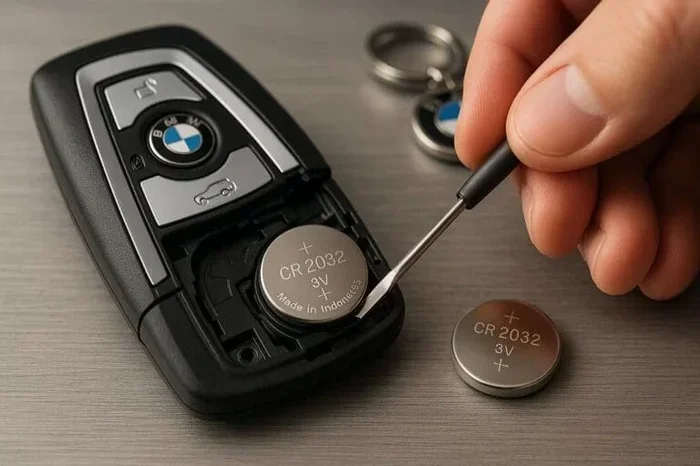
Finding the right battery is the first real step. Most modern car keys use a CR2032 battery. This is a standard 3-volt coin cell that you can find at almost any grocery store, pharmacy, or gas station. However, some older models or specialty keys may use different battery types, so always double-check before you buy.
Common Battery Types for Car Keys
Here is a quick look at the batteries commonly found in car key fobs:
- CR2032: The most common. Used in Toyota, Honda, Ford, Nissan, and many others.
- CR2025: Slightly thinner than the CR2032. Found in some Mercedes and BMW models.
- CR1632: Less common. Used in certain older key fob models.
- SR44: Found in some older or European vehicle keys.
Check your owner’s manual for the exact battery type. You can also look at the old battery once you remove it. The numbers printed on the battery will match one of the types above. Buying the wrong battery type is one of the most common mistakes people make, so take a moment to confirm before your purchase.
Where to Buy Replacement Key Batteries
You do not need to visit a dealer to buy a replacement battery. You have several affordable options:
- Grocery stores: Most carry CR2032 batteries in the electronics aisle.
- Pharmacies: CVS, Walgreens, and similar stores stock them behind the counter.
- Auto parts stores: Stores like AutoZone or O’Reilly often have key battery kits.
- Online retailers: Amazon and Walmart sell packs of replacement batteries for just a few dollars.
- Gas stations: Many convenience stores carry them near the checkout.
A pack of two or three batteries usually costs under five dollars. Compare that to the $50 or more a dealer or locksmith would charge just for the battery swap. This is one of the easiest ways to save money on car maintenance.
Step-by-Step Guide to Changing Your Key Battery
Now comes the fun part. Changing your key battery is simpler than most people think. You do not need any special tools or technical skills. Follow these steps carefully and your key fob will be back to life in no time.
Step 1: Gather Your Supplies
Before you start, make sure you have everything ready:
- A replacement battery (CR2032 or whatever your key requires)
- A small flathead screwdriver or a thin plastic pry tool
- A clean, soft surface to work on
- A well-lit area
Avoid using metal tools that can scratch the key fob casing. A plastic pry tool or even a butter knife wrapped in a cloth works great.
Step 2: Open the Key Fob
Most key fobs have a small seam running along the middle. Look for a tiny notch or groove. Insert your flathead screwdriver or pry tool into the gap. Gently twist to pop the two halves apart. Work slowly to avoid damaging the plastic clips inside.
Some keys have a small release button on the back. Press it and the back cover slides off. If your key has a mechanical key hidden inside, pull it out first. That key often doubles as a prying tool for the fob casing.
Step 3: Remove the Old Battery
Once the fob is open, you will see the battery sitting in a small compartment. Note which side faces up. Take a photo with your phone if you are unsure. Use the screwdriver or your fingernail to gently pry the old battery out. Dispose of the old battery properly. Do not throw coin-cell batteries in the regular trash. Many stores have recycling bins for them.
Step 4: Insert the New Battery
Place the new battery in the compartment with the correct side facing up. The positive side (marked with a plus sign) usually faces up. Push it gently until it clicks into place. Make sure it sits flat and secure. A loose battery will not make proper contact and your key will still not work.
Step 5: Reassemble the Key Fob
Line up the two halves of the fob and press them together firmly. You should hear a click when the clips snap into place. Test the buttons before you put the key back in your pocket. Press the lock and unlock buttons to make sure everything works. If the key does not respond, open it again and check the battery placement.
That is it! You just saved yourself a trip to the dealer and a hefty service fee. Changing your key battery at home is one of the most rewarding DIY car maintenance tasks you can do.
When to Seek Professional Help
Most key battery replacements go smoothly. But sometimes, things do not go as planned. Knowing when to call a professional saves you time and prevents damage to your key fob.
Signs You Need Professional Help
Watch for these situations where a DIY fix might not be enough:
- The key still does not work after replacing the battery: This could signal a deeper issue with the fob’s internal circuitry.
- The key fob is physically damaged: Cracked casings or broken buttons need professional repair or replacement.
- Your car does not recognize the key: Some vehicles require a reprogramming step after a battery change.
- You cannot open the fob without breaking it: Forcing the casing apart can damage the internal electronics.
If any of these sound familiar, do not force it. Visit your local auto parts store or dealership. Many places offer free or low-cost key fob diagnostics. For example, you can get a free diagnostic on your car at many auto parts chains, and they can often check your key fob signal strength too.
Reprogramming Your Key Fob
Some vehicles, especially newer models, need a reprogramming step after a battery change. This process varies by brand and model. In many cases, simply sitting in the car and pressing the start button with the fob inside does the trick. Check your owner’s manual for the exact reprogramming steps for your vehicle.
For more complex electronic issues, you might wonder whether you can handle other DIY car electronics yourself. For instance, many car owners ask can I change my ECU myself when dealing with electronic problems. While that is a more advanced task, it shows the growing trend of car owners handling their own repairs. Starting with something simple like a key battery change builds the confidence for bigger projects down the road.
How Changing Your Key Battery Saves You Money
The financial benefit of changing your own key battery is clear and significant. Let us break down the numbers.
Cost Comparison
A CR2032 battery costs between one and three dollars at most retail stores. A dealer or locksmith will charge anywhere from fifty to one hundred dollars just to swap the battery. That is a markup of over 2000 percent for a task that takes five minutes. The savings add up fast, especially if you have multiple keys to maintain.
Think about how often you need to replace the battery. Every two to three years, you might pay $50 to $100 at a shop. Over ten years, that adds up to $200 to $500 in unnecessary fees. Doing it yourself costs less than $30 over the same period.
Other DIY Car Maintenance Tasks to Try
Once you master the key battery swap, you might feel inspired to tackle other simple car jobs. Many car owners underestimate what they can do on their own. For example, replacing a car battery, changing air filters, or swapping out windshield wipers are all straightforward tasks. Even something like changing the sound system in your car is more achievable than most people think with a little patience and the right guidance.
The key is to start small and build your confidence. Each successful DIY repair saves you money and gives you a better understanding of your vehicle. Over time, you become a more self-reliant car owner who can handle common problems without waiting for a service appointment.
Preventing Key Battery Problems
Prevention is always cheaper than repair. Here are a few habits that extend your key battery life:
- Keep your key fob away from water and moisture.
- Store it in a cool, dry place when not in use.
- Avoid dropping or impacting the fob against hard surfaces.
- Replace the battery every two years as a preventive measure.
- Use the mechanical key when possible instead of relying solely on the remote.
These simple habits keep your key fob in top shape and reduce the chances of being caught off guard by a dead battery.
Common Mistakes to Avoid When Changing Your Key Battery
Even simple tasks come with pitfalls. Avoid these common mistakes to make your battery replacement smooth and successful.
Mistake 1: Using the Wrong Battery Type
Not all coin-cell batteries are the same. A CR2032 and a CR2025 may look similar but have different thicknesses. Using the wrong one means the battery will not seat properly and your key will still not work. Always verify the battery type printed on your old battery or listed in your owner’s manual.
Mistake 2: Forcing the Fob Open
Key fob casings are designed to pop open with gentle pressure. Using too much force cracks the plastic and exposes the internal electronics to dust and moisture. If the fob does not open easily, look for a hidden screw or release mechanism before applying more force.
Mistake 3: Touching the Battery Contacts with Metal
Metal tools can short-circuit the battery contacts and damage the fob’s circuit board. Use a plastic pry tool or your fingernail whenever possible. If you must use a screwdriver, wrap it in a cloth to prevent metal-to-electronic contact.
Mistake 4: Ignoring the Battery Orientation
Putting the battery in upside down means no power flows to the fob. Always check which side faces up before closing the fob. Taking a photo of the old battery placement before you remove it helps you get the orientation right on the first try.
Mistake 5: Forgetting to Test After Reassembly
Once you snap the fob back together, test it immediately. Stand a few feet from your car and press the lock and unlock buttons. If nothing happens, open the fob again and check the battery placement. Testing before you put the key in your pocket saves you from a second round of disassembly.
Avoiding these five mistakes ensures your battery replacement goes smoothly the first time. You will walk away feeling accomplished and ready to handle the next car maintenance task.
Key Takeaways
- Changing your own key battery is simple: It takes about five minutes and requires no special tools.
- You save significant money: A $2 battery replaces a $50 to $100 service fee.
- The right battery matters: Most keys use CR2032, but always confirm before you buy.
- Prevention keeps you prepared: Replace your battery every two years before it dies unexpectedly.
- Avoid common mistakes: Use plastic tools, check battery orientation, and test after reassembly.
- Build your DIY confidence: This small success motivates you to tackle other car maintenance tasks on your own.
Conclusion
Can I change my own key battery? Absolutely. You now have all the knowledge you need to tackle this simple task with confidence. From identifying the right battery type to following the step-by-step replacement process, you can handle this fix in under ten minutes. The money you save alone makes it worth doing yourself.
Do not let a dead key battery ruin your day or drain your wallet. Next time your fob stops working, grab a replacement battery and open up that key fob. You will be amazed at how easy it is. And once you succeed, you will feel more confident about other DIY car maintenance projects too.
Keep spare batteries in your glove box or junk drawer. You never know when you will need one. With the right supplies and a little know-how, you are always prepared. Your car key will keep working smoothly, and your wallet will thank you.
Frequently Asked Questions
How do I know if my key battery needs replacing?
You will notice reduced range, delayed response, or intermittent working of your key fob. Some newer cars also display a key battery warning on the dashboard. If your push-button start stops recognizing the fob, the battery is likely the cause.
What type of battery does a car key use?
Most car keys use a CR2032 battery, which is a standard 3-volt coin cell. However, some models use CR2025 or other types. Always check your owner’s manual or the old battery before purchasing a replacement.
Can I change my key battery without any tools?
Yes, in most cases you can. Many key fobs open with just your fingernail or a small flathead screwdriver. A plastic pry tool works best to avoid scratching or damaging the fob casing.
How much does a key battery cost?
A CR2032 battery costs between one and three dollars at most retail stores. This is a fraction of what dealers or locksmiths charge for a battery replacement, making DIY the clear choice for saving money.
Do I need to reprogram my key after replacing the battery?
In most cases, no. Simply replacing the battery is enough. However, some newer vehicles may require a quick reprogramming step. Check your owner’s manual for specific instructions for your car model.
How often should I replace my key battery?
Most key batteries last between two and three years. Replacing the battery proactively every two years helps prevent being caught off guard by a dead fob at an inconvenient time.