Can I Change My ECU Myself Everything You Need To Know
Yes, you can change my ECU yourself, but it comes with real risks and challenges. Swapping your engine control unit requires the right tools, compatible parts, and a solid understanding of your vehicle. This guide covers everything from preparation to post-installation tuning so you can make an informed decision.
Your car’s engine control unit is basically the brain that keeps everything running. It controls fuel injection, ignition timing, and a dozen other functions you probably never think about. So what happens when that brain starts to fail or you want to upgrade? Can you change my ECU myself, or is this a job best left to a shop?
The short answer is yes. Plenty of car owners swap out their ECU at home. But the full answer is more complicated. There are compatibility issues, programming steps, and potential pitfalls that can turn a simple swap into a headache. This guide walks you through everything you need to know before you crack open that ECU housing.
Whether you are dealing with a failing factory unit, looking to upgrade to an aftermarket ECU, or just curious about the process, you are in the right place. We will cover the tools you need, the steps involved, the risks, and when it makes sense to call in a pro. Let us dive in.
Key Takeaways
- DIY ECU swaps are possible: Many car owners successfully change my ECU myself with the right guidance and tools.
- Compatibility is critical: Not every ECU works with every vehicle, so matching part numbers and software versions matters.
- Specialized tools are required: You will need an OBD2 scanner, ECU programming equipment, and a stable workspace.
- Warranty and legal risks exist: DIY ECU work can void your factory warranty and may trigger check engine lights.
- Professional help is sometimes the better call: Complex vehicles or performance builds often benefit from expert ECU tuning.
- Post-installation calibration is essential: A new ECU must be properly programmed and tested before driving.
📑 Table of Contents
What Is an ECU and Why Does It Matter?
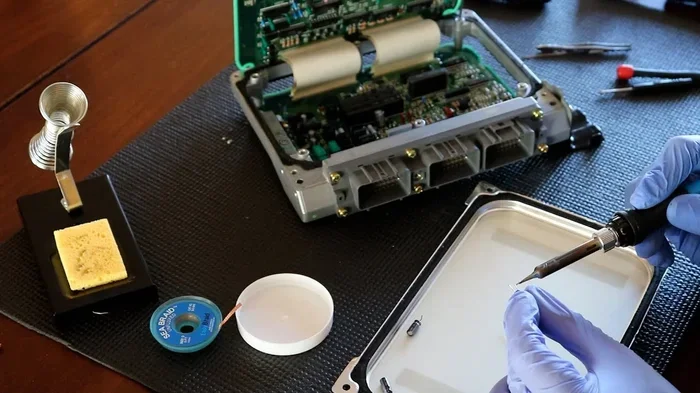
Before you attempt any work, it helps to understand what you are dealing with. The engine control unit is a small computer mounted in your vehicle. It receives data from sensors all over your engine and uses that information to make real-time decisions. Think of it as the conductor of an orchestra.
What Does the ECU Control?
The ECU manages a surprising number of functions:
- Fuel injection timing and duration
- Ignition spark timing
- Idle speed control
- Emissions systems and catalytic converter management
- Turbo boost pressure (on turbocharged engines)
- Variable valve timing (on applicable engines)
- Diagnostic fault codes and warning lights
When the ECU malfunctions, you may notice rough idling, engine misfires, poor fuel economy, or even a no-start condition. Some people also upgrade their ECU to gain better engine performance or to support modifications like larger turbos or aftermarket intake systems.
Factory ECU vs Aftermarket ECU
There are two main types of units you might install. A factory ECU is the original unit that came with your car. It is designed specifically for your engine, transmission, and emissions setup. An aftermarket ECU is a universal or brand-specific unit made by companies like Haltech, AEM, or Holley. Aftermarket units offer more customization but require more work to set up correctly.
| Feature | Factory ECU | Aftermarket ECU |
|---|---|---|
| Plug and play | Yes | Usually no |
| Custom tuning options | Limited | Extensive |
| Cost | Lower | Higher |
| Installation complexity | Easier | More complex |
| Warranty support | Yes | Varies by brand |
Can You Actually Change My ECU Myself?
Here is the honest truth. You can change my ECU yourself, but your success depends on several factors. Your mechanical skill level, the type of vehicle you drive, and the ECU you are installing all play a role.
For a straightforward factory replacement on a common vehicle, a confident DIYer can usually handle the job in one to two hours. For an aftermarket ECU swap on a modern car with complex wiring, you may be looking at a full weekend or more.
When a DIY ECU Swap Makes Sense
Consider doing it yourself when:
- You are replacing a known faulty factory ECU with an identical unit
- Your vehicle has a simple wiring harness and accessible ECU location
- You already own basic diagnostic tools like an OBD2 scanner
- You have done similar electrical work on your car before
- You want to save money on labor costs
When You Should Call a Professional
On the other hand, professional help is wise when:
- You are installing a completely different ECU platform
- Your vehicle uses advanced CAN bus systems or multiplexed wiring
- You need custom ECU tuning or ECU programming
- Your car is still under vehicle warranty and you do not want to void it
- You feel unsure about any part of the process
There is no shame in calling a pro. ECU work can be unforgiving. One wrong wire connection or incorrect ECU configuration can cause serious engine damage.
Tools and Equipment You Will Need
Before you start, gather everything you need. Showing up halfway through a job because you are missing a tool is frustrating and wastes time.
Essential Tools
- OBD2 scanner for reading and clearing fault codes
- Socket set and basic hand tools
- Multimeter for testing electrical connections
- Wire strippers and crimping tools
- ECU programming equipment (specific to your ECU brand)
- Repair manual for your specific vehicle
- Anti-static wrist strap to protect sensitive electronics
Software and Programming Tools
Depending on your vehicle, you may also need:
- ECU flashing software (provided by the ECU manufacturer)
- A laptop with the correct diagnostic software
- USB cables or proprietary adapters for communication
- The correct ECU software file for your vehicle
Quick tip: Always double-check that your software version matches your vehicle model and year. Using the wrong ECU software is one of the most common mistakes people make.
Step by Step Guide to Swapping Your ECU
Here is a general walkthrough of the process. Keep in mind that every vehicle is different, so always refer to your specific repair manual for detailed instructions.
Step 1: Disconnect the Battery
Start by disconnecting the negative terminal on your battery. This prevents electrical shorts and protects both you and your vehicle. Wait at least five minutes before touching any wires.
Step 2: Locate the ECU
Find the current ECU. On most vehicles, it is located under the hood near the firewall, behind the glove box, or beneath the dashboard. Check your repair manual for the exact spot.
Step 3: Document Everything
Before unplugging anything, take clear photos of the wiring connections. Note which wire goes where. This sounds basic, but it saves hours of confusion later.
Step 4: Remove the Old ECU
Unplug the electrical connectors carefully. Remove any mounting bolts or clips holding the unit in place. Gently pull the old ECU out and set it aside.
Step 5: Install the New ECU
Mount the new unit in the same position. Reconnect all wiring harnesses exactly as they were. Make sure each connection clicks firmly into place.
Step 6: Reconnect the Battery and Test
Reconnect the battery and turn the ignition to the on position (do not start the engine yet). Check for any warning lights on the dashboard. Use your OBD2 scanner to read any fault codes.
Step 7: Program and Calibrate
Now comes the critical part. You need to program the new ECU with the correct software. This may involve flashing the unit through your laptop or using a dedicated programming tool. Follow the manufacturer instructions exactly.
After programming, clear any fault codes, start the engine, and let it idle. Monitor for warning lights, unusual sounds, or rough running. Take a short test drive and pay attention to how the engine responds.
Quick tip: If your new ECU requires ECU coding or adaptation, do not skip this step. Many modern vehicles will not run properly without the correct adaptive values stored in memory.
Common Mistakes and Risks to Avoid
Even experienced DIYers can run into trouble with ECU replacement. Here are the most common pitfalls and how to avoid them.
Using the Wrong ECU
Not every ECU fits every car. Even two vehicles of the same make and model can have different ECU part numbers depending on the engine, trim level, and production year. Always verify the ECU compatibility before you buy. Check your vehicle identification number against the ECU part number to be sure.
Skipping the Adaptation Process
Modern vehicles learn your driving habits over time. When you install a new ECU, those learned values are gone. The new unit needs to relearn things like idle speed, throttle response, and fuel trim. This process is called adaptation or relearning. Skipping it can result in poor drivability.
Ignoring Check Engine Lights
If you see a check engine light after the swap, do not ignore it. Use your OBD2 scanner to read the codes. Common post-swap codes include P0606 (ECU processor error), P0101 (mass airflow sensor range), or P0300 (random misfire). Each one tells you something specific about what went wrong.
Not Backing Up the Original Software
Before you flash a new ECU, always save a backup of the original software. If something goes wrong during programming, having that backup can save you from a bricked ECU. A bricked ECU means the unit is essentially useless and needs to be replaced entirely.
Forgetting About Emissions Compliance
In many regions, modifying your ECU configuration can affect emissions compliance. Your vehicle may fail an inspection or smog test if the ECU is not properly calibrated for your specific setup. Check your local regulations before making any changes.
When to Call a Professional Instead
There are situations where professional help is not just recommended, it is necessary.
If your vehicle uses a hybrid ECU system that controls both the engine and transmission, DIY work becomes significantly more complex. One mistake in wiring can disable both systems simultaneously, leaving you stranded.
Similarly, if you are building a performance car and need custom ECU tuning, a professional tuner has the experience and equipment to dial in the perfect fuel and ignition maps. A poorly tuned ECU can cause engine knock, reduced power, or even catastrophic engine failure.
Also consider the cost-benefit ratio. A professional ECU programming service may cost between $200 and $800 depending on your vehicle and location. If you make a mistake during a DIY swap and damage the new ECU, the replacement cost alone could exceed what you would have paid a professional in the first place.
Expert insight: Many shops offer ECU swap and tune packages where they handle both the physical installation and the software configuration. This can be a great middle ground for car owners who want to save on labor but still get professional results.
Key Takeaways
- DIY ECU swaps are possible: Many car owners successfully change my ECU myself with the right guidance and tools.
- Compatibility is critical: Not every ECU works with every vehicle, so matching part numbers and software versions matters.
- Specialized tools are required: You will need an OBD2 scanner, ECU programming equipment, and a stable workspace.
- Warranty and legal risks exist: DIY ECU work can void your factory warranty and may trigger check engine lights.
- Professional help is sometimes the better call: Complex vehicles or performance builds often benefit from expert ECU tuning.
- Post-installation calibration is essential: A new ECU must be properly programmed and tested before driving.
Frequently Asked Questions
How long does it take to change an ECU yourself?
A straightforward factory ECU replacement typically takes one to two hours. However, if you are installing an aftermarket unit or working on a vehicle with complex wiring, plan for four to eight hours or more. Always allow extra time for programming and calibration.
Can changing my ECU myself void my vehicle warranty?
Yes, it can. Modifying or replacing your ECU without dealer approval may void parts of your factory warranty, especially if something goes wrong as a result. Check your warranty terms and consider consulting your dealer before proceeding.
Do I need special software to program a new ECU?
In most cases, yes. Each ECU brand has its own proprietary software for programming and flashing. Some vehicles also require manufacturer-specific diagnostic tools. Research your specific ECU model to find out exactly what software you need before starting the project.
Is it safe to drive after swapping an ECU?
It can be safe if you properly program, calibrate, and test the new unit before driving. Start by letting the engine idle and checking for warning lights. Take a short, low-speed test drive before hitting the highway. If anything feels off, stop and recheck your work.
What happens if I install the wrong ECU software?
Installing incorrect software can cause a range of problems from poor engine performance to a complete no-start condition. In worst-case scenarios, it can damage internal ECU components. Always verify the software part number matches your vehicle before flashing.
Can I return a used ECU after swapping it myself?
It depends on the seller and the condition of the unit. Many aftermarket ECU sellers accept returns within a certain window, but the unit must be in resalable condition. Keep all original packaging and documentation until you are sure the swap was successful.
Conclusion
So, can you change my ECU yourself? The answer is yes, you absolutely can. With the right tools, a compatible replacement unit, and a careful approach, many car owners handle this job successfully at home. It is a rewarding project that saves money and builds your mechanical skills.
But it is not without risks. Compatibility issues, programming errors, and skipped calibration steps can all lead to problems. Take your time, follow each step carefully, and do not hesitate to seek professional help if you get stuck.
Whether you are replacing a failing factory unit or upgrading to a high-performance aftermarket ECU, preparation is your best friend. Know your vehicle, gather your tools, and respect the process. A successful ECU swap leaves you with a car that runs better and a sense of accomplishment that is hard to beat.