Are Coolant and Antifreeze Actually the Same Thing
Coolant and antifreeze are not the same thing, even though many people use the terms interchangeably. Antifreeze is a concentrated liquid that you mix with water, while coolant is the pre-mixed final product that flows through your engine. Understanding this difference can save you money, prevent engine damage, and keep your car running smoothly all year long.
Every car owner has heard the words “coolant” and “antifreeze” thrown around at the auto parts store. You grab a jug, stare at the label, and wonder if they are the same thing. The short answer is no. But here is the thing, most people use these terms as if they mean the same fluid, and that confusion can lead to real problems under your hood.
Antifreeze is a concentrated chemical base, usually made from ethylene glycol or propylene glycol. You mix it with distilled water before it goes into your engine. Coolant, on the other hand, is the finished product. It is the mixture of antifreeze and water that actually flows through your engine’s cooling system. Think of antifreeze as the ingredient and coolant as the final recipe.
Understanding this difference matters more than most people realize. Using the wrong fluid, mixing up concentrations, or skipping a coolant flush can lead to overheating, corrosion, and even a totaled engine. In this guide, we will break down everything you need to know. By the end, you will never confuse these two fluids again.
Key Takeaways
- Coolant and antifreeze are different: antifreeze is a concentrate; coolant is the ready-to-use mixture.
- Antifreeze prevents freezing and boiling: it protects your engine in extreme cold and hot weather.
- Coolant circulates heat away from the engine: it keeps your engine at the right operating temperature.
- Using the wrong fluid can cause serious damage: always check your owner’s manual for the right type.
- Regular coolant flushes are essential: old coolant loses its effectiveness and can lead to overheating.
- Different coolant colors serve different purposes: color coding helps you identify the right type for your vehicle.
- Mixing coolant types can be harmful: stick to one type and follow manufacturer guidelines.
📑 Table of Contents
What Is Coolant?
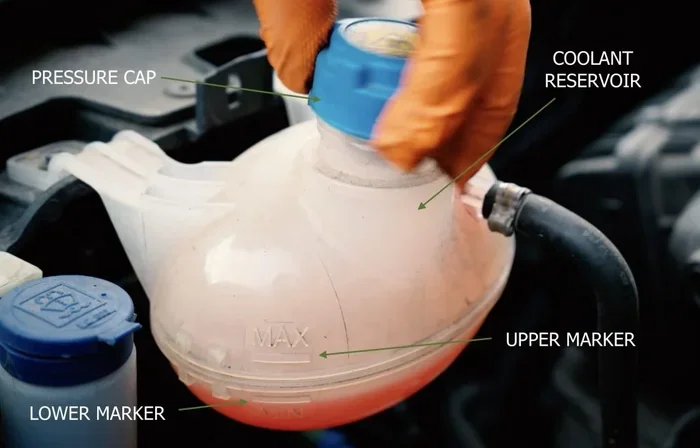
Coolant is the fluid that circulates through your engine to manage heat. It flows through passages in the engine block, absorbs excess heat, and carries that heat to the radiator where it cools down. Then it cycles back through the engine again. This continuous loop keeps your engine running at the optimal operating temperature.
How Coolant Works in Your Engine
Your engine generates a tremendous amount of heat. Without a fluid managing that heat, metal parts would expand, warp, and eventually seize up. Coolant acts as a heat transfer medium. It pulls thermal energy away from critical components like the cylinder walls and pistons. The radiator then dissipates that heat into the air, and the cycle repeats.
Coolant also plays a role in heat transfer efficiency. The mixture of antifreeze and water actually transfers heat better than water alone in certain conditions. This is why a proper coolant mixture matters so much. Too much water and the fluid boils too quickly. Too much antifreeze and it does not transfer heat effectively.
Types of Coolant
Not all coolant types are the same. Different vehicles require different formulations. Here are the most common ones you will encounter:
- IAT (Inorganic Additive Technology): The older green coolant. It uses silicates and phosphates to protect metal surfaces. Most common in older vehicles.
- OAT (Organic Acid Technology): A longer-lasting coolant, often orange or red. It uses organic acids for corrosion protection. Common in GM and Ford vehicles.
- HOAT (Hybrid Organic Acid Technology): A blend of IAT and OAT. It offers the best of both worlds. Often yellow or turquoise in color.
- Si-OAT (Silicate Organic Acid Technology): A premium formulation that includes silicates for extra protection. Common in European vehicles like BMW and Mercedes.
Each type has a different service life and corrosion protection profile. Always check your owner’s manual or ask a trusted mechanic before topping off.
What Is Antifreeze?
Antifreeze is the concentrated base fluid that makes coolant work. On its own, antifreeze is extremely thick and not suitable for running through an engine. You must dilute it with water before use. The most common base chemicals are ethylene glycol and propylene glycol.
Why Antifreeze Matters
The name “antifreeze” tells you its primary job. It prevents the water in your cooling system from freezing in cold weather. But antifreeze does much more than that. Here are the key functions:
- Freeze protection: Pure water freezes at 32 degrees Fahrenheit. A proper antifreeze mixture can protect your engine down to negative 30 degrees or lower, depending on the concentration.
- Boil-over prevention: Antifreeze raises the boiling point of the liquid in your cooling system. This means your fluid can handle high engine temperatures without turning to steam.
- Corrosion inhibition: Antifreeze contains additives that protect metal components from rust and erosion inside the cooling system.
- Lubrication: The additives in antifreeze help lubricate the water pump and other moving parts within the cooling circuit.
Ethylene Glycol vs. Propylene Glycol
Not all antifreeze is created equal. The two main base ingredients are ethylene glycol and propylene glycol. Each has its own advantages and drawbacks.
Ethylene glycol is the most widely used base. It offers excellent heat transfer properties and is very effective at preventing freezing and boiling. However, it is highly toxic to humans and animals. Even a small ingestion can be deadly.
Propylene glycol is a safer alternative. It is less toxic and is often used in applications where there is a risk of accidental contact, such as in food processing or marine environments. It does not perform quite as well as ethylene glycol in extreme temperatures, but for most everyday driving, it works perfectly fine.
The Key Differences Between Coolant and Antifreeze
Now that you know what each one is individually, let us look at the key differences side by side. This comparison table should help clear up any remaining confusion.
Antifreeze is a concentrated chemical base that you must mix with water before use. Coolant is the pre-mixed or ready-to-use fluid that circulates through your engine. Antifreeze is an ingredient; coolant is the finished product.
Here is another way to think about it. Antifreeze is like flour and sugar sitting in your pantry. Coolant is the cake you bake after combining those ingredients with eggs and milk. You would not eat flour and sugar on its own, and you would not pour pure antifreeze into your engine. Both have a purpose, but they are not interchangeable.
Using pure antifreeze without diluting it can actually cause your engine to run hotter, not cooler. The mixture ratio matters. Most manufacturers recommend a 50/50 mix of antifreeze and water. In extreme cold climates, you might go up to a 60/40 antifreeze-to-water ratio for better freeze protection.
How Coolant and Antifreeze Work Together
The real magic happens when antifreeze and water combine to form coolant. This mixture travels through a closed loop that includes the engine block, radiator, hoses, water pump, and thermostat. Each component plays a role in keeping your engine at a stable temperature.
The Cooling System Loop
Here is how the system works in simple terms:
- The water pump pushes coolant through the engine block.
- The coolant absorbs heat from the engine cylinders and other hot components.
- The heated coolant flows through hoses to the radiator.
- Air flowing through the radiator fins cools the fluid down.
- The cooled fluid cycles back into the engine to absorb more heat.
This loop runs continuously while your engine is running. The thermostat regulates the flow, opening and closing to maintain the ideal temperature range. If any part of this system fails, your engine can overheat quickly, which is exactly what you want to avoid.
If your car has ever stopped running while driving and won’t start, overheating from a coolant failure could be the culprit. Similarly, if your engine turns over but refuses to fire up, a low or contaminated coolant level might be starving the system of proper heat management. These are real-world scenarios where understanding your cooling system makes all the difference.
Signs Your Coolant Needs Attention
Your car will give you warning signs when the coolant is not doing its job. Catching these signals early can save you from expensive repairs and a vehicle that won’t start.
Warning Signs to Watch For
- Temperature gauge reading high: If your temperature gauge climbs into the red zone, your coolant may be low or degraded.
- Steam or smoke from the hood: This is a clear sign of overheating. Pull over safely and turn off the engine immediately.
- Coolant leaks under the car: Look for colored puddles (green, orange, pink, or blue) underneath your parked car.
- Sweet smell near the engine: Coolant has a slightly sweet odor. If you smell something sweet near the front of your car, check for leaks.
- Heater not working: Your cabin heater relies on the same coolant system. If it blows cold air, the coolant level may be low.
- Discolored coolant: Fresh coolant is bright in color. If it looks rusty, muddy, or has particles floating in it, it is time for a flush.
If you notice any of these signs, do not ignore them. A small coolant leak today can become a blown head gasket tomorrow. Addressing the problem early keeps your engine temperature in check and prevents catastrophic damage.
Choosing the Right Coolant for Your Vehicle
Not every coolant works for every car. Using the wrong type can lead to poor corrosion protection, reduced performance, and even damage to internal components. Here is how to make sure you pick the right one.
Check Your Owner’s Manual First
Your vehicle’s manufacturer knows exactly what works best. The owner’s manual will specify the recommended coolant type, the proper mixture ratio, and the recommended service interval. Always start there before buying any fluid.
Mixing Ratios and Their Effects
The standard ratio for most vehicles is 50% antifreeze and 50% distilled water. This provides freeze protection down to about negative 34 degrees Fahrenheit and boil-over protection up to 265 degrees. Here is a quick look at how different ratios perform:
- 50/50 mix: Good for most climates. Balanced freeze and boil protection.
- 60/40 antifreeze-to-water: Better for extreme cold. Freeze protection drops to about negative 60 degrees.
- 70/30 mix: Only for severe cold conditions. Beyond this ratio, the mixture actually becomes less effective at transferring heat.
Never use tap water to mix your coolant. Tap water contains minerals that can cause scale buildup and corrosion inside the cooling system. Always use distilled water for mixing.
Can You Mix Different Coolant Types?
This is a question that comes up a lot, and the answer is not a simple yes or no. In general, mixing different coolant types is not recommended. Different formulations use different additive packages, and combining them can cause chemical reactions that reduce corrosion protection and create sludge inside the system.
If you must mix, try to use the same brand and type. If you are unsure what is currently in your system, a full coolant flush and refill is the safest approach. This ensures a clean slate and prevents any compatibility issues.
Common Coolant Mistakes and How to Avoid Them
Even experienced car owners make mistakes when it comes to coolant. Here are the most common ones and how to steer clear of them.
Mistake 1: Topping Off with Water Instead of Coolant
It is tempting to just add water when the level is low in a pinch. Water does not offer freeze protection or corrosion inhibition. It also boils at a lower temperature than coolant. If you must add water temporarily, get to a shop and have the system flushed and refilled with proper coolant as soon as possible.
Mistake 2: Ignoring Coolant Color Changes
Coolant color changes over time. Green coolant turning brown or black is a sign of contamination and oxidation. Do not assume the color change is normal. Have the system inspected and flushed if the fluid looks dirty or discolored.
Mistake 3: Skipping Coolant Flushes
Coolant breaks down over time. The additives that protect against corrosion and scaling get used up. Most manufacturers recommend a coolant flush every 30,000 to 60,000 miles, depending on the type of coolant and the vehicle. Skipping this service can lead to scale buildup, reduced heat transfer, and eventually overheating.
Mistake 4: Opening the Radiator Cap on a Hot Engine
The cooling system is pressurized. Opening the cap while the engine is hot can cause scalding fluid to spray out, leading to serious burns. Always wait for the engine to cool down before checking the coolant level or removing the radiator cap.
When to Seek Professional Help
Some cooling system issues are beyond a DIY fix. If you notice persistent overheating, frequent coolant loss, or a check engine light that won’t go away, it is time to see a professional. A certified mechanic can perform a pressure test, inspect the radiator and hoses, and diagnose any underlying issues with your cooling system.
Sometimes what looks like a simple coolant problem is actually something more serious. For instance, if your car has been running hot and suddenly won’t start and makes no noise, the engine may have seized due to severe overheating. These situations require immediate professional attention and should not be ignored.
Regular maintenance goes a long way in preventing major cooling system failures. Stick to your manufacturer’s recommended service schedule, keep an eye on your coolant levels, and never underestimate the importance of a healthy cooling system. Your engine will thank you for it.
Taking care of your vehicle’s coolant and antifreeze needs is one of the simplest and most cost-effective ways to extend your engine’s lifespan. It is a small maintenance task that pays off in a big way. So the next time you are at the auto parts store, you will know exactly what you are looking for and why it matters.
Final Thoughts
The difference between coolant and antifreeze might seem small, but it has big implications for your vehicle’s health. Antifreeze is the concentrated base ingredient. Coolant is the finished mixture that keeps your engine running at the right temperature. Using the wrong one, mixing the wrong ratios, or skipping regular maintenance can all lead to serious and expensive problems.
Remember to check your owner’s manual, use the right coolant type for your vehicle, and stay on top of coolant flush intervals. These simple habits will keep your engine cool, your cooling system healthy, and your car on the road for years to come. Stay proactive, stay informed, and never underestimate the power of proper engine maintenance.
Frequently Asked Questions
Can I use antifreeze without mixing it with water?
No, you should never pour pure antifreeze directly into your engine. Antifreeze is too thick on its own and does not transfer heat effectively. Always dilute it with distilled water, typically at a 50/50 ratio, to create proper coolant that circulates safely through your engine.
How often should I flush my coolant system?
Most manufacturers recommend flushing your coolant every 30,000 to 60,000 miles. However, the exact interval depends on your vehicle model, the type of coolant you use, and your driving conditions. Check your owner’s manual for the specific recommendation for your car.
What happens if I mix different coolant colors?
Mixing different coolant colors or types can cause chemical reactions that reduce corrosion protection and create harmful sludge. Different colors often indicate different additive packages, which are not always compatible. When in doubt, flush the entire system and start fresh with the correct coolant type.
Is it normal for coolant to get low over time?
A small amount of coolant loss over time can be normal due to minor evaporation or seepage. However, if you are frequently needing to top off, you likely have a leak somewhere in the system. Have a mechanic inspect hoses, the radiator, and the water pump to find and fix the source.
Can low coolant cause my car not to start?
Low coolant itself typically will not prevent your car from starting, but severe overheating caused by low coolant can damage the engine to the point where it seizes and won’t turn over. If your car stops running and won’t start after overheating, the engine may have suffered internal damage that requires professional repair.
What is the difference between long-life and standard coolant?
Long-life coolants, usually OAT or HOAT formulations, contain advanced organic additives that last significantly longer than standard IAT coolants. Standard green coolant typically needs replacement every 24,000 to 36,000 miles, while long-life coolants can go 100,000 miles or more before a flush is needed. Always confirm which type your vehicle requires.
=== CONCLUSION ===
Coolant and antifreeze are not the same thing, and now you know exactly why that matters. Antifreeze is the concentrated base you mix with water, and coolant is the ready-to-use fluid that keeps your engine from overheating or freezing. Using the right type, at the right ratio, and on the right schedule is one of the easiest ways to protect your engine and avoid costly repairs. Stay on top of your cooling system maintenance, and your car will reward you with reliable performance for miles to come.