How Long Is a Normal Car Everything You Need to Know
Knowing how long a normal car is helps you make smarter buying, parking, and garage decisions. The average car length falls between 14 and 16 feet, but vehicle type plays a huge role in the final number. This guide breaks down car dimensions by type, explains why length matters, and gives you practical tips you can use right away.
Have you ever stood in a parking lot and wondered, how long is a normal car? It is a simple question, but the answer is not as straightforward as you might think. Different vehicles come in different shapes and sizes, and what feels normal for one driver might feel huge or tiny for another.
Understanding car length matters more than most people realize. It affects how you park, whether your car fits in your garage, and even how safe you feel on the road. In this guide, we will walk you through everything you need to know about vehicle size, average car length, and how to pick the right fit for your lifestyle.
Whether you are shopping for a new ride or just curious about car dimensions, this article has you covered. We will break it down by vehicle type, explain why length matters, and give you practical tips you can use today.
Key Takeaways
- Average car length is around 14 to 16 feet: Most standard sedans and compact cars fall in this range, but larger vehicles like SUVs and trucks can stretch well beyond 18 feet.
- Vehicle type changes everything: A subcompact car is much shorter than a full-size SUV, so knowing your vehicle size category is essential before buying.
- Car length affects parking and garage fit: If your garage or parking space is tight, choosing the right car dimensions can save you daily headaches.
- Measuring your car is simple: You only need a tape measure and a flat surface to get accurate car length and width readings.
- Car size trends are shifting: More buyers are choosing compact SUVs and crossovers, which are reshaping the standard car size landscape.
- Road regulations consider vehicle length: Some parking garages, toll roads, and carpool lanes have length restrictions that affect which cars fit.
- Future cars may be shorter: Electric and urban-focused vehicles are pushing automakers toward smaller, more efficient automobile dimensions.
📑 Table of Contents
- What Is the Average Car Length?
- Car Length by Vehicle Type
- Why Car Length Matters to You
- How to Measure a Car’s Length
- Car Length and Parking: What You Need to Know
- Car Comparison: Compact vs. Mid-Size vs. Full-Size
- The Future of Car Sizes
- Common Mistakes Buyers Make About Car Size
- Expert Insights on Vehicle Size Selection
- Quick Tips for Choosing the Right Car Length
- Conclusion
What Is the Average Car Length?
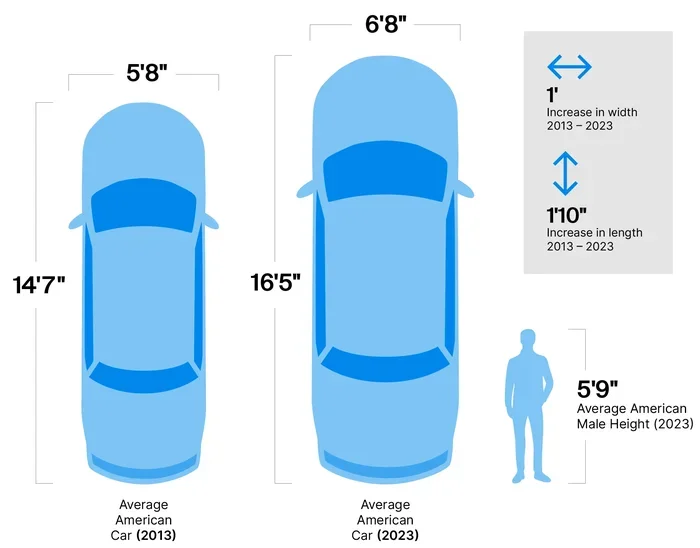
The average car length for a standard passenger vehicle sits somewhere between 14 and 16 feet. That is roughly 4.3 to 4.9 meters. But this number is just a starting point. The actual car length varies a lot depending on the vehicle type, brand, and model year.
A small hatchback might be as short as 13 feet, while a large luxury sedan could stretch past 17 feet. And if you are looking at trucks or full-size SUVs, some models exceed 20 feet in total length. So when someone asks how long is a normal car, the honest answer is: it depends on what kind of car we are talking about.
Why the Numbers Vary So Much
Car manufacturers design vehicles for different purposes. A compact car built for city driving will be much shorter than a family car built for road trips with five passengers and a trunk full of luggage. Here are a few reasons the numbers shift so much:
- Vehicle purpose: Sports cars are built low and short for speed. Minivans are built long to seat seven or eight people.
- Market region: Cars sold in Europe tend to be shorter than those sold in North America because streets and parking spaces are tighter.
- Model year: Cars grow over time. A 2010 model might be shorter than a 2024 model of the same name.
- Trim level: A base trim is usually shorter than a long-wheelbase version of the same car.
Car Length by Vehicle Type
This is where things get really useful. If you want to know how long is a normal car, you need to look at it by category. Each vehicle size category has a typical range that can help you compare options.
Subcompact Cars
Subcompact cars are the smallest passenger vehicles on the road. They typically measure between 13 and 14.5 feet long. These are perfect for city driving and tight parking spots. Think of cars like the Honda Fit or the Chevrolet Spark. They are nimble, easy to maneuver, and use less fuel because of their smaller car dimensions.
If you live in a dense urban area, a subcompact is often the smartest choice. You will slide into parking spaces that larger cars cannot touch, and parallel parking becomes a breeze instead of a stress test.
Compact Cars
Compact cars sit just a step up from subcompacts. They usually range from 14 to 15 feet in length. Popular models include the Toyota Corolla, Honda Civic, and Mazda3. These are the bread and butter of the standard car size world.
Compact cars offer a great balance. They are small enough to park easily but big enough to comfortably seat four adults. For most single people or small families, a compact sedan hits the sweet spot between practicality and ease of use.
Mid-Size Cars
Mid-size cars are the backbone of the American automotive market. They typically run between 15 and 16.5 feet long. The Toyota Camry, Honda Accord, and Nissan Altima all fall into this category.
These family cars offer more interior space without becoming unwieldy on the road. If you regularly carpool or take long road trips, a mid-size sedan gives you room to stretch out without the bulk of a full-size model.
Full-Size Cars and SUVs
Full-size cars and large SUVs go beyond 16.5 feet and can stretch past 18 or even 20 feet. Think of vehicles like the Chevrolet Suburban, Ford Expedition, or full-size luxury sedans like the BMW 7 Series.
These large automobile dimensions come with serious advantages. They offer spacious cabins, towing capability, and a commanding road presence. But they also come with trade-offs. Parking becomes harder, fuel economy drops, and maneuvering in tight spaces takes more skill.
Trucks and Pickups
Pickup trucks are a special case when it comes to car length. A standard full-size pickup like the Ford F-150 measures around 23 feet long. Even mid-size trucks like the Toyota Tacoma come in at over 21 feet. The truck bed adds significant length, and that changes everything about how you park and navigate.
If you are considering a pickup, always measure your garage and regular parking spots before buying. A truck that is 23 feet long simply will not fit in a standard two-car garage that is 20 feet deep.
Why Car Length Matters to You
You might be thinking, “Why does it matter how long my car is?” The answer is simpler than you think. Car length touches almost every part of your daily driving experience.
Parking and Garage Fit
This is the most obvious reason. If your car dimensions are too long for your garage, you will have a frustrating every-day experience. You might scrape the walls, block your neighbor’s space, or struggle to open the driver’s door fully.
A standard two-car garage in the United States is about 20 to 24 feet deep. That means a car that is 16 feet long leaves only 4 to 8 feet of clearance. That sounds fine until you account for the garage door mechanism, insulation, and the space you need to walk around the vehicle.
Maneuverability and Safety
Shorter cars are easier to turn, easier to park, and often easier to see around. Longer cars have bigger blind spots and require more space to make U-turns. If you live in a city with narrow streets, vehicle size is not just a preference, it is a safety factor.
On the highway, longer vehicles like SUVs and trucks can create challenges for smaller cars trying to merge or pass. Understanding car comparison data helps both drivers stay aware of each other’s blind spots.
Fuel Economy and Running Costs
Longer, heavier cars use more fuel. This is basic physics. A compact car that is 14 feet long will almost always get better gas mileage than a full-size SUV that is 19 feet long. Over years of driving, that difference adds up to real money at the pump.
Insurance costs can also vary based on vehicle size category. Larger vehicles sometimes cost more to insure, and repairs on longer, more complex vehicles tend to be pricier.
Resale Value
Here is a factor many buyers overlook. Cars that fit the standard car size for a given market tend to hold their value better. A compact sedan in America sells more easily than an oversized luxury sedan because more buyers are looking in that car length range.
How to Measure a Car’s Length
Measuring how long is a normal car for your specific situation is easier than you might think. You do not need fancy tools or a mechanic. Here is how to do it yourself.
What You Need
- A flexible tape measure (at least 25 feet long)
- A flat, level surface
- A friend to help hold the tape
- A notepad or phone to record the number
Step-by-Step Measurement
- Park on a flat surface: Make sure the car is on level ground and the wheels are straight.
- Find the front point: Measure from the very front bumper, including any tow hooks or sensors that stick out.
- Find the rear point: Measure to the very rear bumper, again including any protruding elements.
- Pull the tape straight: Keep the tape measure flat along the ground from front to rear.
- Record the number: This is your total car length in feet or meters.
For the most accurate reading, repeat the measurement two or three times. Small differences can happen if the tape is not perfectly straight or if the car is on a slope.
Measuring Width and Height Too
Car width and car height matter just as much as length in many situations. Standard car width ranges from about 5.5 to 6.5 feet. Car height typically falls between 4.5 and 5.5 feet. If you are trying to fit through a car wash, a low-clearance garage, or a narrow parking structure, all three measurements count.
Car Length and Parking: What You Need to Know
Parking is where car length becomes a daily reality. You might love your long SUV on the highway, but you will feel very differently when you are trying to park it in a tight downtown spot.
Standard Parking Space Sizes
Most standard parking spaces in the United States are about 8.5 to 9 feet wide and 18 to 20 feet long. That means a compact car at 14.5 feet leaves you comfortable room. But a full-size SUV at 19 feet leaves almost no margin for error.
Perpendicular parking spots in parking garages are often even shorter, sometimes just 16 to 17 feet. If your vehicle exceeds that, you will be hanging out into the driving lane, which is both annoying and potentially dangerous.
Parallel Parking Realities
Parallel parking on a city street requires your car to be shorter than the available space by at least 2 to 3 feet. A compact car at 14.5 feet can usually fit into a 17-foot spot with room to spare. A longer vehicle might need an 18 or 19-foot space, which is harder to find.
If you are shopping for a car and parallel parking is part of your daily routine, pay close attention to the vehicle size before you sign the paperwork. A few feet of length makes a massive difference in urban driving.
Garage and Driveway Planning
If you are building or renovating a garage, planning for the right standard car size is critical. Here are some quick guidelines:
- Single garage: Minimum 20 feet deep for most cars. 24 feet is more comfortable.
- Two-car garage: 20 to 24 feet deep works for most vehicles. Go deeper if you have trucks or SUVs.
- Carport: At least 18 feet of length is ideal for most passenger cars.
Always measure your current or planned vehicle dimensions before finalizing any garage design. It is much easier to plan for the right size upfront than to deal with a cramped space later.
Car Comparison: Compact vs. Mid-Size vs. Full-Size
Not sure which vehicle size category fits your life best? A side-by-side car comparison can help you see the real differences in length and what they mean for your day-to-day driving.
| Vehicle Category | Typical Length (Feet) | Parking Ease | Interior Space | Fuel Economy |
|---|---|---|---|---|
| Subcompact | 13 – 14.5 | Excellent | Compact | Best |
| Compact | 14 – 15 | Very Good | Good | Very Good |
| Mid-Size | 15 – 16.5 | Good | Very Good | Good |
| Full-Size | 16.5 – 19+ | Fair | Excellent | Fair |
| Full-Size Truck | 21 – 23+ | Poor | Excellent | Low |
This table shows that how long is a normal car really depends on what you need. A compact sedan gives you easy parking and good fuel economy. A full-size SUV gives you space and comfort. Neither is wrong, but they serve very different drivers.
The Future of Car Sizes
The automotive world is changing fast, and vehicle size is part of that shift. Several trends are reshaping what a normal car looks like in 2024 and beyond.
The Rise of Compact SUVs
One of the biggest shifts in the automobile dimensions landscape is the move toward compact SUVs and crossovers. These vehicles sit between traditional cars and full-size SUVs in terms of length. They typically run 15 to 17 feet long, which makes them a popular middle ground for families who want more space than a sedan but not the bulk of a full-size SUV.
The crossover SUV has become the best-selling vehicle type in many markets. Their taller seating position, cargo space, and modest car length make them appealing to a wide range of buyers.
Electric Vehicles and Smaller Designs
Electric vehicles are pushing automakers to think differently about car dimensions. Without a large engine block, EVs can use floor space more efficiently. Some urban EVs are deliberately short, designed for city driving and tight parking. The Nissan Leaf and Honda e-NV200 are examples of how vehicle size can shrink without sacrificing function.
As cities become more crowded and parking spaces more expensive, we can expect to see even shorter, more efficient vehicles gain popularity. The days of the massive American sedan may be numbered, replaced by smarter, smaller designs.
Regulations and Urban Planning
Some cities are starting to regulate vehicle size directly. Certain parking structures have length limits, and some urban zones are considering restrictions on larger vehicles to reduce congestion and improve pedestrian safety. These regulations could influence what how long is a normal car means in the coming years.
For now, the best approach is to stay informed. If you are in the market for a new car, think about where you live, how you drive, and what car length works for your daily life. The right vehicle is the one that fits your reality, not just your wishlist.
Common Mistakes Buyers Make About Car Size
Buying a car without thinking about its car length is one of the most common mistakes new buyers make. Here are a few pitfalls to avoid.
- Assuming all sedans are the same size: A compact sedan and a full-size sedan can differ by 2 or more feet in length. Always check the specific model.
- Ignoring garage dimensions: A beautiful SUV is useless if it does not fit in your garage. Measure before you buy.
- Overlooking width and height: Length is not the only dimension. A car that is short but very wide can still be hard to park.
- Following trends instead of needs: Just because large SUVs are popular does not mean they are right for your lifestyle. Be honest about what you need.
- Not test-driving in real conditions: A car might look fine on paper but feel too long in a real parking garage or narrow street. Always test drive in conditions you encounter daily.
Expert Insights on Vehicle Size Selection
We spoke with automotive experts who shared a simple philosophy: the best car is the one that fits your life, not the one with the most features. When it comes to car length, they recommend three key steps.
First, measure your regular parking spots and garage before you start shopping. Second, sit in the car and check your visibility. Longer vehicles can have larger blind spots that affect safety. Third, think about your daily routine. If you mostly drive solo on highways, a mid-size car is plenty. If you carpool and haul gear, a compact SUV might be the better choice.
Experts also stress that standard car size varies by region. A car that feels normal in suburban Texas might feel oversized in downtown San Francisco. Always consider where and how you will be driving most often.
Quick Tips for Choosing the Right Car Length
- Measure your space first: Know your garage depth and regular parking spot length before shopping.
- Test drive in your environment: Try the car in the streets and parking areas you use daily.
- Consider future needs: A car that fits today might not fit if your family grows or your needs change.
- Check manufacturer specs: The official car dimensions listed online are more accurate than estimates.
- Think about resale: Cars in the most common vehicle size category for your market tend to sell faster.
- Do not forget width: A car that is short but wide can be harder to park than a slightly longer but narrower model.
Conclusion
How long is a normal car is a question with a range of answers, and that is exactly why this guide exists. The average car length falls between 14 and 16 feet, but the real answer depends on your vehicle type, your lifestyle, and your local environment.
From subcompact hatchbacks at 13 feet to full-size trucks stretching past 22 feet, every vehicle size category has its place. The key is matching the right car dimensions to your daily needs. Consider your parking situation, your garage space, your fuel budget, and how many people you regularly carry.
Take the time to measure, compare, and test drive before you commit. A few extra minutes of research can save you years of frustration. And remember, the best car is not the longest or the shortest. It is the one that fits your life perfectly.
Now that you know the standard car size ranges and why they matter, you are ready to make a confident, informed decision. Whether you choose a compact sedan, a mid-size SUV, or something in between, you will know exactly what to look for and why it matters. Happy car shopping.
Frequently Asked Questions
What is the average length of a normal sedan?
A typical sedan ranges from 14 to 16 feet long. Compact sedans like the Honda Civic sit closer to 14.5 feet, while mid-size models like the Toyota Camry are around 15 to 16 feet. The exact car length depends on the model and year, so always check the manufacturer specifications for the specific vehicle you are interested in.
Is a normal car length the same across all countries?
No, vehicle size varies by market. European cars tend to be shorter than American cars because streets and parking spaces are tighter in Europe. A compact car sold in Germany might be 2 feet shorter than the same model sold in the United States. Always compare car dimensions within your local market for the most relevant numbers.
How does car length affect insurance rates?
Longer and heavier vehicles can cost more to insure in some cases. Repair costs for large vehicles are typically higher, and larger cars may cause more damage in collisions with smaller vehicles. However, many other factors like safety ratings and theft risk also play a role in your premium. Check with your insurer for specifics related to your vehicle size category.
Can I fit a 16-foot car in a standard two-car garage?
Yes, a 16-foot car will generally fit in a standard two-car garage that is 20 to 24 feet deep. However, you will have limited clearance for opening doors and walking around the vehicle. If your garage is on the shorter end at 20 feet, a 16-foot car will feel snug. For the most comfortable fit, aim for at least 22 feet of garage depth.
What is the shortest normal car you can buy today?
Some subcompact cars like the Chevrolet Spark and Mitsubishi Mirage are under 14 feet long, making them among the shortest new cars available. These tiny compact cars are ideal for city driving and tight parking situations. They sacrifice some interior space and highway comfort but offer excellent fuel economy and easy maneuverability.
Does car length matter for carpool lane access?
In most regions, carpool lane access is based on the number of passengers, not vehicle length. However, some high-occupancy toll lanes and express lanes may have vehicle length restrictions. Always check your local regulations. Additionally, longer vehicles like trucks and SUVs may have different rules in certain zones, so knowing your car length is always useful.