Everything You Need to Know About 4 Stroke Engine Cars
4 stroke engine cars use a four-step cycle to convert fuel into motion, offering better fuel efficiency and lower emissions than older engine designs. Whether you own a 1500cc petrol car or a 3-cylinder car, understanding how your engine works helps you maintain it properly. This guide covers everything from the basic engine cycle to practical engine maintenance tips for car owners.
Most cars on the road today run on something called a 4 stroke engine. You might have heard the term before, but do you really know what it means? More importantly, do you know how it affects your daily driving, your fuel bills, and your car’s long-term health?
If you own a car or are thinking about buying one, understanding how a four stroke engine works gives you a real advantage. You will make smarter decisions about maintenance. You will spot problems early. And you will get the most out of every liter of fuel you put in the tank.
This guide breaks everything down in plain language. No confusing jargon. No unnecessary technical deep dives. Just clear, practical information that any car owner can use. Let us get started.
Key Takeaways
- Four Stroke Cycle: The intake, compression, power, and exhaust strokes work together to power your car efficiently.
- Better Fuel Economy: 4 stroke engines deliver more miles per liter compared to two stroke alternatives.
- Lower Emissions: These engines burn fuel more completely, reducing harmful exhaust output.
- Regular Maintenance Matters: Simple habits like oil changes and spark plug checks keep your engine running smoothly.
- Widely Available: Most modern cars use 4 stroke engines, making parts and service widely accessible.
- Longer Engine Life: Proper care can help a 4 stroke engine last well over 200,000 kilometers.
📑 Table of Contents
What Is a 4 Stroke Engine?
A 4 stroke engine is a type of internal combustion engine that completes its power cycle in four distinct steps. Each step is called a stroke. During these four strokes, the engine takes in air and fuel, compresses it, ignites it, and pushes out the leftover gases.
The word combustion tells you a lot. It means something is burning inside the engine. But unlike older engines, the four stroke engine does this in a very controlled and efficient way. This is why most modern cars use it instead of alternatives like the two stroke engine.
Every time you turn the key and hear your car start, this four step process begins. It repeats thousands of times every minute. And it keeps your wheels turning without you ever having to think about it.
The Four Strokes Explained
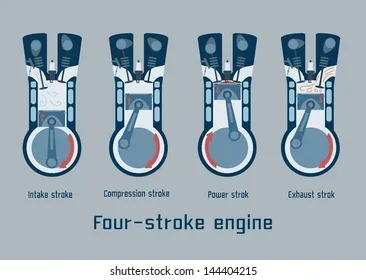
Each stroke plays a specific role. Let us walk through them one by one so you can picture exactly what happens inside your engine.
Stroke One: Intake. The piston moves down and pulls a mixture of air and fuel into the cylinder. Think of it like breathing in. The intake valve opens and lets the mixture flow in. This is the preparation step.
Stroke Two: Compression. The piston moves back up and squeezes the air fuel mixture tightly. Compression is critical because a tightly packed mixture burns more powerfully. The spark plug waits for its moment during this stroke.
Stroke Three: Power. This is where the magic happens. The spark plug ignites the compressed mixture. The explosion pushes the piston down with great force. This is the stroke that actually creates the power that moves your car forward.
Stroke Four: Exhaust. The piston moves back up again. This time it pushes the burned gases out through the exhaust valve. Your car releases these gases through the tailpipe. Then the whole cycle starts over again.
All four strokes happen in just two full rotations of the crankshaft. That is incredibly fast. And it happens smoothly and continuously while you drive.
How Does a 4 Stroke Engine Work?
Now that you know the four strokes, let us look at how they all come together. The engine cycle depends on several key components working in perfect harmony.
The camshaft controls when the valves open and close. The crankshaft converts the piston’s up and down motion into rotational motion. The valves manage airflow in and out of the cylinder. And the piston does the heavy lifting during each stroke.
When all these parts work together, your engine runs like a well-oiled machine. Literally. The engine oil keeps everything lubricated and prevents wear and tear.
The Role of Fuel and Air
Your engine needs the right mix of fuel and air to run properly. Too much fuel and it runs rich, wasting gas. Too little and it runs lean, which can cause damage over time.
Modern 4 stroke engine cars use fuel injection systems to get this mix just right. The system measures the air coming in and sprays the exact amount of fuel needed. This is a big reason why today’s engines are so efficient compared to older models.
Your engine displacement also matters. This refers to the total volume of all the cylinders. A car with 1500cc displacement will generally have different performance characteristics than one with 1000cc or 2000cc. If you are shopping for a car, checking the displacement helps you understand what to expect.
Two Stroke vs Four Stroke: Key Differences
You might wonder why most modern cars use a four stroke engine instead of a two stroke engine. The answer comes down to efficiency and cleanliness.
A two stroke engine completes its cycle in just one revolution of the crankshaft. It is simpler and lighter. But it burns fuel less efficiently and produces more emissions. That is why two stroke engines are mostly found in small machines like chainsaws and mopeds.
The four stroke engine takes two full revolutions to complete one cycle. But it uses fuel more carefully and produces far fewer harmful gases. For passenger cars, this makes the four stroke design the clear winner.
| Feature | Two Stroke Engine | Four Stroke Engine |
|---|---|---|
| Cycles per revolution | 1 | 2 |
| Fuel efficiency | Lower | Higher |
| Emissions | Higher | Lower |
| Engine complexity | Simpler | More complex |
| Noise level | Louder | Quieter |
| Common in cars | Rare | Standard |
Benefits of Owning a 4 Stroke Engine Car
There are many reasons why 4 stroke engine cars dominate the market. Here are the biggest advantages you get as an owner.
Better Fuel Efficiency. Because the fuel burns more completely, you get more power from every drop of gasoline or diesel. Over time, this saves you a significant amount of money at the pump. If you drive a lot, the difference really adds up.
Cleaner Emissions. The four stroke engine produces fewer harmful gases. This is better for the environment and helps your car pass emission tests without trouble. In cities with strict pollution rules, this matters a lot.
Quieter Operation. The controlled burn and separate exhaust stroke make these engines much quieter than two stroke alternatives. You will notice this especially on early morning drives or highway cruising.
Longer Engine Life. A well-maintained 4 stroke engine can easily last 200,000 kilometers or more. The design puts less stress on internal parts because the lubrication system is separate from the fuel system.
More Torque at Lower RPMs. This means your car has strong pulling power even at lower speeds. It makes highway driving and overtaking safer and more confident.
Wider Availability of Parts. Since most cars on Indian roads use four stroke engines, finding replacement parts and qualified mechanics is straightforward. Whether you need a new spark plug or a complete camshaft rebuild, help is never far away.
Common 4 Stroke Engine Problems and How to Fix Them
No engine is perfect. Even the best 4 stroke engine cars can develop issues over time. The good news is most problems are preventable with regular care.
Oil Leaks
Oil leaks are one of the most common issues. They usually happen when gaskets wear out or seals crack. You might notice a dark puddle under your car or see the oil level dropping faster than normal.
Check your oil level every week. If it drops consistently, get your car inspected. Catching a small leak early saves you from expensive engine repairs later.
Spark Plug Wear
The spark plug ignites the fuel mixture in each cylinder. Over time, it wears out and may misfire. Signs include rough idling, poor acceleration, and reduced fuel economy.
Replacing spark plugs is inexpensive and easy. Most mechanics recommend checking them every 15,000 to 20,000 kilometers. A fresh set can instantly improve how your engine runs.
Overheating
Engines generate a lot of heat. The cooling system keeps temperatures in check. If your coolant level is low or the radiator has a blockage, your engine can overheat.
Watch your temperature gauge while driving. If it climbs into the red zone, pull over safely and turn off the engine. Let it cool before checking the coolant level.
Valve Timing Issues
The camshaft and valves must open and close at exactly the right time. If the timing is off, your engine loses power and efficiency. This usually happens due to a worn timing belt or chain.
Replacing the timing belt at the manufacturer recommended interval is essential. It is a relatively affordable service that prevents catastrophic engine damage.
Maintenance Tips for Your 4 Stroke Engine
Keeping your 4 stroke engine cars in top shape does not require a mechanic degree. A few simple habits go a long way.
Change Your Oil Regularly
Engine oil lubricates all the moving parts inside your engine. Over time, it breaks down and loses its effectiveness. Most manufacturers recommend an oil change every 5,000 to 7,500 kilometers.
Do not skip this service. Fresh oil keeps friction low and prevents premature wear. Think of it as a blood transfusion for your engine.
Check Your Air Filter
A clogged air filter restricts airflow to the engine. This makes your car work harder and burn more fuel. Check the air filter every 10,000 kilometers and replace it when it looks dirty.
If you drive on dusty roads or in heavy traffic, you may need to check it more often. It is a quick and free check that makes a real difference.
Use the Right Fuel
Always use the fuel grade recommended by your car manufacturer. Using a lower octane rating than required can cause knocking, which damages the engine over time.
If your car manual says use premium fuel, do not try to save money with regular fuel. The octane rating matters for proper combustion in your four stroke engine.
Keep the Cooling System Healthy
Flush your coolant at the intervals specified in your owner’s manual. Check for leaks around the radiator and hoses. A healthy cooling system prevents overheating and extends engine life.
Drive Gently When the Engine Is Cold
When you start your car in the morning, give it a minute or two before driving hard. Cold oil is thicker and does not lubricate as well. Letting the engine warm up slightly helps all components settle in for the day.
You do not need to let it idle for ten minutes. Just a gentle start for the first few kilometers is enough. This is especially important during winter months.
Follow the Service Schedule
Every car comes with a recommended service schedule. It tells you when to check or replace specific components. Following this schedule is the single best thing you can do for your engine.
If you own a 2nd hand car under 2 lakhs, staying on top of the service schedule becomes even more important. A well-maintained older car can run beautifully for years.
Why 4 Stroke Engines Are Here to Stay
The automotive world is changing fast. Electric cars are gaining popularity. Hybrid technology is advancing. But the 4 stroke engine is not going anywhere anytime soon.
Manufacturers continue to refine this design. New materials and computer-controlled systems make modern four stroke engines more efficient than ever. Technologies like variable valve timing and direct fuel injection push performance and economy even further.
For the millions of car owners in India who rely on their vehicles daily, the four stroke engine remains the most practical and proven option. Whether you drive a compact city car or a larger SUV, the principles are the same.
Understanding your engine gives you confidence. It helps you communicate better with your mechanic. And it saves you money in the long run. That is a win for every car owner.
So the next time you start your car and hear that familiar hum, remember the incredible engineering happening beneath the hood. Four precise strokes, repeating thousands of times per minute, keeping you moving forward.
Final Thoughts
A 4 stroke engine car is a marvel of modern engineering made simple. Four strokes. Four steps. That is all it takes to turn fuel into forward motion. And the beauty of it is that understanding this process empowers you as a car owner.
You do not need to be a mechanic to take care of your engine. Regular oil changes, clean air filters, quality fuel, and attention to warning signs are all it takes. These small habits compound into big savings over the life of your vehicle.
Whether you are looking at a new 1500cc petrol car in India or maintaining your current ride, the knowledge of how a four stroke engine works puts you ahead. You will make better decisions. You will spot trouble earlier. And you will enjoy a smoother, more efficient ride every single day.
Your engine works hard for you every day. Give it the care it deserves, and it will keep you on the road for many years to come.
Frequently Asked Questions
What is the difference between a 2 stroke and a 4 stroke engine?
A two stroke engine completes its power cycle in one revolution, while a 4 stroke engine car needs two revolutions. The four stroke design is more fuel efficient, produces fewer emissions, and lasts longer. Most modern passenger cars use the four stroke design.
How often should I change the oil in my 4 stroke engine?
Most manufacturers recommend an oil change every 5,000 to 7,500 kilometers. However, this can vary based on your driving conditions and the type of oil used. Always check your owner’s manual for the specific recommendation for your car engine type.
Can a 4 stroke engine run on diesel?
Yes, four stroke engines can run on both gasoline and diesel. The key difference is how the fuel is ignited. Diesel engines use compression ignition without a spark plug, while gasoline engines rely on the spark plug to ignite the fuel air mixture.
What happens if I use the wrong fuel in my 4 stroke engine?
Using fuel with a lower octane rating than recommended can cause engine knocking. Over time, this can damage the pistons and other internal components. Always use the fuel grade specified by your car manufacturer for best performance.
Are 4 stroke engines more expensive to maintain than other types?
Not necessarily. While the design is more complex than a two stroke engine, 4 stroke engine cars are widely manufactured, making parts and service affordable and accessible. Regular maintenance actually keeps costs low over the long run.
How long does a 4 stroke engine typically last?
With proper maintenance, a four stroke engine can last 200,000 to 300,000 kilometers or more. Factors like driving habits, fuel quality, and regular servicing all play a role in determining your engine’s lifespan.