Can You Program a Transponder Key Yourself at Home
Yes, you can program a transponder key yourself at home in most cases. With the right tools and basic knowledge, DIY transponder key programming is straightforward and saves significant money. This guide covers everything from understanding how transponder chips work to successfully programming your own car key without professional help.
SEO Title: Can You Program a Transponder Key Yourself at Home
Meta Title: Program a Transponder Key Yourself at Home – Full Guide
URL Slug: /program-transponder-key-yourself-at-home
Can you program a transponder key yourself at home? The answer might surprise you. In most cases, the answer is a confident yes. Programming a transponder key used to require a visit to the dealership or a pricey car locksmith. Today, many vehicle owners can handle this task themselves with basic tools and clear instructions. This guide walks you through everything you need to know about DIY transponder key programming, from understanding how the technology works to successfully programming your own car key in your driveway.
A transponder key is more than just a piece of metal. It contains a tiny electronic chip that communicates with your vehicle’s immobilizer system. This anti-theft system has been standard in cars since the 1990s and has dramatically reduced vehicle theft rates. But it has also made key replacement more complicated and expensive. When you lose your only working key, replacing it through a dealer or locksmith can cost anywhere from 100 to 400 dollars or more. Learning how to program a transponder key yourself can save you a significant amount of money and give you peace of mind.
Whether you have lost a key, need a spare, or are simply curious about how your key fob works, this article has you covered. We will explore the science behind transponder chips, the tools you need, and the exact steps to program your own key. By the time you finish reading, you will have a clear understanding of whether DIY car key programming is right for your vehicle.
Before we dive in, it is important to note that not all vehicles are created equal. Some cars are very easy to program at home. Others require specialized equipment that only professionals have. We will cover both scenarios so you know exactly what to expect. Let us get started.
Key Takeaways
- You Can Do It Yourself: Many vehicles allow DIY transponder key programming with basic tools and patience
- Tools Matter: Having the right equipment like an OBD scanner makes the process much easier and more reliable
- Not All Cars Are Equal: Some vehicles require professional equipment that is not available for home use
- Save Money: Programming your own key can save hundreds of dollars compared to locksmith services
- Safety First: Always have a backup key before attempting any programming procedure
- Common Mistakes Happen: Knowing what to avoid prevents costly errors and wasted time
📑 Table of Contents
- What Is a Transponder Key and How Does It Work?
- Can You Program a Transponder Key Yourself at Home?
- Tools and Equipment You Will Need for Transponder Key Programming
- Step-by-Step Guide to Programming Your Transponder Key
- Common Mistakes to Avoid When Programming a Transponder Key Yourself
- When Should You Call a Professional Instead?
- Conclusion
What Is a Transponder Key and How Does It Work?
A transponder key looks like a regular mechanical key on the outside. But hidden inside the plastic or rubber head is a small electronic chip. This chip is called a transponder, which is short for “transmitter” and “responder.” When you insert the key into the ignition, the car sends out a low-frequency radio signal. The chip in the key receives that signal and sends back a unique coded response. If the code matches what the car expects, the engine starts. If it does not match, the engine stays locked.
This entire process happens in milliseconds. You never even notice it is happening. But it is one of the most effective vehicle security features ever invented. Before transponder keys existed, a thief could simply strip the lock and turn the ignition with a screwdriver. The transponder chip made that nearly impossible because the engine requires the correct electronic signal to run.
Understanding how your chip key works is the first step toward successful programming a transponder key at home. The chip inside your key is not a battery-powered device. It gets its energy from the radio signal sent by the car’s antenna ring, which is usually wrapped around the ignition cylinder. This is called passive communication. The key does not need a battery to transmit its code, which is why transponder keys can last for years without any maintenance.
The Role of the Immobilizer System
The immobilizer system is the brain behind the operation. It is a small computer module that is integrated into your car’s engine control unit, or ECU. When you insert the key, the ECU sends a challenge signal. The transponder chip responds with an answer. The ECU checks that answer against a stored list of valid codes. If the code is valid, the ECU allows the fuel injectors to work and the ignition coil to fire. If the code is invalid, the ECU blocks the engine from starting, even if the mechanical key fits perfectly.
This is why a duplicate key cut at a hardware store will not start a car with a transponder system. The key might turn the ignition physically, but the electronic check will fail. This is also why key replacement through a dealer or locksmith costs so much more than a regular key cut. The new key must be programmed with the correct transponder code before it can start the engine.
Types of Transponder Keys You Might Encounter
Not every transponder key is the same. Different vehicles use different types of chips and communication methods. Here are the most common types you might encounter:
- Fixed code transponder keys – These are the oldest and simplest type. The chip sends the same code every time you use the key. They are the easiest to program at home and are found in vehicles from the 1990s through early 2000s.
- Rolling code transponder keys – These generate a new code each time the key is used. They are more secure than fixed code keys but require more advanced equipment to program. Many modern vehicles use rolling codes for their remote key fob functions.
- Encrypted transponder keys – These use advanced cryptographic encryption. They are the most secure and the hardest to program without dealer-level tools. Luxury brands like BMW, Mercedes-Benz, and Audi often use encrypted systems.
- Smart keys and proximity fobs – These are keyless entry remotes that allow you to start the car without inserting a key. They contain transponder chips but communicate wirelessly with the vehicle. Programming these at home is usually not possible.
Knowing which type of transponder key your vehicle uses is essential before you attempt any car key programming. Check your owner’s manual or look up your vehicle online to identify the chip type. This will save you a lot of frustration and wasted effort.
Can You Program a Transponder Key Yourself at Home?
The short answer is yes, can you program a transponder key yourself for most vehicles? In most cases, you absolutely can. However, the long answer depends on your specific vehicle, the type of transponder chip it uses, and the tools you have available. Some vehicles are very forgiving when it comes to home programming. Others are locked down tight and require professional-grade equipment.
Older vehicles from the 1990s and early 2000s are typically the easiest to program yourself. These cars usually use simple fixed-code transponder chips that can be programmed through a straightforward sequence of key turns and button presses. The process often takes less than 30 minutes and requires no special equipment beyond the new key itself.
Newer vehicles, especially those from luxury brands or models equipped with advanced security features, can be much more challenging. These vehicles may use rolling codes, encrypted chips, or proximity-based smart key systems. Programming these keys usually requires an OBD scanner or proprietary software that is not available to the average car owner.
Vehicles That Are Easy to Program at Home
Many popular car brands make it easy for owners to program their own transponder keys. Ford, Chevrolet, Toyota, Honda, Nissan, and Hyundai vehicles from the late 1990s through mid-2010s often have simple programming procedures built into the vehicle. These procedures typically involve a series of key turns in the ignition or button presses on the key fob.
For example, many Ford vehicles from the 2000s allow you to program a new key by inserting an already-programmed key into the ignition, turning it to the ON position and back to OFF a specific number of times within a set time window, and then programming the new key within the next 30 seconds. The process is straightforward and does not require any additional tools.
Similarly, many Toyota and Honda vehicles from the same era use a simple procedure that involves cycling the ignition with a working key and then programming the new key within a specific time frame. These procedures are well-documented online, and many owners have shared step-by-step video tutorials on platforms like YouTube.
Vehicles That Require Professional Equipment
Some vehicles are simply not designed for home programming. Luxury brands like BMW, Mercedes-Benz, Audi, and Lexus often use encrypted transponder systems that require professional key programming tools. These tools connect to the vehicle’s OBD port and communicate directly with the ECU at a deep level to register a new key.
If your vehicle uses a smart key system with proximity detection, programming a new key at home is almost certainly not possible. These systems pair the key with the car through a secure handshake that requires specialized dealer-level software. Even many car locksmiths do not have the equipment to program these keys and must rely on the dealer.
Before you invest time and money in DIY programming, check your vehicle owner’s manual for a section on key programming. You can also search online forums specific to your vehicle make and model. The community is often very helpful and can tell you exactly whether home programming is possible for your car.
If you already have a push start button system in your vehicle, your key fob likely contains a transponder chip that communicates wirelessly with the car. Understanding how this system interacts with your transponder key is important before you attempt any programming.
Tools and Equipment You Will Need for Transponder Key Programming
Having the right tools makes programming a transponder key at home much easier and more reliable. You do not need a fully equipped workshop or years of mechanical experience. But you do need a few specific items to get the job done correctly. One thing to keep in mind is that your key fob is not heavy for a car accessory at all. Unlike some accessories that can be heavy for a car and weigh down your keychain, a transponder key fob is lightweight and compact. But even though it is small, the technology inside is remarkably powerful.
Essential Tools for DIY Programming
- Blank transponder key – You need a key blank that matches your vehicle make and model. Make sure it has the correct transponder chip type already built into the key blade. Purchasing the wrong chip type is one of the most common mistakes people make.
- Key cutting service – Unless you already have a key cutting machine, you will need to get the mechanical key blade cut to match your lock. Many hardware stores, locksmiths, and even some grocery stores offer this service for a small fee, usually between 5 and 20 dollars.
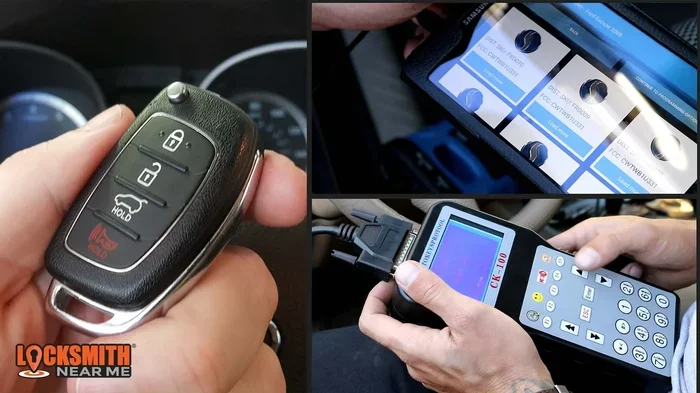
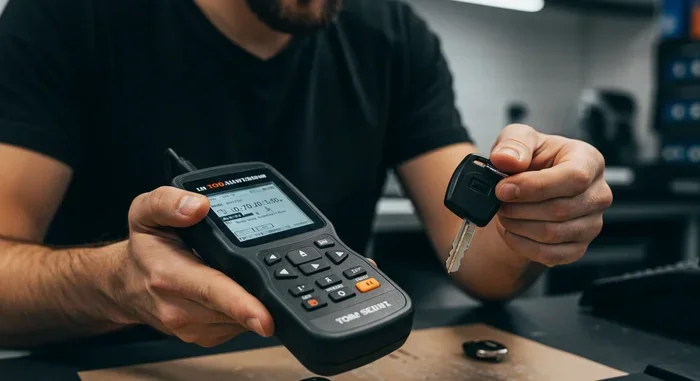
- OBD II scanner – For some vehicles, an OBD scanner is essential for programming. This tool connects to your car’s diagnostic port, usually located under the dashboard on the driver’s side, and allows you to communicate with the ECU.
- Vehicle owner’s manual – Your manual contains the exact programming procedure for your specific model. Do not skip this step. The manual will tell you exactly what sequence to follow and how long you have to complete each step.
- Already-programmed working key – Most home programming methods require at least one key that is already programmed to the vehicle. If you have no working keys at all, home programming is usually not an option.
- Internet access – You will need to look up your specific vehicle’s programming steps. Online forums, YouTube tutorials, and manufacturer websites are excellent resources for finding the exact procedure for your model.
Optional but Helpful Tools
- Key programming tool – Devices like the Zed-Full, Xhorse VVDI, or SuperVAG can handle a wide range of vehicles and chip types. These are professional-grade tools that cost several hundred dollars but can save you many trips to the locksmith over the life of your vehicle.
- Backup key – Always have a second working key before you start. If something goes wrong during programming, having a backup ensures you are not stranded. This is arguably the most important tool on this list.
- Replacement battery – Some transponder keys require a small battery inside the fob. Make sure you have the correct replacement battery on hand before you begin. A dead battery can cause programming to fail even when everything else is done correctly.
The cost of these tools varies widely. A basic OBD scanner can cost between 50 and 150 dollars. A professional-grade key programming tool can cost several hundred dollars. If you only need to program one key, the cost of the tools might not be worth it compared to hiring a locksmith service. However, if you own multiple vehicles or frequently need spare keys, investing in the right tools pays for itself quickly.
Step-by-Step Guide to Programming Your Transponder Key
Now for the part you have been waiting for. Here is a general step-by-step guide to programming a transponder key at home. Remember that every vehicle is different. Always follow your specific car’s procedure as outlined in the owner’s manual. The steps below are a general framework and may not match your vehicle exactly.
Step 1: Prepare Your Vehicle and Keys
Start by finding a quiet, well-lit workspace. Park your car in a safe location where you can access the ignition easily and without distractions. Gather all your keys, including the working key and the new blank key. Make sure your car key battery is fresh if your key fob has a battery. A weak battery can cause programming to fail or behave unpredictably.
Clear any other electronic devices from your workspace. While interference from phones or other keys is rare, it is better to eliminate any potential issues before you start. Place the new blank key next to the working key so you can easily switch between them during the programming process.
Step 2: Enter Programming Mode
Most vehicles have a specific sequence to enter programming mode. This often involves turning the ignition on and off a set number of times within a specific time frame. Here is a common sequence:
- Insert the working key into the ignition.
- Turn the key to the ON position and wait 10 seconds.
- Turn the key back to the OFF position.
- Repeat this cycle three to five times.
- Leave the key in the ON position on the final cycle.
Some vehicles use a different method. You might need to press a button on the dashboard, the key fob itself, or a specific combination of buttons. Always refer to your vehicle-specific guide for the exact steps. The security or immobilizer light on your dashboard should flash or change behavior when you have successfully entered programming mode.
Step 3: Program the New Key
Once you are in programming mode, insert the new blank transponder key into the ignition. Turn it to the ON position and wait for the security light to change. On many vehicles, the security light will stay on for a few seconds and then turn off. This indicates the car has recognized the new key and accepted it into the system.
For vehicles with remote key fobs, you may need to press the lock or unlock button on the fob while in programming mode. The doors should lock and unlock to confirm the fob has been paired successfully. Some vehicles require you to press the buttons within a specific time window, so be ready.
If you are using an OBD scanner for a more advanced vehicle, connect the scanner to the diagnostic port, navigate to the key programming menu, and follow the on-screen prompts. The scanner will communicate directly with the ECU to register the new key. This method is more reliable for vehicles with encrypted systems but requires familiarity with the scanner’s interface.
Step 4: Test the New Key Thoroughly
After programming, turn the ignition off and remove the new key. Insert it again and try to start the engine. If the engine starts, congratulations. You have successfully programmed your own transponder key.
Also test all the remote functions if your key has them. Make sure the locks, trunk release, and panic button all work correctly. If your vehicle has a push start button, try starting the engine with the new key fob in the correct position to confirm everything works smoothly.
It is also a good idea to test the key at a distance. Stand a few feet away from the car and try locking and unlocking the doors. This ensures the remote key fob signal is strong and the programming was fully successful.
Step 5: Exit Programming Mode
Once testing is complete, turn the ignition off and remove the key. Wait a few seconds. Programming mode will usually exit automatically. Try starting the engine with the new key one more time to confirm everything is working. If the engine starts reliably, you are all set.
Repeat the process for any additional keys you need to program. Most vehicles allow you to program up to two or three keys at a time. Always test each key individually before moving on to the next one.
Common Mistakes to Avoid When Programming a Transponder Key Yourself
Programming a transponder key is not rocket science, but it is not foolproof either. Many people run into problems because of simple, avoidable mistakes. Here are the most common errors and how to prevent them.
Not Having a Backup Key
This is the number one mistake people make. If something goes wrong during programming and you do not have a backup key, you could be locked out of your vehicle. Always have at least one working key before you start the process. The backup key serves as your safety net and gives you the option to try again if needed.
Using the Wrong Key Blank
Not all transponder keys are the same. Using the wrong key blank means the chip inside will not match your car’s system. Make sure you purchase the correct blank for your specific vehicle make, model, and year. When in doubt, consult a car locksmith or dealer for the right part number. A wrong key blank will not program, no matter how many times you try.
Skipping the Programming Window
Most programming procedures have a tight time window. You might have only 10 to 30 seconds to complete a step before the car exits programming mode. Rushing or hesitating can cause the process to fail. Have all your steps memorized or printed out before you begin. Do not try to look up the next step while the programming window is open.
Ignoring the Immobilizer Light
The security or immobilizer light on your dashboard is your best friend during programming. If the light stays on or flashes differently than expected, something is wrong. Do not ignore it. Start over and double-check each step. The immobilizer light tells you exactly what is happening at every stage of the process.
Trying to Program Without the Right Tools
Some vehicles simply cannot be programmed at home without the proper equipment. If your car requires an advanced OBD scanner or dealer-level software, do not try to force it. You will waste time and potentially lock yourself out of your vehicle. Know your vehicle’s limitations before you start.
Forgetting to Replace the Key Battery
A dead battery in your new key fob can make it seem like programming failed when it did not. Always install a fresh battery before you start the programming process. This is a small step that many people overlook, but it can save you a lot of frustration.
When Should You Call a Professional Instead?
Can you program a transponder key yourself for every vehicle? No. There are times when calling a professional is the smartest choice. Knowing when to stop and call for help can save you time, money, and frustration. A professional car locksmith or your vehicle dealer has the tools and software to handle even the most complex programming tasks.
If your vehicle uses an encrypted or rolling code transponder system, home programming is likely not an option. These systems require specialized equipment that communicates with the ECU at a deep level. Attempting to force the process could result in errors or, in rare cases, lock you out of your vehicle entirely.
You should also call a professional if you do not have any working keys to start the programming process. Most home programming methods require at least one already-programmed key. If you have lost all keys, a locksmith or dealer is your only option. They have the tools to generate a new key from scratch and program it to your vehicle.
If the immobilizer light stays on after following all the steps correctly, stop and seek professional help. Continuing to attempt programming when the system is not responding can sometimes cause further issues. A locksmith service can diagnose the problem and resolve it safely.