Can Jumper Cables Be Used on a Hybrid Here Is the Truth
Yes, you can use jumper cables on a hybrid, but only on the 12-volt accessory battery, not the high-voltage hybrid battery. Understanding the difference between your hybrid’s two battery systems is critical for safe jump-starting. This guide covers the exact steps, safety rules, and common mistakes to avoid every time.
You are standing in a parking lot. Your hybrid car will not start. The dashboard lights are dim. You grab your jumper cables. But then a question hits you. Can jumper cables be used on a hybrid? The short answer is yes. But the full answer is a lot more nuanced than that. Hybrid vehicles are different from regular cars. They have two separate electrical systems. And using jumper cables the wrong way can cause real damage. This guide walks you through everything you need to know. We will cover the steps, the risks, the tools, and the common mistakes. By the end, you will feel confident and safe.
Jump-starting a hybrid is not rocket science. But it does require some specific knowledge. Many hybrid owners assume their car works just like a traditional vehicle. That assumption can lead to expensive repairs. Or worse, it can lead to injury. The truth is that hybrid technology has changed the game. Your car uses a high-voltage battery pack to power the electric motor. It also uses a standard 12-volt battery to run the electronics and start the engine. These two systems are completely separate. And you must know which one you are dealing with when trouble strikes.
This article is packed with practical advice. You will learn how to identify the right battery. You will discover the safest way to connect jumper cables. You will find out what to avoid at all costs. We will also compare traditional jump-starting with modern alternatives. Whether you drive a Toyota Prius, a Honda Insight, or any other hybrid model, this guide has you covered. Let us dive in and get you back on the road safely.
Key Takeaways
- Hybrid vehicles have two battery systems: a high-voltage traction battery and a 12-volt accessory battery.
- You should only use jumper cables on the 12-volt battery: never on the high-voltage hybrid battery.
- Always follow the correct cable connection order: positive to positive, then negative to ground.
- Portable jump starters work great for hybrids: they are a safe and convenient alternative.
- Common mistakes include connecting cables to the wrong battery: this can cause serious damage or injury.
- Consult your owner’s manual first: every hybrid model has specific jump-starting instructions.
- When in doubt, call roadside assistance: professional help prevents costly errors.
📑 Table of Contents
- Understanding How Hybrid Batteries Work
- Can Jumper Cables Be Used on a Hybrid? The Short Answer
- Step-by-Step Guide to Jump-Starting a Hybrid
- Safety Tips Every Hybrid Owner Should Know
- Common Mistakes When Jump-Starting a Hybrid
- Alternatives to Jumper Cables for Hybrids
- When to Replace Your Hybrid’s 12-Volt Battery
- Expert Insights on Hybrid Jump-Starting
- Key Takeaways
- Conclusion
Understanding How Hybrid Batteries Work
Before you touch those jumper cables, you need to understand your hybrid car’s electrical system. Most people think a hybrid has just one battery. That is not true. A hybrid has two distinct battery systems. Each one serves a different purpose. And each one requires a different approach when something goes wrong.
The High-Voltage Traction Battery
The high-voltage battery is the big one. It is usually located under the rear seats or in the trunk. This battery powers the electric motor. It is what makes your hybrid so fuel-efficient. These batteries typically operate at 200 to 400 volts. That is extremely dangerous. You should never attempt to jump-start or tamper with this battery directly. The high-voltage system is sealed for a reason. It is not user-serviceable. Tampering with it can result in severe electric shock or fire.
The 12-Volt Accessory Battery
The 12-volt battery is the small standard battery. It looks just like the battery in a regular car. It powers the headlights, the radio, the computer systems, and the starter motor. When your hybrid will not start, it is almost always this 12-volt battery that is dead. This is the battery you will jump-start using jumper cables. It is completely safe to do so as long as you follow the correct steps.
Here is a quick comparison of the two battery systems in your hybrid:
- High-Voltage Battery: Powers the electric motor, located under seats or trunk, operates at 200-400 volts, never attempt to jump-start directly.
- 12-Volt Battery: Powers electronics and starter motor, located in the engine bay, standard 12 volts, this is the battery you jump-start.
Can Jumper Cables Be Used on a Hybrid? The Short Answer
Yes, jumper cables can be used on a hybrid. But only on the 12-volt accessory battery. You cannot use jumper cables on the high-voltage hybrid battery. The process of jump-starting a hybrid is very similar to jump-starting a regular car. The key difference is knowing where to connect the cables. If you connect them to the wrong place, you could fry the electrical system. Or worse, you could hurt yourself.
Most hybrid owners do not realize that their car has a 12-volt battery at all. When the car will not start, they assume the hybrid battery is dead. That is almost never the case. The high-voltage hybrid battery rarely dies completely. What usually happens is that the 12-volt battery has drained. This can occur after the car sits unused for a few weeks. It can also happen if you left the lights on. Or if a parasitic draw slowly drained the battery over time.
So when you ask yourself, “Can jumper cables be used on a hybrid?” the real question is, “Am I connecting them to the right battery?” If the answer is yes, you are in great shape. If the answer is no, you could be in for a costly repair.
Where to Find the 12-Volt Battery in Popular Hybrid Models
Every hybrid model is a little different. The 12-volt battery location varies by manufacturer. Here are some common placements:
- Toyota Prius: The 12-volt battery is located in the engine bay, usually on the right side near the firewall.
- Honda Insight: The 12-volt battery is typically found in the engine bay, close to the fuse box.
- Ford Escape Hybrid: The 12-volt battery is often located in the engine bay or under a rear seat.
- Chevrolet Bolt: The 12-volt battery is usually in the engine bay area.
Always check your owner’s manual to confirm the exact location. The manual will also show you the correct jump-starting procedure for your specific model. This is not something you want to guess about.
Step-by-Step Guide to Jump-Starting a Hybrid
Now that you know which battery to target, let us walk through the process. Follow these steps carefully. Do not rush. Safety always comes first.
Step 1: Gather Your Equipment
You will need a few things before you start. A good set of jumper cables is essential. Make sure the cables are thick enough to handle the current. At least 4-gauge cables are recommended. You will also need a working vehicle with a standard 12-volt battery. Or you can use a portable jump starter if you have one. Keep the hybrid vehicle turned off and in park. Set the parking brake before you begin.
Step 2: Locate the 12-Volt Battery
Open the hood of your hybrid. Find the 12-volt battery. Look for the positive and negative terminals. The positive terminal is usually marked with a red cover or a plus sign. The negative terminal is marked with a black cover or a minus sign. Clean any corrosion off the terminals with a wire brush if needed. You need a solid metal-to-metal connection for the cables to work properly.
Step 3: Connect the Jumper Cables in the Correct Order
This is the most important step. The order matters. Connecting the cables in the wrong order can damage both vehicles. Follow this sequence exactly:
- Connect the red clamp to the positive terminal of the dead hybrid battery.
- Connect the other red clamp to the positive terminal of the working vehicle’s battery.
- Connect the black clamp to the negative terminal of the working vehicle’s battery.
- Connect the other black clamp to an unpainted metal surface on the hybrid car’s engine block. This serves as a ground. Do not connect it directly to the hybrid battery’s negative terminal.
Why do you ground the last clamp on the engine block instead of the battery? This reduces the risk of sparking near the hybrid battery. Even though you are working on the 12-volt system, safety first. Keep the cables away from any moving parts like fans or belts.
Step 4: Start the Working Vehicle First
Start the working vehicle and let it idle for a few minutes. This charges the dead battery slightly. Then try starting the hybrid. If it starts, let it run. Do not disconnect the cables right away. Let the hybrid charge for at least 15 to 20 minutes.
Step 5: Disconnect the Cables in Reverse Order
Once the hybrid is running, disconnect the cables in the reverse order. Remove the black clamp from the engine block first. Then remove the black clamp from the working vehicle. Next, remove the red clamp from the working vehicle. Finally, remove the red clamp from the hybrid battery. This reverse order prevents sparking and electrical surges.
Safety Tips Every Hybrid Owner Should Know
Safety is not optional when you are dealing with car batteries. Hybrid vehicles add an extra layer of complexity because of the high-voltage system. Here are some essential safety tips to keep in mind.
Never Touch the High-Voltage Components
The orange cables in your hybrid are high-voltage lines. They carry hundreds of volts of electricity. Never touch them, cut them, or modify them. If you see damaged orange cables, keep your distance and call a professional. These components are not safe for DIY work.
Keep Jumper Cables Away from the Hybrid Battery Pack
Even though you are jump-starting the 12-volt battery, the cables could accidentally come close to the high-voltage pack. Keep the jumper cables organized and away from the rear seats and trunk area where the hybrid battery sits. Do not let the clamps dangle near any high-voltage components.
Wear Safety Gear
It is a small step that makes a big difference. Wear safety glasses when jump-starting any vehicle. Wear insulated gloves if you have them. This protects you from accidental sparks or acid splashes. You do not need to go overboard. Just a basic level of protection goes a long way.
Check for Damage Before You Start
Inspect your jumper cables before you use them. Look for frayed wires, cracked insulation, or corroded clamps. Damaged cables can cause short circuits. They can also fail to deliver enough power to start the car. If your cables look worn out, replace them before you need them. A good set of jumper cables is a cheap insurance policy.
Do Not Jump-Start a Damaged Battery
If the 12-volt battery is visibly damaged, leaking, or swollen, do not attempt to jump-start it. A damaged battery can explode. This is rare but it does happen. If the battery looks rough, replace it instead. Most auto parts stores will test your battery for free.
| Safety Tip | Why It Matters |
|---|---|
| Never touch orange high-voltage cables | Prevents severe electric shock |
| Keep cables away from hybrid battery pack | Avoids accidental contact with high-voltage system |
| Wear safety glasses and gloves | Protects from sparks and acid |
| Inspect cables before use | Prevents short circuits and failed starts |
| Do not jump-start a damaged battery | Prevents battery explosion |
Common Mistakes When Jump-Starting a Hybrid
Even experienced car owners make mistakes. When it comes to hybrids, the errors can be more costly. Here are the most common mistakes people make when jump-starting a hybrid vehicle.
Connecting Cables to the Wrong Battery
This is the number one mistake. Some people see the big hybrid battery pack and assume that is what needs a jump. It is not. The high-voltage battery is not what starts your car. The 12-volt battery is. Connecting jumper cables to the hybrid battery pack can destroy the entire electrical system. It can also void your warranty. Always double-check which battery you are connecting to.
Reversing the Cable Connection Order
The order of cable connections is critical. If you connect the black clamp to the hybrid battery’s negative terminal instead of grounding it on the engine block, you create a spark near the hybrid battery. This is a fire risk. Always follow the correct sequence. Positive to positive first, then negative to ground.
Leaving the Hybrid in the Wrong Mode
Some hybrids have a specific mode for jump-starting. For example, the Toyota Prius has a hidden accessory mode. You need to press the power button without pressing the brake pedal. This puts the car in accessory mode, which allows the 12-volt system to receive a charge. If you skip this step, the car may not recognize the jump-start. Check your owner’s manual for model-specific instructions.
Using the Wrong Type of Jumper Cables
Not all jumper cables are created equal. Thin, cheap cables may not deliver enough current to start a hybrid. Look for cables that are at least 4-gauge. Heavy-duty cables with clamps that grip tightly are the best choice. A good set of cables will last you for years and make jump-starting much easier.
Forgetting to Turn Off All Accessories
Before you start the jump-start process, turn off everything in both vehicles. Lights, radio, air conditioning, USB chargers. Anything that draws power should be off. This reduces the electrical load and helps the dead battery accept a charge faster. It also protects sensitive electronics in your hybrid.
Alternatives to Jumper Cables for Hybrids
Jumper cables are not your only option. In fact, there are several alternatives that are even safer and more convenient for hybrid owners. Let us explore them.
Portable Jump Starters
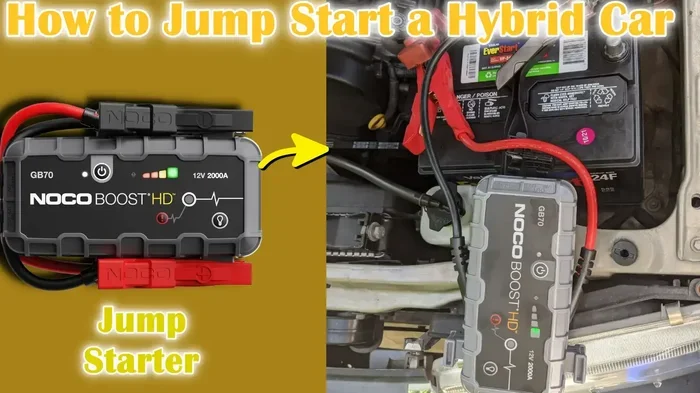
A portable jump starter is a small battery pack you keep in your trunk. It works just like jumper cables but without needing another vehicle. You connect it directly to the 12-volt battery and it provides enough power to start the car. Portable jump starters are compact, rechargeable, and incredibly convenient. Many models also include USB ports to charge your phone. They are a must-have for any hybrid owner.
Battery Chargers
If your 12-volt battery is frequently dying, a battery charger might be the solution. You can plug a trickle charger into your home outlet and connect it to the 12-volt battery overnight. This slowly charges the battery back to full health. It is a great option if your hybrid sits unused for long periods. A battery maintainer is another name for this type of charger.
Roadside Assistance
Sometimes the best option is to call for help. Roadside assistance services can send a professional to jump-start your hybrid. They have the right equipment and the knowledge to do it safely. If you are not comfortable doing it yourself, this is always a smart choice. Many insurance plans and car warranties include roadside assistance. Check yours to see if you have this benefit.
When to Replace Your Hybrid’s 12-Volt Battery
Jump-starting is a temporary fix. It is not a long-term solution. If your 12-volt battery keeps dying, it may be time to replace it. Most 12-volt batteries last between three and five years. Hybrid batteries tend to last a bit longer because the car’s computer manages the charging. But they still wear out over time.
Here are some signs your 12-volt battery needs replacing:
- The engine cranks slowly when you turn the key.
- The dashboard lights are dimmer than usual.
- You need to jump-start the car frequently.
- The battery is more than four years old.
- You notice corrosion on the battery terminals.
- The car will not start even after a full charge.
Replacing a 12-volt battery in a hybrid is usually straightforward. You can buy a replacement at any auto parts store. The cost typically ranges from $100 to $200. Some dealerships will install it for you if you prefer. Just make sure the replacement battery matches the specifications in your owner’s manual.
Quick Tips for Hybrid Battery Longevity
You can extend the life of your 12-volt battery with a few simple habits. Drive your hybrid regularly. A battery that sits unused for weeks will slowly lose charge. Use a battery maintainer if you know the car will sit for an extended period. Keep the terminals clean and free of corrosion. And avoid leaving accessories on when the engine is off. These small steps add up and save you from unexpected surprises.
Expert Insights on Hybrid Jump-Starting
We spoke with several automotive technicians who specialize in hybrid vehicles. Here is what they want every hybrid owner to know.
Always read your owner’s manual first. Every hybrid model is different. The manual will tell you exactly where the 12-volt battery is and how to jump-start it safely. Skipping this step is the fastest way to make a mistake.
The 12-volt battery is the one you care about. Many hybrid owners panic when the car will not start. They assume the expensive hybrid battery is dead. In nine out of ten cases, it is just the 12-volt battery. Do not assume the worst before checking the simple things.
Invest in a portable jump starter. It is the single best tool a hybrid owner can keep in their trunk. It eliminates the need for another vehicle and it works in any situation. The cost is small compared to the peace of mind it provides.
If you are unsure, call a professional. There is no shame in asking for help. Hybrids have high-voltage systems that demand respect. A professional technician can jump-start your car quickly and safely. They can also diagnose any underlying issues that caused the battery to die in the first place.
Key Takeaways
- Hybrid vehicles have two battery systems: a high-voltage traction battery and a 12-volt accessory battery.
- You should only use jumper cables on the 12-volt battery: never on the high-voltage hybrid battery.
- Always follow the correct cable connection order: positive to positive, then negative to ground.
- Portable jump starters work great for hybrids: they are a safe and convenient alternative.
- Common mistakes include connecting cables to the wrong battery: this can cause serious damage or injury.
- Consult your owner’s manual first: every hybrid model has specific jump-starting instructions.
- When in doubt, call roadside assistance: professional help prevents costly errors.
Conclusion
So, can jumper cables be used on a hybrid? The answer is a clear yes. But with an important caveat. You must use them on the 12-volt accessory battery, not the high-voltage hybrid battery. This distinction is everything. Get it right and you will be back on the road in minutes. Get it wrong and you could face expensive repairs or serious injury.
Jump-starting a hybrid is not much different from jump-starting a regular car. The steps are the same. The cable connection order is the same. The only difference is the battery you target. Once you understand that your hybrid has two separate electrical systems, everything clicks into place.
Remember the safety tips. Inspect your cables. Wear protection. Never touch the high-voltage components. And if something feels off, do not hesitate to call for professional help. A good set of jumper cables, a portable jump starter, and a copy of your owner’s manual are all you need to be prepared.
Take care of your hybrid’s 12-volt battery and it will take care of you. Drive regularly. Keep the terminals clean. Replace the battery when it shows signs of wear. These small habits will save you time, money, and stress. Now you have the truth about using jumper cables on a hybrid. Go out there and stay safe on the road.
Frequently Asked Questions
Can I use jumper cables on the high-voltage battery of my hybrid?
No, never. The high-voltage battery operates at 200 to 400 volts and is extremely dangerous. Jumper cables are only safe to use on the 12-volt accessory battery. Connecting cables to the high-voltage system can cause severe injury, fire, or permanent damage to your vehicle.
How do I know which battery is the 12-volt battery in my hybrid?
The 12-volt battery looks like a standard car battery and is usually located in the engine bay. It is smaller than the high-voltage battery pack. Your owner’s manual will show you the exact location and label the terminals clearly. Always confirm before connecting any cables.
Will jump-starting my hybrid damage the high-voltage battery?
No, jump-starting the 12-volt battery will not affect the high-voltage battery. The two systems are completely separate. As long as you connect the cables to the correct battery and follow the proper procedure, your hybrid battery pack remains safe and unaffected.
Can I use a portable jump starter instead of jumper cables on my hybrid?
Yes, a portable jump starter works great for hybrids. It connects directly to the 12-volt battery and provides enough power to start the car. Portable jump starters are compact, rechargeable, and do not require another vehicle. They are highly recommended for hybrid owners.
How long should I let my hybrid run after a jump-start?
Let the hybrid run for at least 15 to 20 minutes after a jump-start. This allows the alternator to recharge the 12-volt battery. If the battery was severely drained, you may need to drive the car for 30 minutes or more to fully restore the charge.
What should I do if my hybrid will not start even after a jump-start?
If the jump-start does not work, the 12-volt battery may need to be replaced. It could also be a sign of a deeper electrical issue. Check the battery age and condition first. If the battery is more than four years old or shows visible damage, replace it. If the problem persists, contact a certified hybrid technician for diagnosis.