How Do You Know Engine Oil Is Low Check For These Signs
Knowing how do you know engine oil is low can save your engine from serious damage. You can spot low oil through warning lights, strange engine noises, burning smells, and reduced performance. Regularly checking your dipstick and watching for these signs keeps your car running smoothly and prevents costly repairs.
Your car’s engine is like its heart. And just like your heart needs blood to work right, your engine needs oil to keep everything running smooth. But how do you know engine oil is low before it causes real damage?
The answer is simpler than you might think. Your car gives you plenty of warning signs. Some are obvious, like a dashboard light flashing on your dash. Others are more subtle, like a faint ticking sound or a slightly burning smell. The key is knowing what to look for and when to act.
Ignoring low oil is one of the fastest ways to wreck your engine. Without proper lubrication, metal parts grind against each other. This creates heat, friction, and eventually catastrophic failure. The repair bill for a seized engine can easily reach thousands of dollars. But catching low oil early? That is a cheap fix.
In this guide, we walk you through every sign that your engine oil is running low. We also cover how to check your oil the right way, what causes oil levels to drop, and when to see a mechanic. Whether you are a seasoned car owner or a complete beginner, this guide has you covered.
Key Takeaways
- Dashboard Warning Lights: The oil pressure light and check engine light are your first alerts that oil levels may be low.
- Unusual Engine Noises: Knocking, ticking, or clunking sounds often mean your engine is running without enough lubrication.
- Burning Smell: A hot, acrid odor from under the hood can signal oil is leaking or burning near hot engine parts.
- Reduced Performance: Sluggish acceleration, poor fuel economy, and engine stalling are common signs of insufficient oil.
- Regular Dipstick Checks: Making it a habit to check your oil level monthly helps you catch problems early.
- Preventive Maintenance: Staying on top of oil changes and monitoring consumption keeps your engine healthy long-term.
📑 Table of Contents
- Why Engine Oil Level Matters So Much
- Dashboard Warning Lights And Indicators
- Strange Engine Noises That Signal Low Oil
- Physical Signs Your Oil Is Low
- How To Check Your Oil Level The Right Way
- What Causes Low Oil Levels?
- Preventing Low Oil Problems
- When To See A Mechanic
- Quick Tips For Staying On Top Of Your Oil
- Common Mistakes People Make With Engine Oil
- Final Thoughts
Why Engine Oil Level Matters So Much
Engine oil does several critical jobs at the same time. It lubricates moving parts, reduces friction, cools the engine, and keeps harmful deposits from building up. When your oil level drops, your engine loses all of these protections.
Think of it this way. You would not run a marathon without drinking water. Your engine should not run without enough oil. Even a short drive with low engine oil can cause wear that adds up over time.
Here is what happens when oil gets too low:
- Increased friction between metal parts creates heat.
- Metal-on-metal contact wears down bearings and cylinder walls.
- Overheating can warp engine components.
- Sludge buildup clogs oil passages and reduces flow.
- Complete engine failure in severe cases.
Understanding why oil matters is the first step toward protecting your car. Next, let us look at the signs that tell you something is wrong.
Dashboard Warning Lights And Indicators
The Oil Pressure Warning Light
This is the big one. If you see a red or yellow light shaped like an oil can on your dashboard, do not ignore it. This oil pressure warning light means your system detects low oil pressure, which often points to low oil level.
Some cars show a generic check engine light instead. Either way, pull over safely and check your oil. Driving with this light on is risky. You could cause permanent engine damage in just a few miles.
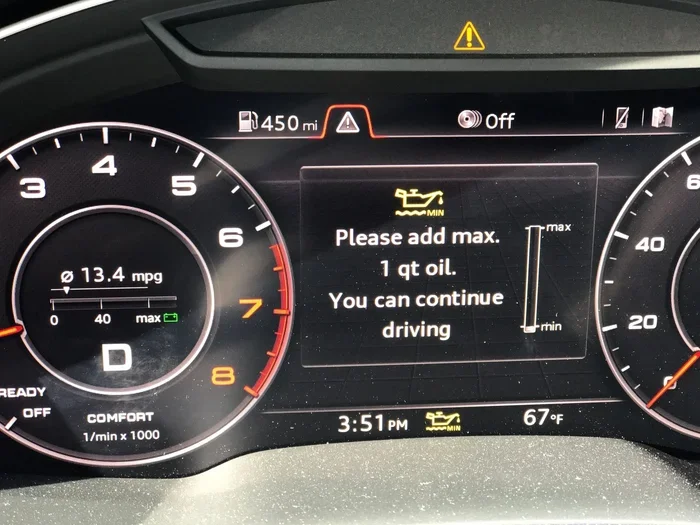
Digital Oil Level Alerts
Many newer vehicles have digital displays that show your oil level directly. These systems use sensors to monitor oil volume and pressure. When the level drops below a safe threshold, your car will display a warning message.
If your car has this feature, pay attention to it. Do not dismiss the alert or assume it will go away on its own. Check your oil immediately and top it off if needed.
Strange Engine Noises That Signal Low Oil
Ticking or Tapping Sounds
One of the most common low oil symptoms is a ticking or tapping noise coming from the engine. This happens because the oil is not reaching the valve train and other upper engine components fast enough.
You might notice this sound most when you first start the car. The ticking often gets quieter once oil circulates, but it should never be ignored. If your engine is properly lubricated, it should run nearly silent at startup.
Knocking Sounds Under Load
A deeper knocking sound, especially when you accelerate or climb a hill, is a serious warning sign. This means the oil is not providing enough cushion between the pistons and cylinder walls.
Knocking under load is a red flag. It often means your oil level is critically low or the oil has broken down and lost its protective properties. Stop driving and check your oil level right away.
Engine Stalling or Rough Idle
In severe cases, low oil can cause your engine to stall or idle roughly. Without proper lubrication, parts slow down or seize up temporarily. If your car stalls frequently, low oil could be the culprit.
Physical Signs Your Oil Is Low
Burning Oil Smell
Do you smell something hot and acrid coming from under the hood? A burning oil smell is a clear sign that oil is leaking onto hot engine parts or that your oil level is dangerously low.
This smell often gets stronger when you are idling or driving slowly. It can also seep into the cabin through the ventilation system. If you notice this odor, pull over and inspect your vehicle.
Smoke From the Exhaust
Blue or gray smoke from your tailpipe can mean oil is leaking into the combustion chamber. This happens when oil levels are low and the engine is sucking oil past worn seals or piston rings.
Blue smoke is never normal. It always points to an oil-related problem that needs immediate attention. Check your oil level and look for leaks underneath your car.
Oil Stains Under Your Car
After parking, take a look at the ground beneath your vehicle. Dark puddles or spots are a sign of an oil leak. Even small leaks can cause your oil level to drop over time.
If you notice fresh stains, check your oil level and inspect the engine bay for wet areas. Catching a leak early can prevent your oil from getting dangerously low.
How To Check Your Oil Level The Right Way
Knowing how to check your oil is a basic but essential car skill. It takes less than five minutes and can save you from expensive repairs. Here is the step-by-step process.
First, park your car on a flat surface. Turn off the engine and wait at least five minutes. This lets the oil settle back into the oil pan so you get an accurate reading.
Next, open the hood and locate the dipstick. It usually has a brightly colored handle for easy identification. Pull it out, wipe it clean with a rag or paper towel, and then reinsert it fully.
Pull it out again and look at the oil level. You will see markings on the dipstick that show the minimum and maximum levels. Your oil should fall between these marks. If it is below the minimum, you need to add oil.
While you are at it, check the oil color and texture. Fresh oil is amber and translucent. Dark, gritty oil needs to be changed soon. Milky or foamy oil could indicate a more serious problem like a coolant leak.
How Often Should You Check Your Oil?
Most experts recommend checking your oil at least once a month. You should also check it before long trips. If your car is older or has high mileage, check it more frequently. Some vehicles burn oil faster than others, and keeping an eye on the level helps you stay ahead of problems.
Regular checking is just as important as knowing how do you know engine oil is low from symptoms. Prevention beats repair every time.
What Causes Low Oil Levels?
Normal Oil Consumption
All engines burn small amounts of oil over time. This is normal and expected. However, some vehicles burn more oil than others. High-performance engines, older cars, and vehicles with high mileage tend to consume oil faster.
If you need to add oil frequently, this could signal a problem worth investigating. Normal consumption is usually no more than one quart per 3,000 miles. Anything beyond that warrants a closer look.
Oil Leaks
Leaks are one of the most common reasons for low oil. Leaks can develop from worn gaskets, loose oil pan bolts, damaged oil filters, or cracked oil lines. Even a small leak can drain your oil level over days or weeks.
Common leak points include the oil pan gasket, valve cover gasket, and oil filter housing. If you spot oil spots under your car or greasy residue on engine parts, have a mechanic inspect the area.
Worn Piston Rings Or Valve Seals
Over time, piston rings and valve seals can wear out. When they do, oil leaks past them and enters the combustion chamber. This causes your oil level to drop and often produces blue exhaust smoke.
This type of problem usually affects older vehicles with higher mileage. Regular maintenance and prompt attention to early signs can slow this process down.
Improper Oil Changes
Skipping oil changes or using the wrong type of oil can accelerate oil breakdown. Old oil loses its viscosity and lubricating ability. It also burns off faster, which can lead to low levels.
Always follow your vehicle manufacturer’s recommended oil change interval. Using the correct oil viscosity and quality also helps maintain proper oil levels over time.
Preventing Low Oil Problems
Prevention is the best medicine when it comes to engine oil. A few simple habits can keep your oil level healthy and your engine running strong.
- Check your oil monthly using the dipstick method described above.
- Keep a log of your oil levels and any changes you notice.
- Use the right oil for your vehicle as specified in your owner manual.
- Change your oil on schedule and never skip oil changes.
- Inspect for leaks regularly, especially under your car.
- Monitor oil consumption between changes and note any increases.
- Keep your oil filter fresh at every oil change to ensure proper flow.
These habits take minimal time but offer huge protection. Think of them as routine maintenance, just like knowing how to wash your car properly or checking tire pressure. Consistent care goes a long way.
Beyond oil checks, staying on top of overall engine maintenance helps too. For instance, if you are wondering about other maintenance questions, you might also ask yourself whether you can wash your car too much or if certain cleaning products are safe for your vehicle. These are all part of being a responsible car owner.
And when in doubt, do not hesitate to seek professional help. A trusted mechanic can perform a free diagnostic on your car and spot issues before they become expensive problems. Many shops offer complimentary inspections that cover fluid levels, belt conditions, and general engine health.
When To See A Mechanic
Some low oil situations are easy to handle on your own. Topping off oil is straightforward and takes just a few minutes. But there are times when professional help is the smart move.
You should see a mechanic if:
- Your oil light stays on even after adding oil.
- You notice a persistent burning oil smell.
- Your engine makes knocking or grinding noises.
- You see blue or gray exhaust smoke consistently.
- You need to add oil more often than normal.
- Your oil appears milky or contaminated.
These signs suggest something beyond a simple top-off. There could be a leak, internal engine wear, or a sensor malfunction. A mechanic can diagnose the root cause and recommend the right fix.
Many drivers also wonder about other car care questions. For example, people often ask whether they can use Clorox wipes on car interior surfaces or if there are better cleaning alternatives. While these are different topics, they share the same spirit of proactive car care.
Taking care of your car means paying attention to both the big picture and the small details. Oil level monitoring is one of the most important small details you can master.
Quick Tips For Staying On Top Of Your Oil
Here are some fast, practical tips to keep in mind:
- Check oil when the engine is cool. This gives you the most accurate reading.
- Use the same brand and type of oil when topping off. Mixing different oils can reduce performance.
- Do not overfill. Too much oil can cause foaming and pressure problems.
- Keep spare oil in your trunk. A quart of the right oil can save you in an emergency.
- Set a monthly reminder on your phone to check your oil level.
- Read your owner manual. It contains specific oil type recommendations and change intervals for your exact model.
These small steps add up to big protection. Your engine works hard for you every day. Returning the favor with regular oil checks and maintenance is the least you can do.
Being proactive about your oil pressure and level also helps you avoid the stress of unexpected breakdowns. A few minutes of attention now can save you hours of frustration and hundreds of dollars later.
Common Mistakes People Make With Engine Oil
Even careful car owners make mistakes. Here are a few to watch out for:
- Waiting for the warning light: By the time the light comes on, your oil may already be dangerously low.
- Checking oil while the engine is running: This gives an inaccurate reading because oil is circulating and not settled.
- Ignoring oil color changes: Dark, gritty oil is a sign it is time for a change, not just a top-off.
- Using the wrong oil grade: Wrong viscosity oil does not protect your engine properly.
- Skipping oil changes to save money: Old oil loses its effectiveness and can actually harm your engine.
Avoiding these mistakes keeps your oil system working the way it should. It also extends the life of your engine significantly.
Final Thoughts
Understanding how do you know engine oil is low is one of the most valuable skills any car owner can have. Your car tells you when something is wrong. Dashboard lights, unusual noises, burning smells, and reduced performance are all clues. The trick is to pay attention before the problem becomes serious.
Make oil checks a regular part of your routine. Know what your dipstick readings should look like. Understand the common causes of low oil, and do not hesitate to see a mechanic when something feels off.
Your engine is the most expensive part of your car. Protecting it starts with something as simple as monitoring your oil level. Stay vigilant, stay proactive, and your car will reward you with years of reliable service.
Frequently Asked Questions
Can I drive my car if the oil light is on?
No, you should not drive with the oil light on. This light means your oil pressure is too low, which can cause severe engine damage within minutes. Pull over safely, turn off the engine, and check your oil level. If the oil is low, add the recommended type and amount. If the light stays on after adding oil, call a mechanic immediately.
How often should I check my engine oil level?
You should check your oil level at least once a month. It is also a good idea to check it before any long road trip. If your car is older or has high mileage, consider checking it every two weeks. Regular checks help you catch drops in oil level early before they cause engine damage.
What is the best way to check engine oil?
The best way is to use your dipstick on a flat surface with the engine cool and turned off. Wait five minutes after turning off the engine to let the oil settle. Pull the dipstick, wipe it clean, reinsert it fully, then pull it out again to read the level. The oil should fall between the minimum and maximum marks on the dipstick.
Can low oil cause engine overheating?
Yes, low oil can absolutely cause engine overheating. Oil helps absorb and dissipate heat from engine components. Without enough oil, friction between metal parts generates excess heat, which can lead to overheating and potentially warped or seized engine parts. If your temperature gauge is rising and your oil is low, address both issues immediately.
How much oil should I add if my level is low?
Add oil in small increments and recheck the dipstick after each addition. Most engines take between four and six quarts total, but the exact amount varies by vehicle. Always use the oil type recommended in your owner manual. Overfilling can be just as harmful as underfilling, so add carefully and check often.
What causes oil to disappear without visible leaks?
Oil can disappear without visible leaks due to normal consumption, worn piston rings, faulty valve seals, or oil burning in the combustion chamber. Some vehicles are designed to burn small amounts of oil as part of normal operation. However, if you are losing more than one quart per 3,000 miles, have a mechanic inspect your engine for internal leaks or wear.