Honda CR-V Wont Start but Battery Is Good – Solutions
A Honda CR-V that won’t start but has a good battery is more common than you think. This guide covers the real reasons behind this frustrating no-start problem and walks you through practical solutions. Whether your engine cranks, clicks, or stays completely silent, you’ll find the answers you need right here.
You turn the key or press the button on your Honda CR-V. The lights come on. The radio works fine. But the engine refuses to turn over. It’s one of the most frustrating moments in car ownership, especially when you know the battery is good. You tested it. It reads 12.6 volts. Everything looks normal on the surface.
Here’s the thing most people don’t realize: a good battery is just one piece of the starting puzzle. Your Honda CR-V needs fuel, spark, compression, and a working ignition system to fire up. When any one of those fails, you get a no-start condition even with a perfectly healthy battery. This article breaks down every possible reason your Honda CR-V won’t start but battery is good, and gives you clear steps to fix it.
We’ve helped thousands of car owners work through confusing starting problems. Whether your CR-V cranks but won’t start, clicks without turning over, or makes no noise at all, this guide has you covered. Let’s dive in and get your Honda running again.
Key Takeaways
- Good battery doesn’t mean no electrical issues: Your battery can test fine while other components like the starter motor or ignition switch fail.
- Fuel and spark problems are the top hidden culprits: A bad fuel pump, clogged filter, or worn spark plugs can stop your CR-V from starting even with a healthy battery.
- Immobilizer and key fob issues are often overlooked: A weak key fob battery or faulty immobilizer can prevent your Honda from recognizing the key.
- DIY diagnostics can save you hundreds: Simple checks like listening for the fuel pump hum or checking relay positions take minutes and cost nothing.
- Knowing when to call a pro matters: Some problems like ECU errors or internal engine damage need professional diagnostic tools and expertise.
📑 Table of Contents
- Why a Good Battery Doesn’t Guarantee Your Honda CR-V Starts
- Top Reasons Your Honda CR-V Won’t Start with a Good Battery
- Step-by-Step Diagnostic Checklist
- When to Call a Professional Mechanic
- How to Prevent Future No-Start Problems
- Comparison: Common No-Start Causes and Their Costs
- Real-World Examples from Honda CR-V Owners
- Final Thoughts: Getting Your Honda CR-V Running Again
Why a Good Battery Doesn’t Guarantee Your Honda CR-V Starts
It’s easy to assume that if your battery tests fine, the electrical system is healthy. But a battery only stores energy. It doesn’t create the mechanical and chemical reactions needed to start your engine. Think of your battery like a gas tank full of fuel. If the fuel line is clogged, the engine still won’t run even with a full tank.
Your Honda CR-V relies on a chain of components working together to start. The battery sends power to the starter motor. The starter motor cranks the engine. The ignition system creates a spark. The fuel pump delivers gasoline. When one link in that chain breaks, your engine stays silent or cranks without firing. Understanding this chain helps you narrow down the problem fast.
Common Signs That Point to More Than a Dead Battery
Before you dig into repairs, it helps to understand what your CR-V is telling you. Different sounds and behaviors point to different problems. Here are the most common signs you might notice:
- Engine cranks normally but won’t fire: The starter motor works, but the engine doesn’t catch. This often points to fuel or spark issues.
- Single click or rapid clicking: The starter solenoid is engaging but the motor isn’t turning the engine. This could be a bad starter or a locked engine.
- No noise at all when you turn the key: The electrical signal isn’t reaching the starter. Check the ignition switch, neutral safety switch, or relays.
- Dashboard lights flash but engine stays dead: The immobilizer system might be blocking the start sequence.
- Engine starts then dies immediately: This often indicates a fuel delivery problem or a failing fuel pump.
If you notice any of these symptoms, don’t panic. Each one gives you a clue about what’s going wrong inside your Honda CR-V.
Top Reasons Your Honda CR-V Won’t Start with a Good Battery
Now let’s get into the real causes. These are the most common reasons a Honda CR-V refuses to start even when the battery is in great shape. We’ll cover each one in detail so you can identify what’s happening with your vehicle.
1. Faulty Starter Motor or Starter Relay
The starter motor is the electric motor that actually cranks your engine. When you turn the key or press the start button, the battery sends a surge of power to the starter. If the starter motor is worn out or the relay has failed, your engine won’t turn over no matter how good your battery is.
Starter motors wear out over time, especially in older Honda CR-Vs. You might hear a grinding noise when you try to start, or you might hear nothing at all. A bad starter relay can also cause this problem. The relay acts as a switch that sends power to the starter motor. When it fails, the signal never reaches the starter.
Quick test: Turn the key to the “ON” position (not start). Listen for a brief hum from the fuel pump near the rear of the car. If you hear nothing, the relay or fuel pump might be the issue. You can also try tapping the starter motor gently with a wrench while someone turns the key. If the engine starts, your starter is likely failing and needs replacement.
2. Fuel Pump Failure
Your Honda CR-V’s fuel pump pushes gasoline from the tank to the engine. When the pump fails, no fuel reaches the combustion chambers. The engine cranks but never fires because it’s essentially running on empty — even with a full tank of gas.
Fuel pump failures are more common than most people think. They can happen from normal wear, contaminated fuel, or electrical issues. A failing fuel pump often gives warning signs before it completely dies. You might notice your CR-V hesitating under load, struggling to start when hot, or losing power at highway speeds.
Quick test: Turn the ignition to the “ON” position (do not start). You should hear a soft humming sound from the back of the car near the fuel tank. This means the fuel pump is pressurizing the system. If you hear silence, the fuel pump or its relay could be to blame.
3. Ignition Switch Problems
The ignition switch is the electrical component that sends power to the starter motor and engine management system when you turn the key. In Honda CR-Vs, the ignition switch is a known wear point, especially in models from the early 2000s to mid-2010s.
When the ignition switch fails, you might get power to the dashboard lights and radio but no signal to start the engine. It’s one of the sneakiest causes of a no-start condition because everything else looks perfectly normal.
Quick test: Wiggle the key in the ignition while trying to start. If the engine starts intermittently when you move the key around, the ignition switch is likely worn out and needs replacement.
4. Immobilizer System or Key Fob Issues
Modern Honda CR-Vs come equipped with an immobilizer system. This security feature prevents the engine from starting unless it recognizes the correct key or key fob. If the system can’t read your key, your CR-V simply won’t start — even with a brand-new battery.
The most common cause is a weak key fob battery. The transponder chip inside your key fob sends a signal to the car’s immobilizer. If the battery is low, the signal might be too weak to register. This is especially common in cold weather or after the key fob has been in your pocket for months without a battery change.
Another possibility is a damaged transponder chip in the key itself. If you’ve dropped your key or it’s been exposed to water, the chip might not communicate properly with the car’s computer. In some cases, you can bypass this by placing the key fob directly against the start button (for push-button start models) or holding it close to the ignition cylinder.
Quick tip: Try holding the key fob directly against the push-start button or the ignition cylinder. This puts the transponder closer to the car’s antenna and can help it read the signal even with a weak fob battery. If this works, replace the key fob battery and the problem should go away.
5. Neutral Safety Switch Failure
The neutral safety switch prevents your Honda CR-V from starting unless the transmission is in Park or Neutral. It’s a simple safety feature, but when the switch fails, your engine won’t crank no matter what you do.
This is a surprisingly common cause of no-start problems, especially in older CR-Vs. The switch can corrode, break, or shift out of alignment over time. You might notice that your CR-V starts in Neutral but not in Park, or vice versa.
Quick test: Shift your transmission to Neutral and try to start the engine. If it starts in Neutral but not in Park, the neutral safety switch is likely the culprit. You can also try shifting between Park and Neutral a few times before attempting to start.
6. Bad Spark Plugs or Ignition Coil
Your engine needs spark to ignite the fuel-air mixture in each cylinder. If the spark plugs are worn out or the ignition coil has failed, the engine will crank but never fire up. This is especially true if multiple spark plugs or coils have degraded at the same time.
Honda CR-Vs typically need spark plug replacement every 30,000 to 60,000 miles depending on the model year and spark plug type. If you’ve been putting off maintenance, worn spark plugs could be your answer. Ignition coils can also fail from heat damage or age, causing intermittent or complete no-start conditions.
Quick tip: If your CR-V has been running rough or misfiring before it stopped starting, the spark plugs or ignition coils are likely the issue. Inspect them visually for wear, carbon buildup, or cracks.
7. Clogged Fuel Filter or Fuel Injectors
Even if the fuel pump is working, debris and contaminants can block the flow of gasoline. A clogged fuel filter or dirty fuel injectors can starve your engine of fuel. The result? Your Honda CR-V cranks but won’t start.
Fuel filters should be replaced every 30,000 to 60,000 miles. Fuel injectors can be cleaned with a fuel system cleaner or professionally flushed. If you’ve been running low on fuel frequently, sediment from the bottom of the tank can clog the filter faster than normal.
8. Ground Wire or Electrical Connection Issues
Your Honda CR-V’s electrical system relies on proper grounding to function. A corroded or loose ground wire can disrupt the flow of electricity to critical components like the starter motor, fuel pump, and engine control unit (ECU). This can cause all sorts of mysterious no-start problems.
Corrosion on battery terminals is the most visible sign of a grounding issue. But internal ground wires can corrode without any visible symptoms. A bad ground can cause intermittent problems that are incredibly frustrating to diagnose.
Quick tip: Inspect your battery terminals for white or greenish corrosion. Clean them with a wire brush and baking soda solution. Also check the ground wire connecting the battery to the chassis and engine block. Make sure the connection is tight and free of rust or corrosion.
Step-by-Step Diagnostic Checklist
When your Honda CR-V won’t start but battery is good, following a systematic diagnostic approach saves time and money. Here’s a checklist you can follow in order:
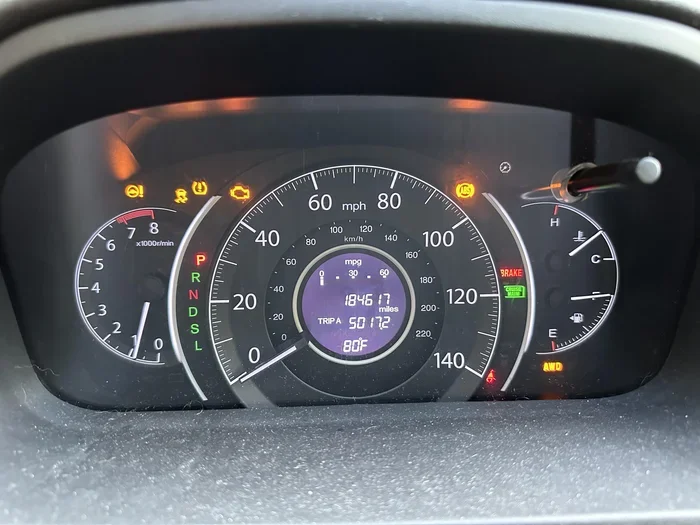
- Check the dashboard warning lights. Do any lights stay on when you turn the key to “ON”? The check engine light, immobilizer light, or security light can give you clues.
- Listen for the fuel pump hum. Turn the key to “ON” without starting. You should hear a brief 2-3 second hum from the rear of the car.
- Verify the gear position. Make sure the transmission is fully in Park. Try starting in Neutral as a test.
- Check the key fob battery. Replace it with a fresh CR2032 battery and try again.
- Listen for the starter. Do you hear a single click, rapid clicking, or nothing at all? Each sound points to a different problem.
- Inspect the battery terminals. Look for corrosion, looseness, or frayed cables.
- Check for the check engine light. If it’s on, there may be a stored diagnostic trouble code that points to the problem.
- Try a different key or spare key. This eliminates the possibility of a damaged transponder chip.
Following this checklist helps you rule out simple causes before moving on to more complex repairs. Many Honda CR-V owners have solved their no-start problems with steps one through four alone.
When to Call a Professional Mechanic
Not every starting problem is a DIY fix. Some issues require professional diagnostic equipment and expertise. Here are situations where you should call a mechanic:
- You’ve checked everything on the list above and the problem persists. This could indicate an internal engine problem or a complex electrical fault.
- The ECU is throwing error codes you can’t interpret. Modern Honda CR-Vs have complex computer systems that need specialized scan tools to diagnose.
- You suspect the engine is locked up. If the engine won’t crank at all and you’ve ruled out the starter, the engine might be mechanically seized.
- You need a fuel pressure test. Testing fuel pressure requires a gauge and know-how. A mechanic can do this quickly and accurately.
- The ignition switch or starter motor needs replacement. These are more involved repairs that benefit from a professional’s experience.
A professional crank no start diagnosis can pinpoint the exact cause in minutes using specialized tools like an OBD-II scanner, fuel pressure gauge, and oscilloscope. If you’ve exhausted the simple checks, don’t hesitate to get expert help.
How to Prevent Future No-Start Problems
Prevention is always better than repair. Here are simple habits that keep your Honda CR-V starting reliably for years to come:
- Replace the key fob battery every 12 months. It’s a cheap and easy way to avoid immobilizer-related no-start issues.
- Change spark plugs on schedule. Follow Honda’s recommended maintenance intervals to keep your ignition system strong.
- Use quality fuel from reputable stations. Contaminated fuel can damage your fuel pump and clog injectors.
- Don’t let your fuel level drop too low. Running on empty stresses the fuel pump and can pull sediment into the fuel system.
- Check your battery terminals regularly. Clean any corrosion and ensure tight connections at least twice a year.
- Get regular maintenance. Oil changes, air filter replacements, and fuel system cleanings keep your CR-V in top shape.
Taking these small steps can save you from the headache of a no-start situation on a busy morning or a cold winter day.
Comparison: Common No-Start Causes and Their Costs
Understanding the potential costs helps you plan your repair budget. Here’s a comparison of common causes and their typical repair costs:
| Cause | Symptom | Typical Repair Cost | DIY-Friendly? |
|---|---|---|---|
| Weak key fob battery | No response when pressing start button | $5-$10 | Yes |
| Bad starter motor | Clicking noise or no crank | $300-$500 | Intermediate |
| Fuel pump failure | Crashes but won’t start, no fuel pump hum | $400-$800 | No |
| Ignition switch failure | Power to dash but no crank | $150-$300 | Intermediate |
| Neutral safety switch | Starts in Neutral but not Park | $100-$250 | Yes |
| Bad spark plugs | Crashes but won’t fire, rough idle before | $50-$150 | Yes |
| Ground wire corrosion | Intermittent no-start, electrical glitches | $20-$50 | Yes |
Costs vary depending on your model year, location, and whether you do the work yourself. Always get a quote from a trusted mechanic before committing to major repairs.
Real-World Examples from Honda CR-V Owners
Many Honda CR-V owners have dealt with the exact same problem you’re facing right now. Here are a few real-world scenarios that highlight how different causes can produce the same symptom:
Case 1: The Clicking CR-V. A 2010 Honda CR-V owner reported that the car would click rapidly when trying to start but the engine wouldn’t turn over. The battery tested at 12.6 volts — perfectly healthy. After checking the connections, the owner discovered the starter motor had worn brushes. Replacing the starter resolved the problem immediately.
Case 2: The Silent CR-V. A 2015 CR-V owner pressed the start button and got absolutely no response. The dashboard lights worked fine. After trying a spare key fob (which worked), the owner replaced the battery in the primary key fob. The immobilizer system had been blocking the start signal because the fob battery was too weak to transmit the proper code.
Case 3: The Crank-But-No-Fire CR-V. A 2008 CR-V cranked normally every time but refused to start. The owner checked the spark plugs (fine) and the key fob (fine). A fuel pump test revealed zero fuel pressure. The fuel pump had failed completely. After replacing the pump and the fuel filter, the CR-V started right up.
These real stories show that the same “won’t start” symptom can have very different causes. That’s why a systematic diagnostic approach is so important.
If your Honda CR-V cranks but won’t start and you’ve already ruled out battery problems, the issue likely lies in the fuel system, ignition system, or security system. For a deeper dive into troubleshooting techniques, check out our guide on crank no start diagnosis for professional-level diagnostic steps.
Final Thoughts: Getting Your Honda CR-V Running Again
A Honda CR-V that won’t start but battery is good is a solvable problem. The key is to work through the possible causes systematically, starting with the simplest and cheapest fixes. In many cases, the solution is as simple as replacing a key fob battery or cleaning a corroded terminal.
Don’t let a no-start situation leave you stranded or stressed. Use the diagnostic checklist in this article to narrow down the cause. If the problem turns out to be a faulty starter, fuel pump, or ignition component, you now know what to expect and how to plan your repair.
Remember that regular maintenance is your best defense against no-start problems. Keep your key fob battery fresh, follow Honda’s service schedule, and pay attention to warning signs before they become full-blown failures. Your Honda CR-V will reward you with reliable starts for many miles to come.
If you’re dealing with a situation where your engine turns over but won’t catch, you’re not alone. Many owners face this exact challenge, and understanding the root cause is the first step toward a fix. For more troubleshooting help, explore our article on car turns over but won’t start causes and solutions to expand your diagnostic knowledge.
Stay patient, stay methodical, and don’t be afraid to call a professional when the problem goes beyond your comfort zone. With the right approach, you’ll have your Honda CR-V back on the road in no time.
For readers dealing with a related scenario where the engine doesn’t crank at all and makes no noise, our article on car won’t start and no noise provides additional insights that complement the information in this guide.
Frequently Asked Questions
Why does my Honda CR-V turn on but not start with a good battery?
This usually means your engine is getting power but is missing one of the three essentials: fuel, spark, or compression. The most common causes are a failed fuel pump, bad ignition coil, or an immobilizer system that isn’t recognizing your key. Start by checking the fuel pump hum and the dashboard for warning lights.
Can a weak key fob battery prevent a Honda CR-V from starting?
Yes, absolutely. Modern Honda CR-Vs use a transponder chip in the key fob to communicate with the immobilizer system. A weak battery can weaken the signal enough that the car doesn’t recognize the key. Try holding the fob directly against the start button or replacing the battery with a fresh CR2032.
How do I know if my starter motor is bad in a Honda CR-V?
You’ll typically hear a single loud click or rapid clicking when you turn the key. The engine won’t crank at all. You can also try tapping the starter motor gently with a wrench while someone turns the key. If the engine starts temporarily, the starter is likely failing and needs replacement.
What should I do first when my Honda CR-V won’t start but the battery is fine?
Start with the basics. Check that the transmission is in Park, listen for the fuel pump hum when you turn the key to ON, verify your key fob battery, and inspect the battery terminals for corrosion. These simple checks solve the problem in many cases without any tools or mechanic visits.
How much does it cost to fix a Honda CR-V that won’t start?
The cost depends entirely on the cause. Simple fixes like a key fob battery or spark plugs cost under $50. More complex repairs like a fuel pump or starter motor can range from $300 to $800. A professional diagnosis typically costs $100-$200 and can save you money by pinpointing the exact problem quickly.
Can a clogged fuel filter cause a Honda CR-V not to start?
Yes, a severely clogged fuel filter can block fuel delivery to the engine, causing a no-start condition. If your CR-V has been hard to start or losing power recently, the fuel filter might be partially blocked. Replacing the fuel filter is a relatively inexpensive and straightforward repair that many owners can do themselves.