Crank No Start Diagnosis Easy Steps to Get Your Car Running
Crank No Start Diagnosis is an essential topic that provides valuable insights.
Key Takeaways
- Understanding Crank No Start Diagnosis: Provides essential knowledge
📑 Table of Contents
- Understanding Crank No Start Problems
- Step-by-Step Crank No Start Diagnosis
- Common Causes of Crank No Start
- Using a Diagnostic Scan Tool for Crank No Start Diagnosis
- Advanced Diagnostic Techniques
- Comparison Table: Spark vs. Fuel vs. Compression
- Common Mistakes to Avoid During Crank No Start Diagnosis
- Expert Insights on Crank No Start Diagnosis
- Key Takeaways
- Conclusion
Understanding Crank No Start Problems
Before you dive into crank no start diagnosis, it helps to understand what’s actually happening. When you turn the key to the “start” position, the starter motor engages the crankshaft and forces the engine to rotate. This is the cranking phase. For the engine to actually start, it needs three things working together perfectly: spark, fuel, and compression.
If any one of these three elements is missing or weak, your engine will crank but not start. The good news is that crank no start diagnosis follows a logical sequence. You don’t have to guess. You can test each system one at a time and narrow down the root cause quickly.
How the Starting System Works
The starting system is pretty straightforward. When you turn the key, the ignition switch sends power to the starter solenoid. The solenoid pushes the starter gear into the flywheel ring gear. The starter motor then spins the crankshaft. This rotation is what creates the cranking sound you hear. If your engine cranks normally but won’t fire, the starting system is doing its job. The problem lies elsewhere.
However, if the engine cranks slowly or makes a grinding noise, you might have a starter motor issue or a dead battery. A weak battery voltage can cause slow cranking that mimics a no-start condition. Always check the battery first before moving on to other tests.
Step-by-Step Crank No Start Diagnosis
Now let’s get into the heart of crank no start diagnosis. Follow these steps in order. Each one builds on the last, and together they give you a complete picture of what’s going wrong.
Step 1: Check the Battery and Electrical Connections
Start with the simplest thing first. A weak or dead battery is the number one cause of engine cranks but won’t start situations. Use a multimeter to check the battery voltage. A fully charged battery should read 12.6 volts or higher. If it reads below 12.0 volts, charge or replace the battery before continuing.
Also inspect the battery terminals. Corrosion on the terminals can block electrical current and prevent proper starter motor operation. Clean the terminals with a wire brush and baking soda solution. Make sure the cable connections are tight and secure.
Step 2: Listen for the Fuel Pump
When you turn the key to the “on” position (before cranking), you should hear a brief humming sound from the back of the car. That’s the fuel pump pressurizing the fuel system. If you don’t hear anything, your fuel pump might be faulty. A fuel pump failure is one of the most common reasons for crank no start conditions.
You can also check fuel pressure with a fuel pressure gauge. Attach the gauge to the fuel rail and turn the key to the “on” position. The pressure should match your vehicle’s specifications, usually between 40 and 65 PSI depending on the model. Low or zero pressure points directly to a fuel pump or fuel filter problem.
Step 3: Test for Spark
Spark is essential for ignition. Without it, your engine can crank all day long and never start. To test for no spark, pull out one spark plug and reattach the spark plug wire or ignition coil boot. Hold the plug about half an inch from a metal surface on the engine. Have someone crank the engine while you watch for a blue spark.
If you see no spark or a weak orange spark, the problem is in the ignition system. Common culprits include a bad ignition coil, worn spark plug wires, or a faulty crankshaft position sensor. The crankshaft position sensor tells the engine computer when to fire the spark plugs. If it fails, there’s no spark and no start.
Step 4: Inspect the Fuel Injectors
Even if the fuel pump is working, fuel needs to reach the cylinders through the fuel injectors. Dirty or clogged injectors can prevent proper fuel delivery. Listen closely when cranking the engine. You should hear a faint clicking from the injectors. No clicking could mean an electrical issue or a problem with the engine control module.
You can also use a noid light to check if the engine control module is sending signals to the injectors. Simply plug the noid light into the injector connector and crank the engine. If the light flashes, the signal is reaching the injectors. If it doesn’t, the issue is upstream in the wiring or the computer itself.
Common Causes of Crank No Start
Understanding the most frequent causes of crank no start can speed up your diagnostic scan process. Here’s a breakdown of the top culprits.
Ignition System Failures
The ignition system creates the spark that ignites the air-fuel mixture. When this system fails, you get no spark and a cranks but won’t start condition. The most common ignition-related failures include:
- Bad ignition coil — the coil converts low battery voltage into the high voltage needed for spark
- Worn spark plugs — old plugs can’t produce a strong enough spark
- Faulty crankshaft position sensor — the engine computer needs this signal to time the spark correctly
- Damaged spark plug wires — cracked or corroded wires leak voltage and reduce spark energy
Fuel System Problems
The fuel system delivers gasoline or diesel to the combustion chambers. If fuel isn’t getting there, the engine won’t start. Common fuel system issues include:
- Fuel pump failure — the pump can’t push fuel through the system
- Clogged fuel filter — restricts fuel flow and starves the engine
- Dirty fuel injectors — prevents proper atomization of fuel
- Empty fuel tank — yes, this happens more often than you’d think
Compression and Mechanical Issues
Compression is the third pillar of the fire triangle. Without adequate compression, the air-fuel mixture won’t ignite properly. Causes of low compression include:
- Broken timing belt — if the belt snaps, the valves and pistons can collide
- Worn piston rings — allows compression to leak past the pistons
- Leaking valves — prevents proper sealing of the combustion chamber
- Head gasket failure — allows compression to escape between cylinders
Using a Diagnostic Scan Tool for Crank No Start Diagnosis
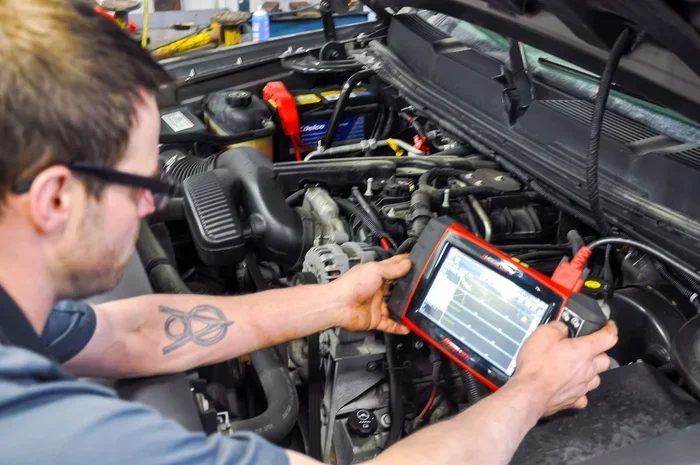
A diagnostic scan tool is one of the most valuable tools for crank no start diagnosis. Modern vehicles have an onboard computer called the engine control module that monitors dozens of sensors and systems. When something goes wrong, the computer stores a trouble code in its memory.
Plug the scan tool into the OBD-II port, which is usually located under the dashboard on the driver’s side. Turn the key to the “on” position and read the codes. Common codes related to crank no start include:
- P0335 — Crankshaft Position Sensor Circuit Malfunction
- P0340 — Camshaft Position Sensor Circuit Malfunction
- P0230 — Fuel Pump Primary Circuit Malfunction
- P0351 — Ignition Coil A Primary/Secondary Circuit
These codes point you directly to the problematic system. However, don’t rely solely on the codes. Always verify with physical testing. A code might indicate a sensor problem, but the real issue could be a damaged wire or connector.
Quick Tips for Using a Scan Tool
- Always check for pending codes, not just stored codes
- Record freeze frame data — it shows engine conditions at the time of the failure
- Clear codes after repairs and test drive to confirm the fix
- Don’t replace parts based only on codes — verify with other tests first
Advanced Diagnostic Techniques
Once you’ve checked the basics, more advanced tests can help you pinpoint stubborn crank no start issues.
Performing a Compression Test
A compression test measures the pressure inside each cylinder. Low compression in one or more cylinders means the engine can’t generate enough heat to ignite the fuel. To perform this test, remove all the spark plugs and thread a compression gauge into each spark plug hole. Have someone crank the engine while you watch the gauge.
Healthy cylinders typically read between 140 and 160 PSI. A variation of more than 10% between cylinders indicates a problem. If all cylinders read very low, the issue is likely a timing belt that has jumped or broken.
Checking the Immobilizer System
Many modern vehicles have an immobilizer system that prevents the engine from starting without the correct key. If your security light stays on or flashes when you turn the key, the immobilizer might be blocking the engine control module from enabling fuel injection and spark. Try using a spare key to rule out a faulty transponder chip in the key fob.
Inspecting the Timing Belt or Chain
A broken timing belt or chain is one of the most serious causes of crank no start. When the timing belt breaks, the camshafts stop turning and the valves don’t open. Without valve movement, the engine can’t draw in air or expel exhaust. In interference engines, a broken timing belt can also cause valve and piston damage. If you suspect a timing belt issue, do not keep cranking the engine. Have it towed to a repair shop.
Comparison Table: Spark vs. Fuel vs. Compression
| System | Key Symptom | Quick Test | Common Fix |
|---|---|---|---|
| Spark | No spark at plug, engine cranks normally | Spark plug test with gap | Replace ignition coil or spark plugs |
| Fuel | No fuel pump hum, engine cranks | Fuel pressure gauge test | Replace fuel pump or fuel filter |
| Compression | Engine cranks faster than normal | Compression gauge test | Repair timing belt or engine internals |
Common Mistakes to Avoid During Crank No Start Diagnosis
Even experienced DIYers make mistakes when diagnosing a crank no start problem. Avoid these common pitfalls to save time and prevent unnecessary part replacements.
Skipping the Battery Check
Many people jump straight into complex tests and forget the simplest explanation. A dead or weak battery can cause all sorts of confusing symptoms. Always test the battery first with a multimeter. A reading below 12.4 volts means the battery needs attention before you proceed with any other diagnostics.
Replacing Parts Without Testing
It’s tempting to just swap parts until the car starts. But this approach wastes money and doesn’t solve the root cause. A fuel pump might sound fine but deliver low pressure. A spark plug might look clean but have a hidden crack. Always test before you replace.
Ignoring the Fuel Filter
A clogged fuel filter restricts fuel flow and can cause a crank no start condition. Many people forget to check the filter and replace the fuel pump instead. A new filter costs a fraction of a new pump and can often solve the problem on its own.
Not Checking for Spark Plug Fouling
Oil-fouled or carbon-covered spark plugs can prevent spark from reaching the combustion chamber. Remove the plugs and inspect them closely. Black, wet, or oily deposits indicate a deeper engine problem that needs attention beyond just spark plug replacement.
Expert Insights on Crank No Start Diagnosis
“The key to effective crank no start diagnosis is a systematic approach. Don’t skip steps. Start with the simplest checks — battery, fuel pump hum, and spark — and work your way toward more complex tests. Nine times out of ten, the answer is spark, fuel, or both.” — Automotive Diagnostic Specialist
Professional technicians rely on a logical diagnostic tree for every crank no start case. They don’t guess. They test one system at a time and eliminate possibilities. This methodical approach saves hours of frustration and prevents wasted money on unnecessary parts.
One thing many experts emphasize is the importance of the crankshaft position sensor. This small sensor is responsible for telling the engine computer exactly where the crankshaft is positioned at all times. Without this information, the computer can’t time the spark or fuel injection correctly. A failed crankshaft sensor is one of the sneakiest causes of cranks but won’t start because it doesn’t produce any warning signs before it fails completely.
Another expert tip is to check the ignition switch itself. In older vehicles, the ignition switch can wear out internally and fail to send the start signal to the starter solenoid. If you hear nothing when you turn the key, not even a click, the ignition switch might be the culprit.
Key Takeaways
- Start with the basics: Always check the battery, fuel pump hum, and spark before moving to advanced tests.
- Spark, fuel, and compression are the three pillars: Your engine needs all three to start. Test each one systematically.
- Use a diagnostic scan tool: Trouble codes can point you in the right direction, but always verify with physical testing.
- Don’t skip the fuel filter: A clogged filter mimics fuel pump failure and costs much less to replace.
- Check the crankshaft position sensor: It’s one of the most common and overlooked causes of crank no start conditions.
- Test before you replace: Save money by verifying the actual problem before swapping parts.
- Know when to call a professional: If you’ve checked all three systems and still can’t find the issue, a certified mechanic can help with advanced diagnostics.
Conclusion
Crank No Start Diagnosis doesn’t have to be scary or complicated. By following a logical sequence of checks — battery, spark, fuel, and compression — you can find the root cause of your engine cranks but won’t start problem. The key is patience and a systematic approach. Start simple, test each system carefully, and don’t replace parts blindly.
Most crank no start issues come down to three areas: the ignition system, the fuel system, or the mechanical compression of the engine. With the right tools and a little knowledge, you can diagnose and often fix the problem yourself. Whether it’s a dead battery, a failed fuel pump, or a bad crankshaft position sensor, the steps in this guide give you everything you need to get started.
Remember, crank no start diagnosis is a skill that gets easier with practice. Every time you work through a no-start condition, you build confidence and mechanical knowledge. So the next time your car cranks but won’t start, don’t panic. Follow the steps, trust the process, and get back on the road.
Frequently Asked Questions
What does crank no start mean?
Crank no start means the engine turns over when you turn the key, but it doesn’t actually fire up and run. This is different from a no-crank condition, where the engine doesn’t turn over at all. A crank no start problem usually involves spark, fuel, or compression.
Can a bad battery cause a crank no start condition?
Yes, a weak or dead battery can cause crank no start symptoms. If the battery voltage drops too low during cranking, the starter motor might not spin fast enough, and the ignition system may not produce a strong spark. Always test your battery first when diagnosing a no-start issue.
How much does it cost to fix a crank no start problem?
The cost varies widely depending on the root cause. A spark plug replacement might cost $50 to $100, while a fuel pump replacement can range from $400 to $800. A crankshaft position sensor typically costs $150 to $300 including parts and labor. Always get a proper crank no start diagnosis before committing to repairs.
What is the most common cause of crank no start?
The most common cause of crank no start is a failure in the fuel system, particularly a fuel pump that has stopped working. The second most common cause is an ignition system problem like a faulty ignition coil or crankshaft position sensor. In older vehicles, a broken timing belt is also a frequent culprit.
Can a clogged fuel filter cause a crank no start?
Absolutely. A clogged fuel filter restricts fuel flow to the engine and can prevent it from starting. Before replacing the fuel pump, always check the fuel filter. A filter replacement is inexpensive and can often resolve the cranks but won’t start problem quickly.
When should I see a mechanic for crank no start diagnosis?
If you’ve checked the battery, tested for spark, verified fuel delivery, and still can’t find the problem, it’s time to see a professional. Internal engine issues like a broken timing belt or low compression require specialized tools and expertise. A mechanic with a professional-grade diagnostic scan tool can quickly identify problems that are difficult to detect at home.