Does the 2025 Toyota Tundra Have a V8 Engine Under the Hood
The 2025 Toyota Tundra does not have a traditional V8 engine. Instead, it features a 3.4-liter twin-turbo V6 hybrid powertrain called i-FORCE MAX. This new engine replaces the older 5.7-liter V8 and delivers strong performance with better fuel efficiency.
The 2025 Toyota Tundra has been a hot topic among truck enthusiasts. One question keeps popping up in forums and search queries: does the 2025 Toyota Tundra have a V8 engine under the hood? The short answer is no. Toyota made a big shift with this new generation. The old V8 is gone, replaced by a modern twin-turbo V6 hybrid system.
This change matters a lot. Truck buyers care about power, towing, and reliability. The new engine delivers on all three fronts. But it also raises questions for those who loved the classic V8 rumble. Let us dive deep into what the 2025 Tundra offers. We will cover the engine specs, performance numbers, and what this means for you as a buyer or current owner.
If you are shopping for a new Tundra or just curious about the latest Toyota truck, this guide has you covered. We will break down everything you need to know about the 2025 Toyota Tundra powertrain. No fluff, just the facts you can use.
Key Takeaways
- No V8 Engine: The 2025 Toyota Tundra uses a twin-turbo V6 hybrid instead of a traditional V8.
- Powerful Performance: The i-FORCE MAX engine produces 389 horsepower and 479 lb-ft of torque.
- Better Fuel Economy: The hybrid V6 offers improved MPG compared to the old V8 setup.
- Towing Capacity Remains Strong: The Tundra can still tow up to 12,000 pounds when properly equipped.
- New Generation Design: Toyota redesigned the entire Tundra platform for the 2025 model year.
- Multiple Trim Levels: Several trims are available, each with different features and capabilities.
- Reliable Powertrain: The twin-turbo V6 builds on Toyota’s reputation for durable truck engines.
📑 Table of Contents
- What Engine Does the 2025 Toyota Tundra Have?
- Performance and Towing Capabilities
- 2025 Toyota Tundra Trim Levels and Configurations
- Maintenance and Ownership Considerations
- How the 2025 Tundra Compares to Competitors
- What This Means for the Future of Toyota Trucks
- Final Thoughts on the 2025 Toyota Tundra Engine
What Engine Does the 2025 Toyota Tundra Have?
The 2025 Toyota Tundra comes with a 3.4-liter twin-turbo V6 engine. This is part of Toyota’s i-FORCE MAX hybrid system. It is a completely new powertrain that replaces the previous 5.7-liter V8. Toyota made this switch to meet modern fuel economy standards and emissions regulations.
The i-FORCE MAX system combines a twin-turbo V6 with an electric motor. Together, they produce a combined 389 horsepower and 479 lb-ft of torque. That is serious power for a truck. The V6 may have fewer cylinders, but it makes up for it with technology and engineering.
How the Twin-Turbo V6 Works
The twin-turbo setup uses two smaller turbochargers instead of one large one. This design reduces turbo lag. You get quick power delivery when you step on the gas. The electric motor adds an extra boost during acceleration. This hybrid system works seamlessly in the background.
Toyota engineers spent years developing this powertrain. They wanted to match or exceed the performance of the old V8. And they did. The numbers speak for themselves. The 2025 Tundra accelerates from 0 to 60 mph in about 5.4 seconds. That is impressive for a full-size truck.
V8 vs V6: What Truck Buyers Need to Know
Many truck fans have strong feelings about V8 engines. The deep rumble and smooth power delivery are hard to replace. But times are changing. The automotive industry is moving toward smaller, more efficient engines with forced induction.
Here is a quick comparison of the old V8 and the new V6:
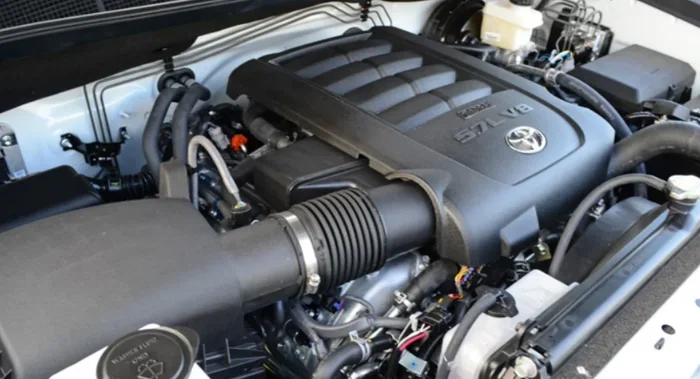
- Engine Type: The 2024 and older models used a 5.7-liter V8. The 2025 model uses a 3.4-liter twin-turbo V6 hybrid.
- Horsepower: The old V8 made 381 horsepower. The new V6 hybrid makes 389 horsepower. That is actually a slight increase.
- Torque: The V8 produced 401 lb-ft. The new V6 hybrid produces 479 lb-ft. A big improvement in low-end torque.
- Fuel Economy: The V8 averaged around 13-16 MPG. The V6 hybrid improves this to around 20-22 MPG combined.
- Emissions: The V6 hybrid produces fewer emissions. This helps Toyota meet stricter environmental standards.
The V6 hybrid clearly has advantages in most areas. It is more powerful, more efficient, and more modern. The only thing missing is the classic V8 sound and feel. But for most truck owners, the numbers matter more than the engine configuration.
Performance and Towing Capabilities
Trucks are work vehicles first. The 2025 Toyota Tundra proves that a V6 hybrid can handle serious duty. Toyota engineered this truck for real-world performance. Whether you are hauling cargo or towing a trailer, the Tundra delivers.
The maximum towing capacity reaches up to 12,000 pounds when properly equipped. That is enough for most travel trailers, boat trailers, and utility trailers. The payload capacity maxes out around 2,200 pounds depending on the configuration.
Real-World Performance Insights
In daily driving, the Tundra feels responsive and capable. The twin-turbo V6 provides smooth power throughout the RPM range. You do not have to rev it hard to get moving. The electric motor fills in any gaps. This makes the truck feel effortless in city traffic and on the highway.
When you need to tow, the system activates additional power. The electric motor provides instant torque. This helps with launching heavy loads. The 10-speed automatic transmission shifts smoothly and keeps the engine in its power band.
If you are planning to program a key fob for your new Tundra, you can do it yourself without visiting the dealership. Check out our guide on programming a key fob without going to the dealership for helpful tips.
Fuel Economy Expectations
One of the biggest benefits of the new powertrain is improved fuel economy. The V6 hybrid delivers better MPG than the old V8 ever could. Here is what you can expect:
- City Driving: Around 20-22 MPG
- Highway Driving: Around 24-26 MPG
- Combined Average: Around 21-23 MPG
These numbers are very competitive for a full-size truck. They rival some mid-size truck engines. The hybrid system shuts off the engine at idle to save fuel. It also captures energy during braking. These small improvements add up over time.
2025 Toyota Tundra Trim Levels and Configurations
The 2025 Tundra comes in several trim levels. Each trim offers different features and capabilities. Here is a quick overview of what is available:
- SR: The base trim. It includes the standard twin-turbo V6 hybrid. Good for buyers who want a work truck without extra frills.
- SR5: Adds more comfort features. This is a popular choice for daily drivers who also need truck capability.
- XLE: Offers upgraded interior materials and additional tech features. A good middle-ground option.
- XSE: Sport-oriented trim with unique styling cues. Appeals to buyers who want a more aggressive look.
- Limited: Premium features and luxury appointments. For buyers who want the full package.
- Platinum: Top-tier trim with the most advanced technology and comfort features.
- 1794 Edition: A rugged off-road focused trim. Named after Toyota’s heritage. Includes special styling and upgraded suspension.
- TRD Pro: The ultimate performance trim. Comes with upgraded skid plates, off-road tires, and specialized tuning.
All trims come with the same 3.4-liter twin-turbo V6 hybrid engine. There is no V8 option available for the 2025 model year. This is a significant change from previous generations where buyers could choose between engine options.
Maintenance and Ownership Considerations
Owning a 2025 Toyota Tundra means staying on top of regular maintenance. The twin-turbo V6 hybrid system has its own maintenance requirements. But Toyota has designed it for reliability and longevity.
Regular oil changes are essential. Use the recommended synthetic oil for best performance. The turbochargers need proper cooling, so avoid shutting off the engine immediately after hard driving. Let the engine idle for a minute or two to cool down the turbo bearings.
The hybrid battery system is designed to last the life of the vehicle. Toyota backs this with an extensive warranty program. The regenerative braking system also reduces wear on traditional brake components. This means lower maintenance costs over time.
Keeping your truck running well also means paying attention to basic maintenance items. For example, a fresh serpentine belt can make a noticeable difference in how your truck runs. Learn more about whether a new serpentine belt improves performance in our article does your car run better with a new serpentine belt.
Common Maintenance Tasks
- Oil and filter changes every 5,000-10,000 miles
- Tire rotations every 5,000-7,500 miles
- Brake inspections every 15,000 miles
- Hybrid battery health checks during regular service
- Coolant flushes every 60,000 miles
- Transmission fluid changes every 60,000 miles
How the 2025 Tundra Compares to Competitors
The full-size truck market is competitive. The 2025 Toyota Tundra faces rivals from Ford, Chevrolet, Ram, and GMC. Let us look at how the Tundra stacks up against the competition.
Tundra vs. Ford F-150
The Ford F-150 offers both V6 and V8 engine options. The base 3.3-liter V6 produces 330 horsepower. The 5.0-liter V8 makes 400 horsepower. The F-150 also offers a hybrid option called the PowerBoost. The Tundra’s twin-turbo V6 hybrid competes directly with the F-150 PowerBoost.
Tundra vs. Chevrolet Silverado
Chevrolet uses a 6.2-liter V8 in many Silverado configurations. This engine produces 420 horsepower. The Silverado also offers a 2.7-liter turbo V4 as a base engine. The Tundra’s V6 hybrid falls between these two options in terms of power output.
Tundra vs. Ram 1500
Ram offers a 3.0-liter twin-turbo V6 diesel and a 5.7-liter HEMI V8. The Tundra’s V6 hybrid competes well with the Ram’s standard V6. The HEMI V8 offers more raw power but worse fuel economy. The Tundra strikes a nice balance between the two.
Overall, the 2025 Tundra holds its own in the competitive truck segment. The hybrid V6 gives it an edge in fuel economy. Toyota’s reputation for reliability gives it an edge in long-term ownership. The twin-turbo setup gives it an edge in low-end torque.
What This Means for the Future of Toyota Trucks
The move away from the V8 signals a bigger trend in the truck world. Automakers are electrifying their lineups. Toyota is leading the way with its hybrid approach. The i-FORCE MAX system represents a bridge between traditional combustion engines and full electrification.
Toyota has confirmed that future truck models will continue this path. The next generation of Toyota vehicles will likely feature more electrified powertrains. This includes hybrid and potentially full electric options. The 2025 Tundra is just the beginning.
For current truck buyers, this means you are getting a modern, efficient, and powerful truck. The twin-turbo V6 hybrid is not a compromise. It is an upgrade. Toyota engineered it to meet the demands of truck owners while adapting to changing market expectations.
If you are concerned about starting your Tundra without the remote key, rest assured that the 2025 model supports keyless start. You can start your car without the remote key using the physical key or the key fob. Learn more about this in our article can I start my car without the remote key.
Final Thoughts on the 2025 Toyota Tundra Engine
The 2025 Toyota Tundra proves that a V8 is no longer necessary for a great truck. The 3.4-liter twin-turbo V6 hybrid delivers the power, capability, and reliability that buyers expect. With 389 horsepower and 479 lb-ft of torque, this engine handles any task you throw at it.
Toyota made a bold move by ditching the V8. But the results speak for themselves. The new Tundra is more powerful, more efficient, and more refined than its predecessor. It competes well against rival trucks in every category that matters.
If you are in the market for a new full-size truck, the 2025 Tundra deserves a serious look. It offers everything a truck buyer needs and more. The hybrid powertrain is the future, and Toyota is leading the charge.
Remember to take care of your truck with regular maintenance. A well-maintained Tundra will last for hundreds of thousands of miles. Keep up with oil changes, tire rotations, and scheduled services. Your truck will reward you with years of reliable performance.
For any issues with your truck’s security system, check out our guide on getting your car out of anti-theft mode with a fob. This can save you time and frustration if your Tundra ever locks you out.
Frequently Asked Questions
Does the 2025 Toyota Tundra have a V8 engine option?
No, the 2025 Toyota Tundra does not offer a V8 engine. It comes standard with a 3.4-liter twin-turbo V6 hybrid engine called the i-FORCE MAX. This is a significant change from previous model years that featured a 5.7-liter V8.
How much horsepower does the 2025 Toyota Tundra produce?
The 2025 Toyota Tundra produces a combined 389 horsepower from its twin-turbo V6 hybrid system. The engine alone contributes the majority of this power, with the electric motor providing an additional boost during acceleration and heavy loads.
Is the 2025 Toyota Tundra twin-turbo V6 hybrid reliable?
Yes, Toyota built the i-FORCE MAX hybrid system with reliability in mind. The company uses proven technology and extensive testing. The hybrid battery is designed to last the lifetime of the vehicle. Regular maintenance will keep the system running strong for years.
Can the 2025 Toyota Tundra tow as much as the previous V8 model?
Yes, the 2025 Tundra can tow up to 12,000 pounds when properly equipped. This matches or exceeds the towing capacity of the previous V8-equipped models. The twin-turbo V6 hybrid produces more torque than the old V8, which helps with towing performance.
Will there ever be a V8 option for the 2025 Toyota Tundra?
Toyota has not announced any plans to bring back a V8 option for the 2025 Tundra. The company is focused on hybrid and electrified powertrains for the future. It is possible that future generations could offer different engine choices, but for now, the twin-turbo V6 hybrid is the only option.
How does the 2025 Tundra’s fuel economy compare to the old V8 model?
The 2025 Tundra’s V6 hybrid delivers significantly better fuel economy than the old V8. You can expect around 20-22 MPG in the city and 24-26 MPG on the highway. The old V8 averaged roughly 13-16 MPG combined. This represents a substantial improvement in fuel efficiency.