So What Happens If You Dont Relearn a Throttle Body
Skipping the throttle body relearn process after a cleaning or replacement can cause serious drivability issues. Your engine may experience rough idle, stalling, hesitation, and even trigger a check engine light. Relearning a throttle body is a simple step that ensures your ECU recalibrates correctly and your engine runs at peak performance.
If you have ever cleaned or replaced your throttle body, you know it feels like a small win. The part looks fresh. The intake tract is free of carbon buildup. But here is the thing most people miss. You are not done yet.
Failing to relearn a throttle body after service can lead to a host of annoying and sometimes costly engine problems. Your vehicle’s computer needs to relearn how the throttle body operates in your specific driving conditions. Without this step, your engine idle can become unstable, your acceleration may feel sluggish, and warning lights may appear on your dashboard.
This guide walks you through exactly what happens if you skip this critical step. You will learn about the symptoms to watch for, the causes behind them, and how to properly reset your throttle body in just a few simple steps. Whether you are a DIY mechanic or a curious car owner, this information will help you keep your engine running the way it should.
Key Takeaways
- Engine problems arise: Skipping the relearn can cause rough idle, stalling, and hesitation.
- Check engine light risks: Your ECU may store fault codes if the throttle body is not reset.
- Simple fix: Relearning takes only 15 to 30 minutes and requires no special tools.
- Cost savings: Doing it yourself avoids expensive dealer visits and unnecessary parts replacement.
- Drive cycle matters: Completing a proper drive cycle after the reset ensures full ECU adaptation.
- Common mistake: Many people clean the throttle body but forget the most critical step.
- Prevention is easy: Always relearn after any throttle body service to maintain smooth engine operation.
📑 Table of Contents
- What Does a Throttle Body Do and Why Does It Matter?
- Why Do You Need to Relearn a Throttle Body?
- What Happens If You Dont Relearn a Throttle Body?
- Common Symptoms and Warning Signs
- Common Causes That Trigger a Throttle Body Reset
- How to Relearn a Throttle Body the Right Way
- Expert Tips and Mistakes to Avoid
- Conclusion
What Does a Throttle Body Do and Why Does It Matter?
Your throttle body is a small but important part of your engine’s intake system. It controls how much air flows into the engine. When you press the gas pedal, the throttle plate opens wider to let more air in. When you lift your foot, it closes back down.
In modern cars, this is all managed electronically. The system is called drive-by-wire. There is no physical cable connecting your pedal to the throttle. Instead, sensors send signals to the engine control module, also known as the ECM. The ECM then tells the throttle body how far to open.
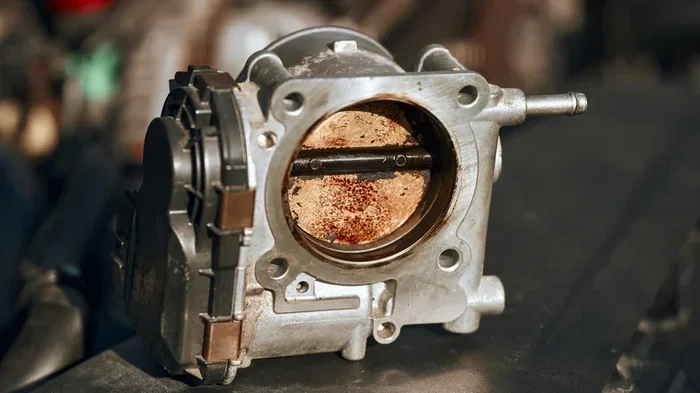
Over time, carbon deposits build up on the throttle plate and the bore. This buildup restricts airflow and throws off the air-fuel ratio your engine depends on. That is why many mechanics recommend a throttle body cleaning as part of regular maintenance. But cleaning the part is only half the job. The other half is making sure the ECM relearns the correct operating parameters.
How the ECM Adapts to Your Throttle Body
Your engine computer constantly adjusts things behind the scenes. It learns your driving habits, the altitude you drive at, and the temperature conditions. It stores these adaptations in its memory. This process is called throttle body adaptation or ECU adaptation.
When you remove the intake or clean the throttle body, you wipe out all of that learned data. The ECM goes back to a default baseline. If you do not let it relearn, it will run the engine with outdated or incorrect values. This mismatch between what the ECM expects and what the throttle body is actually doing is the root cause of most post-cleaning problems.
Why Do You Need to Relearn a Throttle Body?
Think of it this way. Your ECM is like a pilot flying a plane. The pilot has memorized the route, the wind patterns, and the landing approach. Now imagine someone changes the cockpit instruments mid-flight. The pilot would be flying blind without recalibrating. That is exactly what happens to your engine when you skip the throttle body reset.
The idle relearn procedure allows the ECM to study the throttle body in its clean, fresh state. It records the new baseline positions for the throttle plate at idle, part throttle, and full throttle. It also recalibrates the idle air control system, which manages engine RPM when you are not pressing the gas pedal.
Without this relearn, the ECM is essentially guessing. And guessing leads to poor performance, increased fuel consumption, and potential long-term damage to other components like the throttle position sensor and mass airflow sensor.
What the Relearn Process Actually Does
During a proper relearn a throttle body procedure, the ECM goes through several key steps. First, it closes the throttle plate to the factory-specified idle position. Then it monitors the engine RPM and adjusts the idle air control valve to hit the target idle speed. Next, it tests the throttle response at various pedal positions. Finally, it stores all of these new values in its adaptive memory.
This process usually takes about 15 to 30 minutes, depending on the vehicle make and model. Some cars require a specific drive cycle to complete the relearn fully. The drive cycle is a series of driving conditions designed to test all engine systems under controlled parameters.
What Happens If You Dont Relearn a Throttle Body?
So what actually goes wrong? The short answer is a lot of things. Your engine relies on precise air intake to maintain the correct air-fuel ratio. When the ECM does not have updated throttle body data, that precision falls apart. Here are the most common consequences.
Rough or Unstable Idle
The most immediate symptom of a missed relearn is a rough idle. Your engine may fluctuate between too high and too low RPM at a standstill. You might notice the tachometer needle bouncing around. Some drivers describe it as a vibrating or shaking sensation felt through the steering wheel or the entire cabin.
This happens because the ECM does not know where the throttle plate rests at idle. It tries to compensate using the idle air control valve, but the compensation is based on old data. The result is an engine that hunts for the right RPM and never settles.
Engine Stalling
In more serious cases, your engine may stall. This is especially common at stoplights or when coming to a full stop. If the ECM cannot maintain a stable idle speed, the engine simply shuts off. A stalled engine at an intersection is not just inconvenient. It can be dangerous.
Stalling after a throttle body cleaning is one of the top complaints in online car forums. And the fix is almost always the same. Perform a proper throttle body relearn.
Engine Hesitation and Lag
When you press the gas pedal and the engine sputters or delays before responding, that is called engine hesitation. This is a direct result of the ECM using incorrect throttle position data. The pedal sensor tells the computer to open the throttle, but the computer does not know how wide to open it because it has not relearned the new baseline.
You may also feel a slight lag between pressing the pedal and feeling the acceleration. This is sometimes called throttle lag. While it might seem minor at first, it can worsen over time and make your daily driving uncomfortable.
Check Engine Light and Fault Codes
Your ECM is smart. When it detects values that fall outside expected ranges, it stores a fault code and illuminates the check engine light. Common codes you might see include P0505 for idle control system malfunction or P0120 for throttle position sensor circuit issues.
These codes do not always mean something is broken. Often, they simply mean the ECM has not been given the chance to relearn after service. But if ignored, the codes can lead to failed emissions tests and unnecessary parts replacement.
Poor Fuel Economy
A throttle body that has not been relearned can also hurt your wallet at the pump. When the ECM runs the engine with incorrect fuel trim values, it tends to run rich. That means it injects more fuel than necessary. Over time, this wastes gas and can even damage your catalytic converter.
Drivers who skip the relearn step often report a noticeable drop in miles per gallon within the first few weeks after a throttle body cleaning. This is a clear sign that the ECM is struggling to maintain the correct air-fuel ratio.
Long-Term Damage to Other Components
While the immediate symptoms are frustrating enough, the long-term risks are what really matter. Running an engine with incorrect throttle data puts extra stress on several components. The throttle position sensor works harder to compensate for bad baseline values. The mass airflow sensor tries to adjust fuel delivery based on incorrect air intake readings. Over months, this strain can lead to premature failure of these parts.
You might end up paying for a throttle body replacement or sensor repair that could have been avoided with a simple relearn procedure. Prevention is always cheaper than repair.
Comparison: With vs. Without Throttle Body Relearn
| Condition | Idle Quality | Throttle Response | Check Engine Light | Fuel Economy | Long-Term Risk |
|---|---|---|---|---|---|
| With Relearn | Smooth and stable | Immediate and responsive | No fault codes | Normal or improved | Minimal risk |
| Without Relearn | Rough and fluctuating | Delayed or hesitant | Possible fault codes | Reduced by 5 to 15 percent | Increased wear on sensors and converter |
Common Symptoms and Warning Signs
Now that you know what can go wrong, let us talk about how to spot the problems early. Not every symptom is obvious. Some are subtle and easy to overlook. Here are the warning signs you should never ignore after a throttle body service.
Symptom 1: Fluctuating RPM at Idle
Watch your tachometer after starting the engine. A healthy idle should hold steady around 600 to 800 RPM. If the needle swings up and down by 100 RPM or more, your throttle body likely needs a relearn. This is often the first and most noticeable sign.
Symptom 2: Stalling at Stoplights
If your engine dies when you come to a complete stop, do not ignore it. This is a classic sign that the ECM cannot maintain idle speed without updated throttle body data. It is especially common in drive-by-wire vehicles where the ECM has full control over the throttle plate.
Symptom 3: Sluggish Acceleration
Press the gas pedal and feel for any delay or stumbling. A properly relearned throttle body should deliver smooth, immediate power. If your engine feels like it is dragging or struggling to respond, the ECM is probably working with outdated adaptation values.
Symptom 4: Illuminated Check Engine Light
A glowing check engine light after a throttle body cleaning is a red flag. Use an OBD2 scanner to read the codes. If you see idle-related codes like P0505 or P0507, the relearn procedure is almost certainly needed.
Symptom 5: Unusual Engine Sounds
A healthy engine at idle should sound smooth and consistent. If you hear clicking, sputtering, or a rough grinding noise, the engine is struggling to maintain the correct idle speed. This can be a sign that the idle air control system is fighting against bad throttle body data.
Common Causes That Trigger a Throttle Body Reset
You do not just need to relearn after a cleaning. Several situations can wipe out the ECM’s stored throttle body adaptations. Knowing these causes helps you understand why the relearn step is so important.
Throttle Body Cleaning
Carbon buildup is the number one reason mechanics clean throttle bodies. Over thousands of miles, soot and deposits accumulate on the throttle plate and inside the bore. This restricts airflow and causes many of the symptoms we discussed earlier. Cleaning removes the buildup, but it also resets the adaptation values to zero.
Throttle Body Replacement
If your throttle body has failed mechanically or electrically, a replacement is necessary. A new throttle body comes with factory default settings. The ECM has no idea how this new part behaves in your specific engine. A full relearn is absolutely essential after any replacement.
ECM Battery Disconnect
Disconnecting the battery to reset the ECM will also clear all throttle body adaptations. Some people do this intentionally to clear fault codes. Others do it accidentally when working on another part of the car. Either way, the result is the same. The ECM needs to relearn the throttle body settings from scratch.
ECM Software Update
Dealers and independent shops sometimes perform ECM software updates. These updates can change how the ECM manages the throttle body. After an update, a relearn procedure ensures the new software works correctly with your specific hardware.
Throttle Body Sensor Replacement
Replacing the throttle position sensor or the accelerator pedal position sensor can also trigger the need for a relearn. These sensors provide critical input to the ECM. When new sensors are installed, the ECM must recalibrate its understanding of throttle position and pedal input.
How to Relearn a Throttle Body the Right Way
The good news is that relearning a throttle body is straightforward. You do not need expensive diagnostic tools or a trip to the dealer. In most cases, you can do it yourself at home with just a few simple steps.
Method 1: Key-On Engine Off (KOEO) Procedure
This is the most common method for many vehicle makes including Ford, GM, and Chrysler. Here is how it works.
- Turn the ignition key to the ON position. Do not start the engine.
- Wait for the dashboard lights to illuminate and the ECM to power up. This usually takes about 10 seconds.
- Wait an additional 30 seconds to allow the ECM to begin its self-check.
- Start the engine and let it idle. Do not touch the gas pedal.
- Allow the engine to idle for 3 to 5 minutes while the ECM relearns the throttle body baseline.
- Turn the engine off and then restart it. Check for smooth idle.
Method 2: Drive Cycle Relearn
Some vehicles require a specific drive cycle to complete the relearn. A drive cycle is a series of driving maneuvers designed to test and recalibrate engine systems under various conditions.
- Start the engine and let it idle for 2 minutes with the air conditioner off.
- Drive at moderate speed (30 to 45 mph) for 5 minutes without hard acceleration.
- Accelerate gently to 55 mph and hold for 2 minutes.
- Decelerate without braking and let the engine coast down to 20 mph.
- Repeat the acceleration and deceleration cycle two more times.
- Finish by idling the engine for 3 minutes at a stoplight.
Always check your vehicle-specific service manual for the exact drive cycle procedure. Each manufacturer has slightly different requirements.
Method 3: Scan Tool Relearn
If you have access to an OBD2 scan tool, many modern scanners include a dedicated throttle body relearn function. You simply connect the tool, select the relearn option, and follow the on-screen prompts. This is the fastest and most reliable method for vehicles that support it.
Quick Tips for a Successful Relearn
- Always make sure your battery is fully charged before starting the relearn. A weak battery can interrupt the process.
- Do not press the gas pedal during the idle relearn phase unless instructed to do so.
- Close all electrical accessories like the A/C, radio, and headlights during the procedure.
- Be patient. Rushing through the relearn is the most common mistake DIYers make.
- If the first attempt does not work, try the drive cycle method instead.
Expert Tips and Mistakes to Avoid
Over the years, mechanics and car enthusiasts have learned a lot about what works and what does not when it comes to throttle body relearns. Here are some expert insights to help you get the best results.
Common Mistakes That Cause Relearn Failures
The biggest mistake people make is assuming the relearn is complete after just a few minutes of idling. The ECM needs time and specific driving conditions to fully adapt. Another common error is pressing the gas pedal during the idle phase. This confuses the ECM and can reset the learning process before it finishes.
Some people also skip the relearn entirely because the engine seems to run fine after a few minutes. But the adaptation values may not be fully calibrated. Problems like poor fuel economy and subtle hesitation can linger for weeks before becoming noticeable. By then, the engine has been running inefficiently for a long time.
When to Seek Professional Help
Most throttle body relearns are simple enough for any car owner to handle. However, there are times when professional help is the right call. If you have completed the relearn procedure and still experience rough idle or stalling, there may be an underlying mechanical issue. A worn throttle position sensor, a vacuum leak, or a dirty mass airflow sensor could be the real culprit.
A professional mechanic with a quality scan tool can also verify that the throttle body adaptations have been properly stored in the ECM memory. This gives you peace of mind that the job was done correctly.
How Often Should You Relearn?
You only need to relearn after specific events: a throttle body cleaning, a throttle body replacement, an ECM battery disconnect, or an ECM software update. There is no need to relearn as part of routine maintenance if you have not performed any of these services. However, if you notice idle quality declining over time, a relearn can sometimes restore smooth operation without any additional service.
Conclusion
The answer to what happens if you do not relearn a throttle body is simple. Your engine suffers. From rough idle and stalling to hesitation and poor fuel economy, the consequences are real and frustrating. The good news is that preventing all of these problems is incredibly easy. A proper throttle body relearn takes just a few minutes and requires no special equipment.
Whether you just cleaned your throttle body to remove carbon buildup or replaced it entirely, do not skip the relearn step. Your ECM needs those updated adaptation values to run the engine smoothly and efficiently. Take the extra time, follow the procedure for your specific vehicle, and enjoy the peace of mind that comes with a job done right.
Your engine works hard for you every day. Give it the recalibration it needs after service, and it will reward you with reliable, smooth performance for miles to come.
Frequently Asked Questions
Can I drive my car without relearning the throttle body?
You can drive short distances, but it is not recommended. Your engine will likely run rough, idle unstable, and may stall at stops. The ECM will also run the engine with incorrect fuel trim values, which can reduce fuel economy and strain other components over time.
How long does it take to relearn a throttle body?
The process typically takes 15 to 30 minutes. Simple key-on engine off procedures can be done in about 10 minutes. A full drive cycle relearn may take longer since it involves specific driving conditions. Always follow the procedure for your particular vehicle make and model.
Will a throttle body relearn clear the check engine light?
Not always. If the check engine light is on due to a fault code stored in the ECM, you will need to clear the code with an OBD2 scanner after completing the relearn. Sometimes the code clears on its own once the ECM has successfully relearned the throttle body parameters and confirmed proper operation.
Do I need special tools to relearn a throttle body?
For most vehicles, you do not need any special tools at all. A basic key-on engine off procedure requires nothing more than your ignition key. However, some newer vehicles benefit from a scan tool with throttle body relearn capability. A basic OBD2 scanner is a worthwhile investment for any car owner.
What happens if the throttle body relearn fails?
If the relearn fails, your engine will continue to run with incorrect idle and throttle values. You may experience persistent rough idle, stalling, hesitation, and a check engine light. In this case, double-check that your battery is fully charged and try the drive cycle method. If problems persist, consult a mechanic to rule out underlying mechanical issues.
Is throttle body relearn the same as a throttle body reset?
Yes, these terms are used interchangeably by most mechanics and car owners. Both refer to the process of allowing the ECM to relearn the correct operating parameters for the throttle body after it has been cleaned, replaced, or reset. Whether you call it a relearn or a reset, the goal is the same, and the procedure is essentially identical.