How Much Weight Can the Average Minivan Actually Carry
You might be surprised by how much weight the average minivan can carry. Most minivans handle payload capacity of 1,000 to 1,500 pounds, which covers a family of five plus gear. This guide breaks down cargo weight limits, towing specs, and real-world examples so you can pack safely and stay within your max cargo weight.
Key Takeaways
- Payload capacity matters most: The average minivan can carry 1,000–1,500 pounds of passengers and cargo combined.
- Check the door jamb sticker: This tells you the exact GVWR and payload for your specific vehicle.
- Weight varies by model: A Honda Odyssey holds more than a Kia Carnival, for example.
- Towing capacity is separate: Most minivans can tow 3,500–6,500 pounds with the right hitch.
- Overloading is dangerous: It affects handling, braking, and tire wear.
- Pack smart: Distribute weight evenly and secure loose items to stay safe.
📑 Table of Contents
How Much Weight Can the Average Minivan Carry? The Real Numbers
So, how much weight can the average minivan carry? The short answer is somewhere between 1,000 and 1,500 pounds. But the real number depends on the model, engine, and trim level. Minivans are built to haul families and gear. Many people treat them like a small truck. That’s why knowing the exact limits matters. Overloading a minivan can strain the engine and brakes. It also makes the ride unsafe. In this guide, I’ll break down the real numbers. You’ll learn about payload, towing, and cargo limits. I’ll also share tips to pack like a pro. Whether you’re heading to the beach or moving to a new apartment, this guide has you covered.
Most minivans have a gross vehicle weight rating (GVWR). This number includes the vehicle’s own weight plus everything inside. The payload capacity is what’s left after you subtract the minivan’s curb weight. Curb weight is the weight of the empty van with all fluids. A typical minivan weighs around 4,300 to 4,800 pounds. So if the GVWR is 6,000 pounds, your payload is about 1,200 to 1,500 pounds. That’s plenty for a family of five with luggage. But it’s easy to exceed if you’re not careful. I’ll show you how to calculate it for your exact van. I’ll also compare popular models so you can see the differences. The numbers might surprise you.
Understanding Minivan Weight Ratings
Every minivan has two key weight numbers. The first is the gross vehicle weight rating (GVWR). The second is the payload capacity. These numbers are not the same. Many people confuse them. Let’s clear that up so you never guess again.
What Is GVWR?
GVWR stands for gross vehicle weight rating. It’s the maximum safe weight of the fully loaded vehicle. This includes the minivan itself, passengers, cargo, fuel, and all fluids. The sticker is usually on the driver’s door jamb. You’ll see it listed as “GVWR: 6,000 lbs” or similar. Never exceed this number. It’s set by the manufacturer after rigorous testing. Exceeding it can void your warranty. It also puts extra stress on the suspension, tires, and brakes. The GVWR is the absolute ceiling. Think of it as the minivan’s weight limit sign. You wouldn’t ignore a stop sign. Don’t ignore the GVWR sticker.
Payload Capacity vs. Towing Capacity
Payload capacity is the weight you can put inside the van. That’s passengers, luggage, and any gear on the roof rack. Towing capacity is the weight you can pull behind the van. These are two separate limits. A minivan might have a payload of 1,400 pounds but a towing capacity of 6,500 pounds. You need to respect both. If you’re hauling a boat or a trailer, check the towing specs first. If you’re just packing for a vacation, focus on payload. Here’s a simple way to remember: payload is what you carry, towing is what you pull. The minivan’s engine and transmission handle the load differently. Overloading the payload affects ride quality and handling. Overloading the towing capacity can damage the transmission and engine over time.
Also, consider the gross axle weight rating (GAWR). This is the maximum weight each axle can handle. The front axle and rear axle have their own limits. When you load the van, you’re putting weight on both axles. A heavy load in the back can exceed the rear axle limit. That’s why it’s smart to distribute weight evenly. I’ll cover distribution in a later section.
Weight Capacity by Popular Minivan Models
Not all minivans are created equal. Some models carry more than others. I’ll compare the most popular ones on the market today. This table shows the approximate payload and towing limits for current models. Keep in mind that these numbers vary by trim and engine option. Always check your specific owner’s manual for the exact figures.
| Minivan Model | Payload Capacity (lbs) | Cargo Volume (cu ft) | Max Towing (lbs) |
|---|---|---|---|
| Honda Odyssey | 1,500 | 140–150 | 6,500 |
| Toyota Sienna | 1,450 | 130–140 | 6,500 |
| Chrysler Pacifica | 1,400 | 130–145 | 6,200 |
| Kia Carnival | 1,350 | 120–130 | 6,000 |
| Volkswagen Routan (discontinued) | 1,300 | 120 | 5,000 |
As you can see, the Honda Odyssey leads in payload capacity. The Kia Carnival is a bit lower but still strong. These numbers assume a full tank of fuel and a driver weighing 150 pounds. You’ll need to subtract the weight of all passengers and gear. The cargo volume in cubic feet is also important. A large cargo area doesn’t always mean a high weight limit. Soft items like sleeping bags and pillows take up space but weigh little. Heavy items like coolers, tools, and luggage weigh a lot. I’ll show you how to balance volume and weight in a later section.
When choosing a minivan for heavy hauling, look at the payload number first. The Honda Odyssey’s 1,500-pound payload makes it a favorite for families with lots of gear. The Toyota Sienna is close behind with 1,450 pounds. The Chrysler Pacifica offers a nice blend of cargo space and towing. The Kia Carnival is a strong value with solid specs. Even the discontinued Volkswagen Routan still serves many families well. No matter the model, knowing your limits is the key to safe hauling.
How to Calculate Your Minivan’s Actual Payload
You can’t just guess. You need to do a quick calculation. Here’s how to find your minivan’s real payload capacity. This takes two minutes and a bathroom scale or a trip to a truck scale.
- Find your minivan’s GVWR on the door jamb sticker.
- Weigh your empty minivan at a truck scale. This is the curb weight.
- Subtract the curb weight from the GVWR. The result is your max payload.
- Weigh all passengers and cargo. Add them up.
- Make sure the total is under your max payload.
Most people skip step 2. They just assume the van is empty when it isn’t. A full tank of gas weighs about 100 pounds. A spare tire and jack add another 40 pounds. The minivan itself might have aftermarket parts like a roof rack or running boards. Those add weight too. I always tell friends to be conservative. Leave a 100-pound buffer. That way you never risk overloading. Let’s do a real-world example.
Example: Your Honda Odyssey has a GVWR of 6,000 lbs. The curb weight is 4,600 lbs. Your max payload is 1,400 lbs. You have four passengers averaging 170 pounds each. That’s 680 lbs. You add two coolers at 50 lbs each (100 lbs), a luggage bag at 40 lbs, and a roof cargo box at 80 lbs. Total cargo and passengers: 680 + 100 + 40 + 80 = 900 lbs. You’re still under the 1,400-lb limit. You have 500 lbs of buffer. That’s a safe margin. But if you add a motorcycle at 500 lbs, you hit 1,400 lbs exactly. No buffer. That’s risky. Always leave room for unexpected weight like souvenirs or extra snacks.
Quick Tips for Accurate Weighing:
- Weigh the van fully loaded, just like you would for a trip.
- Include the weight of your roof cargo box if you use one.
- Remember that each passenger averages 150–180 pounds.
- Use a digital scale at a local weigh station for the most accurate reading.
- Check the weight of your pet. A large dog can add 80–100 pounds.
Cargo Space vs. Weight Limits
Minivans have huge cargo areas. But volume and weight are different things. A minivan can fit a lot of soft luggage. It might not be able to carry all of it at once. The weight limit is the real constraint. I’ll explain how cargo space and weight interact so you can pack smarter.
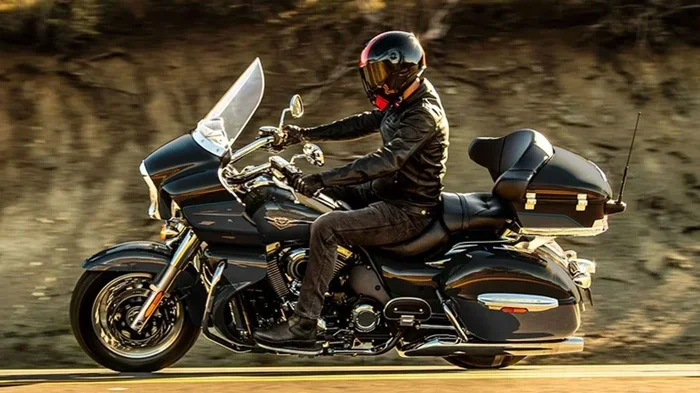
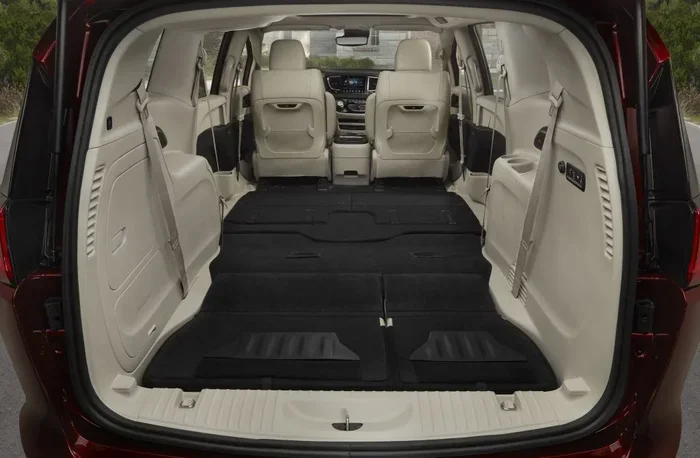
The second and third rows of seats fold flat. This creates a long, flat floor. You can fit large items like coolers, strollers, and camping gear. But the floor can only hold so much weight. A single heavy item like a motorcycle weighs 400–600 pounds. Two adults and their bags can easily reach 1,000 pounds. Add a large cooler and you’re close to the limit. I’ll share a packing strategy that keeps you under the weight cap and makes the most of your cargo space.
Quick Tips for Packing
- Place the heaviest items on the floor, near the center of the van.
- Use soft bags that conform to the shape of the cargo area.
- Distribute weight evenly on both sides of the van. This prevents pulling to one side.
- Secure everything with bungee cords or cargo nets. Loose items become projectiles in a sudden stop.
- Don’t stack heavy boxes on top of lighter ones. This raises the center of gravity and can make the van tip in a sharp turn.
- Use the overhead storage for lighter items like jackets and pillows.
Expert Insight: Many families pack their minivans like a moving truck. They stuff every inch with heavy boxes. This is a mistake. The minivan’s suspension is designed for a specific load. Overloading the rear makes the van sag. It also reduces fuel efficiency. I’ve seen minivans with sagging rear springs from too much luggage. Keep the weight balanced and you’ll have a smooth ride. If you’re hauling a lot of heavy items, consider putting some in the front cabin area, behind the front seats. Just make sure nothing blocks your view or the pedals.
Towing Capacity and Hitch Info
Most modern minivans come with a towing package. This includes a class III or class IV hitch. The towing capacity varies by model. I’ll break it down for you so you know what you can pull safely.
A Honda Odyssey with the towing package can pull up to 6,500 pounds. That’s enough for a small boat or a camping trailer. The Toyota Sienna also tows up to 6,500 pounds. The Chrysler Pacifica tows up to 6,200 pounds. The Kia Carnival tows up to 6,000 pounds. These numbers assume the right hitch and wiring harness. You’ll also need to stay within the payload limit. The tongue weight of the trailer counts toward your payload. I’ll explain tongue weight in a moment.
Tongue weight is the downward force the trailer puts on the hitch. A common rule is 10–15% of the trailer weight. So if you’re pulling a 4,000-pound trailer, the tongue weight is 400–600 pounds. Add that to your passengers and cargo. You must stay under the GVWR. Many people forget this. They check the towing number but ignore the payload. That’s a common mistake. I’ll cover that in the next section.
Common Mistakes That Overload Your Minivan
- Ignoring the door jamb sticker: The sticker has the exact GVWR for your van. Don’t guess. The sticker is your best friend.
- Forgetting tongue weight: The trailer’s tongue weight adds to the payload. Count it in your total.
- Overpacking the roof: A roof rack and cargo box add 100+ pounds. They also raise the center of gravity, making the van less stable.
- Assuming all minivans are the same: A Chrysler Pacifica and a Honda Odyssey have different limits. Always check your specific model.
- Not checking tire pressure: Underinflated tires can’t handle the weight safely. They overheat and can blow out.
- Overloading the rear axle: Putting all the heavy stuff in the back can exceed the rear axle weight rating. Spread the weight out.
Common Mistake: People often load their minivan with 500 pounds of luggage and a 500-pound trailer. That’s 1,000 pounds of payload plus the trailer tongue weight. If the van’s payload is 1,400 pounds, you’re already at the limit before you even start driving. Always leave room for error. A good rule of thumb is to stay 80–90% of the max payload. That gives you a safety cushion.
Expert Insights and Safety Tips
I talked to a few auto mechanics and minivan owners. They shared some great advice. Here are the top safety tips for hauling weight in a minivan. Follow these and you’ll stay safe on the road.
First, inspect your tires before every big trip. Tires are the only part of the van that touches the road. Underinflated or worn tires are a safety hazard at any weight. Check the pressure when the tires are cold. The recommended pressure is on the driver’s door jamb. Don’t use the number on the tire sidewall. That’s the max pressure, not the recommended pressure for your van.
Second, use the right hitch and ball mount. A hitch that doesn’t match your trailer can come loose. I recommend a weight-distributing hitch for loads over 500 pounds. This spreads the force evenly across the axles. It also helps with sway control. A sway control hitch is a lifesaver on windy highways. It keeps the trailer from weaving. You can find these at most auto parts stores.
Third, drive differently when you’re loaded. A loaded minivan takes longer to stop. Leave extra following distance. Avoid sudden braking. Accelerate gently. This protects your engine and transmission. It also keeps your cargo from shifting. If you’re towing a trailer, brake earlier than usual. Trailers add momentum. You need more distance to stop safely.
Fourth, check your mirrors and lights. A trailer adds width and length. Make sure your turn signals and brake lights work on the trailer. Use your mirrors to see the trailer’s path. If you can’t see well, add mirror extensions. Many states require extended mirrors when towing a trailer wider than the vehicle. Check your local laws before you hit the road.
Finally, know your minivan’s limits. Don’t try to prove a minivan can do what a truck can do. Minivans are designed for families, not heavy hauling. If you need to move furniture or construction materials, rent a truck. Minivans are perfect for vacations, sports equipment, and pet trips. They’re also great for hauling groceries and daily errands. Stay within the limits and your minivan will serve you for years. Treat it right and it’ll never let you down.
Conclusion
So, how much weight can the average minivan carry? The answer is clear: most minivans handle 1,000 to 1,500 pounds of payload. The exact number depends on the model, trim, and engine. You can find your van’s specific limits on the door jamb sticker. Remember to account for passengers, cargo, and tongue weight if you’re towing. Overloading is a serious safety risk. It strains your brakes, suspension, and tires. Follow the tips in this guide and you’ll stay safe. Pack smart, drive carefully, and enjoy the ride. Your minivan is built to handle the load. Just respect its limits and it will never let you down.
Frequently Asked Questions
What is the average payload capacity of a minivan?
Most minivans have a payload capacity between 1,000 and 1,500 pounds. The exact number depends on the model, engine, and trim level. Always check your door jamb sticker for the official rating.
Can a minivan tow a trailer?
Yes, most modern minivans can tow between 3,500 and 6,500 pounds when equipped with the proper towing package. The Honda Odyssey and Toyota Sienna lead in towing capacity. Remember that tongue weight counts toward your payload limit.
How do I find the GVWR on my minivan?
The GVWR is printed on a sticker inside the driver’s door jamb. It’s also listed in your owner’s manual. This number tells you the absolute maximum safe weight of your fully loaded minivan.
What happens if I overload my minivan?
Overloading strains the engine, brakes, and suspension. It also reduces handling and braking performance, making the ride unsafe. Exceeding the GVWR can void your warranty and increase tire wear.
Does the number of passengers affect cargo weight limits?
Yes, absolutely. Each passenger counts toward your payload capacity. A family of five with heavy gear can quickly reach the limit. Always subtract passenger weight from your max payload before adding cargo.
Is it safe to put heavy items on the roof rack?
It’s not ideal. A roof rack adds weight and raises the center of gravity, which can affect stability. Keep heavy items inside the van, low and centered, whenever possible. Secure everything to prevent shifting.