Where to Find the Paint Code in Your Owners Manual
Finding your paint code in the owners manual is easier than most car owners think. This guide walks you through every step to locate your vehicle’s factory color code quickly. You will learn where manufacturers hide the code, what it looks like, and how to use it for touch-up paint and repairs. We also cover what to do if you cannot find it in the manual.
Have you ever had a small scratch on your car and wished you could fix it perfectly? Maybe a parking lot door ding or a rock chip on the hood. Whatever the damage, the fix starts with one simple thing. You need the right paint code.
Many car owners do not even know this code exists. They assume matching paint is impossible without a body shop. But that is not true. The factory paint code unlocks access to touch-up paint that matches your car exactly. And the easiest place to find it is right inside your owners manual.
This guide will show you exactly how to find the paint code in your owners manual. We will cover every brand, every trick, and every backup plan. By the end, you will know your code and feel confident about your next repair.
Key Takeaways
- Owners Manual Location: The paint code is often listed in the specifications section or on a sticker inside the manual.
- Multiple Search Points: Manufacturers place paint codes in different spots, so knowing your brand helps.
- Alternative Locations Exist: If the manual fails, check the door jamb, under the hood, or the VIN plate.
- Paint Code Format Varies: Each brand uses its own system of letters, numbers, or a mix.
- Touch-Up Use: Your paint code unlocks exact factory-matched touch-up paint for minor damage.
- Dealership Access: Dealers can pull your color code using the VIN if all else fails.
- Online Tools Help: Many websites let you look up your paint code using just the VIN.
📑 Table of Contents
- Why Your Paint Code Matters
- How to Locate the Paint Code in the Owners Manual
- Common Places Manufacturers Hide the Paint Code
- What If You Cannot Find It in the Manual?
- How to Use Your Paint Code for Touch-Up and Repairs
- Quick Tips and Common Mistakes
- Expert Insights on Paint Codes and Vehicle Identification
- Key Takeaways
- Conclusion
Why Your Paint Code Matters
Your car’s paint code is like a fingerprint. No two vehicles share the same one. Even two cars of the same color from the same year can have different codes. That is because manufacturers mix custom shades for different markets and trim levels.
Here is why this small code carries so much weight:
- Exact Color Match: The code tells paint suppliers the precise formula used at the factory.
- Touch-Up Paint: You can order bottles of touch-up paint that blend seamlessly with your existing coat.
- Resale Value: Proper paint repair keeps your car looking sharp and protects its resale worth.
- Insurance Claims: Insurance adjusters often require the paint code for approved repair estimates.
- Custom Projects: Planning a restoration or custom job? The code gives you the starting point.
Without the correct code, you risk a visible mismatch. Even a slight color difference stands out under sunlight. That is why finding the right code matters so much.
What Does a Paint Code Look Like?
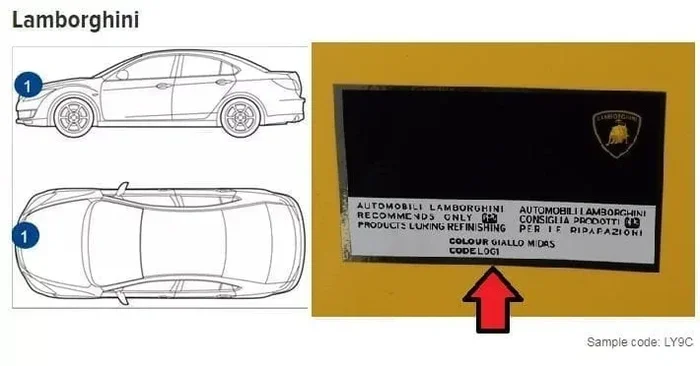
Paint codes vary by brand. Some use three letters like “XYZ.” Others use a mix of letters and numbers such as “ABC123.” A few brands use just a four-digit number. The code is usually short, often between three and seven characters.
For example, Ford uses codes like “LZ” or “9P.” Toyota uses codes like “040” or “3M2.” GM often uses longer alphanumeric codes like “WA3249.” The format depends entirely on the manufacturer. But no matter the style, the code is always printed on a label or sticker somewhere on the vehicle or in the manual.
How to Locate the Paint Code in the Owners Manual
The owners manual is your first stop. Most people flip straight to the table of contents and stop there. But the paint code lives deeper inside. Here is exactly where to look.
Check the Specifications Section
Open the manual and look for a section called “Specifications,” “Vehicle Data,” or “Technical Information.” This section usually appears in the first third of the manual. It contains details about your engine, dimensions, and tire size.
Right near those details, you will find the paint code. It is often listed as “Exterior Color Code” or simply “Paint Code.” The code sits next to a small color swatch or the name of the factory color. For instance, you might see something like “Inferno Red Pearl — Code: 3R8.”
Look for a Sticker Inside the Manual
Many manufacturers include a peel-and-stick label inside the manual cover. This label contains key vehicle data including the paint code. Flip through the pages near the front and back covers. You might find a small rectangular sticker with codes and numbers printed on it.
This sticker is especially common on newer vehicles. If your manual has one, you are in luck. Just write down the code and keep it somewhere safe.
Check the Warranty and Service Pages
Some brands hide the paint code in the warranty section. Look through pages about maintenance schedules or service intervals. The code might appear in a sidebar or a small box near the paint and body care instructions.
This is an easy spot to miss because most people skip warranty pages. But if you have already checked the specifications section and came up empty, this is the next place to look.
Common Places Manufacturers Hide the Paint Code
Not every brand follows the same layout. Some place the paint code in unexpected spots. Here is a breakdown of where different manufacturers tend to hide it.
Ford Paint Code Location
Ford owners should check the driver’s side door jamb first. The sticker there usually lists the paint code under “BC” or “Body Color.” In the owners manual, look in the “Vehicle Description” section. Ford often places the code near the beltline and safety information.
Toyota Paint Code Location
Toyota manuals often list the paint code in the “Vehicle Specifications” section. The code appears next to the color name. Toyota also places a label on the driver’s door frame with the code. Check the manual’s front cover sticker as well.
Chevrolet and GM Paint Code Location
GM vehicles often have a body plate located on the driver’s side door or the inner fender. The paint code sits on this plate. In the manual, look in the “Technical Data” section. GM uses a format that includes a base coat and clear coat indicator.
Honda and Acura Paint Code Location
Honda places the paint code on the driver’s side door jamb sticker. In the manual, check the “Vehicle Information” section. Honda codes are usually short, often just two or three characters. The code sits next to the color name like “Crystal Black Pearl.”
BMW and Luxury Brands
BMW and other luxury brands often use a more complex coding system. The paint code in the BMW owners manual is typically found in the “Technical Data” section. It may include a base color code and a metallic or pearl modifier. These codes can be longer and include letters and numbers.
What If You Cannot Find It in the Manual?
Do not panic. The manual is just the first place to check. Several other spots on your vehicle hold the paint code too.
The Driver’s Door Jamb
Open your driver’s door and look at the door frame. There is almost always a sticker or metal plate there. This label lists tire pressure, vehicle weight, and — you guessed it — the paint code. Look for text like “Paint Code,” “Color Code,” or “BC Code.”
The VIN Plate
Your vehicle identification number plate is another goldmine. Check under the hood, on the dashboard near the windshield, or on the driver’s door pillar. The VIN plate sometimes lists the paint code alongside the VIN itself.
Under the Hood or in the Trunk
Some manufacturers place a label under the hood, near the radiator support or the inner fender. A few brands hide a sticker in the trunk or under the spare tire well. Check these spots if the door jamb does not have the code.
Use the VIN to Look It Up Online
If you still cannot find the code, your VIN can help. The VIN encodes a wealth of information about your vehicle, including the factory paint color. Many free online tools let you enter your VIN and pull up the paint code instantly.
You can also call your dealership’s parts department. Give them your VIN and ask for the exterior paint code. They can look it up in their system within minutes.
How to Use Your Paint Code for Touch-Up and Repairs
Once you have the code, the real fun begins. Here is how to put it to good use.
Order Touch-Up Paint
With the paint code in hand, you can order touch-up paint from the dealership or online suppliers. Most touch-up kits include a small bottle of base coat, a clear coat, and a primer pen. Apply the primer to the scratched area first, then the base coat, then the clear coat.
Keep the touch-up bottle in your glove box. You never know when a small rock chip will appear on the highway.
Match Paint for Larger Repairs
For larger damage, you may need more than a touch-up bottle. Take the paint code to a local auto body shop. They can mix a custom batch of paint that matches your factory color exactly. This is especially important for metallic or pearl finishes, which are tricky to match without the code.
Paint Code vs. Color Name
Never rely on the color name alone. Two cars might both be called “Silver,” but they could have completely different paint formulas. Always use the code. The code is the only way to guarantee a perfect match.
| Color Name | Paint Code | Manufacturer |
|---|---|---|
| Super White | WA1234 | GM |
| Midnight Black | 3R8 | Toyota |
| Ruby Red Metallic | 9P | Ford |
| Crystal Black Pearl | NH503 | Honda |
As you can see from the table above, the same color name can vary wildly across brands. The paint code eliminates all confusion.
Quick Tips and Common Mistakes
Quick Tips
- Take a photo: Snap a picture of the paint code sticker or manual page. Save it on your phone for easy access.
- Write it down: Keep the code in your glove box in a small notebook or on a card.
- Check both sides: Some codes include a modifier. Make sure you copy the full code including any suffix letters.
- Verify with the VIN: After finding the code, cross-check it with an online VIN lookup tool to be sure.
- Act fast: Paint codes can change mid-year. If you own a late-model-year vehicle, double-check the code matches your production date.
Common Mistakes to Avoid
- Guessing the code: Never guess based on the color name. Always use the actual code.
- Ignoring the clear coat: Some codes include clear coat specifications. Ask your paint supplier about this.
- Using an old code: If your car was repainted before you bought it, the old code may not match. Verify with the VIN.
- Skipping the primer: Always use the recommended primer when applying touch-up paint for the best adhesion.
Expert Insights on Paint Codes and Vehicle Identification
Automotive paint experts agree that the paint code is one of the most overlooked pieces of vehicle information. Many car owners spend hundreds of dollars on color matching at body shops when the code was sitting in their manual the whole time.
“The paint code is the single most important piece of data for any paint repair,” says automotive color specialist Mark Dawson. “Whether it is a small touch-up or a full respray, the code eliminates guesswork and ensures a flawless match.”
Another expert tip from body shop professionals: always ask for the paint code when buying a used car. It helps you verify the vehicle’s original color and detect any previous repaints that might hide accident damage.
Knowing your paint code also helps with resale. When you list your car for sale, mentioning the exact factory color and code adds credibility. Buyers appreciate transparency about the vehicle’s history.
For classic car enthusiasts, paint codes are even more critical. Vintage vehicles often had unique factory colors that are no longer in production. The paint code helps restorers source the closest modern equivalent or mix a custom formula from scratch.
Key Takeaways
- Owners Manual Location: The paint code is often listed in the specifications section or on a sticker inside the manual.
- Multiple Search Points: Manufacturers place paint codes in different spots, so knowing your brand helps.
- Alternative Locations Exist: If the manual fails, check the door jamb, under the hood, or the VIN plate.
- Paint Code Format Varies: Each brand uses its own system of letters, numbers, or a mix.
- Touch-Up Use: Your paint code unlocks exact factory-matched touch-up paint for minor damage.
- Dealership Access: Dealers can pull your color code using the VIN if all else fails.
- Online Tools Help: Many websites let you look up your paint code using just the VIN.
Conclusion
Finding the paint code in your owners manual is a simple task that pays off in a big way. Whether you need a quick touch-up for a rock chip or you are planning a full paint repair, the code is your ticket to a perfect match.
Start by checking the specifications section of your manual. Look for a sticker inside the cover. If you come up empty, move on to the door jamb, the VIN plate, or an online VIN lookup. Every method works, and each one gets you closer to your goal.
Once you have the code, use it wisely. Order the right touch-up paint. Share it with your body shop. Keep it in a safe place for future reference. A few minutes spent finding your paint code today can save you hours of frustration and hundreds of dollars down the road.
Your car’s color is part of its identity. Protect it with the right paint code and keep it looking factory-fresh for years to come.
Frequently Asked Questions
Can I find my paint code using just the VIN?
Yes, you can. Many free online tools let you enter your VIN and instantly retrieve the factory paint code. You can also call your dealership and provide the VIN. Their parts department can look up the code in their system quickly.
What if my paint code is worn off the door jamb sticker?
Try checking the owners manual first. If the code is not there either, look under the hood or in the trunk for a label. As a last resort, the dealership can pull the code from the VIN in their database.
Does the paint code change if my car was repainted?
The factory paint code stays the same regardless of repaints. However, if the previous owner used a different color, the code on the vehicle may not match the current paint. Always verify with the VIN to confirm the original factory code.
Can I use the paint code to match a custom color?
The paint code refers to the factory color only. If your car has been custom painted, the original code will not match. Custom colors require a paint match using a spectrophotometer at a professional shop.
How do I know if my paint code includes a metallic or pearl modifier?
Some paint codes include a suffix or additional character that indicates a metallic or pearl finish. Check with your paint supplier to confirm. The owner’s manual or the door jamb label often lists the full code including any modifier.
Is the paint code the same for all trim levels of the same car?
Not always. Some manufacturers offer different paint codes for different trim levels or package options. Even if two cars look the same color, they may have different codes. Always verify using your specific VIN or manual.