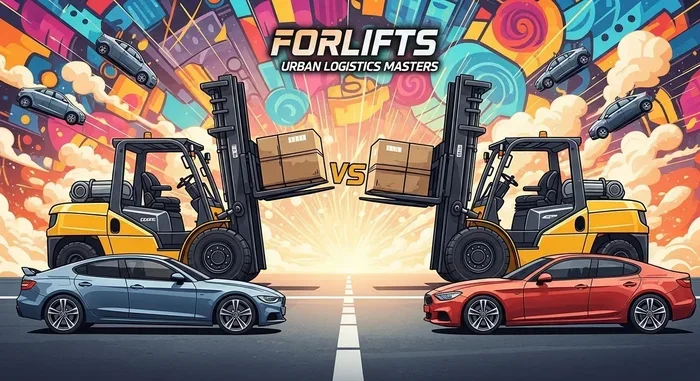
Is Driving a Forklift Easier Than Driving a Regular Car
Driving a forklift is not the same as driving a regular car. While both involve operating a vehicle, the skills, controls, and safety requirements are very different. Many people assume that car driving experience makes forklift operation easy, but that is not always true. This guide breaks down the real differences between forklift driving and car driving so you can understand what to expect. You will learn about controls, steering, safety rules, training needs, and which vehicle is actually harder to master.
Have you ever wondered whether driving a forklift is simpler than getting behind the wheel of a regular car? It is a question many people ask, especially those considering a career in warehousing, construction, or logistics. The short answer is that it depends on what you already know and what kind of driving you are used to.
Most people learn to drive a car at a young age. They spend years perfecting their car driving skills before they ever step into a warehouse. But when they do step into a forklift, they quickly realize that the experience does not always transfer over. The controls feel different. The steering works differently. And the safety risks are not the same at all.
This article will walk you through everything you need to know about driving a forklift compared to driving a regular car. We will look at the controls, the steering, the safety rules, the training requirements, and much more. By the end, you will have a clear picture of which vehicle is harder to operate and why both deserve your full attention and respect.
Key Takeaways
- Different Controls: Forklifts use hydraulic levers and rear-wheel steering, which feel very different from a car’s steering wheel and pedals.
- Steering Is Unique: Forklifts pivot from the rear, making tight turns easier but requiring more spatial awareness.
- Safety Comes First: Forklift operation involves serious safety protocols, load handling, and pedestrian awareness that car driving does not.
- Training Is Mandatory: You need a forklift license and operator certification, which goes beyond a regular driver’s license.
- Neither Is Easy: Both vehicles require practice and respect. Car driving and forklift operation each have their own learning curve.
- Confined Spaces Add Difficulty: Warehouse driving involves narrow aisles, blind spots, and heavy loads that challenge even experienced operators.
- Experience Helps but Does Not Replace Training: Having car driving experience gives you a head start, but it does not substitute for proper forklift training.
📑 Table of Contents
What Makes Driving a Forklift Different from Driving a Car
At first glance, a forklift and a car might look similar. Both have seats, steering wheels, and pedals. But the way they work is completely different. Understanding these differences is the first step in answering whether driving a forklift is easier than driving a car.
Vehicle Design and Purpose
A car is built to move people quickly and comfortably on public roads. A forklift, on the other hand, is a piece of heavy equipment designed to lift and move heavy loads over short distances. This fundamental difference in purpose shapes everything about how each vehicle operates.
Cars are lightweight and built for speed and stability on open roads. Forklifts are heavy, often weighing several thousand pounds, and they carry loads that can shift or tip. This means that forklift operation requires a much deeper understanding of weight distribution, balance, and center of gravity.
The Learning Curve
If you already know how to drive a car, you might think you can jump right into operating a forklift. But that is not how it works. The learning curve for driving a forklift is different because you are dealing with new controls, new movements, and new safety concerns.
Car drivers are used to front-wheel steering, pedals for gas and brakes, and a manual or automatic transmission. Forklift operators must learn hydraulic levers, rear-wheel steering, and how to manage a vehicle that can tip over if not handled correctly. So while car driving experience helps, it does not make forklift driving automatically easy.
The Controls: Forklift vs Car
The controls inside a forklift cab are nothing like those in a car. This is one of the biggest surprises for people who have never operated heavy equipment driving before. Let us break down the key differences.
Steering and Maneuverability
Cars use front-wheel steering. When you turn the wheel, the front wheels pivot and the whole car follows. Forklifts use rear-wheel steering, which means the back wheels do the turning. This creates a very different driving experience.
With a forklift, the rear end swings wide when you turn. This is called the rear swing arc, and it is something every new operator must learn to account for. In a car, you do not have to worry about the back end swinging into things. But in warehouse driving, where space is tight, the rear swing arc can be a real challenge.
Here are some key differences in steering between the two:
- Cars: Front wheels turn the vehicle. The turning radius is predictable and well understood by most drivers.
- Forklifts: Rear wheels turn the vehicle. The front end acts like a lever arm, and the whole machine pivots from the back.
- Cars: You drive forward to make most turns.
- Forklifts: You often need to reverse to position the forks correctly, which requires extra spatial awareness.
Hydraulic Controls and Load Handling
One of the most unique parts of driving a forklift is the hydraulic system. Cars do not have hydraulic levers. Forklifts use them to raise, lower, and tilt the load. This adds a layer of complexity that car drivers simply never deal with.
You have to coordinate the hydraulic controls with the driving controls at the same time. For example, you might be steering through a narrow aisle while simultaneously raising the forks to clear a shelf. This multitasking is something that takes practice and cannot be learned from car driving skills alone.
Pedals and Speed
Most cars have two or three pedals: gas, brake, and sometimes a clutch. Forklifts typically have an accelerator and a brake, but the speeds are much slower. A forklift rarely goes faster than 5 to 8 miles per hour. This might sound simple, but it actually requires a different kind of attention.
Because forklifts move slowly, operators must stay extra alert to their surroundings. Pedestrian traffic, blind corners, and narrow aisles all demand constant awareness. Workplace safety is a huge part of forklift operation that does not apply to everyday car driving.
| Feature | Car | Forklift |
|---|---|---|
| Steering Type | Front-wheel steering | Rear-wheel steering |
| Primary Controls | Steering wheel, pedals | Steering wheel, hydraulic levers, pedals |
| Typical Speed | 25-70 mph | 3-8 mph |
| Load Handling | None | Built-in lifting mechanism |
| Stability Concerns | Rollover at high speed | Tip-over from uneven loads or slopes |
| Driving Environment | Open roads, highways | Confined spaces, warehouses, docks |
| License Required | Standard driver’s license |
Steering and Maneuverability Differences
The way a forklift turns is probably the single biggest difference between driving a forklift and driving a car. Once you understand rear-wheel steering, everything else starts to make more sense.
Why Rear-Wheel Steering Changes Everything
When you turn a car, the front end leads and the back end follows. When you turn a forklift, the back end swings out while the front end (with the forks) stays relatively in place. This means that a forklift can make very tight turns in a small space, which is great for warehouse work.
But it also means that the area behind the forklift is a danger zone. If you are backing up and not paying attention, you can hit a wall, a rack, or worse, a coworker. This is why forklift training always emphasizes checking your surroundings before every move.
Operating in Confined Spaces
Cars are designed to move freely on open roads. Forklifts are designed to work in confined spaces like warehouse aisles, loading docks, and construction sites. These environments require a different kind of driving skill.
You need to be able to judge distances precisely. You need to know how wide your load is and how high it can be raised without hitting anything above you. And you need to be able to stop quickly if a pedestrian steps into your path. These skills take time to develop and cannot be picked up just because you know how to drive a car.
Counterbalance and Load Stability
A counterbalance forklift uses its own weight in the back to balance the load in the front. This is a clever design, but it also means that the forklift behaves differently depending on how much weight it is carrying.
When the forks are empty, the forklift is lighter in the front and the rear wheels do more of the work. When the forks are fully loaded, the balance shifts and the vehicle handles differently. Experienced operators always adjust their driving style based on the load. This is something that manual transmission car drivers might relate to, but it is even more critical with a forklift because an unstable load can cause a serious tip-over accident.
Safety Considerations for Forklift Operators
Safety is the most important part of driving a forklift. While car accidents happen every day, forklift accidents can be even more dangerous because of the heavy loads, the height of the forks, and the confined spaces where they operate.
Key Safety Protocols
Every forklift operator should follow strict safety protocols every single time they get behind the wheel. Here are the most important rules to keep in mind:
- Wear your seat belt: This is the single most important safety feature on a forklift. In a tip-over, the seat belt keeps you inside the cab instead of being thrown out.
- Check the load before moving: Make sure the load is stable, balanced, and within the forklift’s rated capacity.
- Travel with the forks low: Keep the forks close to the ground while driving to maintain a low center of gravity.
- Sound the horn at intersections: Forklifts are quiet, and pedestrians may not hear you coming.
- Never exceed the rated load capacity: Overloading a forklift is one of the leading causes of tip-over accidents.
- Keep a clear line of sight: If you are carrying a tall load, drive in reverse so you can see where you are going.
Blind Spots and Pedestrian Safety
Forklifts have significant blind spots, especially when carrying a large load. Unlike cars, which have rearview mirrors and backup cameras, forklifts rely heavily on the operator’s awareness and peripheral vision.
Pedestrian safety is a major concern in any area where forklifts operate. Workers on foot need to stay alert, and forklift operators need to communicate clearly. Many warehouses use traffic signals, crosswalks, and designated pedestrian zones to reduce the risk of accidents. Workplace hazards like wet floors, uneven surfaces, and loose debris add even more danger to forklift operation.
Common Mistakes That Lead to Accidents
Even experienced operators can make mistakes. Here are some of the most common errors that lead to forklift accidents:
- Turning too fast, which can cause the forklift to tip over.
- Driving with the forks raised too high, which raises the center of gravity.
- Not checking the weight of the load before lifting.
- Ignoring slope and incline conditions, which can cause the forklift to slide.
- Rushing through narrow aisles without checking clearance on both sides.
- Using a forklift for purposes other than load handling, such as lifting people without a proper platform.
Training and Licensing Requirements
One of the biggest differences between driving a forklift and driving a car is the training and certification required. You cannot just hop on a forklift because you know how to drive a car. There are specific rules and regulations in place to keep everyone safe.
What You Need to Get Certified
In most countries, operating a forklift requires formal operator certification. This is not the same as a regular driver’s license. The certification process typically includes:
- Classroom training: You learn about forklift types, safety rules, load capacity, and workplace hazards.
- Practical training: You get hands-on experience operating a forklift under supervision.
- Written exam: You must pass a test covering safety procedures and regulations.
- Skills evaluation: You must demonstrate that you can safely operate the forklift in real-world conditions.
Once you receive your forklift license, you are certified to operate a forklift in your workplace. However, this certification does not last forever. Most employers require refresher training every three years to ensure that operators stay current on safety practices.
Why Car Experience Is Not Enough
You might think that years of car driving experience would make forklift training unnecessary. But the truth is that car driving does not prepare you for the unique challenges of forklift operation. The controls are different. The environment is different. And the safety risks are completely different.
Think of it this way: a person who has driven a car for 20 years is not automatically qualified to fly a helicopter. Both involve operating a vehicle, but the skills required are very different. The same is true for driving a forklift versus driving a car. Proper training is essential.
Which Is Harder: Forklift or Car?
This is the question at the heart of the whole discussion. And the honest answer is that both vehicles are hard in their own way. But they are hard for different reasons.
What Makes Car Driving Challenging
Car driving can be challenging because of the speed, the complexity of road systems, and the unpredictability of other drivers. Highway driving, parallel parking, and navigating busy intersections all require skill and focus. Car drivers also need to deal with weather conditions, road signs, and traffic laws.
However, most people learn car driving in a gradual, step-by-step process. They start with simple roads and slowly work up to more complex situations. This gradual learning curve makes car driving skills easier to develop over time.
What Makes Forklift Driving Challenging
Forklift operation is challenging for different reasons. The confined spaces, the need for precision, and the heavy loads all add difficulty. You cannot make a mistake at high speed and correct it easily, but you also cannot drive too fast because the forklift is not designed for speed.
The real challenge of driving a forklift comes from the multitasking involved. You are steering, managing hydraulic controls, watching your load, monitoring your surroundings, and following safety protocols all at the same time. This level of divided attention is something that car drivers rarely experience.
The Verdict: Is It Easier?
For someone with no driving experience at all, learning to drive a car is probably harder because there are more variables to manage. But for someone who already drives a car, driving a forklift will still feel unfamiliar and challenging because the skills do not transfer directly.
The best way to think about it is this: both vehicles require respect, training, and practice. Neither one is “easy” just because you have experience with the other. The key is to approach each vehicle with the right mindset and the right training.
Quick Tips for New Forklift Operators
- Take your training seriously: Do not skip any part of your forklift certification program. Every lesson builds on the last.
- Practice in a safe area first: Before you operate a forklift in a busy warehouse, spend time in an empty area getting comfortable with the controls.
- Ask questions: If something does not make sense, ask your trainer. There is no such thing as a silly question when it comes to safety.
- Watch experienced operators: Learning from someone with real-world forklift driving experience can teach you things that a classroom cannot.
- Stay calm and focused: Rushing leads to mistakes. Take your time and focus on one task at a time.
Common Mistakes to Avoid
New forklift operators often make the same mistakes over and over. Here are some to watch out for:
- Assuming car skills transfer directly: They do not. The controls, steering, and safety rules are all different.
- Skipping pre-operation inspections: Always check the forklift before you start it. Look for leaks, damage, and worn parts.
- Driving with an elevated load: This raises the center of gravity and increases the risk of a tip-over.
- Ignoring weight limits: Every forklift has a rated capacity. Exceeding it is dangerous and can damage the equipment.
- Not wearing a seat belt: In a tip-over, the seat belt is your best protection against serious injury.
Expert Insights on Forklift vs Car Driving
Experienced warehouse managers and safety trainers agree that driving a forklift requires a unique set of skills that go far beyond what car driving teaches. According to occupational safety experts, the most successful forklift operators are those who approach the job with humility and a willingness to learn.
“Many people underestimate forklift operation because they think it is just a small truck,” says one veteran warehouse supervisor. “But the reality is that a forklift is a piece of heavy equipment, and it demands the same respect as any other heavy machine. The training is not optional, and the safety protocols are there for a reason.”
Another common insight from experts is that driving experience in any form is helpful, but it should never replace formal forklift training. The best operators are those who combine general vehicle awareness with specific forklift knowledge and safety habits.
Key Takeaways for Beginners
If you are just starting out with forklift operation, here are the most important things to remember:
- Training is non-negotiable: You must complete a certified forklift training program before operating a forklift.
- Respect the machine: A forklift is not a toy. It is a powerful piece of equipment that can cause serious injury if mishandled.
- Practice makes perfect: The more time you spend behind the controls, the more comfortable and confident you will become.
- Safety always comes first: No load is worth risking your health or the health of your coworkers.
- Keep learning: Even after you are certified, continue to improve your skills and stay updated on safety best practices.
To answer the question directly: is driving a forklift easier than driving a regular car? The truth is that neither is inherently easier. Both require specific skills, proper training, and a commitment to safety. Car driving experience gives you a basic foundation, but it does not make forklift driving simple. The best approach is to take each vehicle on its own terms, respect the unique challenges it presents, and invest in the right training for the job.
Whether you are a warehouse worker looking to start a new career or a curious beginner wondering about the differences, the most important thing you can do is to take the training seriously. Learn the controls, understand the safety rules, and practice until the skills become second nature. With the right mindset and the right preparation, driving a forklift becomes a manageable and rewarding skill that opens doors to many career opportunities.
Remember, every expert was once a beginner. The difference between a good forklift operator and a great one is the willingness to keep learning, stay safe, and treat every shift as a chance to improve. So whether you are navigating a busy warehouse aisle or merging onto a highway, the principles are the same: stay focused, respect the machine, and always put safety first.
Frequently Asked Questions
Can I drive a forklift with a regular driver’s license?
No, a regular driver’s license does not qualify you to operate a forklift. You need a specific forklift operator certification that includes both classroom training and hands-on practice. This certification is required by law in most places and is essential for workplace safety.
How long does it take to get certified to drive a forklift?
Most forklift certification programs take between one and three days to complete. This includes classroom instruction, practical training, and a final evaluation. Some programs may take longer if they include additional safety modules or specialized equipment training.
Is forklift driving safer than car driving?
Neither is inherently safer than the other. Forklift driving has its own unique risks, such as tip-overs and load instability, while car driving involves risks like high-speed collisions and road hazards. Both require proper training, attention, and adherence to safety rules to minimize the chance of accidents.
Can I learn to drive a forklift if I have never driven a car?
Yes, you can learn to drive a forklift without any prior car driving experience. The skills required for forklift operation are largely separate from car driving skills. As long as you complete proper forklift training and pass the certification exam, you can operate a forklift safely regardless of your car driving background.
What type of forklift is easiest for beginners to drive?
The counterbalance forklift is generally considered the easiest for beginners because it is the most common type and has a straightforward design. It does not require the complex maneuvering of a reach truck or a telehandler. Starting with a counterbalance forklift gives new operators a solid foundation before they move on to more specialized equipment.
Do I need to renew my forklift certification?
Yes, most employers and safety regulations require forklift operators to complete refresher training every three years. Even if your certification is still technically valid, regular refresher courses help you stay current on safety practices, new equipment, and updated regulations. Keeping your skills sharp reduces the risk of accidents in the workplace.
=== CONCLUSION ===
Driving a forklift and driving a car are two very different experiences. They require different skills, different training, and different approaches to safety. Car driving experience can give you a basic comfort level with operating a vehicle, but it does not prepare you for the unique challenges of forklift operation. From rear-wheel steering to hydraulic controls, from confined spaces to heavy load handling, every aspect of forklift driving demands its own set of skills and knowledge.
The most important takeaway is that both vehicles deserve your full respect and attention. Neither is easy to master overnight, and both require proper training and practice. If you are considering a career that involves driving a forklift, invest in quality training, take your certification seriously, and always prioritize safety above all else. With the right approach, you can become a skilled and confident forklift operator who is valued in any warehouse or worksite.