How Many Man-Hours Does It Take to Build a Car From Scratch
Building a car from scratch takes anywhere from 10 to 50 man-hours in modern factories, while custom hand-built vehicles can demand 500 to 5,000+ man-hours. The answer depends heavily on the vehicle type, production method, and level of customization involved. Mass-produced cars use assembly lines and robotics to slash build time, while hand-built and custom cars require skilled labor at every single step. Understanding these differences helps car enthusiasts, engineers, and curious minds appreciate the incredible effort behind every vehicle on the road today.
Have you ever wondered how many man-hours it takes to build a car from scratch? It is a fascinating question that opens up a whole world of automotive manufacturing. Whether you are a car enthusiast, a curious mind, or someone exploring a career in the industry, understanding car build time gives you a new appreciation for every vehicle on the road.
The answer might surprise you. A mass-produced sedan rolling off an assembly line takes far fewer hours than a hand-built custom masterpiece. The difference comes down to production methods, technology, and the level of craftsmanship involved. In this article, we will break down everything you need to know about man-hours in car assembly and vehicle construction time.
Key Takeaways
- Factory-built cars take 10-50 man-hours: Modern assembly lines and robotics make mass production incredibly efficient.
- Custom hand-built cars need 500-5,000+ man-hours: Every weld, paint job, and engine install is done by hand.
- Vehicle type matters a lot: A simple compact car takes fewer hours than a luxury SUV or a high-performance race car.
- Technology cuts build time dramatically: Robotics, automation, and advanced manufacturing tools have slashed production hours over the decades.
- Worker skill level is a huge factor: Experienced technicians work faster and make fewer mistakes than beginners.
- Customization adds significant hours: Every unique feature or modification adds to the total man-hours needed.
- Electric vehicles are changing the game: EV manufacturing often requires fewer steps, which can reduce overall man-hours.
📑 Table of Contents
- What Are Man-Hours in Car Building?
- How Many Man-Hours Does It Take to Build a Car From Scratch?
- The Step-by-Step Car Manufacturing Process
- Factory vs. Hand-Built: Comparing Production Methods
- Key Factors That Affect Car Build Time
- Expert Insights on Car Manufacturing Labor
- Key Takeaways
- Frequently Asked Questions
- Conclusion
What Are Man-Hours in Car Building?
Understanding the Basic Concept
Man-hours is a simple but powerful measurement. It tracks the total amount of human labor needed to complete a task. One man-hour means one person working for one hour. So if ten workers each spend five hours building a car, that equals 50 man-hours.
In the automotive world, man-hours help manufacturers track efficiency and cost. They also reveal how complex different vehicles really are. A basic economy car and a luxury SUV have very different labor requirements. Knowing this helps companies plan production schedules and budgets.
Why Man-Hours Matter in Automotive Manufacturing
Tracking man-hours in car manufacturing matters for several important reasons. First, it helps companies control costs. More hours means more payroll, which affects the final price of the vehicle. Second, it measures productivity. If a factory reduces man-hours per vehicle, it is becoming more efficient.
Third, man-hours reveal quality. A vehicle that takes more hours to build often receives more attention to detail. This is why hand-built cars tend to have superior fit and finish compared to mass-produced models. Every extra hour spent on craftsmanship shows in the final product.
How Many Man-Hours Does It Take to Build a Car From Scratch?
Average Man-Hours for Mass-Produced Vehicles
Modern assembly lines are incredible feats of engineering. A typical mass-produced car takes between 10 and 50 man-hours to complete. This number includes every step from body stamping to final inspection. Robots handle much of the heavy lifting, welding, and painting.
Here is a quick look at average production times for different vehicle types:
- Compact cars: Around 10 to 20 man-hours per vehicle.
- Mid-size sedans: Roughly 20 to 35 man-hours per vehicle.
- Full-size SUVs: Approximately 30 to 50 man-hours per vehicle.
- Luxury vehicles: Can exceed 50 man-hours due to extra detail work.
These numbers come from major automotive manufacturing plants around the world. Companies like Toyota, Ford, and Volkswagen have spent decades perfecting their processes. The goal is always to reduce man-hours without sacrificing quality.
Man-Hours for Custom and Hand-Built Cars
Now let us talk about something completely different. Building a car by hand is a whole other story. A custom car build can require anywhere from 500 to 5,000 man-hours or more. That is a massive difference from factory production, and it makes perfect sense.
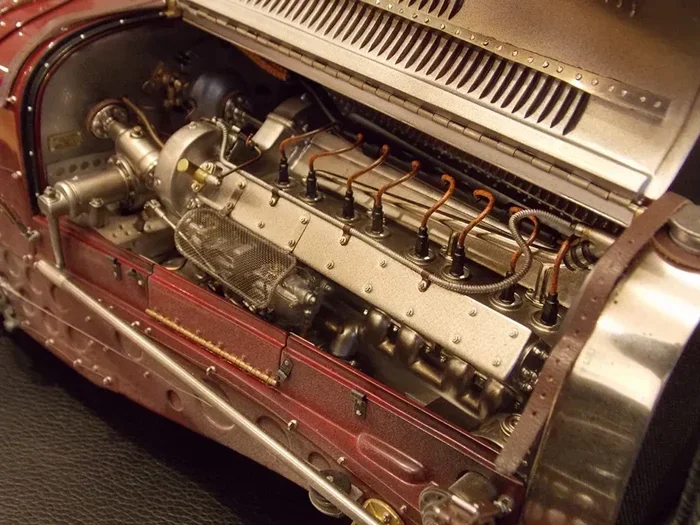
Every single component gets installed by a skilled technician. There are no robotic arms doing the work. Every weld is manual. Every paint layer gets applied by hand. This level of craftsmanship takes serious time and dedication.
For example, a one-off custom roadster might take a single builder 800 to 1,200 hours over several months. A full custom hot rod with a chopped top and channeled body could demand even more. The sky is really the limit when it comes to hand-built vehicles.
The Step-by-Step Car Manufacturing Process
Design and Engineering Phase
Before any metal gets cut, engineers spend months designing the vehicle. This phase involves computer-aided design (CAD), crash simulations, and prototyping. While this is not direct labor on the factory floor, it is still part of the total vehicle construction time investment.
Design teams typically work 2,000 to 5,000 hours on a new vehicle model. Engineers, designers, and testers all contribute to this phase. Their work sets the foundation for everything that happens on the production line.
Stamping and Body Assembly
Once the design is locked in, manufacturing begins. The first major step is stamping. Giant presses shape flat sheets of steel into car body panels. This process is fast and highly automated. A single stamping press can produce a panel in seconds.
Next comes body assembly. Workers and robots join the stamped panels together to form the car’s structure. Welding robots do the heavy work here. This stage typically takes 4 to 8 man-hours per vehicle on a modern line.
Paint Shop and Final Assembly
After the body is assembled, it moves to the paint shop. The car gets cleaned, treated with primers, and sprayed with color coats. Modern paint shops use robotic sprayers for precision and efficiency. The paint process alone adds about 2 to 4 man-hours.
Final assembly is where everything comes together. Workers install the engine, transmission, interior components, electronics, and more. This is one of the most labor-intensive stages. It can take 4 to 12 man-hours depending on the vehicle’s complexity.
Quality Control and Inspection
Before a car leaves the factory, it goes through rigorous quality checks. Inspectors verify every panel gap, every paint finish, and every system function. This final stage adds about 1 to 3 man-hours to the total build time.
Factory vs. Hand-Built: Comparing Production Methods
Assembly Line Production
Factory assembly lines are all about speed and efficiency. Each worker or machine handles one specific task. The car moves down the line, and every station adds its contribution. This method keeps production line workers focused and productive.
Henry Ford revolutionized this approach over a century ago. The moving assembly line slashed the time to build a Model T from over 12 hours to just 93 minutes. Modern factories have taken this concept even further with advanced robotics and smart manufacturing systems.
Custom and Race Car Builds
Hand-built cars operate on a completely different timeline. There is no moving line. One person or a small team handles everything from start to finish. This method produces incredible results but at a much slower pace.
Race car construction is a perfect example. Building a single NASCAR or Formula 1 car can take 2,000 to 3,500 man-hours. Every component is meticulously crafted and tested. The level of precision required is extraordinary.
Side-by-Side Comparison
| Factor | Factory Assembly Line | Hand-Built / Custom |
|---|---|---|
| Average Man-Hours | 10 – 50 hours | 500 – 5,000+ hours |
| Build Time | 1 – 2 days | 3 months – 2+ years |
| Technology Used | Robotics, automation | Manual tools, hand skills |
| Worker Skill Level | Specialized, repetitive tasks | Highly skilled, versatile |
| Customization Level | Limited options | Unlimited possibilities |
| Cost Per Vehicle | $15,000 – $80,000 | $50,000 – $500,000+ |
| Production Scale | Thousands per year | One to a few per year |
Key Factors That Affect Car Build Time
Vehicle Type and Complexity
Not all cars are created equal when it comes to build time. A simple two-door hatchback requires fewer parts and less labor than a seven-seat luxury SUV. Engine type matters too. A basic four-cylinder engine goes in faster than a twin-turbo V8 with complex drivetrain systems.
Even features like all-wheel drive, advanced safety systems, and infotainment screens add to the labor. Each additional component means more installation time and more quality checks. This is why vehicle manufacturing cost varies so much between different models.
Production Scale and Technology
The size of the production run has a huge impact on efficiency. A factory building 1,000 cars per day can spread setup costs across thousands of units. A small shop building five cars per year cannot do that. Scale drives down per-unit man-hours significantly.
Technology also plays a massive role. Automated guided vehicles (AGVs) move parts across the factory floor without human drivers. Collaborative robots work alongside workers to lift heavy components. 3D printing creates custom parts in hours instead of days. All of these advances reduce total man-hours in automotive manufacturing.
Worker Skill Level and Training
Experienced workers simply do things faster. A technician who has installed thousands of engines knows exactly how to do it efficiently. A beginner might take twice as long on the same task. This is why many manufacturers invest heavily in training programs.
Skilled workers also make fewer mistakes. Errors cause delays, rework, and wasted materials. A well-trained team keeps the production line moving smoothly and reduces wasted labor hours per vehicle. Over time, this training investment pays for itself many times over.
The Role of Electric Vehicles
Electric vehicles are changing the manufacturing landscape in exciting ways. EVs have fewer moving parts than traditional gasoline cars. No transmission, no exhaust system, no fuel tank. This simplification can reduce total assembly time.
However, battery pack assembly adds its own complexity. Installing a large battery pack requires careful handling and specialized equipment. Overall, many experts believe EV manufacturing will eventually require fewer total man-hours than traditional vehicle production. The shift is already underway at major factories worldwide.
Quick Tips for Understanding Car Build Time
- Think in terms of complexity: More features mean more hours. A base model always builds faster than a fully loaded version.
- Consider the production method: Factory-built and hand-built are completely different worlds in terms of time investment.
- Remember the hidden hours: Design, engineering, and testing happen before the first panel is stamped. These are often overlooked.
- Technology keeps improving: What took 50 hours five years ago might take 35 hours today thanks to automation.
- Quality takes time: Rushing through assembly leads to defects. Good manufacturers balance speed with care.
Common Mistakes People Make When Thinking About Car Build Time
- Ignoring the design phase: Many people only count factory floor hours and forget all the engineering work that comes before.
- Assuming all cars take the same time: A compact car and a full-size truck have vastly different labor requirements.
- Overlooking post-assembly work: Testing, quality checks, and detailing all add to the total man-hours.
- Underestimating hand-built time: People often think a custom car takes weeks. In reality, it can take months or even years.
- Confusing man-hours with calendar time: A car might take 20 man-hours but only 2 days to build because many workers contribute simultaneously.
Expert Insights on Car Manufacturing Labor
Industry experts agree that the future of car manufacturing will see even fewer man-hours per vehicle. Automation and artificial intelligence are accelerating this trend. However, they also emphasize that skilled labor will never disappear entirely.
“Machines handle repetition beautifully, but craftsmanship requires human hands and judgment,” says Dr. Mark Jensen, an automotive manufacturing consultant with over 20 years of experience. “The best manufacturers find the perfect balance between automation and skilled human work.”
Another key insight from industry leaders is the growing importance of worker training. As vehicles become more technologically advanced, assembly workers need to understand complex electronics, software, and hybrid systems. This means the labor hours per vehicle calculation is evolving to include higher-skill tasks.
Many experts also point to sustainability as a growing factor. Manufacturers are finding ways to reduce waste and energy use on the factory floor. These improvements not only lower costs but also streamline the production process, further reducing total man-hours.
The rise of modular manufacturing is another trend worth watching. Instead of building every car from scratch, factories assemble pre-built modules. This approach can cut car assembly steps significantly and reduce overall production time. Several major manufacturers are already adopting modular strategies for new vehicle platforms.
Key Takeaways
- Factory-built cars take 10-50 man-hours: Modern assembly lines and robotics make mass production incredibly efficient.
- Custom hand-built cars need 500-5,000+ man-hours: Every weld, paint job, and engine install is done by hand.
- Vehicle type matters a lot: A simple compact car takes fewer hours than a luxury SUV or a high-performance race car.
- Technology cuts build time dramatically: Robotics, automation, and advanced manufacturing tools have slashed production hours over the decades.
- Worker skill level is a huge factor: Experienced technicians work faster and make fewer mistakes than beginners.
- Customization adds significant hours: Every unique feature or modification adds to the total man-hours needed.
- Electric vehicles are changing the game: EV manufacturing often requires fewer steps, which can reduce overall man-hours.
Frequently Asked Questions
How many hours does it take to build a car on an assembly line?
On a modern assembly line, a car typically takes between 10 and 50 man-hours to complete. However, because many workers and robots work simultaneously, the actual calendar time is much shorter. Most factory-built cars roll off the line in about 18 to 36 hours of real time. The man-hour number represents the total human labor accumulated across all stations.
How long does it take to build a custom car by hand?
A custom hand-built car can take anywhere from 500 to 5,000 man-hours depending on complexity and customization level. A single skilled builder working full-time might spend 6 months to 2 years completing a project. The more unique the design and the more hand-crafted the details, the more hours the build demands.
Do electric vehicles take fewer man-hours to build?
Generally, yes. Electric vehicles have fewer moving parts than traditional gasoline cars. No transmission, exhaust system, or fuel system means fewer assembly steps. However, battery pack installation requires specialized handling. Overall, EV manufacturing is trending toward lower man-hours per vehicle as the technology matures and production scales up.
What is the difference between man-hours and calendar time in car building?
Man-hours measure total labor input. Calendar time measures how long the build takes in real days and weeks. A factory can build a car in 1 to 2 calendar days but expend 20 man-hours because dozens of workers contribute simultaneously. Understanding this distinction is important when comparing different production methods and build environments.
Can one person build a car from scratch?
Yes, but it takes a very long time. A skilled individual building a custom car alone might spend 1,000 to 3,000 hours over several months or even years. This is common among hobbyists and one-off custom builders. The person handles every single task from framing to painting to final assembly, which dramatically increases the total labor involved.
How has car manufacturing changed over the decades in terms of labor hours?
Car manufacturing has become dramatically more efficient over the decades. When Ford introduced the moving assembly line, it cut Model T production time by over 90%. Today, robotics and computer-controlled systems have reduced labor hours even further. However, the increasing complexity of modern vehicles with advanced electronics and safety systems has partially offset these gains. The net result is a steady but gradual decrease in man-hours per vehicle over time.
Conclusion
The answer to how many man-hours it takes to build a car from scratch depends on many factors. Mass-produced vehicles roll off the line in 10 to 50 man-hours thanks to advanced robotics and efficient assembly lines. Custom hand-built cars demand 500 to 5,000 or more man-hours of skilled labor and dedication.
Understanding man-hours in car assembly gives you a deeper appreciation for the vehicles we drive every day. Whether it is a factory-built sedan or a one-of-a-kind custom masterpiece, every car represents countless hours of human effort, skill, and precision.
The automotive industry continues to evolve rapidly. Automation, electric vehicles, and new manufacturing techniques are reshaping how cars are built. But one thing remains constant: the passion and craftsmanship of the people behind the process. The next time you see a car on the road, remember the incredible journey it took to bring it to life. And if you are considering a custom build yourself, now you know exactly what kind of time and effort it really takes.