How Wide Are Truck Bed Tool Boxes The Ultimate Guide
Truck bed tool boxes come in various widths to fit different pickup beds and storage needs. Standard widths range from about 30 inches to 72 inches, depending on the box type and truck size. Understanding tool box width helps you choose the right fit for your vehicle and gear. This guide breaks down every width option, type, and compatibility factor you need to know.
So you need a truck bed tool box. That much is clear. But one question keeps popping up: how wide should it be? You are not alone. Many truck owners get stuck trying to figure out the right tool box width for their setup. The truth is, there is no one-size-fits-all answer. Truck beds come in different lengths. Tool boxes come in different sizes. And the whole thing can feel confusing fast.
This guide breaks it all down. You will learn about standard truck bed tool box widths, the different types of boxes, and how to pick the right one. We will cover short beds, standard beds, and long beds. You will also get practical tips, common mistakes to avoid, and expert advice. By the end, you will know exactly what width works best for your truck and your needs.
Key Takeaways
- Standard widths range from 30 to 72 inches: Most truck bed tool boxes fit within this spectrum.
- Box type determines width: Roll boxes, side mounts, and under-bed units all vary in size.
- Truck bed size matters: Short, standard, and long beds require different box widths.
- Measure before you buy: Always measure your bed rails, bed length, and available space.
- Compatibility is key: Not every box fits every truck. Check mounting systems and bed dimensions.
- Width affects functionality: Wider boxes offer more storage but may limit bed use.
- Installation style impacts width choice: Side-mount and cross-bed boxes have different width requirements.
📑 Table of Contents
- Understanding Truck Bed Tool Box Widths
- Types of Truck Bed Tool Boxes and Their Widths
- Truck Bed Sizes and How They Affect Box Width
- How to Measure for the Right Tool Box Width
- Common Mistakes When Choosing Tool Box Width
- Quick Tips for Finding the Perfect Tool Box Width
- Expert Insights on Truck Bed Tool Box Width Selection
- How Wide Are Truck Bed Tool Boxes: Final Thoughts
Understanding Truck Bed Tool Box Widths
When we talk about how wide are truck bed tool boxes, we are really talking about two things. The first is the width of the box itself. The second is how that width fits into your truck bed. These are not the same thing, and confusing them can lead to a bad purchase.
What Does “Width” Mean for a Tool Box?
In the tool box world, width refers to how far the box extends across your truck bed from one side rail to the other. Some boxes sit between the bed rails. Others mount on top of the rails. And some span the full width of the bed. Each style has a different tool box dimension profile.
Here are the most common width categories you will encounter:
- Narrow boxes (30-42 inches): These fit between bed rails. They leave room on both sides for other gear.
- Mid-size boxes (42-55 inches): These sit on or slightly wider than the bed rails. They offer a balance of storage and bed access.
- Full-width boxes (55-72 inches): These span the entire bed width. They maximize storage but limit what else you can carry.
Why Width Matters More Than You Think
Width is not just about fitting your box. It affects how you use your truck. A too-wide box can block your tailgate. A too-narrow box might not hold all your tools. Getting the width right means your truck still works as a truck. You can haul stuff. You can access the bed. And your tools stay secure.
Types of Truck Bed Tool Boxes and Their Widths
Not all tool boxes are built the same. The type of box you choose directly impacts the truck bed toolbox width you need. Let us walk through the most popular types.
Roll Tool Boxes
Roll tool boxes are the classic style. They mount on top of the bed rails and roll open. Most roll boxes range from about 48 to 66 inches wide. The exact width depends on the brand and model. Some are designed for short bed trucks and others for long beds.
Here is what to expect from roll box widths:
- Short bed roll boxes: Usually 42 to 54 inches wide.
- Standard bed roll boxes: Typically 54 to 66 inches wide.
- Long bed roll boxes: Often 60 to 72 inches wide.
Roll boxes are great for heavy duty tool storage. They hold a lot of gear. But they do take up vertical space. Make sure your truck can handle the height and weight.
Side-Mount Tool Boxes
Side-mount boxes attach to the outside of the bed rails. They are perfect if you want to keep your full truck bed storage area open. These boxes are usually narrower than roll boxes. Most side-mount options range from 30 to 48 inches wide.
The beauty of side-mount boxes is that they do not block the bed. You can still haul long materials, furniture, or other gear. The trade-off is that the box sits outside the bed rails, which can make it more vulnerable to bumps and debris.
Under-Bed Tool Boxes
Under-bed boxes sit inside the bed, below the rail level. They are low profile and keep your tools hidden. These boxes are usually wider than side-mount boxes but shorter in height. Widths typically range from 48 to 66 inches.
If you want a truck bed organizer that stays out of sight, an under-bed box is a solid choice. They also keep your center of gravity low, which helps with handling and fuel economy.
Cross-Bed Tool Boxes
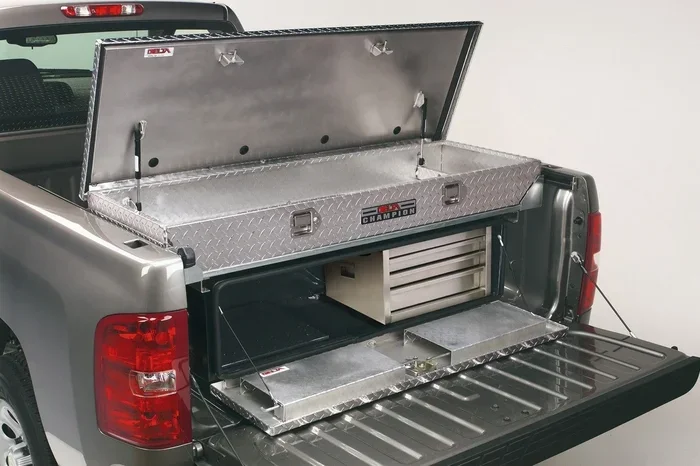
Cross-bed boxes span the width of the truck bed. They mount across the bed rather than along the length. These are usually the widest option available. Many cross-bed boxes are 60 inches or more across.
These boxes are excellent for storing long tools like pipes, lumber, or rods. But they do limit your bed space significantly. You need to think carefully about whether you can live without that bed room.
Truck Bed Sizes and How They Affect Box Width
Your truck bed size is the biggest factor in choosing the right tool box width. A box that fits a short bed will not work on a long bed. And vice versa. Let us break down the three main bed sizes.
Short Bed Trucks (5.5-Foot Beds)
Short beds are common on full-size pickups like the Ford F-150 and Chevrolet Silverado. These beds are about 66 inches long. For a short bed, you want a box that does not exceed about 54 inches in length. Width-wise, you have more flexibility since the bed is shorter.
Quick Tip: When shopping for a tool box for pickup truck short beds, look for boxes labeled “short bed compatible.” They are designed to fit without overhanging the tailgate.
Standard Bed Trucks (6.5-Foot Beds)
Standard beds are the most popular size. They offer a nice balance of bed space and overall truck length. These beds are about 79 inches long. Most standard-width tool boxes fit well in standard beds. You can comfortably use boxes up to 66 inches wide.
Long Bed Trucks (8-Foot Beds)
Long beds give you the most room. These beds are about 98 inches long. You can fit wider and longer tool boxes in a long bed. Boxes up to 72 inches wide work well here. You also have more flexibility with box placement and orientation.
| Bed Type | Bed Length | Recommended Box Width | Best Box Style |
|---|---|---|---|
| Short Bed | 5.5 ft (66 in) | 30-54 inches | Side-mount or compact roll box |
| Standard Bed | 6.5 ft (79 in) | 42-66 inches | Roll box, under-bed, or cross-bed |
| Long Bed | 8 ft (98 in) | 48-72 inches | Roll box, cross-bed, or full-width under-bed |
How to Measure for the Right Tool Box Width
Measuring might sound simple, but there are a few things many people miss. Follow these steps to get the right tool box dimensions for your truck.
Step 1: Measure Your Bed Width
Measure the distance between the inside of the bed rails. This is the space where your box will sit. Do not measure from the outside of the rails. The inside measurement is what matters for in-bed boxes.
Step 2: Measure Your Bed Length
Measure from the inside of the tailgate to the inside of the bulkhead. This tells you how long your box can be. Remember to account for any wheel well intrusions that might eat into your usable space.
Step 3: Check Your Bed Rail Height
Rail height matters for side-mount and roll boxes. If your rails are too short, the box might not mount securely. If they are too tall, the box might sit too high and limit cab access.
Step 4: Consider Your Truck Make and Model
Different trucks have different bed shapes. A Ford F-150 bed is not exactly the same as a Toyota Tacoma bed. Always check the manufacturer’s truck bed compatibility chart before buying. Most brands list which truck models their boxes fit.
Expert Insight: “Always measure twice and buy once,” says Mark Davis, a truck accessory specialist with over 15 years of experience. “The most common mistake we see is people buying a box based on the truck’s advertised bed size rather than measuring the actual bed. Even within the same model year, beds can vary slightly.”
Common Mistakes When Choosing Tool Box Width
Avoiding mistakes saves you time, money, and frustration. Here are the most common errors people make when picking a truck bed tool box width.
Mistake 1: Guessing Instead of Measuring
This is the number one mistake. Do not guess your bed width. Do not assume a “standard” box will fit your truck. Every truck is different. Always measure your specific vehicle.
Mistake 2: Ignoring Bed Liner Thickness
If you have a bed liner or bed mat, it adds thickness. A box that fits perfectly without a liner might not fit with one. Always account for any liner or coating when measuring.
Mistake 3: Forgetting About Tailgate Clearance
A box that is too long will hit the tailgate or prevent it from opening fully. This is especially important for short bed trucks. Always leave a few inches of clearance at the tail end of the bed.
Mistake 4: Overlooking Weight Capacity
Wider boxes can be heavier. They may also hold more tools, which adds weight. Check your truck’s payload capacity before installing a large box. You do not want to exceed safe limits.
Mistake 5: Choosing Width Over Functionality
A wide box might look great, but if it means you cannot haul anything in the bed, it is not practical. Think about how you use your truck daily. If you regularly haul gear, a narrower box might be the smarter choice.
Common Mistakes to Remember:
- Guessing bed dimensions instead of measuring
- Ignoring bed liner or mat thickness
- Forgetting tailgate clearance needs
- Overlooking truck payload limits
- Prioritizing width over real-world functionality
Quick Tips for Finding the Perfect Tool Box Width
Here are some practical tips to help you land on the right truck bed tool box width the first time around.
- Write down your truck bed measurements before you start shopping. Keep this list handy.
- Read the product specs carefully. Look for the “fits truck beds” section on the product page.
- Read customer reviews. Other truck owners often mention fit issues you might not expect.
- Consider your primary use case. Are you a contractor with lots of tools? Or a weekend DIYer with a few essentials? Your needs should drive the width choice.
- Think about future needs. If you plan to add more gear later, a slightly wider box gives you room to grow.
- Check the return policy. If the box does not fit, you want to be able to return it easily.
Quick Tip: If you are between two sizes, go with the smaller one. You can always add a second smaller box or use a truck bed organizer to fill gaps. But a box that is too wide has nowhere to go.
Expert Insights on Truck Bed Tool Box Width Selection
Choosing the right width is about more than just fitting a box on your truck. It is about how the box changes your truck’s overall utility. Here is what the experts have to say.
Expert Insight: “The best truck tool storage solution is the one that fits your lifestyle,” explains Sarah Lin, a product reviewer specializing in truck accessories. “A contractor who needs to carry tools every day has different needs than someone who only uses their truck for weekend projects. Width should always be driven by how you actually use your vehicle.”
Expert Insight: “Width also affects aerodynamics,” adds Jake Morrison, a truck performance specialist. “Wider boxes create more drag, which can hurt fuel economy over time. If fuel efficiency matters to you, consider a narrower or lower-profile box.”
Expert Insight: “Do not forget about the mounting system,” says Rachel Torres, a truck bed accessory installer. “Some heavy duty tool box options use rail-mounted systems that are very secure. Others use clamps or adhesive. The mounting method can affect how wide a box you can safely install.”
How Wide Are Truck Bed Tool Boxes: Final Thoughts
So, how wide are truck bed tool boxes? The answer is: it depends. Widths range from about 30 inches for narrow side-mount boxes to 72 inches for full-width cross-bed units. The right width for you depends on your truck bed size, your storage needs, and how you use your truck every day.
Start by measuring your bed. Know your truck model and bed type. Decide what style of box works best for your lifestyle. And always, always double-check compatibility before you buy. A little planning goes a long way toward finding the perfect fit.
Whether you need a compact box for a short bed or a full-width unit for a long bed, there is a truck bed tool box out there for you. Use this guide to narrow down your options and make a confident choice. Your tools deserve a secure home, and your truck deserves a setup that works.
Take action today. Measure your bed, compare your options, and find the tool box width that makes sense for you. You will be glad you did.
Frequently Asked Questions
What is the standard width for a truck bed tool box?
Most standard truck bed tool boxes range from 42 to 66 inches wide. The exact width depends on the box type and the truck bed size. Roll boxes tend to be wider, while side-mount boxes are usually narrower. Always check the product specifications for your specific truck model.
Can I install a wide tool box on a short bed truck?
Yes, but you need to be careful. A wide box on a short bed may overhang the tailgate or prevent it from opening fully. Most manufacturers recommend staying within 54 inches for short beds. Always measure your bed and check compatibility charts before purchasing.
Does tool box width affect truck fuel economy?
Yes, wider boxes can create more aerodynamic drag, which may slightly reduce fuel economy. The effect is usually small but can add up over time. If fuel efficiency is a priority, consider a narrower or low-profile box design.
What is the difference between a roll box and a cross-bed box in terms of width?
A roll box typically runs along the length of the bed and is narrower in width. A cross-bed box spans the full width of the bed and is much wider. Roll boxes are better for long tools, while cross-bed boxes work well for wide, flat items like pipes or lumber.
How do I know if a tool box will fit my specific truck model?
Check the manufacturer’s compatibility chart. Most brands list which truck makes, models, and years their boxes fit. You should also measure your bed rails, bed length, and rail height. Comparing these measurements to the box specs will confirm the fit.
Are under-bed tool boxes wider than roll boxes?
Under-bed boxes can be quite wide, often ranging from 48 to 66 inches. They are generally wider than side-mount boxes but may be comparable to roll boxes. The key advantage is their low profile, which keeps them hidden and does not affect the truck’s center of gravity.
=== CONCLUSION ===
Finding the right truck bed tool box width does not have to be overwhelming. You now know the standard width ranges, the different box types, and how truck bed sizes affect your choice. You have practical tips, common mistakes to avoid, and expert insights to guide you.
The key is to measure your truck, understand your needs, and choose a box that fits both your bed and your lifestyle. Whether you go with a narrow side-mount box or a full-width cross-bed unit, the right choice keeps your tools secure and your truck functional.
Start today. Grab a tape measure, review this guide, and find the perfect truck bed tool box width for your pickup. You will enjoy a more organized truck and a better overall experience every time you hit the road.