Does A Car Have 1 Or 2 Axles?
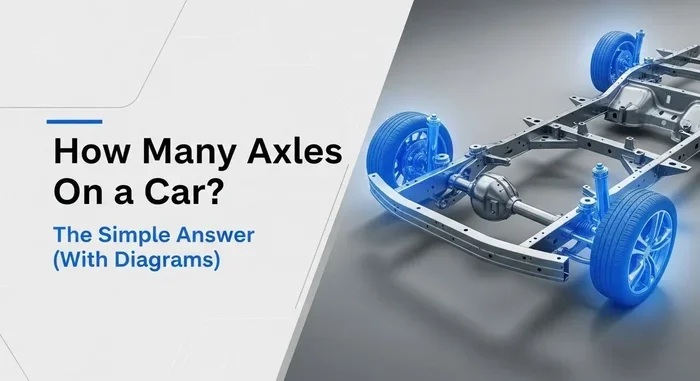
The answer to ‘Does a car have 1 or 2 axles?’ is almost always two, as standard passenger vehicles use a pair of axles—one at the front for steering and one at the rear for power and stability. This simple two-axle design is the foundation of how cars are built and how they handle the road.
Does A Car Have 1 Or 2 Axles?
If you have ever looked under your car and wondered about those spinning rods connecting the wheels, you are thinking about axles. The question of how many axles a car has is one that comes up more often than you might think. Whether you are a new car owner, a DIY mechanic, or just someone who is curious about how vehicles work, understanding your car’s axle setup is important. Axles play a huge role in how your car moves, turns, and handles weight. In this article, we will break down everything you need to know about how many axles a car has, why it matters, and what to watch out for.
Most standard passenger cars have two axles, one in the front and one in the rear. But that is not the full story. The number of axles can change depending on the type of vehicle, its purpose, and its design. Trucks, SUVs, and specialty vehicles may have more. Knowing this helps you make smarter decisions about maintenance, repairs, and even buying a car. So let us dive right in and explore the world of axles in detail.
Key Takeaways
- Most passenger cars have 2 axles: one front axle and one rear axle.
- Axles transmit power to wheels and carry the full weight of your vehicle.
- Heavy-duty trucks use multiple axles to handle greater loads and improve stability.
- The number of axles affects handling, braking performance, and overall road safety.
- Check your owner’s manual or ask a mechanic if you are unsure about axle count.
- Understanding axle basics helps you make smarter decisions about maintenance and towing capacity.
📑 Table of Contents
What Is an Axle and Why Does It Matter?
An axle is a central shaft that connects the wheels on either side of a vehicle. It transfers power from the engine to the wheels so your car can move. Without axles, your car would sit still no matter how much horsepower you have. That gives you a sense of just how important they are.
But axles do more than just spin the wheels. They also carry the weight of the vehicle and its passengers. When you hit a bump or take a sharp turn, your axles absorb the force and keep things smooth. Think of them as the backbone of your car’s movement system.
Here are some key functions of an axle:
- Transfers engine power to the wheels
- Supports the weight of the vehicle and cargo
- Enables smooth turning and cornering
- Absorbs road shocks and vibrations
When an axle fails, you will notice it right away. Your car might pull to one side, make strange noises, or even stop moving entirely. That is why keeping your axles in good shape should be part of your regular car care routine.
How Many Axles Does a Standard Car Have?
The short answer is that most cars have two axles. One axle sits under the front of the car, and another sits under the rear. This setup is called a “two-axle” configuration, and it works for the vast majority of passenger vehicles you see on the road every day.
Each axle connects a pair of wheels. So in a standard car, the front axle connects the two front wheels, and the rear axle connects the two rear wheels. This balanced setup gives cars the stability and control they need for everyday driving.
However, not every car follows this exact pattern. Some vehicles use a split axle design, where each wheel on an axle connects independently. This is common in rear-wheel-drive setups and some performance cars. A split axle improves handling and ride comfort because each wheel can react to road conditions on its own.
If you have ever experienced your car cranks but won’t start, the issue might not always be the axle itself, but understanding your car’s drivetrain helps you narrow down the problem faster.
Front Axle vs. Rear Axle: What Is the Difference?
The front and rear axles do different jobs, even though they share the same basic purpose. The front axle often handles steering in addition to power delivery. In a front-wheel-drive car, the front axle carries both the driving force and the weight of the engine. The rear axle in these cars mainly supports weight and allows the wheels to rotate freely.
In a rear-wheel-drive car, the roles flip. The rear axle delivers power from the transmission to the back wheels, while the front axle focuses on steering and support. This division of labor affects how your car feels on the road and how you should maintain each axle.
Different Types of Cars, Different Axle Counts
While most passenger cars stick with two axles, the automotive world is full of variety. Different vehicle types have different axle needs based on their size, weight, and purpose.
Sedans and Hatchbacks
Standard sedans and hatchbacks use the classic two-axle setup. These cars are light enough that two axles handle the load perfectly. You will find this design in everyday vehicles like the Toyota Camry, Honda Civic, and Ford Focus. If you drive one of these, you have two axles doing all the work.
SUVs and Crossovers
SUVs and crossovers also typically have two axles. But because these vehicles are heavier and often carry more passengers and cargo, their axles are built stronger than those in a standard sedan. Some larger SUVs use a solid rear axle for better durability and load handling.
Trucks and Heavy Vehicles
Trucks are where things get interesting. A standard pickup truck has two axles like a car, but some heavy-duty trucks have more. Semi-trucks, for example, can have five or more axles to distribute their massive weight across the road. This is not just about strength. It is also about legal weight limits and road safety.
Motorcycles and Three-Wheelers
Motorcycles have just one axle at the rear, with the front wheel mounted on a fork. Three-wheelers, like the Can-Am Spyder, use a combination of one front axle and one rear axle, giving them a total of two. The number of axles always matches the vehicle’s design and purpose.
Understanding your vehicle type helps you know what to expect when maintenance or repairs come up. For instance, if your car stopped running while driving and won’t start, knowing your axle configuration can help you or your mechanic quickly identify whether the issue is drivetrain-related.
How to Tell How Many Axles Your Car Has
Figuring out how many axles your car has is surprisingly easy. You do not need to be a mechanic or have special tools. Here are a few simple methods you can try right now.
Method 1: Count the Wheel Pairs
The easiest way is to look at your car from the side and count the pairs of wheels. Each pair of wheels is connected by one axle. A standard car has two pairs of wheels, so it has two axles. This works for almost every passenger vehicle.
Method 2: Look Under the Car
Crouch down and look under your car. You will see metal shafts connecting the wheels on each side. Each shaft is an axle. In most cars, you will see one in the front and one in the back. Some cars also have a driveshaft running between the front and rear axles, which is part of the drivetrain but not an axle itself.
Method 3: Check Your Vehicle Manual
Your car’s owner manual has all the technical details you need, including the axle configuration. If you do not have the physical manual, you can usually find a digital version on the manufacturer’s website. Search for your car’s make, model, and year, and the specs will tell you exactly how many axles your vehicle has.
Method 4: Check the VIN
Your Vehicle Identification Number contains a wealth of information about your car. While it does not directly list the number of axles, decoding the VIN can tell you the body style and configuration, which you can then cross-reference with the expected axle count.
What Happens When an Axle Goes Bad?
A damaged axle is not something to ignore. When an axle starts to fail, your car will give you clear warning signs. Catching these early can save you from expensive repairs and dangerous situations on the road.
Common Signs of a Failing Axle
Watch out for these symptoms that point to a bad axle:
- A loud clicking or popping noise when you turn
- Vibrations in the steering wheel or floorboard
- Grease leaking from the wheels
- The car pulling to one side
- Difficulty steering or handling
- The car won’t start and no noise comes from the engine
If you notice any of these signs, get your car inspected as soon as possible. Driving on a broken axle can cause further damage to your transmission, wheels, and other drivetrain components. In the worst case, a failed axle can cause you to lose control of the vehicle.
Common Causes of Axle Damage
Several things can cause an axle to wear out or break:
- Age and normal wear over time
- Hitting potholes or curbs hard
- Overloading the vehicle beyond its capacity
- Worn-out CV joints or boots
- Lack of lubrication in the axle bearings
- Corrosion from road salt and moisture
Regular maintenance goes a long way toward preventing axle damage. Keep your joints lubricated, avoid overloading, and drive carefully over rough terrain. These simple habits can extend the life of your axles by many miles.
Axle Repair vs. Axle Replacement
When an axle is damaged, you have two main options: repair or replace. Minor damage like a worn CV boot can often be repaired without replacing the entire axle. However, a cracked or severely bent axle usually needs full replacement.
The cost varies depending on your car’s make and model. A simple CV boot repair might cost between $150 and $300. A full axle replacement can range from $500 to $1,000 per axle, including parts and labor. Always get a professional diagnosis before deciding on the best course of action.
Maintenance Tips for Your Car’s Axles
Taking care of your axles does not have to be complicated. A few simple habits can keep them in great shape for years. Here are some practical tips you can start using today.
1. Inspect Your Axles Regularly
During every oil change or tire rotation, ask your mechanic to inspect the axles for wear and damage. Look for cracks, grease leaks, or unusual play in the wheels. Catching small issues early prevents big problems later.
2. Keep the Axle Boots Intact
The CV boots on your axles protect the joints from dirt and moisture. If a boot tears, grease leaks out and contaminants get in, leading to rapid wear. Replace damaged boots immediately to protect your axles.
3. Avoid Overloading Your Vehicle
Every axle has a weight capacity. Exceeding it puts extra stress on the shaft, bearings, and joints. Check your owner’s manual for the recommended load limits and stick to them. Overloading is one of the fastest ways to damage your axles.
4. Drive Smoothly Over Rough Roads
Potholes, speed bumps, and rough terrain all take a toll on your axles. Slow down when you hit bumps and avoid curbs whenever possible. Smooth driving habits add years to the life of your axles and other suspension components.
5. Listen for Unusual Noises
Your car talks to you. Clicking, grinding, or humming noises from the wheel area often point to axle problems. Do not ignore these sounds. Get them checked out quickly before a minor issue turns into a major repair.
If you ever find yourself dealing with a situation where your car won’t start and no noise occurs, remember that axle issues can sometimes be the culprit, especially if the problem is related to the drivetrain disengaging unexpectedly.
Quick Reference: Axle Types by Vehicle
| Vehicle Type | Number of Axles | Axle Configuration | Common Examples |
|---|---|---|---|
| Sedan | 2 | Front and rear | Toyota Camry, Honda Accord |
| Hatchback | 2 | Front and rear | Ford Focus, Chevy Cruze |
| SUV | 2 | Front and rear | Toyota RAV4, Ford Explorer |
| Pickup Truck | 2 | Front and rear | Ford F-150, Chevy Silverado |
| Semi-Truck | 3 to 5+ | Multiple configurations | 18-wheeler, tractor trailer |
| Motorcycle | 1 | Rear only | Harley-Davidson, Honda CBR |
| Three-Wheeler | 2 | Front single, rear pair | Can-Am Spyder |
As you can see, the number of axles varies widely depending on the vehicle. But for the vast majority of cars you will encounter, the answer is simple: two axles, one in the front and one in the rear.
Why Understanding Your Axles Helps You as a Driver
Knowing how many axles your car has might seem like a small detail, but it has real-world benefits. When you talk to your mechanic, you can speak their language. You can better understand repair estimates and make informed decisions about your vehicle. It also helps you when you are buying a car, towing a trailer, or dealing with insurance claims.
For example, if you are considering a vehicle like the 1.5 crore car segment in the Indian market, understanding the axle setup becomes even more important because these vehicles often have different configurations than standard passenger cars. Similarly, if you are planning a road trip and need to pull a trailer, knowing your axle capacity ensures you stay safe and within limits.
Understanding your axles also connects to broader car knowledge. If you ever wonder whether your car can run on alternative fuels or how environmental factors affect your vehicle, having a solid foundation of mechanical knowledge helps you connect the dots. For instance, extreme heat can affect more than just your engine. It can impact your axle bearings and lubricants too.
The more you understand about your car’s components, the more confident you become as a driver. Axles are just one piece of the puzzle, but they are a crucial one. From the moment you turn the key to the moment you park for the day, your axles are working hard to keep you moving safely and smoothly.
So next time you look under your car, give those axles a nod. They are doing more work than most people realize, and taking care of them pays off in reliability, safety, and peace of mind every single time you hit the road.
Frequently Asked Questions
What is Does a Car Have 1 or 2 Axles??
Does a Car Have 1 or 2 Axles? is an important topic with many practical applications and benefits.
How can Does a Car Have 1 or 2 Axles? help me?
Understanding Does a Car Have 1 or 2 Axles? can improve your knowledge and provide practical solutions.