Does a 2006 Ford F150 Have a Cabin Air Filter Inside
The short answer is that most 2006 Ford F150 trucks did not come factory-equipped with a cabin air filter. However, you can easily add an aftermarket cabin filter to improve your truck’s air quality and allergen protection. This guide walks you through everything you need to know about cabin filtration for your 2006 F150.
Have you ever wondered about the air you breathe inside your truck? Whether you drive a 2006 Ford F150 for work or weekend adventures, the quality of air inside your cab matters more than most people think. Dust, pollen, exhaust fumes, and other particles constantly enter your vehicle through the ventilation system. So the big question is — does your 2006 F150 have a cabin air filter built in?
The answer might surprise you. Most 2006 Ford F150 models did not come from the factory with a cabin filtration system. But that does not mean you are stuck breathing dirty air. There are simple and affordable ways to upgrade your truck’s interior air quality. In this guide, we will cover everything you need to know about cabin air filters for the 2006 F150. We will look at how to check if your truck has one, what options exist, and how to install an aftermarket filter if needed.
Let us dive in and get you breathing cleaner air on every drive.
Key Takeaways
- Most 2006 F150s lack a factory cabin air filter: The 13th generation F150 typically did not include this feature from the factory.
- Aftermarket options are widely available: You can install a cabin air filter yourself with basic tools.
- Cabin filters improve air quality: They trap dust, pollen, and debris before they enter the cabin airflow.
- Replacement is simple and affordable: Most filters cost under $25 and swap out in minutes.
- Check behind the glove box: If your truck has a filter, it is usually located in this area.
- Regular maintenance matters: A dirty filter reduces HVAC performance and airflow.
📑 Table of Contents
- What Is a Cabin Air Filter and Why Does It Matter?
- Does the 2006 Ford F150 Have a Cabin Air Filter?
- Benefits of Adding a Cabin Air Filter to Your 2006 F150
- How to Install an Aftermarket Cabin Air Filter in Your 2006 F150
- Common Mistakes People Make With Cabin Air Filters
- How Cabin Air Filters Compare to Engine Air Filters
- How Often Should You Replace Your Cabin Air Filter?
- Other Ways to Improve Air Quality in Your 2006 F150
- Should You Add a Cabin Air Filter to Your 2006 F150?
What Is a Cabin Air Filter and Why Does It Matter?
A cabin air filter is a small filtration device that sits inside your vehicle’s HVAC system. It catches dust, pollen, mold spores, and other airborne particles before they reach the cabin airflow. Think of it as a nose for your truck. Just like your nose filters the air you breathe, a cabin filter cleans the air that enters your cab.
Not all vehicles have them. Car manufacturers started adding cabin air filters more widely in the mid-2000s. Some brands made them standard on every model. Others treated them as optional extras. The 2006 Ford F150 falls into the second category for most trims and configurations.
How a Cabin Filter Works
The filter sits in the path of incoming air. When your blower fan pulls air into the cab, that air passes through the filter first. The filter material traps particles while letting clean air through. Over time, the filter fills up with debris. That is why regular filter replacement is so important.
A clogged filter does more than just fail to clean air. It actually restricts airflow through your vents. You might notice weaker fan performance or musty smells coming from the air conditioning system. Replacing or cleaning the filter fixes these problems fast.
What a Cabin Filter Catches
- Pollen and allergens from trees, grass, and weeds
- Dust and dirt particles from roads and construction
- Mold spores that thrive in humid conditions
- Exhaust particles from other vehicles on the road
- Leaves and debris that enter through the air intake
- Smoke and odor particles from wildfires or nearby fires
If you suffer from allergies or respiratory issues, a cabin filter makes a noticeable difference. Even if you do not have sensitivities, cleaner air just feels better inside a closed cab.
Does the 2006 Ford F150 Have a Cabin Air Filter?
Here is the honest truth. The 2006 Ford F150 was part of the 13th generation, which ran from 2004 to 2008. During this production run, Ford did not include a factory cabin air filter on most F150 models. This was common for trucks of that era. Manufacturers focused more on engine performance and towing capacity than interior air quality.
However, there are a few exceptions to keep in mind:
- Some higher-end trims may have included a cabin filter as part of an optional package
- Vehicles sold in certain regions with stricter air quality standards sometimes came with filters
- Later model years of the F150 started including cabin filters more regularly
If you are not sure whether your specific truck has one, do not worry. We will cover how to check in the next section. The good news is that even if your 2006 F150 does not have a factory filter, you can add one easily.
How to Check If Your F150 Has a Cabin Filter
Checking for a cabin air filter on your 2006 Ford F150 is straightforward. Start by opening the glove box. In many trucks, the cabin filter sits directly behind or beneath the glove compartment. Pull the glove box out gently and look for a removable panel or cover.
If you do not see anything behind the glove box, check under the hood. Some F150 models route the cabin air intake through the engine bay. Look for a rectangular housing near the base of the windshield on the passenger side. If you find a filter element inside that housing, your truck does have a cabin filter.
If you find nothing in either location, your truck likely does not have a factory cabin filter. That is completely normal for this model year. And the good news is that adding one is simple and inexpensive.
Benefits of Adding a Cabin Air Filter to Your 2006 F150
Even though the 2006 F150 did not come with a cabin filter from the factory, adding one brings real benefits. Here is why so many truck owners choose to install an aftermarket filter.
Improved Air Quality Inside the Cab
This is the biggest benefit. A cabin air filter catches particles that would otherwise blow into your face through the vents. You breathe cleaner air every time you drive. For people with allergies or asthma, this change can be life-changing. Less sneezing, less coughing, and fewer irritated airways.
Better HVAC Performance
A clean filter helps your heating and cooling system work efficiently. Without a filter, dust and debris can build up inside the HVAC components. Over time, this reduces airflow and makes your system work harder. A cabin filter keeps everything clean and flowing smoothly.
Odor Control
Do you notice stale or musty smells when you turn on the fan? That often comes from dust and moisture sitting in the air intake system. A cabin filter traps these particles before they accumulate. Some filters even include activated charcoal layers that absorb odors. Your cab smells fresher as a result.
Protection for Your HVAC System
Dust and debris that enter the HVAC system can wear down components over time. The blower motor, evaporator core, and ductwork all benefit from particle filtration. A cabin filter acts as a shield, protecting expensive parts from premature wear.
Better Visibility in Certain Conditions
This might sound surprising, but it is true. When your ventilation system pulls in unfiltered air, it can carry fine dust that fogs up your windshield from the inside. A cabin filter reduces this dust significantly. You get clearer visibility, especially on dry and dusty roads.
Quick Tip
If you frequently drive on gravel roads or through construction zones, a cabin air filter is a must-have. The extra dust and particulate matter will clog your unfiltered system fast and reduce air quality inside the cab.
How to Install an Aftermarket Cabin Air Filter in Your 2006 F150
Adding a cabin air filter to your 2006 Ford F150 is one of the easiest DIY upgrades you can do. You do not need special tools or mechanic skills. Most installations take less than 15 minutes. Here is how to do it step by step.
Step 1: Choose the Right Filter
First, you need to find a filter that fits your truck. Look for a cabin air filter designed for the 2006 Ford F150 or the broader 13th generation F150. Popular brands include FRAM, WIX, and CabinAir. You have two main options:
- Standard particulate filters — trap dust, pollen, and debris
- Charcoal-activated filters — trap particles AND absorb odors
For most truck owners, the charcoal version is the better choice. It offers superior odor control and slightly better filtration. The price difference is usually just a few dollars.
Step 2: Locate the Filter Housing
In the 2006 F150, the aftermarket cabin filter typically goes behind the glove box. Some setups require you to remove the glove box entirely. Others have a dedicated access panel that lets you reach the filter without removing the glove box.
Check your specific filter kit for instructions. Most kits come with a detailed guide and all necessary clips or fasteners.
Step 3: Remove the Old Setup (If Any)
If your truck already has some form of air filtration, gently remove it. Take note of how the old filter sits in place. You will need to orient the new filter the same way. Pay attention to the airflow direction arrows printed on the filter frame.
Step 4: Install the New Filter
Slide the new filter into the housing. Make sure it sits snugly and seals properly. Do not force it. If it does not fit easily, double-check that you have the correct filter size and model.
Step 5: Reassemble and Test
Put the glove box or access panel back in place. Start your truck and turn on the ventilation system. Check for strong, even airflow from all vents. If the airflow feels weak, double-check that the filter is seated correctly and not clogged.
Quick Tip
Mark the installation date on your calendar or on the filter itself. This helps you track when it is time for a cabin filter replacement. Most filters need changing every 12,000 to 15,000 miles or once a year.
Common Mistakes People Make With Cabin Air Filters
Installing a cabin filter is simple, but mistakes do happen. Here are the most common ones and how to avoid them.
Installing the Filter Backwards
Every cabin filter has an airflow direction arrow. If you install it backwards, air bypasses the filter material. You get little to no filtration benefit. Always check the arrow before sliding the filter in place.
Forgetting to Replace the Filter
A cabin filter is not a set-it-and-forget-it part. Over time, it fills up with trapped particles. A clogged filter restricts cabin airflow and can cause musty odors. Set a reminder on your phone to check the filter every 6 to 12 months.
Using the Wrong Size Filter
Not all cabin filters are the same size. Using a filter that is too small means it will not seal properly. Air leaks around the edges and unfiltered air enters your cab. Always verify the dimensions match your 2006 Ford F150 specifications.
Neglecting the Housing
When you swap out the filter, take a moment to clean the housing. Wipe out any dust or debris that has collected inside. A dirty housing defeats the purpose of a clean filter. This is a quick step that many people skip.
Ignoring Weak Airflow After Installation
If you install a new filter and notice weak airflow, do not ignore it. The filter might be the wrong size, installed incorrectly, or already clogged from the factory. Check the fit and orientation first before assuming anything else is wrong.
How Cabin Air Filters Compare to Engine Air Filters
People sometimes confuse cabin air filters with engine air filters. They serve very different purposes, even though both clean air. Here is a quick comparison.
| Feature | Cabin Air Filter | Engine Air Filter |
|---|---|---|
| Location | Inside the cab (behind glove box or under hood) | Under the hood in the air intake housing |
| Purpose | Cleans air entering the passenger compartment | Cleans air entering the engine for combustion |
| Affects | Breathable air quality for occupants | Engine performance and fuel efficiency |
| Replacement Frequency | Every 12,000 to 15,000 miles | Every 15,000 to 30,000 miles |
| Cost | $10 to $25 | $10 to $30 |
| DIY Difficulty | Easy | Easy to moderate |
Your 2006 Ford F150 needs both filters for optimal performance. Since most 2006 models lack a cabin filter, your priority should be adding one. The engine air filter is already in place and should be checked regularly as part of routine vehicle maintenance.
How Often Should You Replace Your Cabin Air Filter?
Once you have a cabin air filter installed, keeping it fresh is essential. A dirty filter does more harm than good. It restricts airflow, reduces filtration efficiency, and can harbor mold and bacteria.
As a general rule, replace your cabin filter every 12,000 to 15,000 miles. If you drive in dusty conditions or heavy traffic often, replace it every 10,000 miles. If you mostly drive on clean highways, you might stretch it to 15,000 or even 20,000 miles.
Here are signs your cabin filter needs replacing:
- Reduced airflow from the vents, even on high fan speed
- Unpleasant odors coming from the air conditioning system
- Increased allergy symptoms inside the cab
- Visible dirt or debris on the filter when you check it
- Weak defrost performance during cold or humid weather
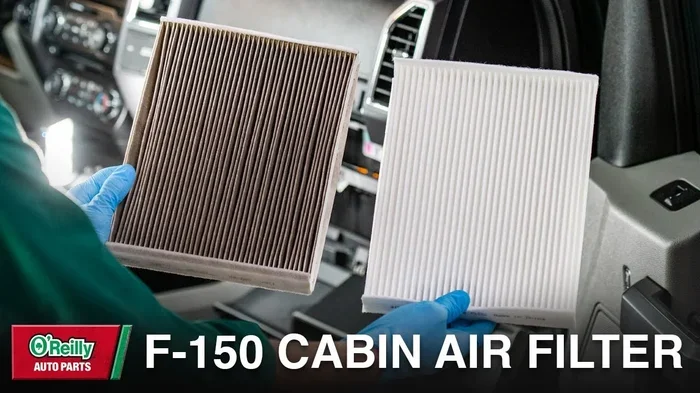
Checking the filter is simple. Open the access panel, pull out the filter, and hold it up to a light. If you cannot see light through it, it is time for a new one. This quick check takes less than two minutes and keeps your interior air quality at its best.
Expert Insight
Many Ford owners ask whether they should clean their cabin filter instead of replacing it. For disposable filters, the answer is no. Cleaning does not restore the filter material properly. For reusable cabin filters, you can rinse them with water and let them dry completely before reinstalling. Check your filter type to determine which approach works best for your 2006 Ford F150 setup.
Other Ways to Improve Air Quality in Your 2006 F150
A cabin air filter is one of the best upgrades for cleaner cab air. But it is not the only step you can take. Here are a few more tips to keep your truck’s interior air fresh and healthy.
Keep Your Truck Clean Inside
Vacuum the seats and floor mats regularly. Dust and crumbs attract allergens and create odors. A clean interior means less debris getting pulled into the ventilation system. Wipe down the dashboard and vents with a damp cloth to remove accumulated dust.
Use Sunshade to Reduce Heat Buildup
Excessive heat inside your truck can cause odors and promote mold growth. A quality sunshade keeps the interior cooler when parked. This is especially helpful in hot climates. You can also explore window tint options to reduce heat and UV exposure. For a comprehensive guide on tinting, check out our 20 percent window tint guide for more details.
Run the A/C Regularly
Even in winter, running the air conditioning for a few minutes each week helps keep the HVAC system in good shape. It circulates refrigerant and keeps seals lubricated. This prevents musty buildup and extends the life of your system.
Check Your Tire Pressure with a Portable Pump
Proper tire pressure contributes to overall vehicle health and efficiency. Keeping a 12 volt car air pump in your truck bed is a smart move. It lets you maintain the right pressure anywhere, which improves fuel economy and safety. This is a small investment that pays off in many ways.
Avoid Smoking Inside the Truck
Cigarette smoke lingers in fabric and upholstery. It creates persistent odors and reduces air quality significantly. If you must smoke, do it outside. Your cabin air quality will thank you.
Should You Add a Cabin Air Filter to Your 2006 F150?
The answer is a clear yes. The 2006 Ford F150 is a legendary truck built for hard work and long hauls. But that does not mean you should settle for poor interior air quality. Adding a cabin air filter is one of the cheapest and most impactful upgrades you can make.
For under $20 and about 15 minutes of your time, you get cleaner air, better HVAC performance, and a more comfortable driving experience. Whether you use your F150 for daily commuting, hauling cargo, or weekend trips, the difference is real and noticeable.
Think about how many hours you spend in your truck each week. That is a lot of time breathing the same air. Making that air cleaner is a small investment with big returns for your health and comfort.
Take care of your truck, and it will take care of you. Adding a cabin air filter to your 2006 F150 is a smart first step toward better vehicle maintenance and a more enjoyable driving experience.
Frequently Asked Questions
Does every 2006 Ford F150 have a cabin air filter?
No, most 2006 Ford F150 models did not come factory-equipped with a cabin air filter. However, some higher-end trims or region-specific models may have included one. You can check behind the glove box or under the hood to confirm whether your specific truck has one.
Can I add a cabin air filter to my 2006 F150 if it does not have one?
Yes, absolutely. Aftermarket cabin air filters are widely available and easy to install. Most kits are designed specifically for the 2006 F150 and can be set up in under 15 minutes with basic tools.
How much does a cabin air filter for a 2006 F150 cost?
Most cabin air filters for the 2006 Ford F150 cost between $10 and $25. Charcoal-activated filters that also control odors may cost a few dollars more. The price is very affordable for the benefits you get.
How often should I replace my cabin air filter?
Replace your cabin air filter every 12,000 to 15,000 miles or once a year. If you drive in dusty conditions or heavy traffic, consider replacing it every 10,000 miles for the best air quality and HVAC performance.
What happens if I do not replace my cabin air filter?
A neglected cabin filter becomes clogged with dust and debris. This reduces airflow from your vents, causes musty odors, and forces your HVAC system to work harder. Over time, it can also harbor mold and bacteria that affect the air you breathe.
Is a cabin air filter the same as an engine air filter?
No, they are completely different. A cabin air filter cleans the air that enters your passenger compartment. An engine air filter cleans the air that enters the engine for combustion. Your 2006 F150 needs both for optimal performance, though most models only came with the engine air filter from the factory.
=== CONCLUSION ===
The 2006 Ford F150 is a tough, reliable truck that has earned its place as one of the best-selling vehicles in America. But when it comes to cabin air quality, most models left something to be desired. The lack of a factory cabin air filter is a gap that many owners do not even realize exists until they add one.
Now you know the full picture. Your 2006 F150 likely does not have a cabin air filter from the factory, but adding one is simple, affordable, and incredibly worthwhile. You will breathe cleaner air, enjoy better HVAC performance, and protect your ventilation system from premature wear.
Take a few minutes this weekend to check your truck and consider installing an aftermarket filter. It is one of those small upgrades that makes a big difference every single time you turn the key and hit the road. Your lungs will thank you.