Are Toyota Highlander Seats Real Leather or Synthetic
The Toyota Highlander offers real leather seats on higher trims like the XLE and Limited, while lower trims use synthetic materials. Understanding which Highlander seat material you get is essential for comfort, durability, and long-term value. This guide covers every trim level, compares real leather vs synthetic options, and gives practical care tips to keep your seats looking great for years.
Key Takeaways
- Trim Matters: Higher trims like the XLE and Limited come with genuine leather, while base trims use synthetic materials.
- Real Leather Feels Different: Genuine leather has a natural texture, warmth, and smell that synthetic cannot fully replicate.
- Maintenance Is Key: Real leather requires regular conditioning to prevent cracking and fading over time.
- Synthetic Has Benefits Too: Synthetic seats are easier to clean and often more resistant to wear and stains.
- Check Before You Buy: Always confirm the seat material when ordering a Highlander, especially if leather is a priority.
- Durability Varies: Real leather can last the life of the vehicle with proper care, while synthetic may show wear sooner.
📑 Table of Contents
- Are Toyota Highlander Seats Real Leather or Synthetic?
- Understanding Toyota Highlander Trim Levels and Seat Materials
- How to Tell If Your Highlander Seats Are Real Leather
- Real Leather vs Synthetic Leather: A Side-by-Side Comparison
- Caring for Your Toyota Highlander Seats
- Common Mistakes People Make With Highlander Seats
- Expert Insights on Highlander Seat Materials
- Quick Tips Summary
- Conclusion
Are Toyota Highlander Seats Real Leather or Synthetic?
When you walk into a Toyota Highlander and run your hand across the seats, you want to know what you are touching. The answer is not as simple as yes or no. Toyota Highlander seats come in different materials depending on the trim level you choose. Some trims use real leather, while others use synthetic leather or cloth. This matters a lot if you care about comfort, appearance, and how long your seats will last.
If you are shopping for a Highlander or already own one, understanding the seat material helps you make better decisions. You will learn which trims offer genuine leather, how to tell the difference between real and synthetic, and how to care for your seats properly. Let us dive right in.
Toyota designed the Highlander as a family-friendly SUV with a premium feel. The seats play a big role in that experience. Whether you are commuting daily or taking a road trip with the whole family, seat material affects comfort in a major way. Real leather seats feel luxurious and breathe well in warm weather. Synthetic options, on the other hand, are easier to maintain and often come standard on more affordable trims.
Understanding Toyota Highlander Trim Levels and Seat Materials
The Toyota Highlander comes in several trim levels, and each one has different seat materials. Here is a breakdown of what you can expect from each trim.
LE Trim: Cloth and Synthetic Options
The base LE trim typically comes with cloth seats as standard. Some versions may offer synthetic leather as an upgrade. Synthetic leather, also called leatherette, looks similar to real leather but is made from polyurethane or vinyl. It is a budget-friendly option that still gives the SUV a polished look.
If you opt for the LE trim, you should know that the seats will not feel as soft or luxurious as genuine leather. However, synthetic materials are more resistant to stains and spills. This makes them a practical choice for families with young children or pets.
SE Trim: Upgraded Seat Materials
The SE trim steps up the interior quality. You often get synthetic leather as standard seating material. The SE trim also offers a sportier look with unique seat styling. The synthetic leather on the SE feels smoother than cloth and gives the cabin a more upscale appearance.
One thing to keep in mind: the SE trim does not always include genuine leather. You need to check the specific package and options when ordering. Toyota sometimes bundles leather seating with other comfort features on the SE, so read the details carefully.
XLE Trim: Real Leather Becomes Available
The XLE trim is where real leather seats start to appear. Many XLE Highlander models come with genuine leather upholstery as standard or as part of a popular package. The leather feels soft to the touch and adds a refined touch to the interior.
If you want the premium look and feel of real leather without stepping up to the Limited or Platinum trims, the XLE is a great sweet spot. The XLE also often includes heated front seats, which pair beautifully with leather material.
Limited and Platinum Trims: Full Leather Experience
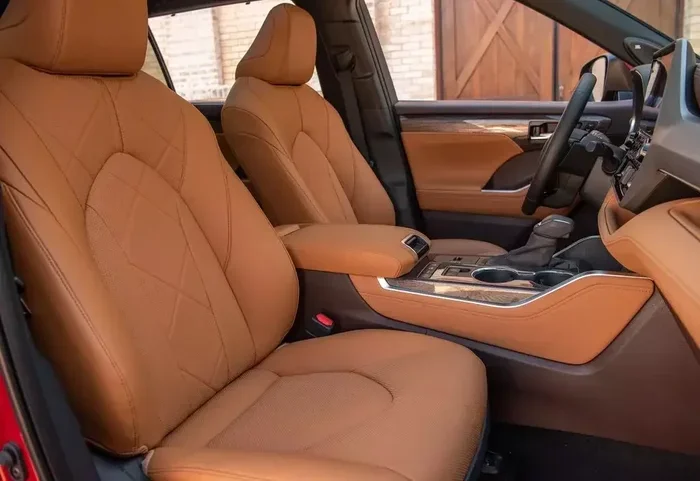
The top-tier Limited and Platinum trims offer the full leather seating experience. These trims feature premium genuine leather with quilted patterns and enhanced comfort features. The Limited trim often includes leather-trimmed steering wheels and second-row captain seats with leather surfaces.
The Platinum trim takes it even further with ultra-soft leather and additional comfort features. If you want the most luxurious interior in the Highlander lineup, these top trims deliver. The Toyota Highlander seats on these trims truly feel like a premium SUV should.
How to Tell If Your Highlander Seats Are Real Leather
Not sure if your Highlander has real leather or synthetic? There are a few simple ways to tell the difference. These tips can save you from confusion when buying a used Highlander or verifying your current seat material.
The Touch Test
Run your fingers across the seat surface. Real leather feels warm and slightly soft. It has a natural texture with subtle variations. Synthetic leather often feels more uniform and slightly plasticky. Real leather also has a slight natural smell that synthetic cannot fully mimic.
Look for the Label
Check the owner’s manual or look for a label on the seat. Toyota clearly labels the seat material in the manual. You can also find a tag on the seat itself that lists the material type. This is the most reliable way to confirm whether you have genuine leather or a synthetic alternative.
The Water Test
Real leather absorbs small drops of water quickly. Synthetic leather will cause water to bead up on the surface. This is a quick and easy test if you want to verify the material at home. Just place a few drops of water on a hidden area of the seat and wait a minute.
Real Leather vs Synthetic Leather: A Side-by-Side Comparison
Choosing between real and synthetic leather depends on your priorities. Here is a detailed comparison to help you decide.
| Feature | Real Leather | Synthetic Leather |
|---|---|---|
| Feel and Comfort | Soft, warm, natural texture | Smooth, slightly plasticky feel |
| Durability | Lasts longer with proper care | Good durability, may crack over time |
| Stain Resistance | Moderate, needs protection | High, resists most spills |
| Maintenance | Requires regular conditioning | Easy to wipe clean |
| Cost | Higher, found on premium trims | Lower, standard on base trims |
| Breathability | Excellent, adapts to temperature | Moderate, can feel warm in heat |
| Appearance Over Time | Develops a natural patina | May look worn or faded |
As you can see, both materials have their strengths. Real leather offers a premium feel and long-term durability, but it requires more attention. Synthetic leather is practical and low-maintenance, making it ideal for busy families.
Caring for Your Toyota Highlander Seats
Whether your Highlander has real leather or synthetic seats, proper care keeps them looking great for years. Here are some practical tips to protect your investment.
Tips for Real Leather Seats
- Condition Regularly: Use a quality leather conditioner every 3 to 6 months. This keeps the leather soft and prevents cracking.
- Clean Spills Quickly: Wipe up any liquid immediately to prevent staining. Use a mild leather cleaner and a soft cloth.
- Avoid Direct Sunlight: Prolonged sun exposure can fade and dry out leather. Use sunshades on your windows when parked outside.
- Use Seat Covers Carefully: If you use seat covers, make sure they are breathable and fit properly. Non-breathable covers can trap moisture and damage leather.
- Vacuum Regularly: Dirt and dust can scratch leather over time. Vacuum your seats weekly to remove debris.
Tips for Synthetic Leather Seats
- Wipe Down Frequently: Synthetic leather wipes clean easily. Use a damp cloth with mild soap for regular cleaning.
- Avoid Harsh Chemicals: Stay away from abrasive cleaners or alcohol-based products. These can damage the synthetic surface.
- Check for Cracks: Synthetic leather can crack at the seams over time. Inspect these areas regularly and apply a protectant spray.
- Use Fabric Protector: A fabric protector spray helps repel stains and extends the life of synthetic seats.
Common Mistakes People Make With Highlander Seats
Avoid these common mistakes to keep your Toyota Highlander seats in top condition.
Assuming All Leather Is the Same
Not all leather is created equal. Some manufacturers use lower-grade leather that wears faster. Toyota uses quality materials, but the grade can vary by trim. Always confirm the seat material before assuming the quality.
Skipping Conditioning
Many Highlander owners forget to condition their leather seats. Over time, this leads to dry, cracked leather that looks worn and feels uncomfortable. Set a reminder to condition your seats every few months. It is a simple step that makes a huge difference.
Using the Wrong Cleaning Products
Never use household cleaners on leather seats. Products with ammonia or bleach can damage the material. Stick to cleaners specifically designed for automotive leather. If you are unsure, check with your Toyota dealer for recommended products.
Ignoring Small Stains
A small stain ignored today becomes a permanent mark tomorrow. Address spills and stains as soon as you notice them. The longer a substance sits on leather, the harder it is to remove.
Expert Insights on Highlander Seat Materials
Automotive experts generally agree that the Toyota Highlander offers competitive seat materials in its class. Compared to vehicles like the Ford Explorer or Chevy Traverse, the Highlander holds its own in interior quality.
One thing experts often point out is the importance of the push start button experience, which ties into the overall feel of the cabin. If you want to learn more about proper push-start button usage, check out our guide on Are You Supposed To Hold The Push Start Button.
When it comes to interior materials, the Highlander punches above its price point. The genuine leather on the XLE and Limited trims feels comparable to vehicles costing thousands more. However, if you compare maintenance costs across brands, you will find that Cadillac parts can be expensive, while Toyota parts remain more affordable and widely available. This makes the Highlander a smart choice for long-term ownership.
Expert tip: If you are deciding between a Highlander with leather seats and one with synthetic, consider your lifestyle. Families who need easy-to-clean seats may prefer synthetic. Those who want a premium feel and do not mind regular maintenance will love genuine leather.
Quick Tips Summary
- Check the trim level: XLE and above typically offer real leather.
- Perform the water test: Real leather absorbs water; synthetic repels it.
- Condition every 3-6 months: This keeps real leather soft and crack-free.
- Use sunshades: Protect your seats from UV damage during summer parking.
- Buy seat protectors: Quality seat covers add an extra layer of protection.
- Read the owner’s manual: It lists the exact seat material for your trim.
Conclusion
So, are Toyota Highlander seats real leather? The answer depends on the trim level you choose. The XLE, Limited, and Platinum trims offer genuine leather that feels premium and lasts for years with proper care. Lower trims like the LE and SE use cloth or synthetic leather, which still looks great but requires different maintenance.
Knowing what you are getting before you buy makes all the difference. Whether you prefer the luxurious feel of real leather or the practical benefits of synthetic, the Highlander delivers a comfortable and well-built interior. Take your time, check the seat material, and enjoy every drive in your Highlander.
If you want to learn more about keeping your vehicle secure, read our article on Are Steering Wheel Locks Easy To Get Off for helpful tips on vehicle security. And if you are curious about tire options, our guide on Are Tesla Tires Run Flat offers useful insights that apply across vehicle types.
Take care of your seats, and they will take care of you for miles to come.
Frequently Asked Questions
Are all Toyota Highlander seats leather?
No, not all Highlander seats are leather. The base LE trim typically comes with cloth seats, and the SE trim often features synthetic leather. Genuine leather is standard or available as an upgrade on the XLE, Limited, and Platinum trims. Always check the specific trim and package details before purchasing.
How can I tell if my Highlander has real leather seats?
You can perform the water test by placing a few drops on a hidden seat area. Real leather absorbs the water quickly, while synthetic leather causes it to bead up. You can also check the owner’s manual or look for a seat label that specifies the material type. The feel and natural smell of genuine leather are also telltale signs.
Is synthetic leather as durable as real leather in a Highlander?
Synthetic leather is durable and resists stains well, but it does not last as long as genuine leather with proper care. Real leather can endure for the life of the vehicle if conditioned regularly. Synthetic leather may show signs of wear such as cracking at the seams after several years of use.
What is the best way to clean Toyota Highlander leather seats?
Use a mild leather cleaner and a soft microfiber cloth. Wipe down the seats gently and avoid harsh chemicals or abrasive tools. Condition the leather every 3 to 6 months to keep it soft and prevent cracking. Always test any cleaning product on a small hidden area first.
Can I upgrade my Highlander seats to real leather if they are synthetic?
Yes, seat upgrades are possible through Toyota dealers or aftermarket specialists. However, the cost and complexity vary depending on your model year and trim. It is often more cost-effective to choose the right trim with leather seats from the start. Check with your local dealer for available options and pricing.
Do Highlander leather seats fade in the sun?
Yes, prolonged sun exposure can cause leather to fade and dry out over time. Using sunshades and parking in shaded areas helps protect the seats. Regular conditioning also creates a barrier against UV damage. Taking these simple steps keeps your leather seats looking rich and new for longer.