Can Low Coolant Cause Your Car to Shake While Driving
Yes, low coolant can absolutely cause your car to shake while driving. When your coolant level drops too low, the engine overheats, which leads to misfires, vibrations, and serious damage. This guide covers the warning signs, root causes, and simple fixes to keep your car running smooth and safe.
Key Takeaways
- Low coolant starves the engine of heat regulation, causing overheating that leads to shaking and vibration.
- Common signs include a rising temperature gauge, rough idle, and visible steam from the hood.
- A cracked head gasket or leaking radiator can trigger coolant loss and subsequent engine shakes.
- Driving with low coolant risks costly repairs, including warped engine heads and seized components.
- Topping off coolant is a quick fix, but finding the root cause is essential for long-term engine health.
- Regular coolant flushes and checks prevent most low-coolant problems before they start.
📑 Table of Contents
- Can Low Coolant Cause Your Car to Shake While Driving?
- What Does Coolant Do in Your Car?
- How Low Coolant Causes Shaking and Vibration
- Warning Signs Your Coolant Level Is Too Low
- Common Causes of Low Coolant
- What Happens If You Keep Driving With Low Coolant?
- How to Fix and Prevent Low Coolant Problems
- Quick Tips to Keep Your Coolant System Healthy
- Conclusion
Can Low Coolant Cause Your Car to Shake While Driving?
If your car starts shaking or vibrating while you drive, it can be a scary experience. One of the most common culprits behind this problem is low coolant. Your car relies on coolant to keep the engine at the right temperature. When the level drops, things go wrong fast.
The short answer is yes. Low coolant can cause a car to shake while driving. But the full story is more complex. Let us break down exactly why this happens, what to look for, and how to fix it before the damage gets worse.
Coolant is not just some mysterious green liquid in your car. It is the lifeblood of your engine’s cooling system. Without enough of it, your engine runs hot. And a hot engine shakes, misfires, and can suffer permanent damage. Understanding this connection is the first step to keeping your car healthy.
Many drivers ignore early warning signs like a slightly rising temperature gauge or a small puddle under their car. By the time the shaking starts, the problem has usually been building for a while. The good news is that catching it early can save you hundreds of dollars in repairs.
What Does Coolant Do in Your Car?
Before we dive deeper into shaking, let us quickly cover what coolant actually does. Think of coolant as your engine’s personal bodyguard against heat. It flows through channels in the engine block and absorbs excess heat. Then it carries that heat to the radiator, where it cools down and cycles back again.
This constant loop keeps your engine running at the perfect temperature. Most cars operate best between 195 and 220 degrees Fahrenheit. When coolant levels drop, this balance falls apart. The engine cannot shed heat properly, and temperatures spike.
Coolant also contains anti-corrosion additives that protect the internal passages of your engine. Over time, these additives break down. That is why manufacturers recommend regular coolant flushes. Fresh coolant keeps the system clean and efficient.
The Cooling System Explained Simply
Your cooling system has several key parts. The radiator releases heat. The water pump pushes coolant through the system. The thermostat opens and closes to regulate flow. And the coolant reservoir holds extra fluid. When any of these parts fail or when the fluid level drops, the whole system suffers.
Here is a simple way to think about it. Your engine generates enormous heat. Imagine running a furnace inside a small enclosed space. Without coolant flowing through, that space would quickly become dangerously hot. Coolant is the mechanism that carries that heat away and keeps everything running smoothly.
How Low Coolant Causes Shaking and Vibration
Now let us get to the heart of the matter. How exactly does low coolant make your car shake? The answer lies in the chain reaction that starts when your engine overheats.
When coolant levels drop, the engine temperature rises. As the temperature climbs past normal limits, several things happen simultaneously. Each one adds to the shaking and vibration you feel in the driver’s seat.
Engine Misfires
One of the first things that happens when an engine overheats is misfiring. The combustion chambers rely on precise timing and temperature to ignite fuel properly. When the engine runs too hot, the air-fuel mixture ignites at the wrong time. This creates a rough, uneven power delivery that you feel as shaking.
You might notice the shaking most at idle or during low-speed driving. Some drivers describe it as a gentle rumble. Others feel sharp jolts through the steering wheel or the entire chassis. Either way, it is a clear signal that something is wrong.
Warped Engine Components
Heat causes metal to expand. When your engine runs consistently hot due to low coolant, critical components can warp. The cylinder head is especially vulnerable. Once warped, it no longer seals properly against the engine block. This leads to compression loss, which directly causes vibration and shaking.
A warped head gasket is one of the most expensive repairs you can face. It often requires removing the cylinder head and machining it flat or replacing it entirely. This is exactly why addressing low coolant early is so important.
Thermostat Failure
The thermostat controls coolant flow based on engine temperature. When coolant is low, the thermostat may get stuck in the closed position. This prevents any coolant from reaching the radiator. The result is a rapid temperature spike and immediate shaking.
A stuck thermostat is a relatively inexpensive fix on its own. But if you let it go too long, the overheating it causes can damage the water pump, head gasket, and even the engine block. The thermostat is a small part with a big job.
Water Pump Damage
The water pump is responsible for circulating coolant throughout the engine. When coolant levels are low, the pump can suck air instead of liquid. Air pockets in the system create uneven cooling and cause the engine to shake. Over time, running dry can destroy the water pump entirely.
Water pump failure leaves you stranded. The pump cannot be bypassed. You need coolant flowing to keep the engine alive. If your water pump fails while driving, pull over safely and call for help.
Warning Signs Your Coolant Level Is Too Low
Shaking is not the only sign of low coolant. In fact, by the time shaking starts, other symptoms have usually been present for a while. Learning to recognize these early warnings can help you avoid the shaking altogether.
Rising Temperature Gauge
This is the most obvious sign. Your dashboard has a temperature gauge or a temperature light. If the needle moves into the red zone or a warning light comes on, your engine is running too hot. Check your coolant level immediately.
Do not ignore this. Many drivers see the warning and keep driving. That is the worst thing you can do. Even a few more minutes of driving can cause irreversible engine damage.
Steam or Smoke From the Hood
If you see steam coming from under your hood, your coolant is likely boiling. This happens when the engine gets so hot that the remaining coolant turns to steam. The pressure builds and the fluid escapes through any weak point in the system.
Steam can be white or translucent. It often smells sweet because coolant contains ethylene glycol. If you see steam, pull over safely, turn off the engine, and let it cool before opening the hood.
Puddles Under Your Car
A coolant leak will often leave a puddle under your parked car. Coolant is typically green, orange, or pink. It has a slightly slippery feel and a sweet smell. If you notice these colorful puddles in your driveway, check your coolant level right away.
Leaks can come from many places. The radiator itself, hoses, the water pump, or the heater core are common sources. Finding the leak early means a much cheaper repair.
Sweet Smell Inside the Car
Sometimes you can smell a coolant leak before you see it. A sweet, syrupy odor inside the cabin often means the heater core is leaking. The heater core uses coolant to warm the air inside your car. When it fails, coolant can seep into the ventilation system.
This is not just a smell issue. A leaking heater core can also cause foggy windows and damp carpets. It is another sign that your coolant system needs attention.
Common Causes of Low Coolant
Understanding why your coolant is low helps you prevent the problem from coming back. Simply topping off the fluid is a temporary fix. You need to address the root cause.
External Leaks
External leaks are the most common reason for low coolant. Hoses crack with age and heat. The radiator can develop pinhole leaks. The water pump seal wears out over time. Even the radiator cap can fail and let coolant escape under pressure.
A visual inspection under your car and around the engine bay can often reveal the source. Look for wet spots, crusty residue, or discolored areas around hoses and connections. Sometimes a leak is obvious. Other times you need a pressure test to find it.
Internal Leaks
Internal leaks are trickier. They happen when coolant enters the combustion chamber or the oil system. A blown head gasket is the most common cause. When the gasket fails, coolant seeps past the seal and burns in the engine.
Signs of an internal leak include white smoke from the exhaust, oil that looks milky or frothy, and coolant disappearing without any visible external leak. These symptoms require immediate attention. Internal leaks can destroy an engine quickly.
Evaporation Over Time
Even a properly sealed system loses a small amount of coolant over time. This is normal, especially in older vehicles. The coolant reservoir cap should maintain proper pressure in the system. If the cap is weak, coolant evaporates faster than it should.
Topping off every few months is normal maintenance. But if you are adding coolant every week, you have a leak somewhere. Do not ignore frequent top-offs.
Coolant Flushes and Maintenance Gaps
Over time, coolant breaks down and loses its effectiveness. Old coolant becomes acidic and corrosive. It can eat away at the inside of hoses, the radiator, and even the engine block. This corrosion creates tiny holes and weak points where leaks develop.
Most manufacturers recommend a coolant flush every 30,000 to 50,000 miles. Check your owner’s manual for the specific interval. Staying on top of this simple maintenance task prevents many coolant-related problems.
What Happens If You Keep Driving With Low Coolant?
This is a critical question. Some drivers wonder if they can just keep topping off and keep driving. The honest answer is that driving with low coolant is risky. The longer you drive, the more damage you risk.
When the engine overheats, the metal components expand beyond their designed tolerances. The cylinder head can warp. The head gasket can blow. The engine block can crack. These are all catastrophic failures that require major repairs or even a full engine replacement.
In extreme cases, a severely overheated engine can seize completely. The pistons weld themselves to the cylinder walls. At that point, the engine is dead. Towing and a full engine rebuild or replacement will cost thousands of dollars.
For comparison, think about how can a car overheat on a hot day even with full coolant. Now imagine what happens when the coolant level is already low on a hot day. The risk multiplies dramatically.
Even less severe overheating can cause the engine to run poorly. You might notice reduced power, poor fuel economy, and rough acceleration. These are signs that heat is already affecting combustion efficiency.
Some drivers wonder about unusual things too, like can a car run on water instead of coolant. The answer is technically yes for a short distance, but water does not have the same boiling point or anti-corrosion properties as proper coolant. It is not a long-term solution and can cause more problems.
How to Fix and Prevent Low Coolant Problems
The good news is that most low coolant issues are preventable and fixable. Here is a step-by-step approach to handling the problem.
Step 1: Check the Coolant Level Safely
Never open the radiator cap when the engine is hot. The system is under pressure and hot coolant can spray out and cause severe burns. Wait for the engine to cool completely, then check the reservoir level.
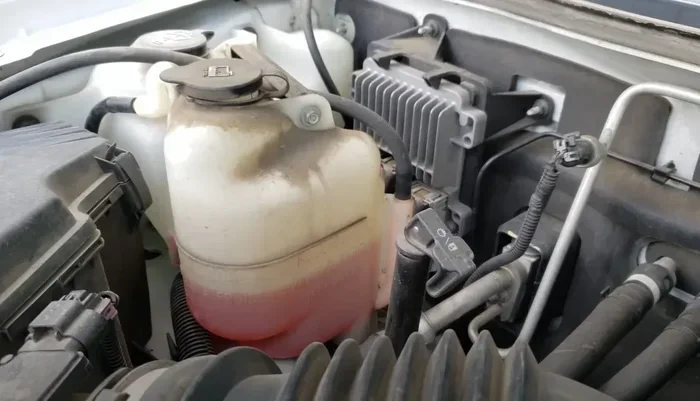
The coolant reservoir has minimum and maximum markings. The fluid should be between those lines. If it is below the minimum, you need to add more. Use the type of coolant specified in your owner’s manual. Mixing different types can cause chemical reactions that damage the system.
Step 2: Inspect for Leaks
Once the level is restored, look for the source of the leak. Check the hoses, radiator, water pump, and reservoir for wet spots or residue. A UV dye can be added to the coolant to make leaks easier to spot. Mechanics use a UV light to trace the dye to the leak source.
If you cannot find the leak yourself, take the car to a mechanic. A pressure test can pressurize the cooling system and reveal even tiny leaks that are not visible to the naked eye.
Step 3: Flush and Replace the Coolant
If your coolant is old or contaminated, a full flush is the best move. This involves draining the old fluid, rinsing the system with distilled water, and filling it with fresh coolant. A proper flush removes rust, scale, and corrosive deposits from the system.
After a flush, make sure to bleed the system properly. Air pockets left in the cooling system can cause the same shaking and overheating problems you were trying to fix.
Step 4: Replace Faulty Components
If the water pump, thermostat, radiator cap, or any hoses are failing, replace them. These are relatively inexpensive parts. But driving without them can lead to engine overheating and shaking.
A new radiator cap is one of the cheapest and most overlooked maintenance items. A faulty cap cannot maintain system pressure, which lowers the boiling point of the coolant and causes premature loss.
Step 5: Follow a Regular Maintenance Schedule
Prevention is always better than repair. Stick to a regular maintenance schedule that includes coolant checks and flushes. Keep an eye on your temperature gauge while driving. And never ignore warning signs like rising needles or unusual smells.
Think of it like this. You would not ignore a check engine light. Do not ignore a rising temperature gauge either. Both are your car telling you something needs attention right now.
Quick Tips to Keep Your Coolant System Healthy
- Check coolant levels monthly when the engine is cool.
- Use the correct coolant type for your vehicle as specified in the owner’s manual.
- Never mix different coolant colors unless your manual explicitly allows it.
- Watch for puddles under your car and investigate any unusual spots.
- Replace the radiator cap every 3 to 5 years as preventive maintenance.
- Do not ignore a rising temperature gauge. Pull over and shut off the engine immediately.
- Flush your coolant on schedule, typically every 30,000 to 50,000 miles.
Conclusion
Low coolant can definitely cause your car to shake while driving. The connection between coolant levels and engine performance is direct and serious. When your coolant drops too low, the engine overheats, components warp, and shaking follows. The chain reaction from low fluid to engine damage can happen faster than most drivers expect.
The best approach is prevention and early action. Check your coolant regularly. Watch for warning signs like temperature gauge spikes, steam from the hood, or sweet smells inside the cabin. And never ignore shaking or vibration. These are your car’s way of telling you something needs help.
Fixing a low coolant problem early is simple and affordable. Letting it go can lead to engine failure that costs thousands. The choice is clear. Take care of your cooling system, and your car will take care of you on every drive.
Stay proactive with your car maintenance. A few minutes of checking today can save you from a major breakdown tomorrow. Your engine works hard for you. Give it the coolant it needs to keep running strong and smooth.
Frequently Asked Questions
Can low coolant cause shaking at idle?
Yes, absolutely. When coolant is low, the engine overheats, which causes misfires and uneven combustion. This is especially noticeable at idle because the engine is under less load and the vibrations are easier to feel. If your car shakes while idling, checking the coolant level should be one of your first steps.
How much does it cost to fix a low coolant shaking issue?
The cost depends entirely on what caused the problem. Simply topping off coolant costs just a few dollars. But if low coolant damaged the head gasket, the repair can range from $1,000 to $2,500 or more. Replacing a water pump or thermostat is much cheaper, usually between $150 and $400. Early intervention keeps costs low.
Is it safe to drive a car that is shaking from low coolant?
No, it is not safe. Driving with an overheating engine risks catastrophic damage like a cracked engine block or seized motor. It also puts you at risk of breaking down on the road. If your car is shaking and the temperature gauge is in the red, pull over safely and turn off the engine immediately.
Can I just add water instead of coolant?
In an emergency, yes, you can add water temporarily. But water does not have the same boiling point or anti-corrosion properties as proper coolant. It can cause overheating and internal corrosion over time. Use water only to get to a repair shop, then flush the system and refill with the correct coolant type.
How often should I check my coolant level?
Checking your coolant level once a month is a good habit. You should also inspect it before any long road trip. The coolant reservoir makes it easy to see the level without opening the radiator cap. Just make sure the engine is cool before you check.
Can a coolant leak cause shaking even if the level looks full?
Yes, this can happen. A slow leak might cause the level to drop gradually without you noticing. Air pockets can also form in the system even with a full reservoir, causing uneven cooling and shaking. If you suspect a leak or air in the system, have a mechanic perform a pressure test to find the issue.