Is a 350 and a 5 7 the Same Motor or a Different Engine
Yes, a 350 and a 5.7 are the same engine. The 350 refers to 350 cubic inches, which equals 5.7 liters of displacement. They are one and the same Chevy small block V8, just measured in different units. Many car enthusiasts get confused by the naming, but once you understand the basics, it all makes sense. Let us break it all down for you.
Have you ever stood in a garage or browsed parts online and wondered, is a 350 and a 5 7 the same motor? It is a question that confuses a lot of people. You see one listing that says Chevy 350 and another that says 5.7 liter V8 and you scratch your head. Are they different engines? Are they the same thing? The short answer is yes. They are the same engine, just described using different units of measurement. Let us dive deep into this topic and clear up all the confusion.
The Chevy small block 350 is one of the most famous engines ever built. It has powered everything from classic Corvettes to heavy-duty trucks. When people say 350, they are talking about the engine’s displacement in cubic inches. When someone says 5.7, they are talking about the same displacement but in metric liters. It is really that simple. But there is a lot more to know about this legendary motor, and that is exactly what we are going to cover in this article.
Key Takeaways
- A 350 and a 5.7 are the same engine: 350 cubic inches converts to 5.7 liters of displacement.
- The Chevy small block 350 is iconic: It has been a staple of American muscle cars and trucks for decades.
- Different names do not mean different engines: The 350, 5.7L, and Vortec 5.7 all refer to the same basic platform.
- Generations matter more than the name: A first-gen 350 differs from a late-model 5.7 in specs and features.
- Performance can vary widely: Horsepower and torque depend on the specific configuration and year.
- Swapping between 350 and 5.7 is straightforward: They share the same mounting points and accessories.
- Understanding displacement helps with parts selection: Knowing your engine details makes buying parts easier.
📑 Table of Contents
- What Does 350 and 5 7 Mean?
- The Chevy Small Block 350: A Legendary Engine
- Is a 350 and a 5 7 the Same Motor in Every Way?
- Performance Differences Between 350 and 5.7 Engines
- Common Confusion: 350 vs Other Chevy Engines
- Maintaining Your 350 or 5.7 Engine
- Why the 350 and 5.7 Remain So Popular
- Final Thoughts on the 350 and 5.7 Debate
What Does 350 and 5 7 Mean?
Before we go any further, let us get the basics down. The number 350 refers to 350 cubic inches of displacement. Displacement is the total volume of all the cylinders in an engine. Think of it as the combined space where air and fuel get burned to create power. The bigger the displacement, the more air and fuel the engine can burn, which generally means more power.
Now, 5.7 liters is the metric version of that same number. One liter equals about 61 cubic inches. So when you multiply 5.7 by 61, you get roughly 348, which rounds up to 350. That is why these two numbers refer to the same engine. They are just speaking different measurement languages. One uses the imperial system, and the other uses the metric system.
This is the same idea as saying 12 inches equals 1 foot. The number changes, but the actual measurement stays the same. So when you hear someone say they have a 350 or a 5.7, they are talking about the exact same engine. The name just depends on who is saying it and where they are from.
Why Two Different Names?
The United States has traditionally used the imperial system for measurements. That is why American engines have always been listed in cubic inches. A 350 small block Chevy has been called that since the 1960s. But as the world became more global, car manufacturers started using metric measurements too. This is especially true for trucks sold in Canada, Europe, and other markets that use the metric system.
So the 5.7 liter label became more common in the 1980s and 1990s. GM started putting the metric size on vehicle badges and service manuals. But under the hood, it was still the same small block engine that Chevy had been building for years. The name changed, but the motor did not.
The Chevy Small Block 350: A Legendary Engine
The Chevy small block 350 has earned a legendary status in the automotive world. It first showed up in 1967 and has been in production in various forms ever since. No other American V8 has had such a long and successful run. It powered classic muscle cars, daily drivers, work trucks, and even high-performance race cars.
What makes the 350 so special? It is a perfect balance of size, weight, and power. It is not too big to fit in a compact car, but it is not too small to deliver serious torque. The firing order is 1-8-4-3-6-5-7-2, and the engine block has a bore of 4.00 inches and a stroke of 3.48 inches. These specs have remained fairly consistent across generations.
Over the years, Chevy made many variations of the 350. Some were designed for economy, while others were built for raw performance. The engine block design allowed for a wide range of configurations. You could have a stock 350 with a two-barrel carburetor producing around 145 horsepower. Or you could have a high-performance version with a four-barrel carb and dual exhaust making over 300 horsepower. The platform was incredibly versatile.
Different Generations of the 350
The Chevy 350 went through several generations. Each generation brought improvements in technology and efficiency. The first generation ran from 1967 to 1980 and featured a cast iron block and either a carburetor or early fuel injection. These engines were known for their durability and simplicity.
The second generation, often called the roller cam 350, came in the 1980s. It used a hydraulic roller camshaft which allowed for better valve timing and improved fuel economy. The compression ratio also changed during this period to meet tightening emissions standards.
By the 1990s, Chevy introduced the Vortec version of the 350. The Vortec 5.7 became the go-to engine for trucks like the Chevrolet Silverado and GMC Sierra. It featured improved cylinder heads, better intake manifold design, and centralized port fuel injection. These changes made the Vortec 5.7 more powerful and more efficient than its predecessors.
Is a 350 and a 5 7 the Same Motor in Every Way?
Now here is where things get interesting. While a 350 and a 5.7 share the same displacement, they are not always exactly the same in every detail. The basic engine block, bore, and stroke are identical. But the accessories, engine management systems, and internal components can differ depending on the year and application.
For example, an older 350 from the 1970s might use a carburetor and have a different compression ratio than a modern 5.7 Vortec engine. The older engine might produce less horsepower but be easier to work on with basic hand tools. The modern 5.7 might have roller lifters, aluminum heads, and an engine control module that manages everything from fuel delivery to spark timing.
So while the core engine is the same, the package around it can be quite different. This matters if you are planning an engine swap or looking for replacement parts. You need to know not just the displacement but also the specific generation and application.
Engine Swap Compatibility
One of the great things about the Chevy 350 platform is how easy it is to swap into different vehicles. Because the engine shares the same bell housing bolt pattern and motor mounts across so many applications, a 350 or 5.7 can go into a wide range of cars and trucks. This is why the small block Chevy remains so popular in the hot rod and restoration communities.
However, you do need to pay attention to a few details. The transmission bell housing might differ between older and newer engines. The accessory drive arrangement can also vary. And the engine mounts might need to be adjusted depending on the vehicle. But overall, the 350 and 5.7 are among the most interchangeable engines in automotive history.
If you are doing a swap, make sure you match the correct intake manifold, headers, and exhaust system to your specific engine version. A carbureted 350 from the 1970s will need different parts than a fuel-injected 5.7 from the 2000s. But the block itself will bolt right into the same transmission and frame.
Performance Differences Between 350 and 5.7 Engines
When people ask, is a 350 and a 5 7 the same motor, they are often really asking about performance. They want to know if one is faster or stronger than the other. The answer depends on which specific engine you are comparing. A stock 350 from 1970 is not the same as a stock Vortec 5.7 from 2002.
Let us look at some numbers. A 1970 Chevy 350 with a four-barrel carburetor might have produced around 300 horsepower and 380 pound-feet of torque. That was impressive for its time. A 2002 Vortec 5.7, on the other hand, produced about 310 horsepower and 335 pound-feet of torque thanks to modern fuel injection and improved cylinder heads.
So the modern 5.7 might have slightly more horsepower, but the older 350 often had more torque. This shows that the name on the engine does not tell the whole story. You need to look at the specific year, configuration, and application to understand what the engine can do.
Aftermarket Performance Potential
One reason the 350 and 5.7 remain so popular is their massive aftermarket support. You can buy performance parts for these engines from dozens of manufacturers. Upgraded camshafts, performance intake manifolds, headers, and high-flow cylinder heads are all readily available. Whether you have a 350 or a 5.7, you can turn it into a serious performer.
Many engine builders start with a 350 or 5.7 block and build them up for specific applications. A mild street build might include a roller cam, aluminum heads, and a performance intake. A serious racing engine might get a completely different crank, forged pistons, and a roller lifter cam. The platform can handle a wide range of modifications.
The compression ratio also plays a big role in performance. Stock 350 engines from the 1970s often had compression ratios around 8 to 1. Modern 5.7 engines typically run around 9 to 1 or higher. Higher compression means more power, but it also means you need to use the right fuel. Always check your owner manual for the recommended fuel grade.
Common Confusion: 350 vs Other Chevy Engines
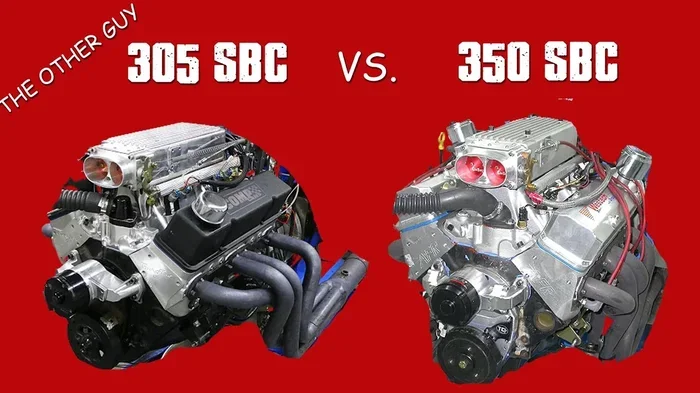
The Chevy small block family includes several different engines, and people often mix them up. The 350 is just one member of the small block family. Other popular engines include the 305, the 307, and the 400. Each of these has a different displacement and different specifications.
The 305 is a smaller version of the small block with a 3.736 inch bore. It displaces 305 cubic inches or about 5.0 liters. The 400 is a bigger engine with a 4.125 inch bore and a 3.75 inch stroke. It displaces 400 cubic inches or about 6.6 liters. These are all different engines, even though they share the same small block platform.
Sometimes people confuse the 350 with the 350TBI, which is just a 350 with a Throttle Body Injection system. The TBI 350 is still a 350 at its core. The same goes for the 5.7 Vortec. It is simply the modern name for the fuel-injected version of the 350. Understanding these distinctions helps when ordering parts or diagnosing problems.
How to Identify Your Engine
If you are not sure whether you have a 350 or a 5.7, there are a few ways to find out. The easiest method is to check the engine casting numbers on the block. These numbers are stamped near the cylinder head and behind the intake manifold. You can look them up online or ask a parts store associate to help.
Another way is to check the vehicle emissions label, which is usually found on the door jamb or under the hood. This label will list the engine displacement and other specs. You can also check the vehicle identification number, or VIN, which encodes engine information in the eighth digit.
Once you know exactly what engine you have, buying parts becomes much easier. You will know the correct bore size, stroke length, and firing order. You will also know which cylinder heads, intake manifolds, and accessories will fit. Taking a few minutes to identify your engine can save you a lot of time and money in the long run.
Maintaining Your 350 or 5.7 Engine
Whether you call it a 350 or a 5.7, this engine needs regular maintenance to stay reliable. The good news is that maintenance is pretty straightforward because these engines have been around for so long and parts are everywhere. Basic upkeep includes regular oil changes, spark plug replacements, and coolant flushes.
One common issue with older 350 engines is oil consumption. As the engine ages, the piston rings can wear and cause the engine to burn oil. Using a high-quality synthetic oil can help reduce this problem. It is also important to check for leaks around the valve covers and oil pan gaskets.
For the Vortec 5.7, the fuel injection system requires a bit more attention. The throttle body injectors can get dirty over time, which can cause rough idling or poor fuel economy. Using a fuel system cleaner periodically can help keep everything running smoothly. The spark plug wires and coil packs also need to be inspected regularly.
Cooling System Care
The cooling system is critical for the 350 and 5.7 engines. These motors run hot, especially under load or in hot weather. Make sure your radiator is in good condition and that the thermostat opens at the correct temperature. A failing thermostat can cause overheating or poor fuel economy.
The water pump is another component to watch. Older 350 engines often use mechanical water pumps, while modern 5.7 engines use electric ones. Both types can fail over time, so keep an eye on your temperature gauge. If it starts climbing, pull over safely and let the engine cool down before continuing.
Regularly checking the serpentine belt and hoses is also important. A cracked belt or a leaking hose can leave you stranded on the side of the road. These are inexpensive parts to replace and easy to inspect during routine maintenance. A little prevention goes a long way with these engines.
Why the 350 and 5.7 Remain So Popular
Decades after its introduction, the Chevy 350 and 5.7 continue to be one of the most popular engines in North America. Why? Because it is reliable, powerful, and easy to work on. The engine design is simple enough that a home mechanic can handle most repairs, yet robust enough to handle serious power builds.
The parts availability is another huge factor. Whether you need a simple gasket or a complete engine rebuild kit, you can find it at almost any auto parts store. The aftermarket industry has also produced thousands of performance upgrades for these engines. From mild street improvements to full race builds, the small block platform can handle it all.
For truck owners, the 5.7 Vortec is a particularly popular choice. It offers a great balance of towing capacity, fuel economy, and reliability. Many truck enthusiasts consider it the ideal workhorse engine. And for classic car restorers, finding a numbers-matching 350 is often the goal. The engine has a certain nostalgia and charm that newer motors simply cannot replicate.
The engine also holds its value well. A well-maintained 350 or 5.7 can last well over 200,000 miles with proper care. Many examples with 300,000 or more miles are still on the road today. This longevity is a testament to the design and engineering that went into these engines. It is no wonder that the Chevy small block has earned its place in automotive history.
Final Thoughts on the 350 and 5.7 Debate
So, is a 350 and a 5 7 the same motor? The answer is a clear yes. They are the same engine, the Chevy small block V8, just measured in different units. The 350 is the displacement in cubic inches, and the 5.7 is the displacement in liters. Under the hood, they share the same basic architecture, the same bore and stroke, and the same firing order.
However, the specific generation, application, and configuration can create real differences in performance, features, and maintenance needs. A 1970 carbureted 350 is a very different machine from a 2005 Vortec 5.7, even though they share the same displacement. Always pay attention to the specific engine details when buying parts or planning modifications.
Whether you are a classic car enthusiast, a truck owner, or a weekend wrench turner, understanding the 350 and 5.7 is essential knowledge. These engines have powered America’s favorite vehicles for more than 50 years, and they show no signs of slowing down. Embrace the legend, learn your engine, and enjoy the ride.
Frequently Asked Questions
Can I use 350 and 5.7 parts interchangeably?
In most cases, yes. Since the 350 and 5.7 share the same displacement and basic architecture, many parts are interchangeable. However, you need to make sure the parts match your specific engine generation. A carbureted 350 from the 1970s and a fuel-injected 5.7 Vortec from the 2000s may need different intake manifolds and accessories. Always verify the part number and application before purchasing.
How do I convert 350 cubic inches to liters?
To convert cubic inches to liters, divide the cubic inch displacement by 61.02. So 350 divided by 61.02 equals approximately 5.7 liters. This is why the 350 and the 5.7 are the same engine. The conversion is a simple math trick that helps you switch between imperial and metric measurements.
What vehicles came with the 350 or 5.7 engine?
The Chevy 350 and 5.7 were used in a huge range of vehicles. Classic Corvettes, Camaros, and Chevelles all offered the 350. Full-size cars like the Impala and Caprice also used it. Trucks like the Chevrolet Silverado, GMC Sierra, Blazer, and Suburban were commonly equipped with the 5.7 Vortec version. Even some Jeeps and other non-Chevy vehicles used this engine in swap applications.
Is the 350 a small block or a big block engine?
The 350 is a small block Chevy engine. The small block family includes displacements like the 283, 305, 307, 350, and 400. The big block family includes engines like the 396, 402, 427, and 454. Both families share the Chevy V8 platform but differ in block size, deck height, and overall dimensions. The 350 belongs to the small block family.
How much horsepower does a stock 350 or 5.7 produce?
Stock horsepower varies widely depending on the year and configuration. A 1970 350 with a four-barrel carb might produce around 300 horsepower. A 1980s 350 with a two-barrel carb might make around 145 to 170 horsepower. A 2000s Vortec 5.7 typically produces 310 to 320 horsepower. Always check the specific specifications for your engine year and application.
What is the best way to identify a 350 or 5.7 engine?
The easiest way is to check the engine casting numbers on the block. These numbers are located on the rear of the block, near the bell housing, and sometimes behind the intake manifold. You can look up these numbers online in databases like the Chevy Powertrain Identification Guide. You can also check the vehicle emissions label or the eighth digit of the VIN for engine information.
=== CONCLUSION ===
To wrap it all up, a 350 and a 5.7 are the same motor. They are both the iconic Chevy small block V8, just measured in different units. The 350 uses cubic inches and the 5.7 uses liters, but the engine underneath is identical. Understanding this simple fact takes a lot of the mystery out of engine shopping, parts ordering, and conversations with other car enthusiasts.
The real magic of this engine lies in its versatility and longevity. Whether you are restoring a classic truck, building a performance machine, or just keeping a daily driver on the road, the 350 and 5.7 platform delivers. With proper care and maintenance, these engines can easily surpass 200,000 miles and still run strong.
Now that you know the answer to is a 350 and a 5 7 the same motor, you can approach any project with confidence. Take the time to identify your specific engine, gather the right parts, and enjoy the process. The Chevy small block is more than just an engine. It is a piece of American automotive history that continues to inspire and excite enthusiasts around the world. So get under the hood, turn some wrenches, and keep this legend alive.