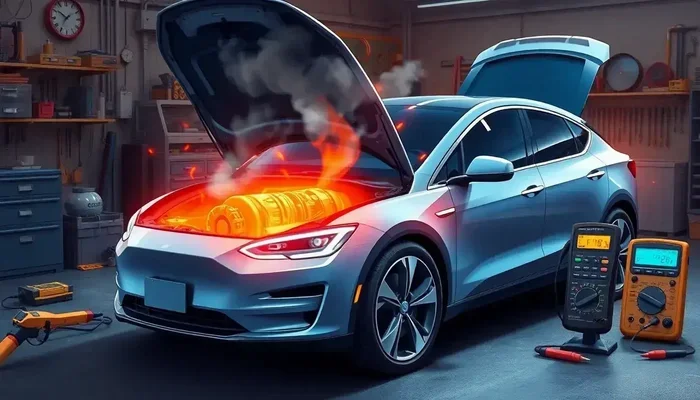
Can an Electric Car Overheat Here Is What You Need to Know
Yes, an electric car can overheat, though it’s rare thanks to advanced cooling technology. Can an electric car overheat is a common concern, and the answer is yes — typically during extreme heat, fast charging, or heavy strain — but modern battery thermal management systems are built to prevent serious damage. Knowing the warning signs and taking simple precautions keeps your EV running safely in any climate.
Key Takeaways
- EV batteries work best between 60-80°F — extreme heat accelerates degradation and reduces range.
- Thermal management systems prevent overheating by circulating coolant through battery packs and power electronics.
- Fast charging in hot weather raises battery temperature — pause if your dashboard warns of overheating.
- Overheating damages battery life and reduces driving range over time, so prevention matters daily.
- Park in shade and pre-condition your EV before trips to keep temperatures in a safe zone.
- Watch for warning signs like reduced power or unusual sounds — these mean your EV needs cooling.
- Regular maintenance keeps cooling systems working efficiently and protects your electric vehicle from heat damage.
📑 Table of Contents
- Can an Electric Car Overheat? Here Is What You Need to Know
- What Causes an Electric Car to Overheat
- Signs Your Electric Car Is Overheating
- How Electric Cars Manage Heat
- Can an Electric Car Overheat in Hot Weather?
- What to Do If Your Electric Car Overheats
- Electric Car Overheating vs. Gas Car Overheating
- Key Takeaways
Can an Electric Car Overheat? Here Is What You Need to Know
So you have heard the rumors. People whisper about electric car overheating in the comments section of every EV video online. Some say these vehicles are virtually indestructible. Others claim they are ticking time bombs on wheels. The truth sits somewhere in the middle. Can an electric car overheat? Yes, it absolutely can. But the reasons, risks, and solutions look very different from what you might expect. In this guide, we break down everything you need to know. You will learn how heat builds up, what warning signs to watch for, and how to protect your investment. By the end, you will feel way more confident about owning or driving an electric vehicle. Let us get into it.
Electric vehicles are built with advanced thermal management systems designed to keep everything running smoothly. Still, extreme temperatures, heavy use, and poor maintenance can push any car past its limits. Whether you are a new EV owner or just curious, understanding battery temperature behavior is essential. It directly affects your electric vehicle performance, range, and even safety. This article walks you through every angle step by step. No hype, no scare tactics. Just honest, practical information you can actually use.
What Causes an Electric Car to Overheat
Heat is a natural byproduct of any machine that converts energy. Electric cars are no exception. But the sources of heat are different from a traditional gasoline-powered car. Understanding these sources helps you see why electric car overheating happens and how manufacturers try to prevent it.
Battery Heat Generation
The battery pack is the heart of every electric vehicle. It also happens to be one of the biggest sources of heat. When you charge your car, especially at fast charging stations, lithium-ion cells push and pull electrons at high speeds. This activity generates significant warmth. Under normal conditions, your car’s cooling system handles it. But during a long road trip with multiple fast charges, things can get hot. Fast charging alone does not usually cause a problem. However, combining it with hot weather or steep mountain driving creates a real risk of elevated battery temperature.
Here are the most common situations that heat up your EV battery:
- Rapid or DC fast charging at high power levels
- Driving at highway speeds for extended periods
- Heavy acceleration and sporty driving habits
- Charging in direct sunlight or extreme heat
- Steep uphill driving that demands constant power
Each of these puts extra stress on the cells. Your vehicle’s computer constantly monitors battery temperature and adjusts output to stay safe. But the system has limits.
Electric Motor and Drivetrain Heat
The electric motor itself produces heat too. It spins at incredibly high RPMs and works hardest during acceleration. Unlike a gas engine that takes time to warm up, an EV motor can reach peak efficiency almost instantly. That is great for performance. But it also means heat builds up fast. The electric motor heat usually stays within safe ranges thanks to dedicated cooling loops. Still, aggressive driving in hot conditions can overwhelm the system. This is where heat dissipation becomes critical. If the motor cannot shed heat quickly enough, your car may reduce power to protect itself.
External Factors That Contribute
Sometimes the problem is not your car at all. The environment is doing the heavy lifting. Driving in hot weather above 95 degrees Fahrenheit puts extra strain on every component. Your air conditioning works harder, the battery sits in a hot undercarriage, and coolant systems run at full capacity. Add traffic jams in summer heat, and you have a recipe for EV overheating signs. Other external factors include:
- Parked cars sitting in direct sun for hours
- Charging cables exposed to extreme temperatures
- Driving on hot asphalt with no airflow
- High altitude combined with warm weather
These factors alone usually do not cause serious problems. But combined with heavy use, they can tip the balance. This is why electric car maintenance matters more than many people realize.
Signs Your Electric Car Is Overheating
Knowing the warning signs of overheating symptoms can save you from expensive damage or dangerous situations. Modern EVs are very good at alerting drivers before things get critical. But you still need to pay attention. Here is what to look for.
Warning Lights and Dashboard Alerts
Your dashboard is your first line of defense. Most electric vehicles will display a battery temperature warning well before any real damage occurs. You might see a thermometer icon, a battery symbol with wavy lines, or a message that says “Reduce Power.” Do not ignore these alerts. They mean your thermal management system is struggling. If you see a battery warning light, pull over safely and let the car cool down. Continuing to drive with an active warning can worsen the problem quickly.
Performance Changes to Watch For
One of the sneakiest EV overheating signs is a drop in performance. You might notice any of the following:
- Slower acceleration than usual
- Reduced top speed during highway driving
- Lower range even with a full charge
- Delayed response when you press the accelerator
- Charging speed drops significantly mid-session
These changes happen because your car is actively protecting itself. The onboard computer limits power output to lower heat generation. This is called “thermal throttling.” It is frustrating in the moment, but it is actually a safety feature. Your car is telling you, “Hey, I need a break.” Listen to it. Electric vehicle performance always takes a hit when heat climbs too high.
Unusual Smells and Sounds
Trust your senses. A sweet, syrupy smell inside the cabin often points to coolant leaking from the cooling system. A burning smell near the undercarriage suggests the battery or motor is generating excessive heat. You might also hear the cooling fans running louder or more often than normal. These are all overheating symptoms that deserve immediate attention. If you detect any unusual smells, stop driving and inspect the vehicle as soon as it is safe.
How Electric Cars Manage Heat
Here is the good news. Electric car manufacturers know heat is a challenge. That is why every modern EV comes equipped with sophisticated cooling technology. Let us look at the main systems that prevent can an electric car overheat scenarios from turning into disasters.
Liquid Cooling Systems
Most modern EVs use a liquid cooling system rather than simple air cooling. A mixture of water and coolant circulates through channels around the battery cells and motor. This liquid absorbs heat and carries it away to a radiator or heat exchanger. Think of it like a car radiator but wrapped around your battery pack. The system works automatically and adjusts flow based on battery temperature readings. Some premium brands even use active heating and cooling, meaning they can warm up the battery in cold weather and cool it down in extreme heat. This level of battery cooling is one reason EVs are more resilient than people assume.
Battery Pre-Conditioning
This is a feature many drivers do not even know about. Battery pre-conditioning means your car warms up or cools down the battery before a fast charge or intense drive. The vehicle uses grid power while still plugged in to bring the pack to the ideal temperature. This reduces stress during charging and helps maintain electric vehicle performance. If your car supports this feature, use it. It is one of the best ways to avoid electric car overheating on long trips. Simply set your departure time and let the car do the work.
Regenerative Braking and Heat
Regenerative braking is a wonderful feature. It captures energy during deceleration and sends it back to the battery. But there is a trade-off. It also generates heat, especially in stop-and-go traffic. Regenerative braking heat adds to the overall thermal load on the battery. During hot weather, your car may reduce the intensity of regenerative braking to prevent overheating. You might notice the car coasts more smoothly when you lift off the accelerator. That is not a malfunction. It is your car managing heat dissipation on its own.
Can an Electric Car Overheat in Hot Weather?
Short answer. Yes, but it is rare with proper care. Driving in hot weather is the most common trigger for elevated battery temperatures. The good news is that most modern EVs handle summer conditions just fine. They are designed with wide safety margins. But extreme situations can still cause problems. Let us compare how different EVs handle hot weather based on their cooling systems and battery sizes.
| Electric Vehicle | Battery Cooling Type | Max Operating Temp | Hot Weather Rating |
|---|---|---|---|
| Tesla Model 3 | Liquid Cooled | 131°F (55°C) | Excellent |
| Hyundai Ioniq 5 | Liquid Cooled | 140°F (60°C) | Excellent |
| Nissan Leaf | Air Cooled | 122°F (50°C) | Good |
| Chevrolet Bolt | Liquid Cooled | 131°F (55°C) | Very Good |
| BMW iX | Liquid Cooled | 140°F (60°C) | Excellent |
As you can see, liquid cooled systems handle heat better than air-cooled ones. The Nissan Leaf, for example, uses an older air-cooling design. It handles moderate weather well but is more vulnerable to extreme temperatures. Newer EVs almost all use liquid cooling. This makes battery temperature regulation far more reliable.
Tips for Driving in Extreme Heat
Summer driving does not have to be stressful. Follow these simple tips and your car will thank you.
- Pre-condition your battery before long drives or fast charges
- Park in the shade whenever possible to reduce initial heat soak
- Limit fast charging during peak heat hours (11 AM to 3 PM)
- Use eco mode to reduce power output and heat generation
- Keep your tires properly inflated to reduce rolling resistance heat
- Plan charging stops around rest areas with shade and airflow
These small habits add up fast. They keep your battery temperature in the safe zone and protect your range reduction from getting out of control on hot days.
What to Do If Your Electric Car Overheats
Even with the best care, things can go wrong. Knowing what to do in a real overheating situation makes all the difference. Stay calm and follow these steps.
Immediate Steps to Take
First, do not panic. Most overheating situations are not dangerous. They are simply your car protecting itself. Here is your action plan:
- Reduce speed gradually and avoid hard acceleration
- Turn off climate control temporarily to reduce electrical load
- Pull over safely and let the car idle for 10 to 15 minutes
- Check your dashboard for any persistent warnings
- Call roadside assistance if warning lights do not clear
Never open the hood immediately. The cooling system and battery components are hot. Let everything cool down before inspecting anything. In most cases, a short break solves the problem completely. Electric vehicle safety features are designed to prevent catastrophic failure. Your car will shut down before anything dangerous happens.
Long-Term Prevention Tips
Prevention is always better than cure. Here is how you avoid electric car overheating in the first place.
- Schedule regular maintenance checks with a certified EV technician
- Inspect your coolant levels at least once a year
- Avoid charging to 100% daily. Keep it between 20% and 80% for best health
- Use slow charging at home whenever you can. Save fast charging for road trips
- Monitor battery health through your vehicle’s app or dashboard
- Replace degraded coolant according to the manufacturer’s schedule
These habits protect your battery from battery degradation caused by repeated heat stress. A well-maintained EV battery can last well beyond 200,000 miles. Neglect, on the other hand, can cut that life short.
Electric Car Overheating vs. Gas Car Overheating
Many people compare electric car overheating to traditional gas car overheating. The comparison is useful but often misleading. Let us break it down clearly.
Key Differences
Gas engines run at 200 to 250 degrees Fahrenheit under normal operation. They need coolant and radiators just to survive. Electric vehicles operate at much lower internal temperatures. The battery typically stays between 60 and 90 degrees Fahrenheit during normal use. This means there is far more room for error. When something does go wrong, a gas car overheating often means a failed water pump, broken radiator, or blown gasket. An EV overheating is more likely caused by a software glitch, coolant leak, or extreme environmental conditions. The fixes are often simpler and less expensive.
Here is a side-by-side comparison:
- Gas cars generate heat from combustion. EVs generate heat from electrical resistance and motor operation
- Gas cars need warm-up time. EVs reach operating temperature instantly
- Gas cars can overheat from a simple hose failure. EVs need more complex system diagnostics
- Gas cars lose coolant quickly. EVs slowly lose performance before failing
- Gas cars have simpler cooling systems. EVs have multi-loop cooling with smart controls
Both types of vehicles can overheat. But the causes, symptoms, and solutions are very different. Understanding these differences helps you respond correctly. Do not treat an EV overheating the same way you would handle a traditional car. Electric vehicle maintenance requires a completely different approach.
Key Takeaways
Let us wrap up everything we covered. Here is what you should remember about can an electric car overheat:
- Yes, electric cars can overheat, but it is uncommon with proper care
- Battery heat and motor heat are the main causes, not combustion
- Watch for overheating symptoms like reduced power, warning lights, and unusual smells
- Modern EVs have advanced thermal management systems that prevent most issues
- Driving in hot weather requires extra attention but does not cause immediate danger
- Regular electric car maintenance is your best defense against heat problems
- Knowing what to do during an overheating event keeps you and your car safe
The bottom line. Can an electric car overheat? The answer is yes, but modern engineering makes it a rare event. Manufacturers design EVs with multiple layers of protection. Your job is to respect those systems through smart driving habits and consistent maintenance. Do not ignore warning signs. Do not skip service appointments. And always plan ahead during extreme weather. Do that, and your electric car will serve you reliably for many years to come. Stay informed, stay cool, and enjoy the ride.
Frequently Asked Questions
Can an Electric Car Overheat?
Yes, electric cars can overheat, though it is less common than with traditional gas vehicles. EVs rely on battery packs and electric motors that generate heat during operation, especially during fast charging or extreme weather. Most modern electric vehicles come equipped with advanced cooling systems to manage this heat effectively.
What Causes an Electric Car to Overheat?
Several factors can cause an electric car to overheat, including high ambient temperatures, fast charging at high speeds, and driving aggressively for long periods. A malfunctioning thermal management system or low coolant levels can also lead to overheating issues. Additionally, extreme cold can strain the battery and cause excess heat buildup when the car works harder to warm up.
How Can I Prevent My Electric Car From Overheating?
To prevent overheating, park your EV in shaded areas or garages during hot weather and avoid charging at maximum speed during peak heat. Regular maintenance of the cooling system and checking coolant levels can go a long way in keeping your car running safely. Many EVs also have built-in battery management systems that reduce power output to prevent damage from excessive heat.
What Happens When an Electric Car Overheats?
When an electric car overheats, it may reduce power output, slow down charging speeds, or shut down entirely to protect the battery and components. Prolonged overheating can shorten battery life and lead to costly repairs if not addressed promptly. Most EVs will display warning lights on the dashboard to alert you before serious damage occurs.
Do Electric Cars Have Cooling Systems?
Yes, most electric cars use liquid cooling systems to regulate battery and motor temperatures effectively. These systems circulate coolant through battery packs and power electronics to keep everything within safe operating ranges. Some newer EVs also use heat pumps to manage temperature more efficiently in both hot and cold climates.
Can Extreme Heat Damage an Electric Car Battery?
Extreme heat can potentially damage an electric car battery over time if the thermal management system is not working properly. High temperatures accelerate battery degradation, which can reduce overall range and performance. Keeping your EV cool and avoiding prolonged exposure to extreme heat helps preserve battery health and longevity.