Why 8 Year Old Cars Make Great Daily Drivers in 2024
8 year old cars offer the ideal balance of affordability, modern features, and proven reliability. Buying a vehicle that is 8 years old means you skip the steepest depreciation curve and still get a well-built machine with today’s safety tech. This guide covers savings, reliability, top models, hidden costs, and smart buying tips for 8 year old cars in 2024.
There is a sweet spot in the car market that smart buyers know about. It is the zone where you save real money, get a modern vehicle, and still drive something dependable every single day. That zone is the world of 8 year old cars.
When most people think about buying a car, they picture brand-new models rolling off the lot. But here is the truth. A vehicle that is 8 years old has already gone through the worst of its depreciation. You get to enjoy the rest of its life at a fraction of the original price. In 2024, 8 year old cars are more capable, safer, and more efficient than ever before.
Whether you are a first-time car buyer, a family looking for a practical daily driver, or someone who wants to stretch every dollar, this guide is for you. We will walk through exactly why 8 year old cars make sense, what you save, which models to look at, and how to avoid common pitfalls. Let us dive in.
Key Takeaways
- Massive Depreciation Savings: 8 year old cars have already lost 50-60% of their original value, saving you thousands upfront.
- Modern Safety Features: Vehicles from 2016 and newer come with advanced driver-assistance systems and solid build quality.
- Lower Insurance and Registration Costs: Insurance premiums and annual fees drop significantly for older vehicles.
- Reliable Daily Drivers: Many 8 year old models from Toyota, Honda, and Mazda are known to last well beyond 200,000 miles.
- Certified Pre-Owned Options: You can find extended warranties and inspected vehicles that add peace of mind to buying 8 year old cars.
- Smart Financing Opportunities: Shorter loan terms on pre-owned vehicles mean less interest paid over time.
- Know the Hidden Costs: Maintenance, tires, and wear items need budgeting, but they are still far cheaper than new car ownership.
📑 Table of Contents
Why 8 Year Old Cars Hit the Sweet Spot
The car depreciation curve is not a straight line. It drops fast in the first few years and then levels out. This is where 8 year old cars shine. By year eight, most vehicles have already lost about 50 to 60 percent of their original value. After that, the depreciation slows way down.
Think of it like buying a phone. You would not pay full price for a two-year-old phone when a one-year-old model is almost the same. Cars work the same way. The technology, safety features, and build quality of a 2016 model are very close to a 2024 model in many cases. The difference? The 2016 model costs thousands less.
Modern Features on Older Platforms
Here is something that surprises many buyers. Cars built around 2016 and later come packed with features that used to be luxury-only. Blind-spot monitoring, rearview cameras, Apple CarPlay, Android Auto, and automatic emergency braking are now standard on most models. When you buy 8 year old cars, you still get these features at a much lower price.
You are not sacrificing safety. You are not sacrificing convenience. You are simply paying less for technology that has already been proven in the market. That is a smart move for any buyer.
Proven Reliability Before You Buy
One of the biggest advantages of 8 year old cars is that their reliability track record is already established. You can look up owner reviews, reliability ratings from Consumer Reports and J.D. Power, and real-world long-term data. There are no surprises about whether a model holds up over time.
With a brand-new car, you are essentially guessing. Will the transmission be smooth? Will the electronics work properly? With an 8-year-old vehicle, thousands of owners have already answered those questions for you. You can make a confident decision based on real data.
What You Save When You Buy 8 Year Old Cars
The financial benefits of buying 8 year old cars go way beyond the sticker price. Let us break down exactly where you save money.
Upfront Purchase Price
A new car that costs $35,000 today might be worth $14,000 to $18,000 after 8 years. That is a savings of $17,000 to $21,000 right out of the gate. You can afford a higher trim level, a better engine, or even a luxury brand for the price of a base-model new car.
Here is a simple comparison to show the difference.
| Vehicle | New Price (2024) | 8-Year-Old Price | Total Savings |
|---|---|---|---|
| Toyota Camry | $28,000 | $14,000 | $14,000 |
| Honda CR-V | $32,000 | $17,000 | $15,000 |
| Ford F-150 | $38,000 | $22,000 | $16,000 |
| Chevrolet Equinox | $30,000 | $15,000 | $15,000 |
These numbers vary based on mileage, condition, and location. But the pattern is clear. 8 year old cars save you a significant amount of money from day one.
Lower Insurance Premiums
Insurance companies base their rates partly on the value of your vehicle. A cheaper car means lower premiums. With 8 year old cars, your monthly insurance bill can be noticeably lower than what you would pay for a brand-new model.
Over five years of ownership, the insurance savings alone can add up to $1,500 or more. That is money back in your pocket that you can use for maintenance or savings.
Reduced Registration and Tax Costs
Many states charge registration fees and sales tax based on the vehicle’s value. An 8-year-old car costs less, so your annual registration fees and any applicable taxes are lower too. This is a small but steady saving that adds up year after year.
Reliability of 8 Year Old Cars in 2024
One of the biggest concerns people have about older cars is whether they will break down. The good news is that modern cars are built to last. An 8 year old car from a reputable brand is often still in its prime mechanical years.
Engine and Transmission Longevity
Today’s engines and transmissions are designed to handle well over 200,000 miles with proper care. An 8-year-old vehicle with 80,000 to 100,000 miles still has a long life ahead. Brands like Toyota, Honda, and Mazda are especially known for engines that go the distance.
The key is regular maintenance. Oil changes, fluid flushes, and timing belt replacements on schedule keep these vehicles running strong for many more years.
Technology That Still Works
You might worry that an 8-year-old car will feel outdated. In reality, the technology in a 2016 model is still very functional in 2024. Touchscreen infotainment systems, backup cameras, and connectivity features from that era still work well for daily use.
Sure, the latest models have faster processors and newer software. But for a daily driver, the tech in 8 year old cars is more than enough for navigation, music, phone calls, and hands-free driving.
Safety Ratings Still Hold Up
Crash test ratings do not expire. A car that earned a 5-star safety rating from the NHTSA eight years ago still offers the same crash protection today. The structural integrity of the vehicle does not degrade just because it is older.
Many 8 year old cars also come with electronic stability control, multiple airbags, and advanced braking systems. These are safety features you want on your daily driver, and they are standard on vehicles from 2016 and newer.
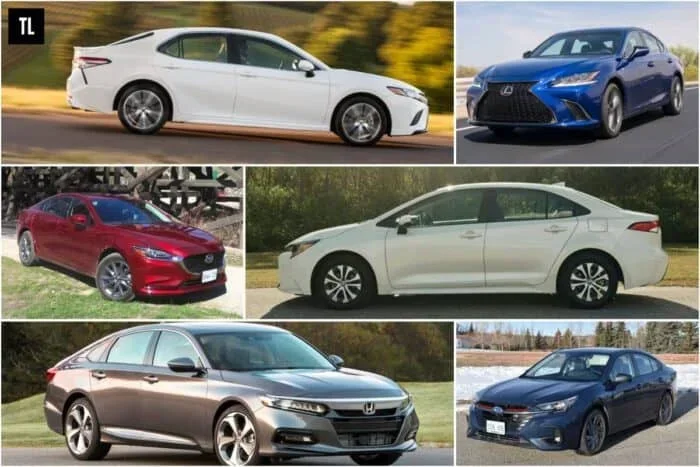
Best Models to Consider as 8 Year Old Cars
Not all 8 year old cars are created equal. Some models are known for lasting longer, costing less to maintain, and holding their value better than others. Here are some of the best options to consider in 2024.
Toyota Camry
The Camry has been a top choice for daily drivers for decades. An 8-year-old Camry is smooth, comfortable, and incredibly reliable. Owners routinely report pushing these vehicles past 200,000 miles with minimal major repairs. The Camry also offers solid fuel economy, making it an excellent choice for commuting.
Honda CR-V
If you need a compact SUV, the Honda CR-V is hard to beat. An 8-year-old CR-V still feels modern inside, offers great cargo space, and has a reputation for lasting well beyond 200,000 miles. It is practical, efficient, and one of the most trusted vehicles on the road.
Mazda3
The Mazda3 combines fun driving dynamics with everyday reliability. An 8-year-old Mazda3 still looks great and drives with more engagement than many competitors. The interior quality in models from this era is also surprisingly upscale for the price range.
Toyota RAV4
The RAV4 is one of the best-selling SUVs in America, and for good reason. It is spacious, reliable, and holds its value well. An 8-year-old RAV4 gives you the utility of a newer model without the new-car price tag. It is an excellent family vehicle that is easy to live with day to day.
Honda Accord
The Accord has always been a benchmark for midsize sedans. An 8-year-old Accord offers a refined ride, comfortable seats, and a reputation for mechanical durability. It is one of the best used sedans you can buy, period.
The Hidden Costs of Owning 8 Year Old Cars
Let us be honest. Buying 8 year old cars is not all savings and no trade-offs. There are costs you need to plan for, and understanding them upfront keeps you from surprises.
Maintenance and Repairs
As a vehicle ages, it needs more maintenance. Items like brakes, tires, battery, and suspension components wear out over time. With an 8-year-old car, you should budget for these routine expenses. However, these costs are still far lower than the depreciation hit you take on a new car.
A good rule of thumb is to set aside $100 to $200 per month for maintenance on any used vehicle. This covers oil changes, tire rotations, brake pads, and small repairs before they become big problems.
Warranty Considerations
Most 8 year old cars are out of their original factory warranty. This means you are responsible for repair costs. However, you have options. Many dealerships offer certified pre-owned programs that include extended warranties. You can also purchase third-party extended warranties for additional protection.
Buying a vehicle with a remaining factory warranty or an extended warranty gives you peace of mind. It is worth exploring these options before you commit to a purchase.
Fuel Economy Changes Over Time
Older vehicles may not be as fuel-efficient as their newer counterparts. Engine wear, carbon buildup, and older transmission tuning can reduce fuel economy slightly. That said, most 8-year-old cars still deliver respectable gas mileage, especially if they have been well maintained.
Tips for Finding the Best 8 Year Old Cars
Now that you know the benefits and costs, here is how to find the right 8 year old car for you.
Get a Pre-Purchase Inspection
Always have a trusted mechanic inspect any used car before you buy. A pre-purchase inspection costs around $100 to $200 but can save you thousands in unexpected repairs. The mechanic will check the engine, transmission, brakes, suspension, and electrical systems.
This is the single most important step when buying any used vehicle. Do not skip it, no matter how good the deal looks.
Check the Vehicle History Report
Always run a vehicle history report using the VIN. Services like Carfax and AutoCheck will show you accident history, title status, service records, and ownership history. A clean report gives you confidence in the vehicle’s background.
Look for red flags like salvage titles, accident damage, or inconsistent mileage readings. These are warning signs that the vehicle may not be a good buy.
Buy from Reputable Sellers
Whether you buy from a dealership, a private seller, or a certified pre-owned program, choose a source with a good reputation. Dealerships often offer return policies and warranties. Private sellers may offer lower prices but less protection.
Do your research on the seller before you commit. Read reviews, check ratings, and ask questions about the vehicle’s history.
Test Drive Thoroughly
Take your time during the test drive. Listen for unusual sounds. Check that all features work properly. Test the brakes, acceleration, steering, and suspension on different road types. A thorough test drive reveals problems that a visual inspection might miss.
Negotiate with Confidence
Know the market value of the vehicle before you negotiate. Use tools like Kelley Blue Book, Edmunds, and NADA Guides to determine fair pricing. Walk into the negotiation with a clear number in mind and be willing to walk away if the deal does not feel right.
Conclusion
There has never been a better time to consider 8 year old cars as your next daily driver. The savings are real, the reliability is proven, and the modern features are more than enough for everyday life. Whether you choose a Toyota Camry, Honda CR-V, or Mazda3, you are making a smart financial decision that keeps money in your pocket.
The key is to do your homework. Get inspections, check history reports, and budget for maintenance. When you approach the purchase of 8 year old cars with knowledge and care, you end up with a dependable vehicle that serves you well for years to come.
So the next time you are in the market for a car, do not overlook the 8-year-old options. They might just be the best value you will ever find.
Frequently Asked Questions
Are 8 year old cars worth buying in 2024?
Yes, absolutely. 8 year old cars offer excellent value because they have already gone through the steepest depreciation. You get modern safety features, proven reliability, and significant savings compared to buying new. As long as the vehicle has been well maintained, it can be a smart and economical choice for 2024 and beyond.
How much money can I save by buying an 8 year old car?
Most 8 year old cars save you between 50 and 60 percent of their original price. On a vehicle that originally cost $30,000, you might find one for $12,000 to $18,000. This savings applies to the purchase price, insurance, registration fees, and even some taxes. Over the full ownership period, the total savings can easily reach $10,000 or more.
What is the best way to find reliable 8 year old cars?
Start by researching models with strong reliability ratings from sources like Consumer Reports and J.D. Power. Toyota, Honda, and Mazda models are consistently at the top of these lists. Always get a pre-purchase inspection, run a vehicle history report, and buy from a reputable seller. These steps dramatically reduce the risk of buying a problematic vehicle.
Do 8 year old cars still have good fuel economy?
Most 8 year old cars still deliver solid fuel economy, especially sedans and smaller SUVs. While they may not match the efficiency of the newest hybrid or electric models, they are still very economical for daily driving. Proper maintenance, including clean air filters and correctly inflated tires, helps keep fuel economy at its best.
Can I get a warranty on an 8 year old car?
Yes, you have several options. Many dealerships offer certified pre-owned programs that include extended warranties. You can also purchase third-party extended warranties from companies like Endurance or Protect My Car. These warranties vary in coverage and cost, so compare options carefully before choosing one.
What maintenance should I expect with an 8 year old car?
At 8 years old, expect to service brakes, tires, battery, and various fluids regularly. Timing belt or chain replacement may also be due depending on the model. Staying on top of scheduled maintenance keeps the vehicle running smoothly and prevents costly repairs down the road. Setting aside a monthly maintenance budget is a smart habit for any used car owner.