Where Can I Find My Cars Paint Code And What It Means
Finding your car paint code is easier than most people think. This guide shows you exactly where to look on your vehicle and what the code means. You will learn multiple locations, how to use the code for touch-up paint, and why it matters for car repairs.
Have you ever stood in front of an auto parts store shelf, staring at rows of tiny paint bottles, trying to figure out which one matches your car? It happens more often than you might think. Whether you have a small scratch or a major dent, finding the right color is the first step. And the key to that perfect match is your car paint code. This little combination of letters and numbers holds the secret to your vehicle’s exact color. In this guide, we will walk you through everything you need to know. You will learn where to find it, what it means, and how to use it like a pro.
The good news is that locating your car paint code is much simpler than most people believe. You do not need to be a mechanic or a car expert. With a flashlight and a few minutes, you can find the code yourself. Once you have it, you can order touch-up paint, get accurate quotes from body shops, or even sell your car with more confidence. Let us dive in and explore every way to uncover this important piece of information.
Key Takeaways
- Multiple Locations: Your car paint code can be found in several places, including the door jamb, glove box, and under the hood.
- Easy to Decode: The paint code tells you the exact color formula used by the manufacturer for your specific vehicle.
- Essential for Repairs: Using the correct paint code ensures a perfect color match for touch-ups, body work, and custom projects.
- Free to Find: Locating your paint code costs nothing and takes just a few minutes of your time.
- Helpful for Buyers and Sellers: Knowing your paint code adds value when buying, selling, or trading in a vehicle.
- Online Tools Exist: Many auto parts stores and manufacturer websites let you look up your paint code instantly.
📑 Table of Contents
- What Is a Car Paint Code and Why Does It Matter?
- Where Can I Find My Car Paint Code?
- How to Read and Understand Your Paint Code
- What to Do Once You Have Your Paint Code
- Common Problems When Finding Your Paint Code
- Quick Tips for Finding Your Car Paint Code
- Expert Insights on Car Paint Codes
- Key Takeaways
- Conclusion
What Is a Car Paint Code and Why Does It Matter?
Every vehicle leaves the factory with a specific color formula. The car paint code is a unique identifier that tells you exactly which formula was used. It usually consists of a few letters and numbers, like “WA 845” or “L902.” This code is not random. Each part of it points to the exact shade, finish, and type of paint your car was coated with at the factory.
Why Can’t I Just Use Any Paint?
You might wonder why you cannot just grab any red or blue paint from a hardware store. The answer lies in how modern automotive paint is made. Car manufacturers use highly specialized formulas. These formulas account for things like metal flake, pearl finishes, and color depth. Even two cars that look the same color from a distance can have completely different paint codes. Using the wrong one means a visible mismatch, and nobody wants that on their vehicle.
Here is why your car paint code matters so much:
- Exact Color Match: The code ensures the replacement paint is identical to your original factory color.
- Resale Value: A well-matched paint job helps maintain your car’s appearance and value.
- Insurance Claims: Adjusters often require the paint code before approving touch-up repairs.
- Body Shop Efficiency: Shops can mix paint faster and more accurately when they have the correct code.
- DIY Projects: If you like working on your car yourself, the code saves you time and money.
Where Can I Find My Car Paint Code?
This is the question most car owners ask, and the answer is simpler than you think. There are several places where manufacturers place the paint code sticker or label. Let us go through each one so you can find yours quickly.
Check the Driver’s Side Door Jamb
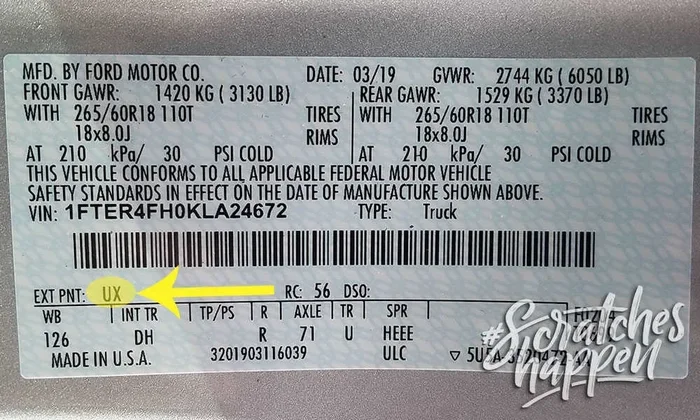
The most common place to find your car paint code is on the driver’s side door jamb. Open your front left door and look along the frame or the door itself. You will likely see a small sticker or metal plate. This label contains a lot of information, including tire pressure, vehicle weight, and of course, the paint code. Look for a section labeled “Paint Code,” “Color Code,” or “Exterior Color.”
If you have trouble finding it, run your fingers along the door jamb. The sticker is usually flat and slightly raised. It may be partially hidden under the rubber seal or behind the door latch. Use your phone flashlight to get a better look.
Look Inside the Glove Box
Some manufacturers place the paint code label inside the glove box or on the glove box door. Open it up and check the sides, the top, and the back panel. In many models from brands like Ford, Chevrolet, and Toyota, you will find it right there. The label format is similar to the door jamb sticker, with the same kinds of information.
Check Under the Hood
Your engine compartment is another place manufacturers use to hide the paint code label. Look on the inner fender, the radiator support, or the firewall. The label is often placed where it is somewhat protected from moisture and heat. Pop the hood and scan these areas carefully. If you see a sticker with a barcode or a series of numbers and letters, that could be your car paint code.
Look on the VIN Plate
Every vehicle has a Vehicle Identification Number plate, usually located on the dashboard near the windshield. On some cars, this plate also includes the paint code. Check the bottom edge or the side of the plate. The paint code might be listed separately from the VIN itself. Use your phone to take a photo so you can read it more clearly later.
Check the Spare Tire Area
In some vehicles, especially SUVs and trucks, the paint code label is tucked under the trunk floor or near the spare tire. Lift the carpet or remove the trunk trim panel if needed. This location is less common but still worth checking if you have not found the code elsewhere.
Look in the Owner’s Manual
Your car owner’s manual is a goldmine of information. Flip through it and check the index for “paint code” or “color code.” Many manufacturers include the paint code on a page dedicated to vehicle specifications. If you have lost your physical manual, you can often find a free PDF version on the manufacturer’s website by entering your vehicle model and year.
Use Online Databases
If you cannot find the physical label, do not worry. Many online resources can help you look up your car paint code using your VIN. Websites like the manufacturer’s own site, auto parts retailers, and paint specialty stores offer free VIN lookup tools. Simply enter your 17-digit VIN and the site will return your paint code along with the color name. This method works especially well if your label has faded or been removed over time.
How to Read and Understand Your Paint Code
Once you find the label, the next step is understanding what the numbers and letters mean. A typical car paint code looks something like this: “3B4” or “WA 845 M” or “K902.” Each segment has a purpose, even if it is not obvious at first glance.
The first part of the code usually identifies the manufacturer. For example, “WA” stands for Volkswagen, and “L” often refers to Chevrolet. The middle numbers or letters represent the specific color shade. The final segment might indicate the finish type, such as solid, metallic, or pearl.
Solid vs. Metallic vs. Pearl Finishes
Understanding the finish type is important when ordering paint. A solid color is the simplest type. It has no special effects and looks the same from every angle. Metallic colors contain tiny metal flakes that create a shimmering effect. Pearl finishes use a special coating that gives the paint a luminous, almost glowing quality. Your paint code will tell you which type your car has, and this information is critical for getting a perfect match.
Here are some common finish types you might encounter:
- Solid: No special effects, easy to match and apply.
- Metallic: Contains metal flakes for a sparkling look.
- Tri-Coat Pearl: Three layers of paint create a deep, complex color effect.
- Matte: A flat, non-reflective finish found on some specialty vehicles.
What to Do Once You Have Your Paint Code
Now that you have your car paint code, what can you actually do with it? The possibilities are more useful than you might expect. Let us explore the most common and practical applications.
Order Touch-Up Paint
The simplest thing you can do is order a touch-up pen or small bottle of paint. Auto parts stores and online retailers sell touch-up paint matched to your specific code. You just need to apply a small amount to any chips or scratches. This is a quick fix that costs just a few dollars and keeps your car looking sharp between professional services.
When ordering touch-up paint, always double-check that the code matches exactly. Even a single wrong digit can result in a noticeable color difference. If you are unsure, contact the retailer’s customer service and provide your code for confirmation.
Get an Accurate Quote from a Body Shop
If your car needs a more significant repair, having the paint code ready will save you time and money. When you call a body shop, give them the code upfront. They can mix the paint in advance and give you a more accurate estimate. Without the code, the shop may need extra time to identify the right color, which could delay your repair and increase costs.
Match Paint for Custom Projects
Are you planning a custom paint job or a restoration project? Your car paint code is the starting point. Professional painters use the code to mix a base coat that matches your vehicle. From there, they can adjust the formula slightly to achieve the exact look you want. Whether you are restoring a classic car or adding a custom accent, the paint code gives you a reliable foundation.
Sell or Trade-In Your Vehicle with Confidence
If you are selling your car, knowing the paint code adds a layer of transparency. Buyers appreciate honesty about the vehicle’s history. If you have had any repainting done, you can share the paint code and prove that the work was done correctly. This builds trust and can make the difference in a sale.
Common Problems When Finding Your Paint Code
Even with this guide, you might run into some challenges. Paint code labels can fade, rust, or fall off over time. Here are the most common problems and how to solve them.
Faded or Worn Labels
Sun exposure and road grime can make the label hard to read. If the sticker is faded, try cleaning it gently with a damp cloth. Sometimes wiping away dirt reveals hidden numbers. If the label is too worn, use the online VIN lookup method instead. It is fast and reliable.
Label Removed by Previous Owner
If you bought a used car and the previous owner removed the label, you still have options. The VIN lookup is your best friend here. You can also check with the dealership. Provide them with your VIN and ask for the paint code. They have access to manufacturer databases that can help.
Multiple Codes on One Label
Some labels list multiple codes for different parts of the vehicle. For example, the front bumper might have a different code than the rear quarter panel. Look for the label that says “Exterior Color” or “Body Color.” If you are unsure, the dealership can help you identify which code is the correct one.
Quick Tips for Finding Your Car Paint Code
Here are some practical tips to make the process smoother:
- Use a flashlight. Paint code labels are often in dark or tight spaces. A small flashlight or your phone light makes a big difference.
- Take photos. Snap a picture of the label as soon as you find it. This gives you a reference you can zoom in on later.
- Clean the area first. Wipe the surface before looking. Dirt and grease can hide the label or make it hard to read.
- Check both sides of the sticker. Sometimes the code is printed on the back or edge of the label.
- Write it down immediately. Do not trust your memory. Jot it down or save it in your phone right away.
- Keep a photo in your glove box. Store a picture of the label in your glove box for easy access whenever you need it.
Expert Insights on Car Paint Codes
We spoke with a few automotive paint specialists to get their perspective on why the paint code is so important. One expert shared that misidentifying the paint code is the number one mistake in DIY touch-ups. “People often guess based on the color name on the paint bottle,” they said. “But the name is just a marketing label. The code is the real identifier.”
Another specialist emphasized the importance of the finish type. “A metallic paint code will not match a solid paint code, even if the base color looks the same,” they explained. “Always check the finish type before ordering.”
These insights reinforce why taking the time to find the correct car paint code is worth the effort. It saves you from costly mistakes and ensures a professional-quality result every time.
Key Takeaways
- Multiple Locations: Your car paint code can be found in several places, including the door jamb, glove box, and under the hood.
- Easy to Decode: The paint code tells you the exact color formula used by the manufacturer for your specific vehicle.
- Essential for Repairs: Using the correct paint code ensures a perfect color match for touch-ups, body work, and custom projects.
- Free to Find: Locating your paint code costs nothing and takes just a few minutes of your time.
- Helpful for Buyers and Sellers: Knowing your paint code adds value when buying, selling, or trading in a vehicle.
- Online Tools Exist: Many auto parts stores and manufacturer websites let you look up your paint code instantly.
Conclusion
Finding your car paint code is one of those small things that makes a big difference. Whether you are touching up a scratch, planning a body repair, or just curious about your vehicle, the code is your best resource. You now know all the places to look, how to read the code, and what to do once you have it. The process is quick, free, and incredibly useful.
Take a few minutes today to locate your paint code. Write it down, take a photo, and store it somewhere safe. You will be glad you did the next time you need a touch-up or visit a body shop. Your car’s color is part of its identity, and the paint code is the key to keeping it looking its best for years to come.
With the right car paint code in hand, you are ready for any paint-related task. No more guessing, no more mismatches. Just confidence and a perfect color match every single time.
Frequently Asked Questions
Can I find my car paint code using just the VIN?
Yes, in many cases you can. Several online tools and manufacturer websites allow you to enter your VIN and retrieve the paint code. This is especially helpful if the physical label is missing or unreadable. Simply search for a VIN decoder that includes paint code information.
Is the paint code the same as the interior color code?
No, they are different. The exterior paint code refers to the body color, while the interior color code refers to the upholstery and trim. Your vehicle may have separate codes for each. Always make sure you are looking at the exterior paint code when ordering touch-up paint.
What if my paint code has letters and numbers that I cannot read?
Try cleaning the label with a damp cloth and using a flashlight. If it is still unreadable, use the VIN lookup method online. You can also contact your dealership with your VIN, and they will be able to provide the exact paint code from their system.
Do all car manufacturers use the same format for paint codes?
No, every manufacturer has its own format. Some use three digits, others use a combination of letters and numbers. The length and structure vary by brand. This is why it is important to use the code exactly as it appears on your vehicle’s label.
Can I use the paint code for any type of repair?
The paint code is used for both small touch-ups and larger body repairs. It ensures the mixed paint matches your original factory color. For major repairs, a professional body shop will use the code as the starting point for their paint mixing process.
How often do paint codes change for the same car model?
Paint codes can change between model years or even between production runs of the same year. Always confirm the code matches your specific year, make, and model. Using the wrong code for a different year can result in a visible color difference.