Tinting Your Cars Tail Lights: Laws You Must Know
Tinting your car’s tail lights can boost style and visibility, but laws vary by state and ignorance is not an excuse. Tail light tinting laws govern how dark or tinted your lights can be, and breaking them can lead to fines, failed inspections, or even accidents. This guide breaks down what’s legal, what’s not, and how to stay compliant while customizing your ride.
You’ve probably seen cars on the road with darkened tail lights. They look sleek, aggressive, and totally custom. But before you grab a roll of tint film, there’s something you need to know: tinting your car’s tail lights isn’t just a style choice—it’s a legal one. The rules around tail light tinting laws vary wildly from state to state, and getting it wrong can cost you money, time, and even your safety.
Whether you’re upgrading your aftermarket tail lights or simply adding a smoke tint for a stealthy look, understanding the legal landscape is essential. This guide walks you through everything you need to know about tinting your car’s tail lights, from the basics of visibility requirements to the penalties you could face. We’ll break down state-by-state rules, explain the types of tint films, and give you practical tips to stay on the right side of the law.
Key Takeaways
- Laws differ by state: No federal rule sets a universal standard for tail light tint darkness.
- Red and blue tints are often banned: These colors can confuse other drivers and emergency vehicles.
- Visibility is key: Tint must not reduce the brightness or clarity of your brake lights and turn signals.
- Penalties are real: You could face fines, citation, or be forced to remove the tint.
- Film type matters: Some tint films are designed to meet legal VLT (visible light transmission) requirements.
- Check local ordinances: Even if a state allows tint, your city or county may have stricter rules.
- Professional installation helps: A pro can ensure your tint meets legal standards and looks great.
📑 Table of Contents
- Why Tail Light Tinting Is So Popular
- Tinting Your Car’s Tail Lights: What the Law Says
- State-by-State Breakdown of Tail Light Tint Laws
- Common Types of Tail Light Tint Films
- Risks and Penalties for Illegal Tail Light Tint
- How to Choose Legal Tail Light Tint Options
- Maintaining Your Tinted Tail Lights
- Conclusion
Why Tail Light Tinting Is So Popular
Car owners love to personalize their rides. Tinted tail lights offer a clean, modern look that sets a vehicle apart. They can reduce glare from sun or headlights behind you. Many people also choose LED tail lights with a tinted finish for a sporty appearance. The trend has exploded in the automotive tint community, and social media is full of before-and-after transformations.
But popularity doesn’t equal legality. A tint that looks amazing on a car in one state might be illegal in the next. The vehicle lighting regulations that govern tail lights exist for one main reason: safety. Your tail lights communicate with other drivers. They signal when you’re braking, turning, or reversing. Any modification that reduces their effectiveness can create a serious hazard on the road.
Road safety should always come first. Before you buy any tint, ask yourself: will this still let other drivers see my lights clearly at night? In rain? In fog? If the answer is maybe, you need to dig deeper into the car modification laws that apply to you.
Tinting Your Car’s Tail Lights: What the Law Says
There is no single federal law that bans or permits tinting your car’s tail lights. Instead, each state sets its own state laws through vehicle codes and safety inspections. The Department of Transportation (DOT) and the National Highway Traffic Safety Administration (NHTSA) provide general guidelines, but enforcement is left to local authorities. This patchwork of rules is why a simple online search can give you conflicting answers.
The Difference Between State and Federal Rules
Federal guidelines focus on DOT standards for original equipment. If your tail lights came from the factory, they must meet specific brightness and color requirements. When you add a tint film or replace them with aftermarket tail lights, you move into state jurisdiction. Some states treat any tint as an illegal modification. Others allow tint as long as it meets certain VLT (visible light transmission) percentages.
VLT measures how much light passes through a film. A 5% VLT means only 5% of light gets through—very dark. A 70% VLT means 70% of light passes, which is barely tinted. Most states require tail lights to have a VLT above a certain threshold, often between 20% and 50%. The exact number depends on your location.
What the Law Actually Looks At
Law enforcement and safety inspectors focus on three key areas when checking tinting your car’s tail lights:
- Color: Tail lights must be red or amber. Red tint is often allowed only if it doesn’t alter the color. Blue tints are almost always banned because they mimic emergency vehicles.
- Brightness: The tint cannot reduce the intensity of your brake lights or turn signals. If a police officer can’t clearly see your lights from a distance, you’re at risk.
- Visibility: The tint must not create a haze or glare that obscures the light lens. Even a legal tint can become a problem if it’s old, scratched, or bubbling.
State-by-State Breakdown of Tail Light Tint Laws
Because laws change frequently, it’s vital to check your local DMV or state statute before tinting. Here’s a general look at how different regions approach tail light tinting laws. This table is for reference only and may not reflect the latest updates.
| State | Tail Light Tint Law | Typical Penalty |
|---|---|---|
| California | Tint must not reduce red light visibility; VLT must be above 20% for any overlay. | Fix-it ticket, fine up to $250. |
| Texas | No tint allowed on tail lights that reduces light output. Red tint is restricted. | Citation, possible fine, and order to remove. |
| New York | Tail lights must be clearly visible; any tint that obscures light is illegal. | Fine up to $150, safety inspection failure. |
| Florida | Permissive; tint allowed if it doesn’t reduce light output below DOT standards. | Warning or fine if deemed unsafe. |
| Illinois | Strict; no tint on tail lights that changes color or reduces brightness. | Fine, mandatory removal, failed inspection. |
As you can see, the rules range from very strict to somewhat flexible. Some states focus on the tint darkness, while others care more about color alteration. A few states have no specific mention of tail light tint, which can create a gray area where officers use their discretion.
States With Strict No-Tint Rules
States like New York, Illinois, and Pennsylvania take a hard line. They often define any non-OEM tail light cover or tint as an illegal modification. In these states, even a light smoke tint can fail a safety inspection. If you live in a strict state, your safest bet is to keep your tail lights completely clear or use only DOT-approved LED tail lights that come with a built-in finish.
States With Permissive Tint Laws
On the other end, states like Florida, Arizona, and parts of Texas allow tint as long as it doesn’t compromise safety. They often use VLT measurements and require that brake lights and turn signals remain fully visible. Even in permissive states, you still need to pass a safety inspection if your vehicle requires one. A tint that’s too dark can still fail you.
Expert Insights
Automotive law experts often say the same thing: when in doubt, check with your local DMV. “The internet is full of outdated forum posts,” says one car modification laws attorney. “What was legal five years ago might not be today. A quick call to your DMV can save you a lot of headaches.”
Common Types of Tail Light Tint Films
If you decide to tint your tail lights, you’ll encounter several film types. Each has different properties, and not all are legal everywhere.
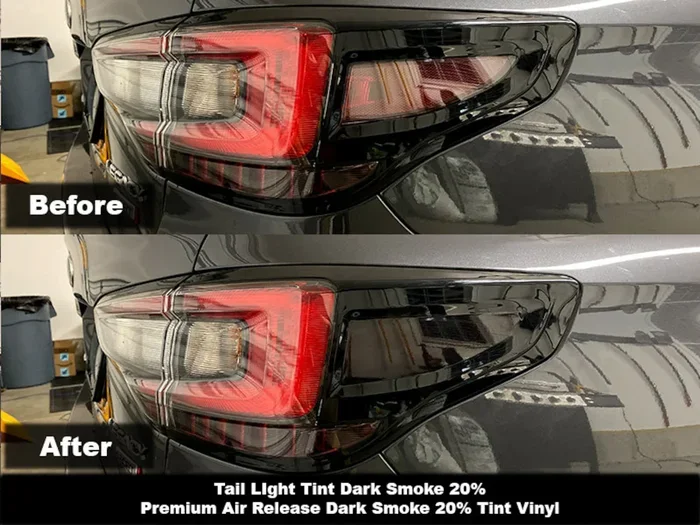
- Smoke Tint: A semi-transparent dark film. It gives a sleek, smoked look. Many states allow smoke tint if it doesn’t reduce VLT below the legal limit.
- Dark Tint (Privacy Tint): Very dark film, often 5% to 20% VLT. This is almost always illegal on tail lights because it blocks too much light.
- Clear Coating: A protective, clear film that adds scratch resistance without changing color or VLT. This is legal everywhere and a great way to protect your lights.
- Colored Tint: Films in blue, green, or purple. These are almost universally banned on tail lights because they change the required red or amber color.
Smoke Tint vs. Dark Tint vs. Clear Coatings
Smoke tint is the most popular choice for those who want a subtle look. It darkens the light slightly but often maintains enough visibility. Dark tint is the go-to for a dramatic effect, but it’s a legal minefield. Clear coatings are the safest option—they protect your lights and won’t trigger a citation. If you’re unsure, a clear coating is the smartest automotive tint choice.
Risks and Penalties for Illegal Tail Light Tint
Breaking tail light tinting laws can lead to more than just a fine. Here’s what you might face.
Fines, Citations, and Safety Hazards
Most states treat illegal tint darkness on tail lights as a moving violation. Fines can range from $50 to $500, depending on the state and how many times you’ve been stopped. In some cases, an officer will issue a fix-it ticket, giving you a deadline to remove the tint or face a court date. Repeated violations can lead to higher fines, points on your license, or even increased insurance rates.
Beyond the financial cost, there’s a safety risk. If your brake lights or turn signals are obscured, other drivers can’t react in time. This increases the chance of a rear-end collision. Law enforcement often pulls over vehicles with illegally tinted lights because they pose a clear danger on the road.
Common Mistakes
- Assuming online advice is current: Laws change. A forum post from 2018 may not reflect today’s rules.
- Tinting all four tail lights evenly: Even if two lights are legal, tinting all four can draw attention and lead to a citation.
- Using non-certified film: Cheap tint films often have no VLT rating and can bubble or fade, making them unsafe and illegal.
- Ignoring local city ordinances: Your state might allow tint, but your city might not. Always check both.
How to Choose Legal Tail Light Tint Options
You can still customize your car and stay legal. The key is choosing the right product and following the rules.
Checking VLT Ratings and DOT Approval
Before you buy any tint film, look for the VLT rating on the packaging. Choose a film that keeps your tail lights above the state’s minimum VLT. For example, if your state requires 30% VLT, pick a film that lets at least 30% of light through. Also, look for DOT approval or certification that the film meets vehicle lighting regulations. Reputable brands will clearly state this on their website or product label.
If you’re replacing your entire tail light assembly, consider aftermarket tail lights that come with a built-in, legally compliant tint. These are designed to meet DOT standards and often include LED tail lights that are brighter and more efficient. This can be a safer and easier route than applying a separate film.
Quick Tips for a Legal Installation
- Read your state’s vehicle code before you buy anything.
- Keep your original tail lights so you can switch back if needed.
- Apply tint evenly without bubbles or wrinkles that could distort light.
- Have a professional install the film if you’re unsure about the process.
- Document the VLT of your film and keep the receipt in case of a question.
Maintaining Your Tinted Tail Lights
A legal tint can last for years if you care for it properly. Maintenance is simple but important.
Cleaning Do’s and Don’ts
- Do use a soft microfiber cloth and a gentle, ammonia-free cleaner.
- Don’t use harsh chemicals or abrasive scrubbers that can scratch or degrade the tint.
- Do check the edges regularly for peeling or lifting. Early repair prevents bubbling.
- Don’t use high-pressure washers directly on the tint, as the force can lift the edges.
Regular cleaning keeps your tail light covers looking sharp and ensures the tint doesn’t degrade to the point where it becomes unsafe or illegal. A well-maintained tint will pass a safety inspection with confidence.
Conclusion
Tinting your car’s tail lights can be a great way to personalize your vehicle and improve its look. But the laws around tail light tinting are not simple. They vary by state, they focus on safety, and they carry real penalties for non-compliance. By understanding vehicle lighting regulations, checking your local rules, and choosing the right tint film, you can enjoy a custom look without the risk.
Remember, the goal is to enhance your car while keeping the roads safe for everyone. Whether you go with a subtle smoke tint or a protective clear coat, make sure your brake lights and turn signals remain bright and visible. Stay informed, stay compliant, and drive with confidence.
Take a few minutes to research your state’s state laws before you make any changes. A little homework now can save you time, money, and trouble later. Happy customizing!
Frequently Asked Questions
Is tinting your car’s tail lights illegal?
It depends on your state. Some states allow tint as long as it meets VLT and color requirements, while others ban any tint that reduces light output. Always check your local DMV before tinting.
What VLT is legal for tail light tint?
VLT laws vary, but many states require tail lights to have a VLT of at least 20% to 50%. You must ensure your tint film allows enough light through to remain clearly visible.
Can I tint my tail lights with a red film?
Red tint is heavily restricted in most states because it can be confused with emergency vehicle lights. Even if the tint is legal, it must not change the original red color of your tail lights.
What happens if I get caught with illegal tail light tint?
Possible outcomes include a fix-it ticket, a fine ranging from $50 to $500, or an order to remove the tint immediately. Repeated violations can lead to higher fines and points on your license.
Are clear tail light covers legal?
Yes, clear protective covers are generally legal because they don’t alter the color or brightness of your lights. They simply add a layer of protection against road debris and UV damage.
Can I use LED tail lights with a tint?
LED tail lights are legal in most states if they meet DOT brightness and color standards. Adding a separate tint film to LED lights can still be illegal if it reduces visibility or changes the light color.