How to Tell If Rotors Are Bad Before Your Brakes Fail
Knowing how to tell if rotors are bad can save you from dangerous brake failure and costly repairs. This guide covers every warning sign, from vibrations to grinding noises, so you can spot trouble early. We break down rotor inspection, diagnosis, and repair options in simple, practical terms every driver can understand.
Your car’s braking system is one of the most important safety features you have. And at the heart of that system sit the brake rotors — the metal discs your wheels spin on. When you press the brake pedal, the brake pads clamp down on these rotors to slow you down. Simple enough, right? But here is the thing. When those rotors go bad, your entire braking system suffers. You lose stopping power. You lose confidence behind the wheel. And in the worst case, you lose the ability to stop safely.
So how do you tell if rotors are bad before it is too late? That is exactly what this article breaks down. We will walk you through every warning sign, every symptom, and every diagnostic trick you can use at home or at the shop. Whether you are a DIY mechanic or someone who just wants to understand what the mechanic is talking about, this guide has you covered. By the end, you will know exactly what to look for and what to do next.
Key Takeaways
- Vibrations and pulsation: A shaky brake pedal or steering wheel when stopping is one of the clearest signs your rotors are warped or worn.
- Squealing and grinding noises: High-pitched squeals or metal-on-metal grinding often point to rotor damage or severely worn brake pads.
- Visual inspection matters: Checking rotor thickness, scoring, and blue spots can reveal heat damage and uneven rotor wear.
- Resurfacing vs replacement: Not all bad rotors need full replacement — some can be resurfaced if they meet minimum thickness requirements.
- Common causes include hard braking, worn pads, and corrosion: Understanding what damages rotors helps you prevent future problems.
- Regular brake inspections keep you safe: Catching rotor issues early improves stopping power and extends the life of your entire braking system.
📑 Table of Contents
What Are Brake Rotors and Why Do They Matter?
Let us start with the basics. Brake rotors — also called brake discs — are flat, circular metal pieces attached to each wheel. When you step on the brake pedal, the caliper squeezes the brake pads against the rotor. This friction is what slows your car down. It sounds simple, but the forces involved are enormous. Every time you brake, the rotors handle intense heat and pressure.
Over time, this wear and tear takes a toll. The rotors thin out. They develop grooves. They can even warp from too much heat. And once a rotor goes bad, it does not just affect braking performance. It can damage the brake pads, the caliper, and even the wheel hub. That is why learning how to tell if rotors are bad is so important. Catching the problem early saves you money, time, and most importantly, keeps you safe on the road.
Most standard passenger car rotors last between 50,000 and 70,000 miles. But that range depends heavily on driving habits, road conditions, and the quality of the parts you use. Aggressive drivers who brake hard frequently may wear through rotors much faster. And drivers who live in coastal areas with salt air often deal with corrosion that eats away at rotor surfaces. So your mileage may vary quite a bit.
How to Tell If Rotors Are Bad: Warning Signs to Watch For
Your car gives you plenty of clues when the rotors are going bad. The trick is knowing what those clues mean. Here are the most common signs that your rotors need attention.
1. Vibration or Pulsation in the Brake Pedal
This is probably the number one sign of warped rotors. When you press the brake pedal and feel a shaking or pulsing through the pedal, the rotors are likely uneven. Warped rotors happen when the rotor surface is no longer perfectly flat. Instead of making smooth, even contact with the brake pads, the rotor wobbles slightly as it spins.
That wobble creates the pulsing feeling you feel through the pedal. Some drivers also notice the steering wheel shaking when they brake hard. This usually points to a bad rotor on the front wheels, since the front brakes do most of the heavy lifting. If you feel this vibration, do not ignore it. It will not fix itself, and it will only get worse over time.
2. Squealing or Squeaking Noises
A high-pitched squeal when you apply the brakes is one of the most common complaints drivers have. Often, this sound comes from the brake pads themselves. But here is the catch. If the pads are new and you still hear squealing, the rotors might be the culprit. Glazed rotors — rotors that have been overheated — create a slick, uneven surface that makes noise even with fresh pads.
Sometimes the squeal is just a sign of surface rust on the rotors, especially after the car sits overnight. That is normal and usually goes away after a few brake applications. But if the noise persists, gets louder, or happens every time you brake, it is worth getting the rotors checked. A brake inspection at a trusted shop can clear things up quickly.
3. Grinding or Growling Sounds
This one is serious. A grinding or growling noise when you brake usually means the brake pads are completely worn down and metal is pressing directly against the rotor. At that point, both the pads and the rotors are likely damaged. The rotor surface gets scored and grooved from the metal-on-metal contact.
If you hear grinding, stop driving as soon as safely possible. Continuing to drive with worn pads and damaged rotors can destroy the entire braking system. The repair bill goes up fast when you let it get to this point. Grinding is your car screaming at you to stop and pay attention.
4. Increased Stopping Distance
Do you notice it takes longer to stop than it used to? This is a subtle sign that often goes unnoticed until it becomes dangerous. Bad rotors lose their ability to grip the brake pads effectively. The friction drops off, and your stopping power decreases.
You might not notice this in everyday driving. But try braking hard from 40 or 50 miles per hour and compare how it feels to when the rotors were in good shape. If the car takes longer to slow down, the rotors may be worn thin or unevenly worn. This is especially important in emergency situations where every foot of stopping distance counts.
5. Visible Damage on the Rotor Surface
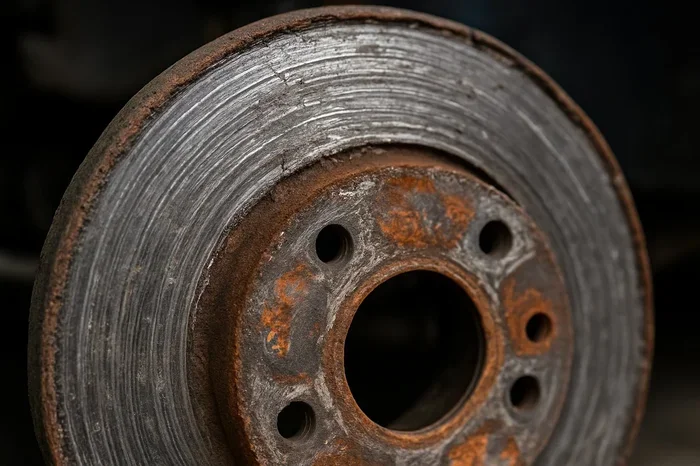
If you can look at the rotors yourself, you might see obvious signs of trouble. Deep grooves or scoring across the rotor surface are a clear indicator of wear. Blue or purple spots on the rotor mean the metal has been overheated — a condition called heat checking. These discoloration spots weaken the rotor and can lead to cracking over time.
You can also look for rust pitting, especially on cars that sit outside a lot. Surface rust is normal and harmless. But deep pitting eats into the rotor and creates an uneven surface. You can use a simple rotor thickness gauge to measure whether the rotor still meets the minimum thickness spec stamped on the rotor itself. If it is below that number, replacement is the only safe option.
6. Brake Pulling to One Side
If your car pulls to one side when you brake, it could mean one rotor is in worse shape than the other. Uneven rotor wear causes one side to grab more than the other. This pulls the car in the direction of the weaker rotor.
Brake pulling can also be caused by a stuck caliper or uneven brake pad wear. But the rotors should always be checked as part of the diagnosis. A mechanic will measure both rotors and compare their thickness and surface condition to find the root cause.
How Mechanics Diagnose Bad Rotors
While you can spot many warning signs yourself, a professional brake inspection gives you the full picture. Mechanics use specific tools and techniques to measure rotor health accurately.
Measuring Rotor Thickness
The first thing a mechanic does is measure the rotor thickness with a micrometer or a rotor thickness gauge. Every rotor has a minimum thickness stamped on it, usually near the hub. If the rotor has worn below that minimum, it must be replaced. You cannot safely resurface a rotor that is already too thin.
This measurement is critical because thinner rotors overheat faster. They are more prone to warping and cracking. A rotor that is just a few thousandths of an inch below the minimum spec can cause all the symptoms we talked about — vibration, noise, and reduced stopping power.
Checking for Runout and Warpage
A dial indicator is used to measure rotor runout. This tells the mechanic how much the rotor wobbles as it spins. Too much runout means the rotor is warped. Even a small amount of wobble — as little as 0.001 inches — can cause noticeable pedal pulsation.
Some mechanics will try to fix excessive runout by indexing the rotor on the hub. This involves repositioning the rotor to minimize the wobble. But this fix only works in certain situations. If the rotor is severely warped or the hub itself is damaged, replacement is the better option.
Visual Inspection for Scoring and Heat Damage
A good visual inspection goes a long way. Mechanics look for deep grooves, scoring, and heat discoloration. Blue or purple spots indicate the rotor has been through extreme temperatures. This often happens when a driver rides the brakes on a long downhill stretch or when a stuck caliper applies constant pressure to one rotor.
Surface scoring from worn brake pads is also common. Once the pad material wears down to the metal backing plate, that metal digs into the rotor surface. The result is deep, rough grooves that reduce braking effectiveness and create noise. A brake rotor scoring pattern tells the mechanic how long the pads were run past their limit.
Rotor Resurfacing vs Replacement
Once you confirm the rotors are bad, the next question is whether to resurface or replace them. Both options have their place, and the right choice depends on the condition of the rotors.
When Resurfacing Makes Sense
Rotor resurfacing involves machining the rotor surface to restore a flat, smooth contact area. The rotor is mounted on a lathe and a cutting tool shaves off a thin layer of metal. This removes minor warping, surface rust, light scoring, and uneven wear.
Resurfacing works well when the rotor is still above minimum thickness and the warping is not severe. It is also a more affordable option compared to buying new rotors. Many shops offer rotor resurfacing for around 50 to 150 dollars per rotor, depending on the vehicle and the shop.
However, resurfacing is not a permanent fix. Every time you resurface a rotor, it gets thinner. You can only resurface a rotor a limited number of times before it falls below the safe minimum thickness. After that, replacement is your only option.
When Replacement Is Necessary
Sometimes the rotors are simply too far gone for resurfacing. If the rotor is below minimum thickness, has deep cracks, or is severely warped, a new rotor is the only safe choice. Driving on a cracked rotor is extremely dangerous. The rotor can fail completely while you are driving, leading to a total loss of braking on that wheel.
Replacement costs vary widely depending on the vehicle. For most standard passenger cars, expect to pay between 30 and 75 dollars per rotor for a basic aftermarket part. Premium or performance rotors can cost 100 dollars or more each. Add in labor, and a full rotor replacement job typically runs between 200 and 500 dollars per axle.
The brake rotor replacement cost also depends on whether you are replacing just the rotor or the entire brake assembly. If the caliper or brake lines need replacing at the same time, the bill goes up. That is why catching rotor problems early, when resurfacing might still be an option, can save you real money.
| Factor | Resurfacing | Replacement |
|---|---|---|
| Cost per rotor | 50 to 150 dollars | 30 to 150+ dollars |
| Minimum thickness required | Yes, must be above spec | No minimum needed |
| Fixes warping | Yes | No (new rotor is flat) |
| Lifespan | Shorter than new rotor | Full new rotor lifespan |
| Best for | Mild to moderate wear | Severe wear or damage |
| Can be done again later? | Limited times only | N/A (fresh start) |
Common Causes of Rotor Damage
Understanding what causes rotors to go bad helps you prevent the problem in the first place. Several factors contribute to premature rotor wear and damage.
Hard and Aggressive Braking
If you are the type of driver who slams on the brakes frequently, your rotors take a beating. Hard braking generates intense heat, which causes the rotor surface to warp and develop hot spots over time. This is especially common in stop-and-go city traffic or when towing heavy loads.
Try to anticipate stops and brake gently whenever possible. Coasting to a stop instead of last-second hard braking not only saves your rotors but also your brake pads. It is a simple habit that pays off in the long run.
Worn Brake Pads
Driving on worn-out brake pads is one of the fastest ways to destroy your rotors. Once the pad material wears down to the metal backing, that metal grinds directly against the rotor surface. The result is deep scoring, grooves, and uneven wear patterns that ruin the rotor.
Always replace brake pads in pairs — both sides of the same axle. And do not let worn pads sit on the car for weeks. The longer you drive on metal-on-metal contact, the more damage you do to the rotors and potentially the caliper as well.
Stuck or Seized Caliper
A caliper that sticks or seves applies constant pressure to one rotor. This causes that single rotor to overheat and wear unevenly. You might notice that one rotor is significantly darker or more worn than the others.
Caliper problems often come from worn rubber seals, corroded slides, or damaged pistons. Regular brake inspections should include a check of the calipers. Catching a stuck caliper early can save you from replacing multiple rotors at once.
Corrosion and Road Exposure
Cars driven in coastal areas or regions that use road salt in winter are especially prone to rotor corrosion. The metal surface reacts with moisture and salt, creating pitting and surface degradation over time.
Driving the car regularly helps prevent corrosion, as the heat from braking dries off the rotor surface. If a car sits unused for long periods, the rotors can develop surface rust that may need to be addressed during the next brake service.
How to Prevent Rotor Failure
The good news is that you can take steps to keep your rotors in good shape and extend their lifespan significantly.
Follow a Regular Brake Maintenance Schedule
Stick to the maintenance intervals recommended by your vehicle manufacturer. Most automakers suggest inspecting the brakes every 12,000 to 15,000 miles. During these inspections, the mechanic checks rotor thickness, pad wear, caliper condition, and overall braking system health.
Do not skip these inspections, even if your brakes seem fine. Problems often develop gradually, and catching them early makes the repair cheaper and simpler.
Invest in Quality Brake Parts
Cheap brake pads and rotors might save you money upfront, but they often wear faster and perform worse than quality parts. OEM-equivalent or premium aftermarket rotors are made from better materials that handle heat more effectively and resist warping.
Look for rotors that meet or exceed original equipment specifications. Ceramic brake pads are a popular upgrade for many drivers because they are gentler on rotors and produce less dust and noise. Pairing quality pads with quality rotors gives you the best overall braking performance.
Break in New Brake Parts Properly
When you get new rotors and pads installed, take it easy on the brakes for the first 100 to 200 miles. This break-in period, also called bedding in, allows the pad material to transfer evenly onto the rotor surface. It creates a consistent friction surface that improves stopping power and reduces noise.
During the break-in, avoid hard braking from high speeds. Instead, apply moderate braking pressure from moderate speeds several times to gradually heat the pads and rotors. This simple step goes a long way toward extending the life of your new brake components.
Drive Defensively
Your driving style has a huge impact on how long your rotors last. Smooth, predictable driving with gentle braking puts far less stress on the entire braking system. Anticipate traffic flow, leave plenty of following distance, and use engine braking on downhill grades to reduce the load on your brakes.
These habits not only protect your rotors but also improve fuel economy and reduce wear on other components. It is a win-win situation that benefits both your safety and your wallet.
When to See a Professional
While some rotor checks can be done at home, certain situations call for a professional diagnosis. If you experience any of the following, it is time to visit a trusted mechanic.
- Persistent vibration in the brake pedal or steering wheel that does not go away after a few brake applications.
- Grinding noises that continue even after replacing the brake pads.
- The brake warning light on your dashboard comes on.
- Visible cracks or deep grooves on the rotor surface.
- Your car pulls strongly to one side when braking.
- You are unsure about the condition of your rotors and want a professional opinion.
A qualified mechanic has the tools and experience to diagnose rotor problems accurately. They can measure thickness, check for runout, and assess the overall condition of the braking system in ways that are difficult to do at home. When in doubt, get a second opinion. It is always better to be safe than sorry when it comes to your brakes.
Conclusion
Learning how to tell if rotors are bad is one of the most valuable skills any driver can develop. The warning signs are there — vibrations, noises, longer stopping distances, visible damage. You just need to know what to look for and take action before the problem gets worse. Your brakes are not something you want to ignore or put off. They are the difference between a safe stop and a dangerous one.
Stay on top of your brake maintenance. Inspect the rotors regularly. Listen to what your car is telling you. And when the signs point to bad rotors, do not delay the repair. Whether you choose resurfacing or full replacement, addressing the problem quickly keeps you safe and prevents more expensive damage down the road. Your braking system works hard for you every day. Give it the attention it deserves.
Frequently Asked Questions
Can I drive with bad rotors?
You can drive short distances with bad rotors, but it is not safe or recommended. Damaged rotors reduce your stopping power and can cause the brakes to fail completely. If your rotors are warped, cracked, or severely worn, get them repaired or replaced as soon as possible.
How much does it cost to replace brake rotors?
The brake rotor replacement cost typically ranges from 30 to 150 dollars per rotor for parts, plus 100 to 300 dollars per axle for labor. The total cost depends on your vehicle model, the type of rotor you choose, and the shop you visit. Resurfacing is a cheaper alternative when the rotors are still above minimum thickness.
How long do brake rotors last?
Most brake rotors last between 50,000 and 70,000 miles, but this varies based on driving style, road conditions, and part quality. Aggressive drivers or those who frequently tow heavy loads may need to replace rotors more often. Regular brake inspections help you track rotor wear and catch problems early.
Can bad rotors damage brake pads?
Yes, absolutely. Bad rotors with deep grooves, warping, or scoring wear down brake pads unevenly and faster than normal. Worn pads can also damage rotors in return. This is why replacing pads and rotors together — or at least inspecting both — is the best practice for maintaining a healthy braking system.
What causes rotors to warp?
Rotor warping is usually caused by excessive heat from hard braking, riding the brakes on long downhill drives, or installing new pads without resurfacing the rotors. A stuck caliper can also apply uneven pressure and cause warping over time. Proper break-in procedures and regular maintenance help prevent warping.
Is rotor resurfacing worth it?
Rotor resurfacing is worth it when the rotor is still above minimum thickness and the warping or scoring is not severe. It restores a smooth, flat surface at a fraction of the cost of new rotors. However, resurfacing cannot fix a rotor that is too thin, cracked, or badly damaged. In those cases, replacement is the only safe option.