Can Hail Damage Total A Car?
Yes, hail damage can total a car, especially when the dents and cracks are widespread or affect critical parts like the windshield and roof. Insurance companies use a simple formula to decide whether a vehicle is a total loss. Understanding this process helps car owners make smart decisions after a hailstorm.
Have you ever walked out to your car after a bad storm and found it covered in tiny dents? It is a frustrating sight. Many car owners wonder, Can hail damage total a car? The short answer is yes. But the full story is more interesting than you might think. Hailstones can range from tiny pebbles to balls the size of golf balls. When they hit your car hard enough, the damage adds up fast. In this article, we will walk through everything you need to know about hail damage and whether it can actually total your vehicle.
Whether you live in tornado alley or just got caught in a surprise summer storm, understanding hail damage matters. You need to know what counts as total loss, how insurance works, and what steps to take next. This guide breaks it all down in plain language. No confusing jargon. No fluff. Just clear, helpful advice you can use right away.
Key Takeaways
- Hail can total a car: Severe hailstorms cause deep dents, cracked glass, and structural damage that may exceed your vehicle’s value.
- Insurance covers hail damage: Comprehensive auto insurance typically pays for hail storm damage, minus your deductible.
- Total loss depends on repair cost vs. car value: If repairs cost more than the car is worth, insurers declare it a total loss vehicle.
- Paintless dent repair works well: This affordable method fixes many hail dents without damaging the original paint.
- Document everything: Taking hail damage photos right after a storm strengthens your auto insurance claim.
- Act quickly: Delaying repairs can lead to rust, water leaks, and higher repair bills down the road.
📑 Table of Contents
- What Is Hail Damage and How Does It Affect Your Car?
- Can Hail Damage Actually Total a Car?
- How Insurance Companies Decide If a Car Is Totaled
- The Cost of Hail Damage Repair vs. Total Loss
- What to Do If Your Car Gets Damaged by Hail
- How to Prevent Hail Damage and Protect Your Vehicle
- Key Takeaways to Remember
What Is Hail Damage and How Does It Affect Your Car?
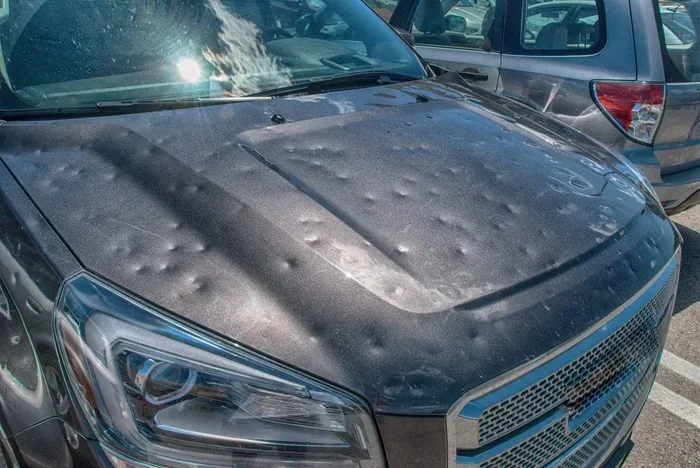
Hail damage happens when balls of ice fall from the sky during a severe storm and strike your vehicle. The impact can leave marks ranging from small dimples to deep cracks. Understanding the types of hail damage helps you assess the situation calmly.
Common Types of Hail Damage on Cars
Hail affects different parts of a car in different ways. Here are the most common types of hail storm damage you might see:
- Dented body panels: The hood, roof, and trunk often take the hardest hits. These dents vary in size depending on the hailstone.
- Cracked or shattered glass: Windshields, side windows, and rear windows can crack or break entirely from a strong impact.
- Paint damage: When the hail is sharp or the car surface is thin, the paint can chip or scratch, leading to rust later.
- Mirror and trim damage: Side mirrors and weather stripping can crack or break off during a heavy hailstorm.
- Structural damage: In rare but severe cases, the roof or frame can suffer structural damage car owners need to address immediately.
How Severe Storms Cause Widespread Damage
A single hailstorm can hit your car with hundreds or even thousands of impacts in just minutes. The longer the storm lasts, the worse the damage gets. Large hailstones carry more energy, so they cause deeper dents and more cracks. Storms that last over 30 minutes often cause the most hail damage car repair bills. Size matters a lot here. Marble-sized hail might leave light marks. Golf ball-sized hail can punch through a car roof or shatter a windshield in one hit.
Can Hail Damage Actually Total a Car?
Now let us get to the big question: can hail damage total a car? The answer depends on several factors. It is not just about how many dents you see. Insurance companies look at the big picture before making a decision.
When Hail Damage Leads to a Total Loss
A car becomes a total loss vehicle when the cost to repair it exceeds a certain percentage of its actual cash value. Most insurers use a threshold of 70 to 75 percent. So if your car is worth $10,000 and the repair estimate comes to $7,500 or more, the insurer will likely declare it totaled. Here are situations where hail damage can push a car to total loss:
- The roof and hood have hundreds of deep dents that need extensive car body repair.
- The windshield is shattered and multiple windows are cracked.
- The paint is damaged across large panels, requiring full repainting.
- Dents affect the alignment or structural integrity of the frame.
- The vehicle is older and already has a lower market value.
When Hail Damage Does Not Total a Car
On the other hand, not every hailstorm results in a total loss. Many cars survive with repairable damage. Here is when a car might not be totaled:
- The dents are mostly cosmetic and do not affect the car’s function.
- The vehicle is newer and holds a high market value.
- The damage is limited to one or two panels.
- Glass damage is minor and can be replaced affordably.
- The repair cost stays well below the total loss threshold.
Can hail damage total a car in these cases? Usually not. But the repair bills can still be painful. That is why having the right insurance matters so much.
How Insurance Companies Decide If a Car Is Totaled
Dealing with insurance after a storm can feel overwhelming. But understanding the process makes it much easier. Insurance companies follow a clear set of rules when deciding whether a car is a total loss.
The Total Loss Formula
Every insurance company uses what is called the total loss formula, or TLF. This formula compares the cost of repairs to the actual cash value of the car. The actual cash value is not what you paid for the car. It is what the car is worth right now, based on its age, mileage, condition, and market trends. Here is how it works:
- The insurer sends an adjuster to assess the storm damage assessment.
- The adjuster estimates the total repair cost, including parts and labor.
- The insurer calculates the actual cash value of the car.
- If repair costs exceed the threshold (usually 70 to 75 percent), the car is declared totaled.
- The insurer pays you the actual cash value minus your hail damage deductible.
What Is a Hail Damage Deductible?
Your deductible is the amount you pay out of pocket before insurance kicks in. For example, if your deductible is $500 and the insurer values your car at $8,000, you would receive $7,500 after a total loss. The hail damage deductible applies to comprehensive claims, which cover weather-related damage. This is different from a collision deductible, which covers accidents. Make sure you know your deductible amount before you need it.
Filing a Claim for Hail Damage
Filing an auto insurance claim for hail damage follows a straightforward process. First, contact your insurance company as soon as possible after the storm. Next, document all the damage with clear photos and videos. Then, an adjuster will visit your car or ask you to bring it in for inspection. The adjuster will provide an estimate. If the estimate exceeds the total loss threshold, your claim will be processed as a total loss. If not, the insurer will pay for repairs up to the policy limits.
The Cost of Hail Damage Repair vs. Total Loss
Understanding repair costs helps you see why some cars get totaled while others do not. The numbers can vary widely depending on the vehicle and the extent of the damage.
Average Hail Damage Repair Costs
Minor hail damage might cost a few hundred dollars to fix. But severe storms can drive the bill into thousands. Here is a rough breakdown:
- Small dents with no paint damage: $50 to $150 per dent.
- Moderate dents with paint damage: $150 to $400 per panel.
- Cracked windshield replacement: $200 to $600 depending on the car model.
- Full roof repaint and dent repair: $2,000 to $5,000 or more.
- Multiple glass replacements plus body work: $5,000 to $10,000+.
As you can see, costs add up fast. A car with a damaged roof, cracked windshield, and dozens of dents can easily reach a total loss threshold.
Repair Methods for Hail Damage
When a car is not totaled, several repair options exist. The best method depends on the type and severity of the damage:
- Paintless dent repair (PDR): This is the most popular and affordable method for fixing hail dents. Technicians gently massage the dents from behind the panel without disturbing the paint. It works well for small to medium dents and keeps the original factory finish intact.
- Traditional body repair: For dents with paint damage, technicians sand, fill, and repaint the affected area. This method costs more and takes longer than PDR.
- Glass replacement: Cracked or shattered windows need full replacement. This is usually covered under comprehensive coverage and can be done quickly at most auto glass shops.
- Full panel replacement: In cases of severe damage, entire panels like the hood or roof may need to be replaced rather than repaired.
Paintless dent repair is often the go-to solution for hail damage because it is fast, affordable, and preserves the car’s value. Many auto body shop specialists now focus specifically on hail damage repair because demand is so high after storms.
Repair Cost vs. Total Loss: A Comparison
Let us look at a real-world example to make this clearer:
- Car: 2018 Honda Civic, actual cash value of $12,000.
- Damage: 200 dents, cracked windshield, paint damage on the roof.
- Repair estimate: $9,500.
- Total loss threshold (75%): $9,000.
- Result: The repair cost ($9,500) exceeds the threshold ($9,000). The car is declared a total loss.
In this example, the same storm damage on a more expensive car might not reach the total loss threshold. The car value estimate matters just as much as the damage itself.
What to Do If Your Car Gets Damaged by Hail
If your car takes a hit from a hailstorm, acting quickly can save you time and money. Here is a step-by-step guide on what to do right after the storm passes.
Step 1: Document the Damage Thoroughly
Before you do anything else, take detailed hail damage photos and videos. Capture every angle of the car. Get close-ups of individual dents and wider shots showing the overall damage pattern. These photos are essential for your insurance claim. They also help the adjuster understand the full scope of the damage without having to guess.
Step 2: Contact Your Insurance Company
Call your insurance provider as soon as possible. Report the storm damage and ask about the claims process. Most companies have a dedicated line for weather-related claims. Be ready to provide your policy number, a description of the damage, and the photos you took. The sooner you file, the better.
Step 3: Get a Professional Damage Assessment
Ask your insurer if they have approved auto body shop partners in your area. You can also visit a trusted local shop for an independent estimate. Getting multiple quotes gives you a clearer picture of the real repair cost. This knowledge is powerful when negotiating with the insurance adjuster.
Step 4: Decide on Repair or Total Loss
If your car is not totaled, you will need to decide where to get it repaired. Look for shops that specialize in hail damage car repair and paintless dent repair. Read reviews, check certifications, and ask about warranty options. If the car is declared a total loss, you will receive a payout. You can then use that money toward a replacement vehicle or keep the car and repair it yourself if the cost is worth it.
Step 5: Consider Temporary Transportation
While your car is being repaired, you may need another way to get around. Some comprehensive policies include rental car coverage. Check your policy or ask your agent. If rental coverage is not included, you might need to arrange transportation on your own. Planning ahead for this can reduce the stress of the repair process.
How to Prevent Hail Damage and Protect Your Vehicle
You cannot stop a hailstorm from happening. But you can take steps to reduce the risk of damage to your car. Prevention is always better than repair.
Parking Strategies That Help
- Use a garage: Parking indoors is the best protection against hail. If you have a garage, use it during storm season.
- Find covered parking: Gas stations, parking garages, and carports offer good shelter when a storm rolls in.
- Use a car cover: A heavy-duty hail cover can absorb the impact of small to medium hailstones. These covers are affordable and easy to store.
- Monitor weather alerts: Pay attention to storm forecasts. If hail is predicted, move your car to a safe spot ahead of time.
Understanding Your Policy Coverage
Not all auto insurance policies cover hail damage. Only comprehensive coverage includes weather-related claims. If your policy only has liability coverage, hail damage will not be covered. This is an important distinction to understand before storm season arrives. Talk to your insurance agent and make sure your comprehensive auto insurance coverage is active and up to date.
Know Your Car’s Value
Understanding your car’s current market value helps you set realistic expectations. If your car is older and worth very little, even moderate hail damage might push it to total loss. Websites and tools can give you a reliable car value estimate based on your vehicle’s make, model, year, mileage, and condition. Knowing this number ahead of time helps you make better decisions after a storm.
Key Takeaways to Remember
Hail damage is a real threat to any vehicle exposed to severe weather. The damage can range from minor cosmetic issues to a complete total loss. Here are the most important points to keep in mind:
- Severe hail can absolutely total a car, especially older vehicles or those with low market value.
- Comprehensive insurance is the only type of coverage that pays for hail damage repairs or total loss.
- The total loss decision depends on repair costs compared to the car’s actual cash value.
- Paintless dent repair is an effective and affordable option for many hail dents.
- Documenting damage with photos immediately after a storm is critical for a successful insurance claim.
- Parking your car in a garage or under cover during storm season is the best prevention.
The bottom line is simple. Can hail damage total a car? Yes, it can. But with the right insurance coverage, quick action, and smart repair choices, you can handle the aftermath with confidence. Do not wait until the next storm to prepare. Review your insurance policy now, understand your coverage, and know what steps to take if hail strikes your vehicle.
Storms are unpredictable, but your response does not have to be. Stay informed, stay prepared, and protect your investment. Your car is one of your biggest purchases. Taking a few simple precautions can save you thousands of dollars and a lot of headaches in the long run.
Frequently Asked Questions
How much does it cost to repair hail damage on a car?
The cost depends on the severity of the damage, the size of the hailstones, and the type of vehicle. Minor dents might cost $50 to $150 each to repair, while severe damage involving multiple panels and cracked glass can reach $5,000 or more. Paintless dent repair is usually the most affordable option for hail-related dents.
Does comprehensive insurance cover hail damage?
Yes, comprehensive auto insurance covers hail damage. This type of coverage includes weather-related incidents like hailstorms, flooding, and falling trees. If you only have liability coverage, hail damage will not be covered. Check your policy to confirm your coverage type and deductible amount.
What should I do immediately after a hailstorm?
First, take detailed photos and videos of all the damage from multiple angles. Then contact your insurance company to file a claim as soon as possible. Next, get a professional assessment from a trusted auto body shop. Acting quickly helps ensure your claim is processed smoothly and your repair options remain open.
Can you drive a car with hail damage?
In most cases, yes. Minor dents and small cracks do not usually affect the car’s ability to drive safely. However, if the windshield is cracked or the damage affects your visibility, it is best to avoid driving until repairs are made. Also, large dents on the roof or structural panels could compromise safety and should be inspected by a professional.
How long does hail damage repair take?
The timeline depends on the extent of the damage. Simple paintless dent repair can be completed in one to three days. More extensive repairs involving panel replacement and repainting may take one to two weeks. Glass replacement is usually done within a day or two. Your auto body shop can give you a more accurate timeline based on your specific situation.
Will hail damage affect my car’s resale value?
Yes, hail damage can reduce a car’s resale value even after repairs. Buyers often notice previous damage and may offer less money for the vehicle. Paintless dent repair helps preserve value better than traditional body repair because it maintains the original factory paint. Getting repairs done quickly also minimizes long-term value loss.