How to Read a 17 Digit VIN Number and Unlock Its Secrets
Learning how to read a 17 digit VIN number is easier than you think. Every car, truck, and SUV built after 1981 carries a unique 17 character code that reveals its manufacturing details, specifications, and history. This guide breaks down each section of the VIN so you can decode your vehicle’s identity in minutes.
If you have ever stood in a parking lot staring at a car wondering what story it tells, the answer is hiding in plain sight. Every vehicle on the road carries a unique 17 character code stamped into its frame, etched on a metal plate, and printed on its registration papers. This code is called the vehicle identification number, and it holds a wealth of information about your car.
Learning how to read a 17 digit VIN number opens up a world of knowledge. You can find out where the vehicle was built, what engine it has, what model year it is, and even whether it has been involved in accidents or recalls. Whether you are buying a used car, tracking down parts, or simply curious about your own vehicle, this skill is incredibly valuable. Let us break it all down together.
Key Takeaways
- Every VIN tells a story: The 17 digit VIN number contains details about the manufacturer, model year, assembly plant, and serial number.
- Three main sections make up a VIN: The WMI, VDS, and VIS each serve a specific purpose in identifying your vehicle.
- A VIN lookup unlocks vehicle history: You can access accident reports, title status, recall information, and more through free and paid tools.
- The 10th character reveals the model year: This is one of the most useful and easiest sections to decode.
- Common VIN mistakes cost money: Misreading characters or confusing similar letters and numbers can lead to wrong vehicle data.
- VIN decoding helps protect buyers: Always check the VIN before purchasing a used vehicle to avoid hidden problems.
📑 Table of Contents
- What Is a VIN Number and Why Does It Matter?
- The Anatomy of a 17 Digit VIN Number
- How to Decode Each Section of Your VIN
- What You Can Learn From a VIN Lookup
- Common Mistakes People Make When Reading a VIN
- Tips for Using Your VIN Like a Pro
- Understanding VIN Locations on Your Vehicle
- The History and Evolution of the VIN System
- Why the Check Digit Matters
- VIN Decoding for Different Vehicle Types
- How VINs Help Protect Consumers
- Conclusion
What Is a VIN Number and Why Does It Matter?
A VIN number is like a fingerprint for your vehicle. No two vehicles in operation share the same VIN. This 17 character alphanumeric code was standardized in 1981 by the National Highway Traffic Safety Administration, or NHTSA. Before that year, VIN formats varied widely between manufacturers, which made tracking vehicle history much harder.
So why does the VIN matter so much? Think about all the information you need when buying a used car. You want to know the make, model, year, engine size, and trim level. You also want to check for accidents, flood damage, odometer rollbacks, and outstanding recalls. The VIN decoder pulls all of this together from a single string of characters.
Beyond buying and selling, VINs play a role in insurance claims, warranty registrations, and theft recovery. Law enforcement agencies use VINs to identify stolen vehicles. Manufacturers use them to issue safety recalls. Even your local mechanic uses the VIN to order the correct parts. The vehicle identification number is truly the backbone of automotive identification.
Every character in the VIN carries meaning. There are no random letters or numbers thrown in for fun. Each position in the 17 digit sequence serves a specific purpose. Once you understand the structure, you can read a VIN almost as easily as reading a sentence.
The Anatomy of a 17 Digit VIN Number
The 17 digit VIN number is divided into three distinct sections. Each section contains a specific set of information about the vehicle. Let us look at each one closely.
The World Manufacturer Identifier (Positions 1 to 3)
The first three characters of the VIN make up the World Manufacturer Identifier, or WMI. This section tells you who made the vehicle and where it was built. The first character identifies the country of origin. For example, 1, 4, and 5 represent the United States. J means Japan. W stands for Germany. K indicates South Korea.
The second and third characters together identify the manufacturer. Ford uses 1F, Toyota uses JT, and BMW uses WBA. So if you see a VIN that starts with 1FT, you know right away it is a Ford vehicle made in the United States. This manufacturer code is the first big clue in the VIN puzzle.
Some manufacturers use the third character to identify a specific division or vehicle type. For instance, General Motors might use different third characters for Chevrolet, GMC, or Cadillac vehicles. This helps distinguish between brands that share the same first two characters.
The Vehicle Descriptor Section (Positions 4 to 9)
Positions 4 through 9 form the Vehicle Descriptor Section, or VDS. This middle section is packed with details about the vehicle itself. It tells you the model line, body style, engine type, transmission, and trim level.
Each manufacturer has its own system for assigning characters in this section. There is no universal standard for positions 4 through 8. This is where things get interesting. Two different automakers might use the same character to mean completely different things. That is why using a VIN decoder specific to your vehicle brand can be so helpful.
Position 9 is special. It holds the check digit. This is a mathematical calculation that validates the entire VIN. The check digit helps confirm that the VIN is legitimate and has not been altered or forged. When you run a VIN check, the system uses this digit to verify the VIN’s authenticity. It is one of the most important security features built into the VIN system.
The Vehicle Identifier Section (Positions 10 to 17)
The last eight characters make up the Vehicle Identifier Section, or VIS. This section identifies the specific vehicle as a unique unit. It includes the model year, assembly plant code, and the serial number.
Position 10 tells you the model year. The characters used cycle through the letters A through Y, skipping I, O, Q, and U to avoid confusion with numbers. After Y, the system resets and uses numbers. For example, A represents 1980, B is 1981, and so on. The letter M stands for 2021, and N is 2022. This pattern repeats every 30 years.
Position 11 identifies the assembly plant. Every manufacturer has multiple plants around the world, and each one gets a unique code. A Ford truck built in Dearborn, Michigan will have a different plant code than the same model built in Cuautitlan, Mexico.
Positions 12 through 17 form the sequential serial number. This is the unique identifier that distinguishes your specific vehicle from every other vehicle of the same model, year, and plant. Think of it as the vehicle’s personal ID number. No other car rolling off the same line will share these final six digits.
How to Decode Each Section of Your VIN
Now that you understand the three main sections, let us walk through how to decode a real VIN step by step. Grab a VIN from any vehicle you own or are considering, and follow along.
Let us use a sample VIN for demonstration purposes: 1FTFW1ET5EFA12345. This is a fictional VIN, but it follows the real structure perfectly.
Step 1: Identify the manufacturer. The first three characters are 1FT. The 1 tells us this vehicle was made in the United States. FT points to Ford Motor Company. So we know immediately this is a Ford.
Step 2: Decode the vehicle details. Characters 4 through 8, which are W1ET5 in our example, describe the body style, engine, and trim. Ford uses a specific internal coding system for these positions. A Ford truck VIN decoder can translate these characters into exact specifications like F-150, SuperCrew cab, and 5.0 liter V8 engine.
Step 3: Check the check digit. Position 9 is the letter E in our example. The system has already validated this digit mathematically. If someone tries to use a fake VIN, the check digit will not match, and the VIN check will flag it immediately.
Step 4: Find the model year. Position 10 is the letter E, which corresponds to 2020 in Ford’s system. This tells us the vehicle was manufactured for the 2020 model year.
Step 5: Identify the assembly plant. Position 11 is the letter A, which for Ford typically indicates the Dearborn Truck Plant in Michigan.
Step 6: Read the serial number. The final six characters, 12345, are the unique serial number assigned to this specific truck as it rolled off the production line.
That is all it takes to read a VIN from start to finish. Once you practice a few times, it becomes second nature. You will start recognizing patterns and understanding vehicles just by glancing at their VINs.
What You Can Learn From a VIN Lookup
A VIN lookup is one of the most powerful tools available to car buyers and owners. By entering the vehicle identification number into a decoder tool, you can access a surprising amount of information. Here is what a VIN lookup typically reveals.
First, you get the basic vehicle specifications. This includes the make, model, year, engine size, and trim level. This information is essential when ordering parts or verifying a vehicle’s advertised features.
Second, a VIN check can pull the vehicle history report. Services like Carfax and AutoCheck use the VIN to compile records of ownership changes, accident reports, title brands, and service history. A clean history report gives buyers confidence. A report with red flags can save you from a costly mistake.
Third, VIN lookups reveal open recalls. Manufacturers issue recalls for safety defects, and the NHTSA maintains a database linked to VINs. You can check whether a specific vehicle has any unresolved recalls simply by entering its VIN on the NHTSA website. This is a free service that every car owner should use regularly.
Fourth, the VIN can confirm the original equipment. This includes the factory installed engine, transmission, axle ratio, and even the paint color code. For restorers and enthusiasts, this level of detail is invaluable when trying to match original components.
Finally, the VIN can help verify the vehicle title. A title check through the VIN can reveal whether the vehicle has a clean title, a salvage title, or a rebuilt title. This distinction matters enormously for resale value and insurance purposes.
The best part is that many VIN lookup tools are free. You can run a basic VIN decoder online in seconds and get instant results. For more detailed history reports, there is usually a small fee, but the information is well worth the cost.
Common Mistakes People Make When Reading a VIN
Even with a clear guide, people make mistakes when reading VINs. Being aware of these common errors can save you time and frustration.
The most frequent mistake is confusing the letter I with the number 1. In VINs, the letters I, O, and Q are never used. They are excluded to avoid confusion with the numbers 1 and 0. So if you see what looks like an I in a VIN, it is almost certainly a 1. This simple rule applies to every position in the VIN.
Another common error is misreading the model year character. Because the VIN model year system cycles through letters and numbers, people sometimes assume a letter means a recent year when it actually means an older one. Always cross-reference the model year character with the correct decoding chart for the manufacturer.
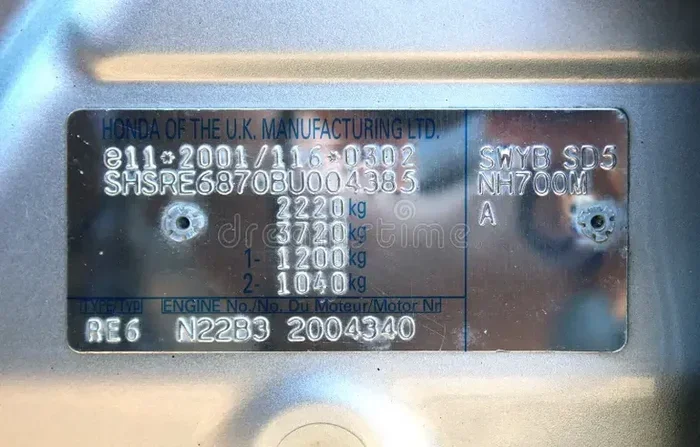
Some people also forget that the VIN is not just on the dashboard. While the dashboard VIN plate is the most commonly checked location, the VIN also appears on the driver side door jamb, the vehicle title, the registration, and the insurance card. Checking multiple VIN locations helps verify that the vehicle has not been tampered with or rebuilt using parts from a different vehicle.
A third mistake is relying on a single free VIN decoder without cross-referencing. Different decoders may provide different levels of detail. Using multiple tools and comparing results gives you a more complete picture of the vehicle.
Tips for Using Your VIN Like a Pro
Once you know how to read a VIN, you can use it like a seasoned automotive professional. Here are some practical tips to get the most out of your VIN knowledge.
First, always verify the VIN before purchasing a used vehicle. Match the VIN on the dashboard with the VIN on the title, registration, and door jamb sticker. If any of these do not match, walk away. Mismatched VINs are a serious red flag that can indicate theft, fraud, or a rebuilt vehicle.
Second, use the VIN to research parts compatibility before ordering. Many online auto parts stores allow you to enter the VIN and automatically filter results to parts that fit your specific vehicle. This eliminates guesswork and prevents costly returns.
Third, run a VIN check periodically, even on vehicles you already own. Recalls are issued regularly, and a vehicle that was recall-free last year may have a new recall this year. Staying on top of recall information keeps you and your family safe on the road.
Fourth, save your VIN in your phone and in your vehicle records. In the event of an accident, theft, or insurance claim, having the VIN readily available speeds up the process significantly. Many people scramble to find their VIN during stressful situations. A little preparation goes a long way.
Fifth, share the VIN with your mechanic. A mechanic who has the VIN can pull up the vehicle’s service history and factory specifications before you even walk in the door. This leads to faster, more accurate diagnoses and repairs.
Understanding VIN Locations on Your Vehicle
Knowing where to find the VIN on your vehicle is just as important as knowing how to read it. The VIN appears in several locations on every vehicle, and each serves a specific purpose.
The most visible location is the dashboard on the driver side. Stand outside the vehicle and look through the windshield at the lower corner of the dashboard. The VIN is stamped on a metal plate or printed on a sticker. This is the location police officers and insurance adjusters check most frequently.
The driver side door jamb is another key location. Open the driver door and look for a sticker or plate on the door frame. This VIN sticker also lists the tire pressure, gross vehicle weight rating, and other important specifications. The door jamb VIN is particularly useful because it is easy to access and hard to alter.
Under the hood, you will find the VIN stamped on the engine block. This location is important for verifying that the engine in the vehicle matches the VIN records. A VIN mismatch between the dashboard and the engine block can indicate a engine swap or potential fraud.
On older vehicles, the VIN may also appear on the steering column, the firewall, or the passenger side corner post. Each manufacturer has its own placement preferences, but the dashboard and door jamb are the two most universal locations across all vehicles.
The History and Evolution of the VIN System
The VIN system has a fascinating history that stretches back decades. Before 1954, vehicles did not have standardized identification numbers. Each manufacturer used its own format, length, and coding system. This lack of standardization made vehicle tracking, recalls, and registration a nightmare for authorities and consumers alike.
In 1954, the American Automobile Manufacturers Association began pushing for a standardized system. However, it took nearly three decades for a universal standard to emerge. In 1981, the NHTSA finalized the 17 character VIN format that is still in use today. This standard applied to all passenger cars, trucks, buses, and motorcycles manufactured for sale in the United States.
The 1981 standard was a game changer. It allowed government agencies, insurance companies, and consumers to access consistent vehicle information across all manufacturers. The introduction of computer databases in the 1990s made VIN lookups even more powerful. Today, a VIN check takes seconds and delivers comprehensive vehicle history reports that were unimaginable just a few decades ago.
Modern vehicles now include VIN-based electronic systems. The VIN is stored in the vehicle’s computer modules, linked to the key fob immobilizer system, and tied to online manufacturer databases. This digital integration makes the VIN more important than ever in the age of connected cars and autonomous driving technology.
Why the Check Digit Matters
The check digit in position 9 deserves special attention because it serves as the VIN’s built-in security feature. Every character in the VIN is assigned a numerical value, and a specific mathematical formula is applied to calculate what the check digit should be.
If even a single character in the VIN is changed or mistyped, the calculated check digit will not match the actual check digit in the VIN. This immediately flags the VIN as invalid. The check digit prevents fraudulent VINs from passing through verification systems undetected.
When you run a VIN check online, the system validates the check digit first. If the check digit does not match, the system will alert you that the VIN may be incorrect or tampered with. This is why it is so important to double-check the VIN you are entering. A single wrong character can lead to no results or, worse, results for a completely different vehicle.
The check digit calculation uses a weighted formula that assigns different values to each position in the VIN. The weights and multipliers are part of the federal regulation that governs VIN format. While you do not need to perform the calculation yourself, understanding that it exists gives you confidence in the reliability of VIN-based systems.
VIN Decoding for Different Vehicle Types
The 17 digit VIN format applies to passenger vehicles, but the decoding process varies slightly depending on the type of vehicle. Understanding these differences helps you get more accurate results from VIN decoders.
For motorcycles, the VIN follows the same 17 character format but uses different position assignments for certain details. The engine displacement and motorcycle-specific features are encoded in the VDS section. Motorcycle VIN decoders account for these differences automatically.
For commercial trucks and heavy-duty vehicles, the VIN includes additional manufacturer-specific codes in the VDS section. These codes identify the gross vehicle weight rating, axle configuration, and cab style. Fleet managers and trucking companies rely heavily on VIN decoding for maintenance and compliance tracking.
For recreational vehicles and trailers, the VIN structure follows the same 17 character standard but may include manufacturer-specific codes for axle count, hitch type, and interior configuration. RV buyers should always use a VIN decoder that supports their specific vehicle type.
For classic and vintage vehicles manufactured before 1981, the VIN may be shorter than 17 characters. These older VINs do not follow the standardized format and require specialized decoding resources. Classic car enthusiasts often rely on manufacturer-specific VIN guides or vintage vehicle databases to decode pre-1981 VINs.
How VINs Help Protect Consumers
The VIN system is one of the strongest consumer protection tools available in the automotive industry. By providing a unique, unalterable identifier for every vehicle, the VIN creates a transparent paper trail that follows the vehicle throughout its entire life.
When a vehicle is involved in an accident, the VIN links the damage report to that specific vehicle. When a vehicle is recalled, the VIN identifies every single unit affected. When a vehicle changes ownership, the VIN ensures the title and registration follow the correct car. This traceability protects both buyers and sellers from fraud and misrepresentation.
VIN cloning is a serious crime where thieves steal the VIN from a newer vehicle and place it on a stolen or salvaged vehicle. This fraud is harder to detect when buyers do not know how to read and verify a VIN. Checking the VIN against multiple databases and physical locations on the vehicle helps uncover cloning attempts before it is too late.
Odometer fraud is another problem that VIN history reports help address. By tracking the reported mileage at each ownership change, a VIN history report can reveal whether the odometer has been rolled back. This protection is especially valuable in the used car market, where inflated mileage readings can dramatically reduce a vehicle’s value.
Every consumer who buys or sells a vehicle benefits from understanding the VIN. It is a free tool that provides access to information that was once only available to dealers and insurance companies. Learning how to read a 17 digit VIN number empowers you to make smarter, safer automotive decisions.
Conclusion
The 17 digit VIN number is far more than a random string of characters stamped on your car. It is a detailed blueprint that tells the story of your vehicle from factory to driveway. Every position in the VIN carries meaning, from the country of origin and manufacturer to the model year, assembly plant, and unique serial number.
By learning how to read a 17 digit VIN number, you gain access to powerful information that protects you as a buyer, helps you maintain your vehicle, and keeps you informed about recalls and safety issues. The skills you have learned in this guide apply to every vehicle on the road, from daily commuters to classic cars to heavy-duty trucks.
Take a moment right now to look up your own VIN. Enter it into a VIN decoder and see what you can discover. You might be surprised by how much information is hidden in those 17 characters. The more you practice reading VINs, the more confident and informed you will become as a vehicle owner. Your VIN is always waiting to share its secrets. All you have to do is ask.
Frequently Asked Questions
What does the 17 digit VIN number tell you?
The 17 digit VIN number reveals the vehicle’s manufacturer, country of origin, model year, engine type, trim level, assembly plant, and unique serial number. It also enables you to access the vehicle’s full history report, including accident records, title status, and recall information.
Where can I find the VIN on my vehicle?
The VIN is located on the driver side dashboard (visible through the windshield), the driver side door jamb sticker, the engine block, and on your vehicle title and registration documents. Checking multiple locations helps verify the VIN is genuine and matches the vehicle.
Can I decode a VIN for free?
Yes, many websites offer free VIN decoder tools that provide basic vehicle specifications. For a more detailed history report that includes accident records and ownership history, you may need to pay a small fee through services like Carfax or AutoCheck.
What does the 10th character in a VIN represent?
The 10th character in a 17 digit VIN number represents the model year of the vehicle. The characters cycle through letters and numbers in a repeating 30-year pattern. For example, the letter M represents 2021, and the number 7 represents 2027.
Why are the letters I, O, and Q not used in a VIN?
The letters I, O, and Q are excluded from VINs to prevent confusion with the numbers 1 and 0. This rule applies to all 17 positions in the VIN and helps ensure that VINs are read accurately by humans and computer systems alike.
How can I check if a VIN has an open recall?
You can check for open recalls by entering the VIN on the official NHTSA recall lookup website. This free government tool searches the manufacturer’s recall database and tells you if your specific vehicle has any unresolved safety recalls that need to be addressed.
=== CONCLUSION ===
Learning how to read a 17 digit VIN number is a skill that pays dividends every time you interact with a vehicle. Whether you are buying a used car, ordering parts, checking for recalls, or simply satisfying your curiosity, the VIN gives you answers. The three main sections, the check digit, and the model year code all work together to create a complete identity for your vehicle. Use the tips and insights from this guide to decode VINs with confidence. Share this knowledge with friends and family so they too can make smarter automotive decisions. The road starts with knowing your VIN.