How Many Catalytic Converters Are in a Ford F-150
The Ford F-150 typically has two catalytic converters, though the exact number depends on the engine type and exhaust setup. Understanding your F-150’s catalytic converter count helps with maintenance, emissions compliance, and even theft prevention. This guide covers everything you need to know about your truck’s exhaust system.
If you own a Ford F-150 or are thinking about buying one, you might wonder about the catalytic converters. These small but mighty devices play a huge role in keeping your truck running clean and legal. So, how many catalytic converters are in a Ford F-150? The answer is usually two, but there is more to the story than that.
Your F-150’s exhaust system is more complex than it looks from the outside. Multiple components work together to reduce harmful emissions and keep your engine running smoothly. The catalytic converter is one of the most important parts in that system. Without it, your truck would pollute much more and might even fail inspection.
In this article, we will break down everything you need to know. We will cover the exact number of converters, where they are located, why they matter, and what to do if something goes wrong. Whether you are a DIY mechanic or just a curious truck owner, this guide has you covered.
Key Takeaways
- Standard Count: Most Ford F-150 models come with two catalytic converters as part of the dual exhaust system.
- Engine Matters: The number of converters can vary depending on whether you have a V6 or V8 engine.
- Placement Is Key: Catalytic converters sit between the exhaust manifold and the muffler in the exhaust flow path.
- Theft Risk Is Real: F-150 catalytic converters are targeted by thieves due to precious metals inside.
- Replacement Costs: Replacing a Ford F-150 catalytic converter can range from a few hundred to over a thousand dollars.
- Emissions Compliance: Working catalytic converters are essential for passing vehicle emission tests.
📑 Table of Contents
- Understanding the Ford F-150 Exhaust System
- How Many Catalytic Converters Are in a Ford F-150
- Where Are the Catalytic Converters Located?
- Why Catalytic Converters Matter for Your F-150
- Common Catalytic Converter Problems in Ford F-150
- Catalytic Converter Cost and Replacement for Ford F-150
- Tips for Maintaining Your F-150 Catalytic Converters
- Final Thoughts
Understanding the Ford F-150 Exhaust System
The exhaust system on a Ford F-150 does more than just make noise. It channels gases away from the engine and cleans them before they leave the vehicle. A typical F-150 exhaust system includes several key parts that work in sequence.
What Does a Catalytic Converter Do?
A catalytic converter is like a filter for your exhaust gases. It sits in the exhaust pipe and uses chemical reactions to turn harmful pollutants into less dangerous substances. The main job is to reduce carbon monoxide, nitrogen oxides, and unburned hydrocarbons. These are the gases that cause smog and health problems.
Inside the converter, you will find a honeycomb structure coated with precious metals like platinum, palladium, and rhodium. As hot exhaust gases flow through, these metals trigger chemical reactions that clean the gases. This process happens very fast and is essential for modern trucks to meet emission standards.
Now, you might be thinking about other trucks too. For comparison, many 5-seater cars in India also use catalytic converters, though the count and size differ based on the engine and local emission laws. The principle is the same across vehicles.
How Many Catalytic Converters Are in a Ford F-150
The answer to this question depends on a few factors. The year of the truck, the engine type, and the exhaust configuration all play a role. Let us break this down clearly so you know exactly what to expect.
Standard Dual Exhaust Setup
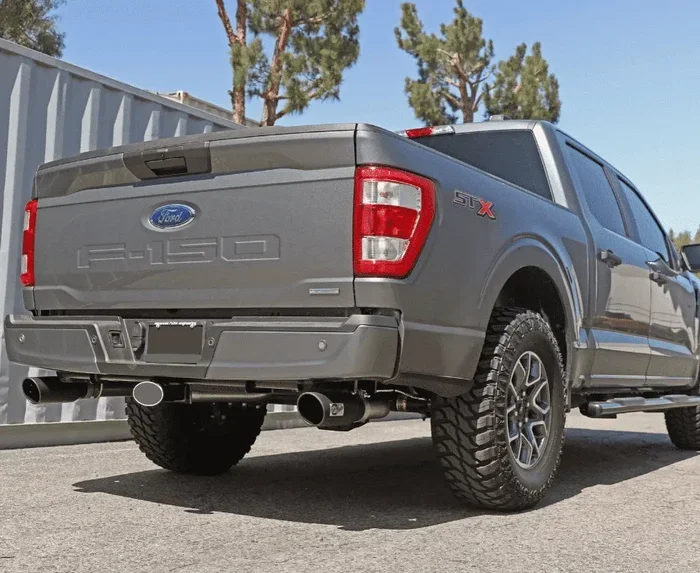
Most Ford F-150 trucks come with a dual exhaust system. This means there are two separate exhaust pipes running from the engine to the rear of the truck. Each pipe has its own catalytic converter. So in a standard setup, you are looking at two converters.
This dual setup is common on the V8 engines, which are the most popular choice for the F-150. The V8 produces more power and therefore more exhaust, so it needs two converters to handle the flow efficiently. If you have a standard cab or supercab F-150 with the 5.0L V8, you will almost certainly have two catalytic converters.
Single Exhaust Variations
Some F-150 models, especially those with smaller engines or base trims, may use a single exhaust system. In this case, there is only one catalytic converter. This is less common but does exist on certain configurations. The 3.3L V6 base engine sometimes comes with a single exhaust setup on lower trims.
It is also worth noting that earlier model years might have different configurations. Older F-150s from the 1990s and early 2000s sometimes had only one converter, especially before stricter emission laws took effect. Always check your specific model year to be sure.
Catalytic Converter Count by Engine Type
Here is a quick look at how the engine type affects the converter count:
- V8 Engines (5.0L, 5.4L, 6.2L): Typically two catalytic converters with a dual exhaust system.
- V6 Engines (3.3L, 3.5L EcoBoost): Usually two converters, though some base models may have one.
- Hybrid Models (PowerBoost): Two converters plus additional emission components for the hybrid system.
For context, engine size and cylinder count matter a lot here. While 3 cylinder cars in India use smaller exhaust systems with fewer components, the F-150’s larger engine demands a more robust setup with multiple converters to handle the increased exhaust volume.
Where Are the Catalytic Converters Located?
Knowing where the converters sit on your F-150 helps with maintenance and troubleshooting. The location is pretty straightforward once you understand the exhaust flow path.
In a dual exhaust setup, each converter is positioned close to the engine. They attach directly to the exhaust manifolds, which are the parts that collect gases from the engine cylinders. From there, the cleaned gases flow through the rest of the exhaust system, past the resonator and muffler, and out the tailpipe.
On most F-150 models, you can spot the converters underneath the truck, near the front. They look like bulging sections of the exhaust pipe. If you look under your F-150, you will likely see two of these sections, one on each side of the exhaust system.
The exact position can shift slightly depending on the model year. Newer F-150s from 2015 onward often have the converters mounted a bit further back than older models. This change came from updated emission designs and heat management improvements.
Why Catalytic Converters Matter for Your F-150
You might be tempted to ignore your catalytic converters, but that would be a mistake. These components are critical for several reasons, and they affect your truck in more ways than you might think.
Emission Standards and Legal Compliance
The United States has strict emission standards set by the EPA. Your F-150 must meet these standards to be street legal. Catalytic converters are the primary component that ensures your truck passes emission tests. Without working converters, your truck would release far too many harmful pollutants into the air.
Different states have different rules. California, for example, has even stricter standards than the federal level. If you live in a state with CARB regulations, your catalytic converter setup must meet those specific requirements. This is something to keep in mind if you ever plan to modify your exhaust system.
Similarly, when looking at vehicles from different markets, emission rules vary widely. Just as 1600cc cars in India must meet Bharat Stage VI emission norms, your F-150 must comply with EPA and state-level standards that govern catalytic converter performance.
Engine Performance and Fuel Economy
A healthy catalytic converter actually helps your engine run better. It maintains proper back pressure in the exhaust system, which affects how efficiently the engine burns fuel. When a converter gets clogged or damaged, you might notice reduced power, worse fuel economy, or rough idling.
Keeping your converters in good shape is one of the simplest ways to protect your F-150’s performance. Regular maintenance and paying attention to warning signs can save you from expensive repairs down the road.
Common Catalytic Converter Problems in Ford F-150
Like any vehicle part, catalytic converters can develop problems over time. The F-150 is no exception. Here are the most common issues owners face.
Signs of a Failing Catalytic Converter
How do you know when something is wrong with your converter? Watch for these warning signs:
- Check Engine Light: This is often the first sign. A faulty converter triggers the OBD-II sensor and lights up your dashboard.
- Rotten Egg Smell: A strong sulfur smell from the exhaust means the converter is not processing gases properly.
- Reduced Fuel Economy: A clogged converter forces the engine to work harder, burning more fuel.
- Loss of Power: You might feel sluggish acceleration, especially at highway speeds.
- Rattling Noise: A broken internal honeycomb structure can cause a rattling sound from underneath the truck.
If you notice any of these symptoms, get your F-150 checked soon. Ignoring a bad converter can lead to bigger problems with your engine and exhaust system.
Catalytic Converter Theft and Prevention
This is a growing problem across the country. Catalytic converters contain precious metals that thieves can sell for quick cash. The Ford F-150 is unfortunately a common target because the converters are easy to access underneath the truck.
Here are some tips to protect your converters:
- Install a Cat Shield: A metal cage or shield over the converter makes it much harder to steal.
- Engrave Your VIN: Etching your vehicle identification number on the converter helps police identify stolen parts.
- Park in Secure Areas: Garage parking or well-lit areas reduce theft risk significantly.
- Use Anti-Theft Bolts: Special bolts that require unique tools make removal much harder for thieves.
Catalytic Converter Cost and Replacement for Ford F-150
If you need to replace a catalytic converter on your F-150, you will want to know what to expect cost-wise. The price can vary quite a bit based on several factors.
How Much Does It Cost to Replace?
On average, replacing one catalytic converter on an F-150 costs between $500 and $2,500 per unit. If you need both replaced, the total can climb to $1,000 to $5,000 or more. The wide range depends on the model year, engine type, and whether you choose OEM or aftermarket parts.
Here is a rough breakdown:
- OEM Converter: More expensive but offers the best fit and performance. Expect $800 to $2,500 per unit installed.
- Aftermarket Converter: More affordable, ranging from $300 to $1,200 per unit installed.
- High-Flow Converter: A popular upgrade for performance-minded owners. Costs $500 to $1,500 per unit.
Labor costs also add to the total. Some converters are easier to access than others, which affects the shop time. On most F-150 models, the job takes about 1 to 2 hours per converter, though it can be longer if the bolts are rusted or hard to reach.
One thing to keep in mind: if your truck is under warranty, the converter might be covered. Ford offers a emissions warranty that often covers catalytic converters for 8 years or 80,000 miles. Check your warranty paperwork before paying for a replacement out of pocket.
Tips for Maintaining Your F-150 Catalytic Converters
Prevention is always better than cure. Taking care of your catalytic converters can extend their lifespan and save you money. Here are some practical tips.
- Use Quality Fuel: Cheap or low-quality fuel can cause buildup that damages the converter over time.
- Fix Engine Misfires Promptly: Unburned fuel entering the exhaust system can overheat and destroy the converter.
- Avoid Short Trips: Frequent short trips prevent the converter from reaching optimal operating temperature, leading to clogging.
- Get Regular Inspections: Have your exhaust system checked during routine oil changes or tire rotations.
- Watch Your Coolant: Coolant leaks into the exhaust can coat and clog the converter. Fix leaks quickly.
These simple habits go a long way. A well-maintained converter can last the lifetime of your truck, which is typically 100,000 to 150,000 miles or more.
Final Thoughts
So, to answer the big question once more: most Ford F-150 trucks have two catalytic converters as part of their dual exhaust system. Some models with smaller engines or older years may have just one. The exact number depends on your engine, trim level, and model year.
Your catalytic converters are essential for clean emissions, legal compliance, and optimal engine performance. Taking care of them should be a priority for any F-150 owner. Regular maintenance, prompt repairs, and theft prevention measures will keep your truck running strong for years to come.
Whether you are a daily driver or a workhorse, understanding your F-150’s exhaust system gives you an edge as an owner. Now you know exactly what to look for, what to expect in terms of costs, and how to keep everything running smoothly. Your truck will thank you for it.
Frequently Asked Questions
Can I drive my Ford F-150 with a bad catalytic converter?
You technically can, but it is not a good idea. A failing converter can cause engine damage over time and will cause your truck to fail emission tests. It can also lead to reduced fuel economy and poor performance. Get it fixed as soon as possible.
How long does a Ford F-150 catalytic converter last?
A well-maintained catalytic converter on an F-150 can last 100,000 miles or more. However, factors like fuel quality, engine health, and driving habits can shorten or extend that lifespan significantly.
Are Ford F-150 catalytic converters expensive to replace?
They can be. The cost typically ranges from $500 to $2,500 per converter. The total expense depends on whether you choose OEM or aftermarket parts and the specific model year of your truck.
Why are Ford F-150 catalytic converters stolen so often?
The F-150 sits high off the ground, making the converters easy to access. The precious metals inside the converter, especially platinum and rhodium, make them valuable to thieves. This is why anti-theft measures are so important.
Does the Ford F-150 Hybrid have a different converter setup?
Yes, the PowerBoost hybrid F-150 has two catalytic converters plus additional emission components specific to the hybrid powertrain. The hybrid system adds complexity to the exhaust and emissions setup compared to standard gasoline models.
Will removing the catalytic converter improve my F-150’s performance?
Some owners report slight performance gains, but the risks far outweigh any benefits. Removing the converter is illegal in most states, will cause your truck to fail emission tests, and can trigger check engine lights and error codes. It is not recommended.