How Does a Truck Hood Latch Work Inside Your Engine Bay
A truck hood latch is a simple but important system that keeps your hood securely closed while you drive. It uses a primary latch, a secondary lock, and a release cable to let you open the hood safely. Understanding how each part works helps you troubleshoot problems and keep your truck running smoothly.
Have you ever popped the hood on your truck and wondered what makes it stay shut? Or maybe your hood latch has been sticking, and you want to understand why. How does a truck hood latch work is a question many truck owners ask, especially when something goes wrong. The truth is, the hood latch system is a cleverly designed mechanism that keeps your engine bay safe and secure while you drive. It may look simple on the outside, but there is a lot happening inside that little metal piece. In this guide, we will break down every part of the hood latch system, explain how it works step by step, and give you practical tips to keep it in great shape. Whether you drive a light-duty pickup or a heavy-duty rig, this article has something useful for you.
Your truck hood latch does more than just hold the hood down. It also works as a safety feature. Without a properly functioning latch, your hood could fly open at highway speeds, which is extremely dangerous. The system relies on a primary latch, a secondary lock, a release cable, and several springs to do its job. Let us take a closer look at each of these parts and how they come together to keep your engine bay protected.
Key Takeaways
- The hood latch system has two main parts: the primary latch and the secondary safety lock that prevent the hood from flying open while driving.
- A hood release cable connects the interior handle to the latch mechanism, allowing you to pop the hood from inside the cab.
- Regular maintenance keeps your hood latch working smoothly, including lubrication, cable adjustment, and visual inspections.
- Common problems include a sticky latch, broken release cable, and worn-out spring tension. Most are easy to fix at home.
- Knowing when to replace your hood latch saves time and money, especially if the latch is visibly damaged or corroded.
- The hood latch works with the hood hinge and striker plate to create a secure seal over the engine bay.
- Diesel trucks and heavy vehicles may have stronger latch systems to handle extra weight and engine vibration.
📑 Table of Contents
- What Is a Truck Hood Latch?
- The Main Components of a Hood Latch System
- How the Hood Latch Mechanism Works Step by Step
- Common Hood Latch Problems and How to Fix Them
- Maintenance Tips for Your Hood Latch
- When to Replace Your Hood Latch
- How the Hood Latch Works With Other Engine Bay Components
- Key Takeaways
- Conclusion
What Is a Truck Hood Latch?
A truck hood latch is the device that holds your hood closed. It sits at the front of the engine bay, usually near the center of the hood. When you pull the release handle inside your truck, the latch releases, and the hood pops up slightly. You then lift the hood fully and secure it with a prop rod or hydraulic strut.
Most truck hood latches are built from metal, often steel or zinc-plated alloy. They are designed to handle vibration, weather, and the weight of the hood itself. A typical latch includes a hood catch, a striker plate, and a locking mechanism. The catch grabs onto the striker plate to keep the hood locked in place.
The latch also works hand in hand with the hood hinge on each side. Together, the hinges and the latch create a secure enclosure over your engine. If any one part fails, the whole system becomes unreliable. That is why understanding how each piece works matters so much.
Why the Hood Latch Matters
Your hood latch is not just a convenience feature. It is a critical safety component. A hood that flies open while driving can block your windshield and cause a serious accident. The latch also protects your engine from debris, rain, and dust. A well-maintained latch keeps everything sealed tight and your engine running at its best.
For trucks that carry heavy loads, the latch system takes on even more stress. The added weight on the rear axle changes how the truck rides, and that vibration can loosen the latch over time. This is why regular inspection is so important for heavy-duty trucks.
The Main Components of a Hood Latch System
Now that you know what a hood latch does, let us look at each part in detail. Understanding the components helps you diagnose problems and talk to your mechanic with confidence.
Primary Hood Latch
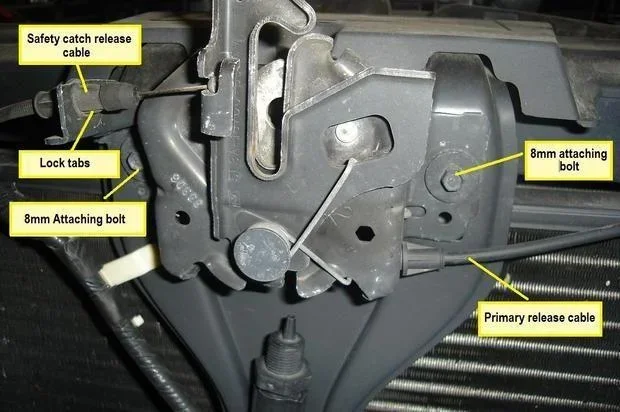
The primary hood latch is the main locking mechanism. It is the part that physically grabs the hood and holds it shut. When you pull the release handle inside the truck, a cable pulls the primary latch open, and the hood lifts.
The primary latch has a few key pieces:
- The latch body: This is the main housing that holds everything together.
- The hook or jaw: This is the part that grabs onto the hood edge.
- The spring: This pushes the latch closed and keeps tension on the hood.
- The lock slot: This is where the latch engages with the striker plate.
Secondary Hood Lock
Most trucks have a secondary hood lock for extra safety. This is a smaller latch that sits slightly off-center from the primary latch. Once you lift the hood a few inches, the secondary lock releases, allowing you to fully open the hood. The secondary lock prevents the hood from accidentally popping open while driving, even if the primary latch shifts.
Some trucks use a hood safety latch that requires a two-step release. You pull the handle once to release the primary latch, and then you move the hood slightly to release the secondary lock. This design adds an extra layer of security.
Hood Release Cable
The hood release cable connects the interior handle to the latch mechanism. When you pull the hood release lever inside your truck, the cable pulls on the latch, releasing it. The cable is usually a steel wire wrapped in a protective rubber or plastic sheath.
Over time, the cable can stretch, fray, or corrode. A stretched cable may feel loose when you pull the handle, and the latch might not release properly. Replacing a hood release cable is usually a simple and affordable repair.
Hood Striker Plate
The hood striker plate is a metal plate mounted on the truck frame, right where the hood latch engages. The latch hooks over the striker plate to lock the hood in place. If the striker plate is bent or worn, the hood may not close properly or may not latch securely.
Hood Prop Rod or Hydraulic Strut
Once the latch releases, you need something to hold the hood open. Older trucks use a hood prop rod, which is a metal rod that you detach and stick into a hole on the hood. Newer trucks often use hydraulic struts that hold the hood open automatically. Both systems work with the latch to give you safe access to the engine bay.
How the Hood Latch Mechanism Works Step by Step
Understanding the step-by-step process of how the hood latch operates makes it much easier to troubleshoot problems. Here is exactly what happens when you open and close your truck hood.
Step 1: Pulling the Release Handle
When you pull the hood release lever inside your truck, it pulls the hood latch cable. The cable runs from the handle under the dashboard down to the latch assembly in the engine bay. This motion applies tension to the latch mechanism.
Step 2: Releasing the Primary Latch
The cable pulls on a lever inside the latch body. This lever pushes against the spring and releases the hook or jaw from the striker plate. The hood is now free to lift slightly. You will usually hear a click or feel the hood drop a few inches.
Step 3: Releasing the Secondary Lock
Once the primary latch opens, you lift the hood a bit more. This motion releases the secondary safety latch. The secondary lock disengages, and the hood is now fully free to open.
Step 4: Securing the Hood Open
You lift the hood all the way and secure it with the prop rod or hydraulic strut. The strut or rod holds the hood in the open position while you work on the engine. When you are done, you remove the prop rod and let the hood close.
Step 5: Closing and Latching the Hood
When you lower the hood, the weight of the hood pushes the latch body forward. The spring inside the latch pulls the hook back into position. The hood settles onto the striker plate, and the primary latch grabs hold. The secondary lock then engages automatically, securing the hood for driving.
For trucks that carry heavy loads, the process is the same, but the latch has to work harder. The added weight puts more pressure on the hood latch assembly, which is why regular maintenance is so important.
Quick Tip: How to Test Your Hood Latch
Here is a simple test you can do at home. Close the hood and try to lift it slightly without pulling the release handle. If the hood moves at all, the latch is not gripping properly. You should also check that the secondary lock holds the hood firmly in place. A loose latch can be a safety hazard, especially at highway speeds.
Common Hood Latch Problems and How to Fix Them
Even the best hood latch systems can develop problems over time. Here are the most common issues truck owners face and what you can do about them.
Sticky or Jammed Hood Latch
A sticky latch is one of the most common problems. It happens when dirt, rust, or grime builds up inside the latch mechanism. The spring may also lose tension over time, making it harder for the latch to close fully.
Fix: Clean the latch with a wire brush and apply a lubricant like white lithium grease or WD-40. If the spring is weak, you may need to replace the entire latch assembly.
Broken Hood Release Cable
The release cable can fray, stretch, or snap over time. If the cable breaks, pulling the interior handle will not release the latch. This is a common problem on older trucks and vehicles that sit outside in harsh weather.
Fix: Inspect the cable regularly for signs of wear. Replace the cable if you notice fraying, kinking, or excessive slack. The replacement is usually straightforward and costs between $15 and $50 for most truck models.
Hood Not Latching Properly
If your hood does not close all the way or seems loose, the striker plate or latch hook may be misaligned. A bent striker plate or a worn latch hook can prevent a secure connection.
Fix: Check the alignment of the latch and striker plate. You can adjust the striker plate by loosening its bolts and repositioning it slightly. If the latch hook is worn or bent, replace the latch assembly.
Hood Latch Not Releasing from Inside
Sometimes the release handle feels loose or does not pop the hood. This usually means the cable has stretched too much or has come disconnected from the latch.
Fix: Trace the cable from the handle to the latch. Check for disconnections, kinks, or damage. Adjust or replace the cable as needed. Make sure the cable end is properly attached to the latch lever.
Corrosion and Rust
Trucks that spend a lot of time outdoors are prone to rust on the latch and striker plate. Corrosion can make the latch stiff or even freeze it in place.
Fix: Remove rust with a wire brush or sandpaper. Apply a rust converter or primer, then lubricate the moving parts. For severe rust, replacing the latch is the best long-term solution.
Expert Insight: The Importance of the Secondary Latch
Many truck owners focus only on the primary latch and forget about the secondary lock. But the secondary latch is what keeps the hood secure during driving. If the secondary lock is worn or broken, your hood could vibrate loose on the highway. Always inspect both latches during your regular maintenance routine.
Maintenance Tips for Your Hood Latch
Keeping your hood latch in good shape is easy if you follow a simple maintenance schedule. A few minutes of care can save you from costly repairs and keep your truck safe.
Lubricate the Latch Regularly
Apply a thin layer of grease to the latch mechanism every 6 months. This keeps the moving parts smooth and prevents rust. Use a lubricant that is rated for metal and can withstand high temperatures.
Check the Release Cable
Inspect the hood release cable at least twice a year. Look for fraying, rust, or slack. A cable that is starting to wear should be replaced before it breaks completely.
Inspect the Striker Plate
Check the striker plate for signs of bending, wear, or corrosion. The plate should be firmly mounted and aligned with the latch hook. Adjust or replace it if needed.
Tighten All Bolts and Fasteners
Vibration from driving can loosen the bolts that hold the latch and striker plate in place. Check these bolts every few months and tighten them as needed. Use a torque wrench to avoid over-tightening.
Common Mistakes to Avoid
- Forcing the hood closed: If the hood does not close easily, do not slam it. This can damage the latch and misalign the striker plate.
- Ignoring a loose cable: A loose release cable may seem minor, but it can lead to a complete failure if not addressed.
- Using the wrong lubricant: Avoid using WD-40 as a long-term lubricant. It is a cleaner and water displacer, not a lasting lubricant. Use white lithium grease or silicone spray instead.
- Skipping the secondary lock check: The secondary lock is just as important as the primary latch. Always inspect both.
When to Replace Your Hood Latch
Sometimes, maintenance is not enough, and you need to replace the entire hood latch. Here are the signs that it is time for a new one.
- The latch is visibly cracked, bent, or broken.
- The hood does not stay closed even when the latch is fully engaged.
- The release cable has broken and the latch cannot be opened from inside.
- The latch spring is weak and the hood does not latch securely.
- Corrosion has damaged the internal mechanism beyond repair.
Replacing a hood latch is a straightforward repair for most truck models. The latch assembly is usually held in place by two or three bolts. You disconnect the release cable, remove the old latch, and install the new one. Make sure to align the striker plate correctly before tightening the bolts.
For trucks that carry heavy loads or tow trailers, consider upgrading to a heavy-duty hood latch. These latches are built with stronger springs and thicker metal to handle extra stress. A heavy-duty latch is especially important for trucks that weigh 000 lbs heavy for a car class vehicles, where the added weight puts more strain on every component.
For diesel truck owners, regular inspection of the hood latch is especially important. Diesel engines vibrate more than gasoline engines, and that vibration can loosen the latch over time. If you are curious about maintenance intervals for diesel vehicles, check out our guide on what counts as high mileage for a diesel engine to understand how mileage affects overall truck maintenance.
Comparison: Standard vs. Heavy-Duty Hood Latches
| Feature | Standard Hood Latch | Heavy-Duty Hood Latch |
|---|---|---|
| Material | Standard steel | Reinforced steel or zinc alloy |
| Spring Tension | Normal | High tension for heavy loads |
| Corrosion Resistance | Basic coating | Galvanized or powder-coated |
| Price Range | $15 – $40 | $40 – $80 |
| Best For | Light-duty and daily driving | Towing, heavy loads, rough terrain |
| Lifespan | 3 – 5 years | 5 – 8 years with proper care |
Choosing the right latch for your truck depends on how you use it. If you use your truck for daily commuting, a standard latch works fine. If you tow trailers or carry heavy loads, a heavy-duty latch is a smart investment.
How the Hood Latch Works With Other Engine Bay Components
The hood latch does not work alone. It is part of a larger system that includes the hood hinge, the hood seal, and the engine bay insulation. All of these parts work together to protect your engine and keep your truck running smoothly.
The hood hinge allows the hood to pivot open and closed. The hinge must be lubricated and free of play for the hood to align properly with the latch. If the hinge is worn, the hood may not sit correctly on the striker plate, which can cause the latch to fail.
The hood seal is a rubber gasket that runs along the edge of the hood. It creates a watertight seal that keeps rain, dirt, and debris out of the engine bay. A damaged hood seal can let water reach the latch mechanism, causing rust and corrosion.
Regularly inspect the hood seal for cracks or gaps. Replace it if you notice any damage. A good hood seal also reduces wind noise while driving, which is a nice bonus.
For truck owners who haul heavy loads, understanding the full weight distribution of your vehicle matters too. When you carry loads that make your truck 000 lbs heavy for a car class, every component from the latch to the suspension feels the difference. Keeping all parts well-maintained ensures your truck stays safe and reliable.
Key Takeaways
- The hood latch system has two main parts: the primary latch and the secondary safety lock that prevent the hood from flying open while driving.
- A hood release cable connects the interior handle to the latch mechanism, allowing you to pop the hood from inside the cab.
- Regular maintenance keeps your hood latch working smoothly, including lubrication, cable adjustment, and visual inspections.
- Common problems include a sticky latch, broken release cable, and worn-out spring tension. Most are easy to fix at home.
- Knowing when to replace your hood latch saves time and money, especially if the latch is visibly damaged or corroded.
- The hood latch works with the hood hinge and striker plate to create a secure seal over the engine bay.
- Diesel trucks and heavy vehicles may have stronger latch systems to handle extra weight and engine vibration.
Conclusion
How does a truck hood latch work is a question with a surprisingly satisfying answer. The system is a well-engineered combination of a primary latch, a secondary lock, a release cable, and a striker plate, all working together to keep your hood secure. Each part plays a vital role, and understanding how they work together helps you maintain your truck better and troubleshoot problems faster.
Regular maintenance goes a long way. Lubricate the latch, check the cable, inspect the striker plate, and never ignore small signs of wear. A little care now can prevent big headaches later. Whether you drive a light-duty pickup or a heavy-duty diesel, your hood latch deserves attention. Take a few minutes today to check your latch system, and you will thank yourself the next time you pop the hood for an oil change or a quick inspection.
Your truck works hard for you. The least you can do is make sure the hood latch keeps it protected. With the right knowledge and a little regular care, your hood latch will keep your engine bay safe for miles to come.
Frequently Asked Questions
How much does it cost to replace a truck hood latch?
A standard hood latch assembly costs between $15 and $40 for most truck models. Heavy-duty latches can range from $40 to $80. If you hire a mechanic, expect to pay an additional $50 to $100 for labor. Many truck owners can replace the latch themselves in under an hour, saving on labor costs entirely.
Can I drive with a broken hood latch?
It is not safe to drive with a broken hood latch. A faulty latch can allow the hood to open while driving, which blocks your view and creates a serious hazard. If your latch is broken, get it repaired before you drive the truck again. A temporary fix is not worth the risk.
Why does my hood latch keep sticking?
A sticking hood latch is usually caused by dirt, rust, or a lack of lubrication. Over time, grime builds up inside the latch mechanism, and the spring loses tension. Clean the latch thoroughly and apply a quality lubricant like white lithium grease. If the problem continues, the spring may need to be replaced.
How often should I inspect my hood latch?
You should inspect your hood latch at least every 6 months. Check for rust, loose bolts, cable wear, and proper latch alignment. If you drive in harsh conditions or haul heavy loads, inspect it more frequently. A quick visual check during your regular oil changes is a great habit to build.
What is the difference between a hood latch and a hood lock?
The hood latch is the main mechanism that holds the hood closed. The hood lock is an additional security feature that prevents someone from opening your hood. Some trucks come with a lock built into the latch, while others have a separate lock that you key into. Both serve different purposes but work together to keep the hood secure.
Do diesel trucks need a different hood latch than gasoline trucks?
Diesel trucks often need stronger hood latches because diesel engines are heavier and vibrate more. The added vibration can loosen standard latches over time. While the basic mechanism is the same, diesel trucks benefit from heavy-duty latches with stronger springs and better corrosion resistance. Always check your truck manual for the recommended latch specifications.