Different Types of Rear View Mirrors Explained in Detail
Understanding the different types of rear view mirrors can make your driving safer and more comfortable. From basic manual mirrors to advanced auto-dimming and convex options, each mirror type serves a unique purpose. This guide breaks down every mirror type so you can choose the best one for your vehicle and driving style.
Have you ever checked your rear view mirror and thought, “I wish I could see more back there”? You are not alone. Your car mirrors play a huge role in keeping you safe on the road. Yet many drivers never think about the different types of rear view mirrors available. Most people just accept whatever came with their vehicle and move on.
The truth is, choosing the right mirror can make a big difference. It can help you spot dangers faster. It can reduce eye strain during long drives. And it can give you the confidence to change lanes or park in tight spaces. This guide covers every type of mirror you should know about.
Whether you drive a small sedan or a large truck, there is a mirror setup that fits your needs. We will walk through each option in simple terms. By the end, you will know exactly which mirrors work best for your car and your driving habits. Let us get started.
Key Takeaways
- Manual mirrors are simple and affordable: They work without any power source and are easy to replace.
- Auto-dimming mirrors reduce glare at night: These mirrors use special technology to darken automatically when bright lights hit them.
- Convex mirrors give a wider view: They help you see more of the road behind you and reduce blind spots.
- Towing mirrors are essential for hauling: They extend your field of vision when you pull a trailer or caravan.
- Heated mirrors prevent fogging: They keep your mirrors clear in humid or cold weather conditions.
- Power mirrors offer convenience: You can adjust them from inside the car with the push of a button.
- Proper adjustment is key: Even the best mirror won’t help if it’s not positioned correctly.
📑 Table of Contents
- Why Your Rear View Mirror Matters More Than You Think
- The Most Common Types of Rear View Mirrors
- Specialty Mirrors for Specific Driving Needs
- How to Choose the Right Mirror for Your Vehicle
- Installing and Adjusting Your Rear View Mirror Properly
- Common Mistakes and How to Avoid Them
- Expert Insights on Choosing and Using Rear View Mirrors
- Key Takeaways
Why Your Rear View Mirror Matters More Than You Think
Most drivers glance at their mirror without thinking. It becomes a habit. But the rear view mirror is one of the most important safety tools in your car. It gives you a clear line of sight behind you. Without it, you would have to turn around while driving. That is dangerous and against traffic laws in most places.
Good mirrors help you stay aware of your surroundings. They let you see cars approaching from behind. They help you judge distances when braking. They also play a role in parking and merging. A well-positioned mirror can prevent accidents before they happen.
Not all mirrors are created equal, though. Different vehicles need different mirror setups. A compact car has different mirror needs than a full-size truck. Your driving style matters too. If you often drive at night, you need a mirror that handles glare well. If you tow a trailer, you need extra-wide coverage.
The right mirror setup also reduces fatigue. When you do not have to strain your neck to see behind you, driving feels easier. Over long road trips, this makes a real difference. You stay more relaxed and more focused on the road ahead.
The Most Common Types of Rear View Mirrors
Let us look at the mirrors you will find in most cars today. Each type has its own strengths. Some are basic and affordable. Others come with advanced features. Knowing what each one does helps you make a smart choice.
Manual Rear View Mirrors
The manual rear view mirror is the most basic type. It is a simple glass mirror mounted on the windshield. You adjust it by hand using a lever or knob on the bottom. These mirrors have been around for decades and they work very well.
Manual mirrors are lightweight and inexpensive. They do not need any electricity to function. This makes them reliable and low maintenance. If the power goes out or a fuse blows, your manual mirror still works perfectly.
However, manual mirrors do have limitations. They do not adjust automatically. You have to reach over and move them by hand. And they do not reduce glare from headlights behind you at night. For basic driving needs, though, a manual mirror gets the job done just fine.
Best for: Budget-friendly vehicles, daily commuters, and drivers who prefer simplicity.
Power Rear View Mirrors
A power rear view mirror works the same way as a manual one. But it uses an electric motor to adjust the angle. You control it with a switch or button inside the car. No need to reach over and fiddle with a lever.
Power mirrors are very convenient. You can fine-tune the angle with precision. Most cars today come with power mirrors as standard. They are especially helpful for drivers who share a vehicle. Each driver can quickly adjust the mirror to their preferred position.
These mirrors still need electricity to work. If your car battery dies, the mirror will not adjust. But the mirror itself will still reflect, so it is not a total loss. Overall, power mirrors add a nice layer of comfort to your daily drive.
Best for: Daily drivers, families sharing a vehicle, and anyone who values convenience.
Auto-Dimming Rear View Mirrors
An auto-dimming rear view mirror is a game changer for night driving. It uses special sensors to detect bright light from behind. When a strong beam hits the mirror, it darkens automatically. This reduces glare and keeps your vision clear.
The technology behind these mirrors is clever. There are sensors on the front and back of the mirror. They measure the light difference and adjust the mirror tint. The process happens in seconds. You do not have to do anything at all.
Auto-dimming mirrors can really improve safety. Glare from headlights behind you can be blinding. It takes your eyes off the road for a dangerous moment. With an auto-dimming mirror, you stay focused and alert. Many luxury cars include this feature standard. But you can also buy aftermarket auto-dimming mirrors and install them yourself.
Best for: Night drivers, people who frequently drive on highways, and anyone bothered by headlight glare.
Electrochromic Rear View Mirrors
Electrochromic mirrors are a step up from standard auto-dimming mirrors. They use a special gel layer between two glass panels. When electricity passes through the gel, it changes tint. The more light it detects, the darker the mirror becomes.
These mirrors offer a smooth and gradual dimming effect. Unlike basic auto-dimming mirrors, they do not switch between on and off. The tint adjusts continuously. This gives you a more natural viewing experience.
Electrochromic mirrors are often found in premium vehicles. They are more expensive than standard auto-dimming mirrors. But they work very well and last a long time. If you want the best glare reduction available, this is the way to go.
Best for: Premium car owners, frequent highway drivers, and anyone who wants top-tier glare control.
Specialty Mirrors for Specific Driving Needs
Standard rear view mirrors work great for everyday driving. But sometimes you need something different. Specialty mirrors are designed for specific situations. They solve problems that regular mirrors cannot handle. Let us look at some of the most popular options.
Convex and Wide-Angle Rear View Mirrors
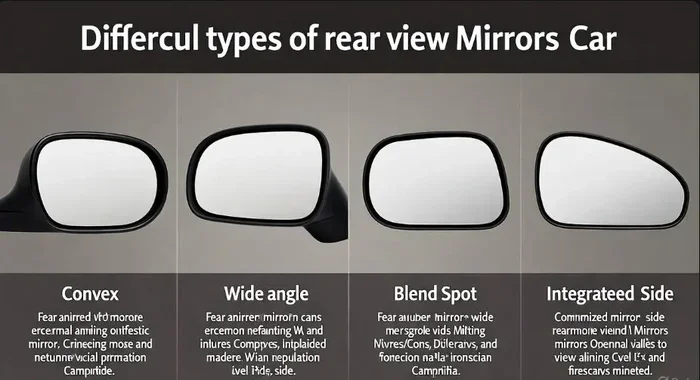
A convex mirror curves outward. This shape gives you a much wider view than a flat mirror. You can see more of the road behind you. Blind spots shrink significantly with a convex mirror.
Many cars come with a small convex mirror built into the corner of the side mirror. This is often called a blind spot mirror. It helps you see cars that are next to you but out of your main mirror view.
Convex mirrors do have one downside. They make objects look smaller and farther away than they really are. You need to keep this in mind when judging distance. But for overall awareness, a convex mirror is very helpful.
Best for: City driving, tight parking situations, and drivers who want extra blind spot coverage.
Towing and Extended Rear View Mirrors
If you pull a trailer, a boat, or a caravan, standard mirrors will not cut it. Towing mirrors are wider and longer. They extend your field of vision to see the full length of your trailer.
These mirrors come in different styles. Some clip onto your existing side mirrors. Others replace the entire mirror housing. Electric towing mirrors are very popular because they fold in when you are not towing. This keeps them safe on the highway.
Towing mirrors are essential for safe towing. Without proper mirror coverage, you cannot see what is behind your trailer. This makes lane changes and merging very risky. If you tow regularly, investing in good towing mirrors is a must.
Best for: Truck owners, RV drivers, boat haulers, and anyone who tows frequently.
Heated Rear View Mirrors
Heated mirrors have a small heating element built into the mirror glass. When you turn them on, the heat melts frost and fog. Your mirror stays clear even in cold or humid weather.
This feature is very common in cars from cold climates. But it is useful anywhere moisture can build up on your mirror. A foggy mirror is just as dangerous as a dirty one. Heated mirrors solve this problem quickly and easily.
Most heated mirrors activate with a button or automatically when the defrost is on. They use very little power and are very reliable. If you live in a place with cold mornings, heated mirrors are a welcome addition.
Best for: Cold climate drivers, frequent rain or fog drivers, and anyone who has dealt with foggy mirrors.
Signal Mirror and Blind Spot Mirrors
Signal mirrors contain a small indicator light built into the mirror housing. When you turn on your turn signal, the mirror lights up. This gives extra visibility to drivers behind you.
Blind spot mirrors are small convex mirrors that attach to your side mirrors. They give you a wider angle to see vehicles in your blind spots. These are especially helpful on multi-lane highways.
Both of these mirror types add an extra layer of safety. They are affordable and easy to install. Even if your car does not come with them, you can add them aftermarket with no hassle.
Best for: Safety-conscious drivers, highway commuters, and anyone who wants extra visibility.
How to Choose the Right Mirror for Your Vehicle
With so many options, picking the right mirror can feel overwhelming. But it does not have to be. A few simple factors will guide your decision.
First, think about your driving conditions. Do you drive mostly in the city or on highways? Do you drive at night often? Your answers will tell you which features matter most.
Second, consider your vehicle type. A small car has different mirror needs than a large SUV or truck. The size and shape of your car will determine what fits best.
Third, think about your budget. Manual mirrors are the cheapest. Power mirrors cost a bit more. Auto-dimming and electrochromic mirrors are the most expensive. Set a budget and find the best option within it.
Here is a quick comparison of the most popular mirror types:
| Mirror Type | Glare Reduction | Adjustment | Price Range | Best For |
|---|---|---|---|---|
| Manual Mirror | None | Hand lever | Low | Budget vehicles |
| Power Mirror | None | Electric switch | Low to Medium | Daily convenience |
| Auto-Dimming Mirror | Yes | Automatic | Medium | Night driving |
| Electrochromic Mirror | Yes | Automatic (gradual) | High | Premium vehicles |
| Convex/Wide-Angle Mirror | None | Hand or electric | Low to Medium | Blind spot coverage |
| Towing Mirror | None | Electric or manual | Medium to High | Towing and hauling |
| Heated Mirror | None | Automatic or button | Low to Medium | Cold weather driving |
Take your time when choosing. The right mirror setup makes every drive safer and more comfortable. Do not settle for less than what your driving needs require.
Installing and Adjusting Your Rear View Mirror Properly
Even the best mirror will not help if it is not set up correctly. Proper installation and adjustment are essential. Here is how to get it right.
For a standard rear view mirror, place it on the windshield. The mirror should sit behind the headrest. You should be able to see the entire rear window through it. Adjust the angle so you get the clearest view possible.
For side mirrors, the goal is to minimize blind spots. Lean your head against the driver’s window. Adjust the left mirror so you can just barely see the side of your car. Then lean to the right and adjust the right mirror the same way. This technique gives you the best coverage.
If you have power mirrors, use the control switch to make fine adjustments. Take your time and check your view from the driver’s seat. Small changes can make a big difference in what you can see.
For towing mirrors, extend them fully and angle them to capture the trailer. Make sure they do not vibrate or shake while driving. A loose towing mirror can be more dangerous than no mirror at all.
Quick tip: Re-check your mirror adjustment whenever someone else drives your car. A different seating position changes your view. A quick adjustment takes only a few seconds and can improve safety.
Common Mistakes and How to Avoid Them
Even experienced drivers make mirror mistakes. Here are the most common ones and how to fix them.
Mistake 1: Not adjusting mirrors before driving. Many drivers get in the car and start driving without checking their mirrors. Always adjust before you move. It takes five seconds and it could save your life.
Mistake 2: Relying only on mirrors. Mirrors have blind spots. Always check over your shoulder before changing lanes. Mirrors are a tool, not a replacement for looking around.
Mistake 3: Ignoring dirty or damaged mirrors. A cracked or dirty mirror distorts your view. Clean your mirrors regularly. Replace them if they are damaged. A small repair can prevent a big accident.
Mistake 4: Using the wrong mirror type for your needs. If you tow a trailer, standard mirrors are not enough. If you drive at night, a manual mirror may cause too much glare. Match your mirror to your driving habits.
Mistake 5: Forgetting to maintain power mirrors. Power mirrors have motors and wiring. Check them periodically. If the adjustment becomes jerky or unresponsive, get them checked by a mechanic.
Avoiding these simple mistakes keeps you and others safe on the road. Good mirror habits are one of the easiest ways to improve your driving.
Expert Insights on Choosing and Using Rear View Mirrors
Automotive experts agree that mirrors are one of the most overlooked safety features in a car. According to safety professionals, proper mirror positioning can reduce blind spots by up to 90 percent. That is a huge improvement from a poorly adjusted setup.
Experts also recommend upgrading your mirrors over time. As your driving needs change, your mirror requirements change too. A new job that involves longer commutes might call for an auto-dimming mirror. A new hobby like towing might require specialized towing mirrors.
Another expert tip is to keep your mirrors clean. Dust, pollen, and rain can all reduce mirror clarity. A quick wipe with a microfiber cloth before a long drive can make a noticeable difference. It is a small habit with big safety benefits.
Finally, experts suggest checking your mirror condition regularly. Mirrors can degrade over time. The coating can wear off. The housing can crack. Catching these issues early prevents bigger problems down the road.
Key Takeaways
- Manual mirrors are simple and reliable: They need no power and work in any condition.
- Power mirrors add convenience: Electric adjustment makes it easy to find the perfect angle.
- Auto-dimming mirrors reduce night glare: They automatically darken when bright lights hit them.
- Convex mirrors expand your view: They help you see more and reduce blind spots.
- Towing mirrors are essential for hauling: They give you the coverage you need when pulling a trailer.
- Heated mirrors prevent fogging: They keep your view clear in cold and humid conditions.
- Proper adjustment is critical: Even the best mirror will not work if it is not positioned correctly.
The world of rear view mirrors has come a long way. From basic manual glass to smart auto-dimming technology, there is a mirror for every driver. The key is understanding your needs and choosing accordingly. Whether you need a simple replacement or a full upgrade, the right mirror makes a real difference.
Take a moment today to check your own mirrors. Are they clean? Are they properly adjusted? Do they meet your driving needs? Small changes can lead to safer, more comfortable drives every single day.
Stay safe out there. Your mirrors are your eyes on what is happening behind you. Treat them well and they will look out for you.
Frequently Asked Questions
What is the difference between a manual and a power rear view mirror?
A manual rear view mirror is adjusted by hand using a lever or knob on the bottom. A power rear view mirror uses an electric motor and is adjusted with a button or switch inside the car. Power mirrors offer more convenience and precision, but manual mirrors are simpler and more reliable since they do not need electricity.
Do auto-dimming rear view mirrors really work?
Yes, auto-dimming rear view mirrors work very well. They use sensors to detect bright light from behind and automatically darken the mirror glass. This reduces glare from headlights at night and helps you stay focused on the road. Most drivers who switch to auto-dimming mirrors say they notice an immediate improvement in night driving comfort.
Can I add a convex mirror to my existing side mirrors?
Yes, you can easily add a convex blind spot mirror to your existing side mirrors. These small mirrors clip on or stick on with adhesive. They give you a wider viewing angle and help reduce blind spots. They are affordable and simple to install, making them a great upgrade for any vehicle.
How often should I replace my rear view mirror?
You should replace your rear view mirror if it is cracked, damaged, or the coating has worn off. Even if it looks fine, consider replacing it if the auto-dimming feature stops working or the mirror becomes loose. Regular inspection helps ensure your mirror is always providing a clear and accurate view behind you.
Are towing mirrors worth the investment?
Absolutely. If you regularly tow a trailer, boat, or caravan, towing mirrors are essential. Standard mirrors do not provide enough coverage to see the full length of your load. Towing mirrors extend your field of vision and make lane changes, merging, and parking much safer. They are a worthwhile investment for any towing enthusiast.
What is an electrochromic mirror and how is it different from auto-dimming?
An electrochromic mirror uses a special gel layer that changes tint gradually based on light levels. A standard auto-dimming mirror switches between light and dark states. Electrochromic mirrors offer a smoother, more gradual adjustment. They are typically found in premium vehicles and provide the most refined glare reduction experience available.
=== CONCLUSION ===
Understanding the different types of rear view mirrors explained in this guide empowers you to make better choices for your vehicle. From simple manual mirrors to advanced electrochromic options, each type serves a specific purpose. Your driving habits, vehicle type, and budget all play a role in finding the right fit.
Take the time to evaluate your current mirror setup. Ask yourself if you could benefit from better glare control, wider coverage, or easier adjustment. Small upgrades can lead to big improvements in safety and comfort. The right rear view mirror keeps you connected to what is happening behind you at all times.
Drive safe, stay aware, and never underestimate the power of a well-chosen mirror. Your eyes on the road behind you matter more than you might think.