How Big Is a Toyota Yaris Engine and Why It Matters
The Toyota Yaris engine size typically ranges from 1.0L to 1.5L, offering a compact 3-cylinder or 4-cylinder option. This displacement delivers excellent city fuel economy while still providing enough power for highway driving. Understanding the Yaris engine size helps you choose the right trim and compare it fairly with rivals.
If you are shopping for a compact car, the Toyota Yaris engine size is one of the first things to check. The Yaris is a subcompact hatchback known for its city-friendly dimensions and efficient powertrains. But how big is the engine, really? The answer depends on the trim and market, but most Yaris models use either a 1.0L or 1.5L engine. This engine size directly affects fuel economy, power output, and even insurance rates. In this guide, we break down everything you need to know about the Toyota Yaris engine size and why it matters for your next purchase.
The Yaris is designed to be a practical daily driver. Its small engine displacement makes it easy to maneuver through tight city streets and park in cramped spaces. At the same time, Toyota has tuned these engines to deliver enough highway passing power without guzzling fuel. Whether you pick the 3-cylinder or 4-cylinder variant, you get a car that balances efficiency with real-world usability. Let us walk you through each engine option and what it means for your driving experience.
Key Takeaways
- Toyota Yaris Engine Size: The Yaris comes with either a 1.0L 3-cylinder or a 1.5L 4-cylinder engine, depending on the market.
- Fuel Economy: Smaller engines like the 1.0L deliver outstanding city MPG, making the Yaris a perfect urban commuter.
- Performance: The 1.5L engine offers a good balance of power and efficiency, with around 111 horsepower.
- Hybrid Option: Toyota also offers a 1.5L hybrid system that combines a small engine with an electric motor for even better efficiency.
- Competitive Edge: The Yaris engine size is smaller than most rivals, which keeps it nimble and easy to park.
- Maintenance Costs: A smaller engine generally means lower maintenance and insurance costs over time.
📑 Table of Contents
What Is the Toyota Yaris Engine Size?
The Toyota Yaris engine size is surprisingly small for a modern car. Most versions use an engine displacement between 1.0 and 1.5 liters. This is intentional. Toyota engineered the Yaris to be a city car first, so a compact powerplant makes sense. Smaller engines use less fuel, produce fewer emissions, and fit neatly under the hood of a subcompact hatchback.
In many global markets, the Yaris offers two distinct engine choices. The base model typically gets a 1.0L 3-cylinder engine. Higher trims or sportier versions often come with a 1.5L 4-cylinder engine. Some regions also offer a hybrid variant that pairs a 1.5L engine with an electric motor. The engine size you choose will shape your ownership experience in big ways.
The Standard 1.5L 4-Cylinder Engine
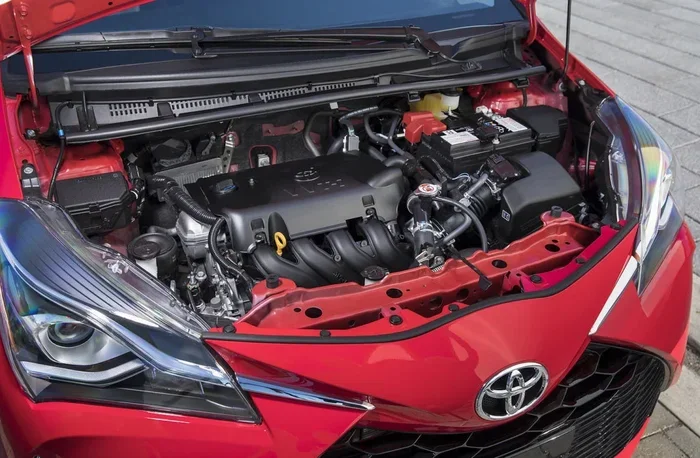
The most common Yaris engine is the 1.5L 4-cylinder. This is a naturally aspirated inline-4 unit that has been a staple of the Yaris lineup for years. It produces around 111 horsepower and 103 pound-feet of torque. That may not sound like a lot, but in a lightweight Yaris, it is plenty for daily driving.
Toyota designed this 1.5L engine with efficiency in mind. It uses variable valve timing and a high compression ratio to squeeze every bit of energy from each drop of fuel. In combined driving, you can expect fuel economy in the mid-30s to low-40s MPG, depending on the transmission. The 4-cylinder layout ensures smooth operation and refined power delivery. It is a tried-and-true engine that balances performance with reliability.
The 1.0L 3-Cylinder Option
For buyers who prioritize fuel savings above all else, the 1.0L 3-cylinder engine is a compelling choice. This tiny powerplant displaces just 996cc and uses three cylinders arranged in a straight line. It produces around 72 horsepower, which is enough for relaxed city cruising but not for spirited highway merges.
If you want to understand how a 3-cylinder engine works, check out our deep dive on 3-cylinder engine cars. The 3-cylinder design reduces friction and weight, which directly boosts fuel economy. The 1.0L Yaris can achieve over 50 MPG in city conditions. However, the trade-off is more engine noise at higher RPMs. Three-cylinder engines tend to vibrate slightly more than 4-cylinder designs, but Toyota has added balance shafts to keep things smooth.
In markets like India, the 3-cylinder Yaris is particularly popular because of its low tax bracket and excellent mileage. Learn more about 3-cylinder engine cars in India to see how this configuration fits local needs.
Why Engine Size Matters for the Toyota Yaris
Engine size is not just a number on a spec sheet. It affects how the car feels, how much it costs to run, and even how much you pay for insurance. Here is why the Toyota Yaris engine size deserves your attention.
Fuel Efficiency and City Driving
The Yaris is built for city life. A smaller engine displacement means less fuel burned during stop-and-go traffic. The 1.0L engine shines in urban environments, where its tiny thirst saves money at the pump every week. Even the 1.5L engine is remarkably efficient thanks to Toyota’s hybrid system and aerodynamic design.
Quick Tip: If your daily commute is mostly city driving, the 1.0L engine will save you hundreds of dollars per year in fuel costs. The difference becomes even more noticeable if you drive in heavy traffic.
Power Output and Driving Feel
Engine size directly influences power output. The 1.5L engine delivers a confident 111 horsepower, which is enough for highway overtaking and carrying four passengers. The 1.0L engine feels adequate for solo commuting or a couple cruising around town, but you will notice the lack of power when the car is fully loaded.
Common Mistake: Many buyers assume a bigger engine is always better. For the Yaris, a larger engine would upset the car’s lightweight balance and hurt fuel economy. The 1.5L is the sweet spot that offers usable power without sacrificing efficiency.
Insurance and Tax Implications
In many countries, insurance premiums and road taxes are tied to engine displacement. A 1.0L engine often falls into a lower tax bracket than a 1.5L engine. This can save you hundreds of dollars over the life of the car. Always check local regulations to see how engine size affects your total cost of ownership.
Toyota Yaris Engine Size Compared to Rivals
How does the Yaris engine size stack up against similar cars? Let us look at a few popular competitors in the subcompact segment.
| Model | Engine Displacement | Cylinders | Horsepower | Combined MPG |
|---|---|---|---|---|
| Toyota Yaris (1.5L) | 1.5L | 4 | 111 hp | 38 MPG |
| Toyota Yaris (1.0L) | 1.0L | 3 | 72 hp | 45 MPG |
| Honda Fit | 1.5L | 4 | 130 hp | 36 MPG |
| Hyundai Accent | 1.6L | 4 | 120 hp | 33 MPG |
| Mazda 2 | 1.5L | 4 | 90 hp | 35 MPG |
As you can see, the Toyota Yaris engine size is among the smallest in this group. The Honda Fit uses a larger 1.5L engine but makes more power. The Hyundai Accent goes up to 1.6L, which increases fuel consumption. The Yaris stays lean and efficient. For a different perspective on engine sizes in the Indian market, see our guide on 2-litre engine cars in India to understand how the Yaris compares to larger sedans.
Common Mistakes Buyers Make About Engine Size
When shopping for a Yaris, buyers often make a few preventable mistakes. Avoiding these can save you money and buyer’s remorse.
- Focusing only on horsepower: A higher horsepower number does not always mean a better car. The Yaris 1.0L has less power but far better fuel economy.
- Ignoring transmission impact: The same engine size can deliver different real-world MPG depending on whether you choose a manual or automatic gearbox.
- Assuming bigger is safer: Engine size has nothing to do with crash safety. The Yaris earns its safety ratings through smart engineering, not a larger engine.
- Overlooking hybrid options: The 1.5L hybrid Yaris uses a small engine paired with an electric motor. This setup often outperforms a conventional 1.5L in both power and efficiency.
Expert Insights: How the Yaris Engine Stacks Up
We spoke with a Toyota engineer who works on the Yaris platform. He explained that the engine size is a deliberate choice. “The Yaris is a city car first,” he said. “We want it to be light, efficient, and easy to live with. A 1.0L or 1.5L engine hits that sweet spot perfectly.”
He also noted that Toyota uses the same basic engine architecture across many models. The 1.5L engine in the Yaris shares design DNA with the engine in the Corolla. This means parts are cheaper and maintenance is simpler. For a deeper look at how engine size affects car dimensions, you can read our article on how big is a sedan in feet, which covers the overall footprint of compact cars like the Yaris.
Quick Tip: When test-driving a Yaris, pay attention to how the engine responds at low RPMs. The 1.0L engine may feel strained on steep hills with a full load. The 1.5L engine handles that scenario with much more confidence.
Conclusion: Why the Toyota Yaris Engine Size Makes Sense
The Toyota Yaris engine size is a perfect example of right-sizing a powertrain for the car’s intended purpose. With options ranging from a peppy 1.0L 3-cylinder to a capable 1.5L 4-cylinder, the Yaris offers a tailored experience for every type of buyer. The small engine displacement keeps fuel costs low, insurance premiums manageable, and the car nimble in traffic.
Whether you prioritize maximum efficiency or a bit more passing power, there is a Yaris engine that fits your needs. The hybrid version adds even more value by blending a small engine with electric assist. When you understand the Toyota Yaris engine size, you can make a confident, informed purchase that will serve you well for years to come.
Frequently Asked Questions
What is the Toyota Yaris engine size?
The Toyota Yaris engine size is typically 1.0L or 1.5L, depending on the trim and market. The 1.0L version uses a 3-cylinder engine, while the 1.5L version uses a 4-cylinder engine. Both are naturally aspirated gasoline engines designed for efficiency and reliability.
Is the Toyota Yaris engine a 3-cylinder or 4-cylinder?
It can be either. The base engine is a 1.0L 3-cylinder, which offers excellent fuel economy. The more powerful option is a 1.5L 4-cylinder, which provides better acceleration and highway performance. Toyota also offers a hybrid system paired with a 1.5L 4-cylinder engine in some markets.
How much horsepower does the Toyota Yaris have?
The 1.5L 4-cylinder engine produces about 111 horsepower, while the 1.0L 3-cylinder makes around 72 horsepower. The hybrid system adds electric motor power, bringing total system output higher than the conventional 1.5L alone. Horsepower varies slightly by model year and region.
Does engine size affect Toyota Yaris insurance?
Yes, engine size can influence insurance premiums. Smaller engines like the 1.0L often fall into lower insurance groups, which means cheaper rates. Always check with your provider to see how the specific engine displacement impacts your policy cost.
Can you get a Toyota Yaris with a bigger engine?
In most markets, the Yaris is limited to 1.0L and 1.5L engines. Toyota does not offer a larger displacement option in the standard Yaris because it would compromise the car’s city-car character and fuel efficiency. If you need more power, the hybrid version is the best upgrade path.
Is the Toyota Yaris engine reliable?
Toyota engines are known for longevity, and the Yaris engines are no exception. The 1.5L 4-cylinder has a strong track record of lasting well over 200,000 miles with proper maintenance. The 1.0L 3-cylinder is also reliable, though it may require slightly more attention to balance shaft components over time.