Gas Tank Size of Toyota Tacoma and How Far It Can Go
Gas Tank Size of Toyota Tacoma is an essential topic that provides valuable insights.
Key Takeaways
- Understanding Gas Tank Size of Toyota Tacoma: Provides essential knowledge
📑 Table of Contents
- Gas Tank Size of Toyota Tacoma: Overview by Generation
- How Far Can a Toyota Tacoma Go on a Full Tank?
- Factors That Affect Tacoma Fuel Range
- Quick Tips to Maximize Your Tacoma’s Fuel Range
- Common Mistakes That Reduce Tacoma Fuel Economy
- How the Tacoma Compares to Competitors
- Should You Upgrade Your Tacoma’s Fuel Tank?
- Key Takeaways
Gas Tank Size of Toyota Tacoma: Overview by Generation
The Toyota Tacoma has been around since 1995. Over the years, Toyota has updated the truck in many ways. The fuel tank size is one thing that has changed across generations. Here is a quick look at how the Tacoma gas tank has evolved.
First Generation (1995-2004)
The original Tacoma came with a 15.9-gallon fuel tank. This was a solid size for a compact pickup truck. It gave drivers a decent range without making the truck too heavy. Most first-generation Tacomas got around 19 to 21 MPG combined.
Back then, the Tacoma was available with a 2.4-liter four-cylinder or a 3.4-liter V6. Both engines used the same tank size. The Toyota Tacoma range on a full tank was roughly 300 miles on the highway.
Second Generation (2005-2015)
Toyota bumped up the fuel capacity for the second-generation Tacoma. The standard tank grew to 20.2 gallons. This was a big improvement. It gave owners more range and fewer trips to the gas station.
The 2005 to 2015 Tacoma offered a 4.0-liter V6 as the main engine option. This engine was reliable and got decent fuel economy. With a 20-gallon tank and 20 MPG, the Tacoma fuel range was around 400 miles.
Third Generation (2016-Present)
The current Tacoma has a 20-gallon fuel tank across most trims. Toyota kept the tank size consistent throughout this generation. This makes it easy to compare models and plan your fuel budget.
The third-gen Tacoma comes with either a 2.7-liter four-cylinder or a 3.5-liter V6 twin-turbo engine. The four-cylinder gets better fuel economy, while the V6 offers more power. Both engines share the same 20-gallon tank.
| Generation | Years | Tank Size | Engine Options |
|---|---|---|---|
| First Gen | 1995-2004 | 15.9 gallons | 2.4L I4, 3.4L V6 |
| Second Gen | 2005-2015 | 20.2 gallons | 4.0L V6 |
| Third Gen | 2016-Present | 20.0 gallons | 2.7L I4, 3.5L V6 |
How Far Can a Toyota Tacoma Go on a Full Tank?
This is the question most Tacoma owners care about. The answer depends on several factors. Let us break it down by trim and engine type.
Tacoma MPG by Engine
The engine you choose has a big impact on fuel economy. Here is how the two main engine options compare:
- 2.7-liter four-cylinder: This engine delivers about 20 MPG combined. It is the fuel-efficient choice for daily driving.
- 3.5-liter V6 twin-turbo: This engine is more powerful but uses more fuel. It gets around 17 to 19 MPG combined.
With a 20-gallon tank, the four-cylinder can go about 400 miles on the highway. The V6 twin-turbo might get you closer to 360 miles. These numbers are estimates based on EPA ratings. Your actual Tacoma gas mileage will vary.
TRD and Off-Road Trim Fuel Economy
Toyota offers several special trims for the Tacoma. The TRD Off-Road, TRD Pro, and Limited trims are popular choices. But do they affect fuel economy?
Yes, they do. These trims often come with larger wheels, heavier suspension, and extra equipment. All of that adds weight and wind resistance. The result is slightly lower Tacoma MPG compared to the base SR trim.
Here is a quick comparison of estimated range by trim:
- SR (2.7L I4): About 400 miles
- SR5 (2.7L I4): About 390 miles
- TRD Off-Road (3.5L V6): About 340 miles
- TRD Pro (3.5L V6): About 330 miles
- Limited (3.5L V6): About 335 miles
As you can see, the engine choice matters more than the trim. But the extra accessories on TRD models do take a toll. If you want maximum range, the four-cylinder base trims are the way to go.
Factors That Affect Tacoma Fuel Range
Your Tacoma’s actual range will not always match the EPA estimates. Several real-world factors play a role. Understanding these can help you get the most out of every tank of gas.
Driving Habits
How you drive matters a lot. Aggressive acceleration and hard braking waste fuel. Smooth, steady driving is the best way to improve Tacoma gas mileage. Try to maintain a constant speed on the highway. Use cruise control when it is safe to do so.
Towing and Payload
The Tacoma is a workhorse. Many owners use it for towing trailers, boats, or equipment. Towing significantly reduces fuel economy. A heavy load on the tailgate also affects range. If you tow often, expect your Tacoma fuel range to drop by 20 to 30 percent.
Terrain and Driving Conditions
Highway driving is more fuel-efficient than city driving. Stop-and-go traffic burns more gas. Mountain roads and steep inclines also reduce range. If you live in a hilly area or do a lot of city driving, plan for more frequent fuel stops.
Tire Pressure and Maintenance
Underinflated tires create more rolling resistance. This makes your engine work harder and use more fuel. Keeping your tires at the recommended pressure is an easy way to boost Tacoma gas mileage. Regular oil changes and air filter replacements also help the engine run efficiently.
Weather and Temperature
Cold weather reduces fuel economy. The engine takes longer to warm up. Winter gasoline also has slightly less energy than summer fuel. If you live in a cold climate, your range will be lower in the winter months.
Quick Tips to Maximize Your Tacoma’s Fuel Range
Want to get the most miles out of every tank? Here are some proven tips that actually work:
- Keep your speed steady. The sweet spot for most Tacomas is between 45 and 65 mph. Going faster increases wind resistance and burns more fuel.
- Remove unnecessary weight. Clean out your truck bed. Every extra pound means your engine works a little harder.
- Use the right octane fuel. The Tacoma does not require premium gas. Using regular unleaded saves you money without hurting performance.
- Check your tire pressure monthly. Properly inflated tires improve fuel economy and safety.
- Plan your trips wisely. Combine errands into one trip. A warmed-up engine runs more efficiently than a cold one.
- Use cruise control on the highway. It helps maintain a steady speed and reduces fuel consumption.
Expert Insight: Many Tacoma owners report getting better fuel economy than the EPA estimates. This is especially true for drivers who follow the tips above. One common mistake is assuming the factory fuel gauge is always accurate. Trust your trip meter more than the gauge needle. This helps you plan refueling stops before you get stranded.
Common Mistakes That Reduce Tacoma Fuel Economy
Some habits silently drain your gas tank. Avoiding these mistakes can save you money at the pump:
- Idling too long. Letting your truck idle for extended periods wastes fuel. If you are parked for more than a minute, turn off the engine.
- Ignoring the check engine light. A faulty sensor or oxygen sensor can throw off your fuel mixture. If your check engine light comes on after filling up, it could be related to fuel quality. Sometimes bad gas can cause a P0171 code, which affects how your engine burns fuel.
- Using the wrong fuel type. Premium gas will not improve performance in a standard Tacoma. Stick with regular unleaded.
- Neglecting maintenance. Old spark plugs, dirty fuel injectors, and clogged air filters all reduce efficiency.
- Roof racks when not in use. Roof racks create drag even when empty. Remove them when you are not using them.
One thing to keep in mind: if you ever experience fuel delivery issues after a fill-up, make sure your gas cap is sealed properly. A loose cap can trigger fuel vapor leaks and even cause your car not to start after getting gas in rare cases.
How the Tacoma Compares to Competitors
The Tacoma faces competition from several other mid-size trucks. Here is how the fuel tank and range compare:
- Chevrolet Colorado: 18.5-gallon tank, similar MPG. Slightly less range than the Tacoma.
- Ford Ranger: 18.0-gallon tank, comparable fuel economy. A bit less range on a full tank.
- Honda Ridgeline: 18.5-gallon tank, better MPG in some trims. Competitive range.
The Tacoma holds its own in the mid-size truck segment. Its 20-gallon tank gives it a slight edge in range. Combined with Toyota’s reputation for reliability, the Tacoma remains a top choice for truck buyers who care about fuel efficiency.
Should You Upgrade Your Tacoma’s Fuel Tank?
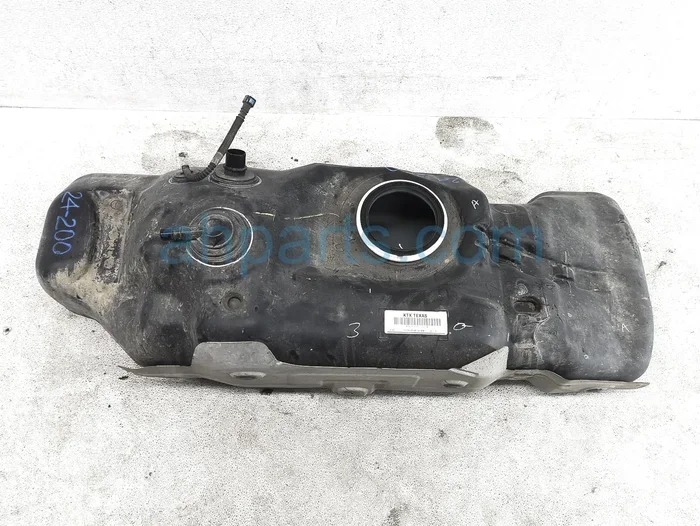
Some Tacoma owners wonder if they can install a larger fuel tank. The answer is yes, but with caveats. Aftermarket fuel tank upgrades are available. They can increase your range by several hundred miles.
However, bigger tanks add weight to the truck. This can offset some of the fuel savings. Aftermarket tanks can also be expensive. Before you invest, consider whether you really need the extra range. For most daily drivers, the stock 20-gallon tank is more than enough.
If you do decide to upgrade, make sure you use a reputable brand. Poorly installed fuel tanks can cause leaks or safety issues. Always consult a qualified mechanic before making any modifications to your fuel system.
Expert Insight: If you frequently drive long distances in remote areas, an upgraded fuel tank can be a lifesaver. But for most Tacoma owners, the stock tank provides plenty of range. Focus on improving fuel economy through driving habits and maintenance first.
Key Takeaways
- The standard Tacoma gas tank holds 20 gallons in the third generation (2016-present), while older models ranged from 15.9 to 20.2 gallons.
- Tacoma fuel range on a full tank can be between 330 and 400 miles, depending on the engine and driving conditions.
- The 2.7-liter four-cylinder engine delivers better fuel economy than the 3.5-liter V6 twin-turbo.
- TRD and off-road trims tend to have slightly lower MPG due to added weight and accessories.
- Driving habits, towing, and maintenance all significantly affect your real-world Tacoma MPG.
- Regular maintenance like oil changes, tire pressure checks, and air filter replacements helps maximize your fuel range.
- The Tacoma holds its own against competitors like the Colorado, Ranger, and Ridgeline in terms of fuel capacity and range.
Frequently Asked Questions
What is the gas tank size of a Toyota Tacoma?
The gas tank size of Toyota Tacoma depends on the model year. The current third-generation Tacoma (2016 and newer) has a 20-gallon fuel tank. Second-generation models from 2005 to 2015 came with a 20.2-gallon tank. First-generation models from 1995 to 2004 had a 15.9-gallon tank.
How far can a Toyota Tacoma go on a full tank?
With a 20-gallon tank and an average of 20 MPG, the Toyota Tacoma range on a full tank is about 400 miles. The four-cylinder engine can go farther than the V6 twin-turbo. Highway driving also gives you more range than city driving.
Does the Tacoma TRD Pro have a bigger gas tank?
No, the Tacoma TRD Pro uses the same 20-gallon fuel tank as other trims. However, its heavier accessories and off-road equipment can reduce fuel economy. This means the TRD Pro may not go as far on a full tank compared to the base SR model.
Can bad gas affect my Tacoma’s fuel system?
Yes, bad gas can cause problems. Contaminated fuel can lead to engine issues and error codes. For example, bad gas can cause a P0171 code, which indicates a lean fuel mixture. If you suspect bad fuel, have your system inspected by a qualified mechanic as soon as possible.
Why does my Tacoma have less range than the EPA estimates?
Several factors reduce real-world range. Towing, hauling heavy loads, aggressive driving, and cold weather all lower fuel economy. Stop-and-go city driving also uses more gas than highway cruising. Your actual Tacoma gas mileage will vary based on how and where you drive.
Can I add an aftermarket fuel tank to my Tacoma?
Yes, aftermarket fuel tank upgrades are available for the Tacoma. These can increase your range significantly. However, they add weight and cost. For most owners, the stock 20-gallon tank is sufficient. If you frequently drive long distances in remote areas, an upgrade might be worth considering.
=== CONCLUSION ===
The gas tank size of Toyota Tacoma is one of the best in the mid-size truck class. With a standard 20-gallon tank, the Tacoma offers a Tacoma fuel range that can comfortably cover 330 to 400 miles on a single fill-up. Whether you drive the fuel-efficient four-cylinder or the powerful V6 twin-turbo, there is a Tacoma configuration that fits your needs.
Your real-world range depends on many factors. Driving habits, towing, terrain, and maintenance all play a role. But with the right approach, you can maximize every mile. Follow the tips in this guide, keep up with regular maintenance, and you will get the most out of your Tacoma’s fuel tank.
Understanding your truck’s fuel capacity is not just about numbers. It is about freedom. It is about knowing you can hit the road and go as far as your adventure takes you. The Toyota Tacoma delivers on that promise. Trust the truck, plan your fuel stops, and enjoy every mile of the journey.