Does Toyota Camry Have a Tire Pressure Monitoring System
Yes, the Toyota Camry comes equipped with a tire pressure monitoring system that alerts drivers when tire pressure drops below safe levels. The TPMS is a standard safety feature across most Camry trims, helping you maintain proper tire pressure for better fuel efficiency and road safety. In this guide, we will walk you through everything you need to know about the Toyota Camry tire pressure monitoring system, from how it works to common problems and fixes.
Owning a Toyota Camry comes with many benefits. It is a reliable sedan that offers comfort, fuel efficiency, and a smooth ride. But one question many Camry owners ask is whether their vehicle has a tire pressure monitoring system. The short answer is yes. The Toyota Camry tire pressure monitoring system is a standard safety feature that helps you keep your tires in good shape.
Your tire pressure light is one of the most important dashboard warning lights you will ever see. When it comes on, it means something is off with your tire pressure. Ignoring it can lead to poor fuel economy, uneven tire wear, and even dangerous driving conditions. Understanding how your TPMS works can save you time, money, and stress.
In this article, we will cover everything you need to know about the tire pressure monitoring system on the Toyota Camry. We will look at how it works, common problems, how to reset it, and tips for keeping your tires in great shape. Whether you drive a 2010 Camry or a 2024 model, this guide has you covered.
Key Takeaways
- Standard Feature: The Toyota Camry has a factory-installed tire pressure monitoring system on most trims, making it easy to stay aware of your tire health at all times.
- Warning Light Matters: A TPMS warning light on your dashboard means one or more tires may be underinflated, and you should check them right away.
- Easy Reset: Resetting the tire pressure light on a Camry is a simple process that can often be done at home with the steering wheel controls.
- False Alerts Happen: Cold weather and temperature changes can trigger false TPMS alerts, so it is important to understand what your sensor is actually telling you.
- Fuel and Safety: Keeping your Camry tires at the recommended pressure improves fuel efficiency, handling, and overall safety on the road.
- Sensor Replacement: If your tire pressure sensor fails or the battery dies, you will need a replacement to keep the system working properly.
📑 Table of Contents
What Is a Tire Pressure Monitoring System?
A tire pressure monitoring system, or TPMS, is an electronic system in your vehicle. It keeps track of the air pressure inside your tires. When the pressure drops below a safe level, the system sends a warning to your dashboard. This alert usually appears as a yellow or red light shaped like a horseshoe with an exclamation mark in the center.
The purpose of a tire pressure monitor is simple. It helps you avoid driving on underinflated tires. Underinflated tires can cause several serious problems. They reduce your fuel efficiency. They wear out faster on the outside edges of the tread. They also increase the risk of a blowout, which can be very dangerous at high speeds.
How TPMS Works
Most modern vehicles, including the Toyota Camry, use a direct TPMS. Each tire has a small sensor inside the valve stem. This sensor measures the actual air pressure inside the tire. It sends a wireless signal to your car’s computer. If the pressure drops by about 25 percent below the recommended level, the TPMS light turns on.
Some older vehicles use an indirect TPMS. This system does not have physical sensors. Instead, it uses the wheel speed sensors from your anti-lock braking system. It compares the rotational speed of each wheel. A tire with low pressure has a smaller rolling radius. This means it spins faster than the other tires. The system detects this difference and triggers the warning light.
Direct vs. Indirect TPMS Comparison
| Feature | Direct TPMS | Indirect TPMS |
|---|---|---|
| Sensors | Physical sensors inside each tire valve stem | No physical sensors; uses wheel speed data |
| Accuracy | High; provides exact pressure readings | Lower; estimates pressure based on wheel rotation |
| Cost | Higher; sensors need battery replacement | Lower; no separate sensors to maintain |
| Found On | Most newer Toyota Camry models | Older vehicle models |
| Maintenance | Sensor battery replacement every 5-7 years | Minimal; relies on existing ABS sensors |
The Toyota Camry uses a direct TPMS on most trims. This gives you precise readings for each individual tire. You can see exactly which tire is low and how low it is. This makes it much easier to address the problem quickly.
How the Toyota Camry Tire Pressure Monitoring System Works
The Toyota Camry tire pressure monitoring system is designed to keep you safe on the road. It is a standard feature across nearly all Camry trims and model years. The system continuously monitors the air pressure in all four tires and the spare tire on some models.
When you start your Camry, the TPMS performs a self-check. The warning light should flash for a few seconds and then turn off. If the light stays on, it means the system has detected a problem. If the light flashes repeatedly, it usually means there is a malfunction in the TPMS itself.
TPMS Across Different Camry Trims
The Toyota Camry has been equipped with TPMS for many years now. Here is a general breakdown of how the system appears across different trims:
- L and LE trims: Come with standard TPMS. The basic system monitors all four tires and alerts you when pressure is low.
- SE and XSE trims: Include the same TPMS as the base trims but may have additional display features on the multi-information display.
- TRD and Hybrid trims: Feature the full TPMS suite with detailed pressure readings available on the dashboard display.
No matter which Camry trim you drive, the tire pressure warning system works the same way. It keeps you informed about your tire health at all times.
When Was TPMS Added to the Camry?
The Tire Pressure Monitoring System became mandatory for all passenger vehicles sold in the United States starting in 2008. This was a federal requirement under the TREAD Act. The Toyota Camry began including TPMS well before this mandate. Most Camry models from the mid-2000s onward came with a factory-installed monitoring system.
If you own an older Camry from the early 2000s, it may not have TPMS. However, you can have an aftermarket system installed. These are widely available and relatively affordable. They provide the same basic function of alerting you to low tire pressure.
How to Check Tire Pressure on a Toyota Camry
Checking your tire pressure regularly is one of the best things you can do for your Camry. The TPMS will alert you when pressure is low, but it is still a good idea to check manually. This helps you catch slow leaks early and keep your tires in top condition.
Locating the Recommended Tire Pressure
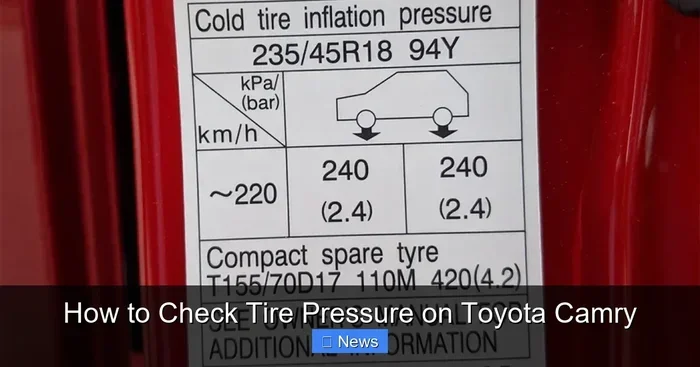
Every Toyota Camry has a recommended tire pressure listed in the owner manual. You can also find this information on a sticker inside the driver’s door jamb. The sticker shows the recommended tire inflation pressure for both front and rear tires. For most Camry models, the recommended pressure is between 32 and 35 PSI.
Do not rely on the number printed on the tire itself. That number is the maximum pressure the tire can handle, not the recommended pressure for your vehicle. Always use the figure listed on the door jamb sticker or in the owner manual.
Using a Tire Pressure Gauge
A tire pressure gauge is a simple and inexpensive tool. You can find one at any auto parts store for under ten dollars. Here is how to use it:
- Remove the valve cap from the tire.
- Press the gauge firmly onto the valve stem.
- Read the pressure displayed on the gauge.
- Compare the reading to the recommended pressure.
- Add air if the pressure is low. Let air out if it is too high.
- Replace the valve cap when you are done.
Make it a habit to check your tire pressure at least once a month. Temperature changes can affect your tire pressure. A tire can lose about one PSI per month naturally. So regular checks help you stay ahead of any problems.
Common TPMS Problems in Toyota Camry
The tire pressure monitoring system on the Toyota Camry is generally very reliable. However, like any electronic system, it can sometimes have issues. Here are the most common problems Camry owners encounter with their TPMS.
Faulty Tire Pressure Sensor
The most common TPMS problem is a faulty sensor. Each tire has a small sensor inside the valve stem. Over time, these sensors can fail. They may stop sending signals to your car’s computer. When this happens, the TPMS light stays on even if your tire pressure is fine.
Sensor failure can happen for several reasons. Exposure to road salt and debris can damage the sensor. The rubber seal around the sensor can degrade over time. In some cases, the sensor simply reaches the end of its lifespan. Most TPMS sensors last between five and ten years. When a sensor fails, you will need a tire pressure sensor replacement to restore proper function.
Battery Failure in the Sensor
Each tire pressure sensor has a small battery inside. This battery powers the sensor and its wireless transmitter. Unfortunately, these batteries are not replaceable in most designs. When the battery dies, you need to replace the entire sensor.
Battery failure is the most common reason for TPMS sensor replacement. The battery typically lasts around five to seven years. If your Camry is getting older, there is a good chance one or more of your sensors may need to be replaced soon. You can usually get a warning that the sensor battery is low before it dies completely.
Temperature Changes and False Alerts
Cold weather can cause your tire pressure light to come on, even if your tires are fine. This happens because air pressure inside a tire decreases when the temperature drops. A sudden drop in temperature of 10 degrees Fahrenheit can reduce tire pressure by about one PSI.
If you notice your TPMS light coming on during cold mornings, it is often a false alert. Simply checking and topping off your tire pressure usually fixes the problem. Once the tires warm up from driving, the pressure increases and the light may turn off on its own.
How to Reset the TPMS Light on a Toyota Camry
If you have fixed a low tire pressure issue, the next step is to reset the system. The tire pressure reset process on a Toyota Camry is straightforward. In most cases, you can do it yourself without any special tools.
Step-by-Step Reset Process
Here is how to reset the TPMS light on your Camry:
- Make sure all tires are at the recommended pressure. Use your tire pressure gauge to verify.
- Start the engine and let the car idle for a few minutes.
- Locate the TPMS reset button. On most Camry models, it is located beneath the steering column on the left side of the dashboard.
- Press and hold the reset button until the TPMS light blinks three times.
- Release the button and start driving. The system will recalibrate as you drive.
- After driving for about 20 minutes at speeds above 20 mph, the light should turn off.
If the light does not turn off after resetting, there may be a deeper issue. You should check all tires again and make sure none are actually low. Sometimes a very slow leak can cause the light to come back on shortly after a reset.
When to See a Professional
If you have tried resetting the system and the light keeps coming back, it is time to visit a professional. A certified mechanic can run a diagnostic scan to identify the exact problem. They can check each sensor individually and determine if any need to be replaced.
Some owners also ask how to get other warning lights off, like the security indicator light. If your TPMS light is on and you are also dealing with other dashboard warnings, learning how to get the security indicator light to turn off can help you address multiple warning lights at once. While the TPMS light is specific to tire pressure, other dashboard lights may require different troubleshooting steps.
For Camry owners who are concerned about their key fob and remote systems, it is worth noting that the TPMS operates independently of your key fob. Even if you are wondering whether you can start your car without the remote key, the tire pressure monitoring system will continue to function normally. Many Camry owners ask if they can start their car without the remote key, and the answer is yes, in most cases the key fob is not required for the TPMS to work. Similarly, if you ever find yourself in a situation where you need to start your car without the key fob, the TPMS will still monitor your tire pressure regardless of your key fob status.
Tips for Maintaining Proper Tire Pressure on Your Camry
Keeping your Toyota Camry tires at the right pressure is one of the simplest things you can do. It improves safety, saves fuel, and extends the life of your tires. Here are some practical tips to help you maintain proper tire pressure on your Camry.
Why Tire Pressure Matters for Fuel Efficiency
Underinflated tires create more rolling resistance. This means your engine has to work harder to keep the car moving. The result is lower fuel efficiency. According to the Department of Energy, keeping your tires properly inflated can improve your gas mileage by up to three percent. That may not sound like a lot, but it adds up over time.
On the other hand, overinflated tires can also cause problems. They wear out more quickly in the center of the tread. They provide a harsher ride and reduce traction on wet roads. Always aim for the recommended tire pressure listed on your door jamb sticker.
Quick Tips for Tire Maintenance
Here are some quick tips to keep your Camry tires in excellent condition:
- Check your tire pressure monthly. Do not wait for the TPMS light to come on. Regular checks help you catch slow leaks early.
- Check tire pressure when the tires are cold. Driving heats up the air inside the tires and increases the pressure reading. Check before you drive or wait at least three hours after driving.
- Inspect your tires for visible damage. Look for cuts, bulges, or nails embedded in the tread. These can cause slow leaks or sudden blowouts.
- Rotate your tires regularly. Follow the rotation schedule in your Camry owner manual. This promotes even wear and extends tire life.
- Keep a tire pressure gauge in your glove box. This way, you always have a reliable tool on hand for quick checks.
- Do not forget the spare tire. Some Camry models have a full-size spare. Check its pressure periodically as well.
Taking care of your tires is an important part of tire maintenance. It is simple, costs very little, and pays off in safety and savings. Your Toyota Camry is a long-lasting vehicle, and proper tire care helps ensure it stays that way for years to come.
Conclusion
The Toyota Camry is equipped with a reliable tire pressure monitoring system that keeps you informed about your tire pressure at all times. This TPMS feature is a standard safety component across nearly all Camry trims and model years. It helps you maintain proper tire pressure for better fuel efficiency, safer driving, and longer tire life.
If your tire pressure light comes on, do not ignore it. Check your tire pressure right away and address any issues. Whether it is a simple slow leak or a faulty sensor, addressing the problem quickly keeps you and your passengers safe. Regular tire pressure checks and proper maintenance go a long way in keeping your Camry running smoothly.
Understanding your Toyota Camry tire pressure monitoring system empowers you to take better care of your vehicle. With the tips and information in this guide, you now have the knowledge to handle common TPMS issues, reset the warning light, and keep your tires in great shape. Stay proactive, stay safe, and enjoy the ride.
Frequently Asked Questions
How do I know if my Toyota Camry has TPMS?
Most Toyota Camry models from 2008 onward come with a factory-installed tire pressure monitoring system. You can confirm this by looking for the TPMS warning light on your dashboard. When you start your car, the light should flash briefly and then turn off. If you do not see this light, check your owner manual or look for the TPMS symbol on the instrument cluster.
Can I drive with the TPMS light on?
It is not recommended to drive with the TPMS light on. The light means one or more of your tires may be underinflated. Driving on low tires reduces fuel efficiency, causes uneven tire wear, and increases the risk of a blowout. Check your tire pressure as soon as possible and inflate to the recommended level.
How much does it cost to replace a tire pressure sensor on a Camry?
The cost of a tire pressure sensor replacement varies depending on the model year and where you go for service. On average, you can expect to pay between 50 and 100 dollars per sensor. Some dealerships and tire shops may offer bundled pricing if you need multiple sensors replaced at once.
How often should I check my Camry’s tire pressure?
You should check your tire pressure at least once a month. Temperature changes, slow leaks, and normal air loss can all affect your tire pressure over time. Making it a monthly habit helps you catch problems early and keeps your tires in great condition.
What should my Toyota Camry tire pressure be?
The recommended tire pressure for most Toyota Camry models is between 32 and 35 PSI. However, the exact figure depends on your specific model year and trim level. Always check the sticker on the driver’s door jamb or your owner manual for the precise recommended pressure for your vehicle.
Can cold weather trigger the TPMS light?
Yes, cold weather can trigger the TPMS light even if your tires are properly inflated. When the temperature drops, the air inside your tires contracts, which reduces the pressure. A sudden temperature drop of just 10 degrees Fahrenheit can lower tire pressure by about one PSI. If the light comes on in cold weather, check your pressure and add air if needed.