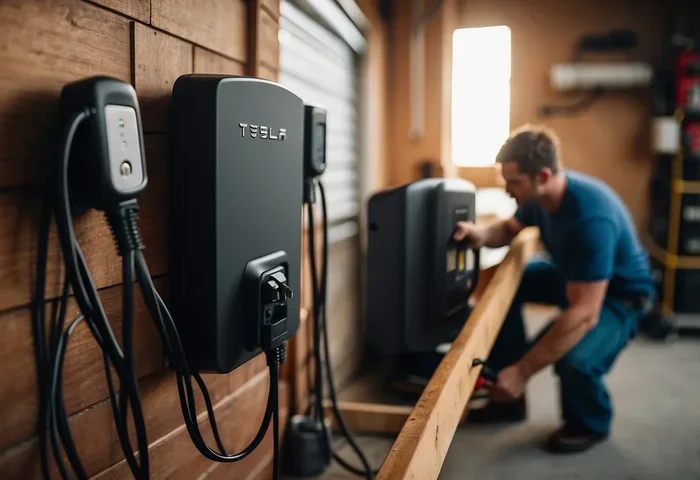
Can I Use a Dryer Outlet to Charge a Tesla at Home
Yes, you can use a dryer outlet to charge a Tesla at home. A standard 240-volt dryer outlet provides enough power for Level 2 charging, adding roughly 20-30 miles of range per hour. You will need a Tesla Mobile Connector and possibly an adapter, but the setup is straightforward and much cheaper than installing a dedicated Tesla Wall Connector.
So you just got a Tesla. Or maybe you are thinking about buying one. Either way, the first question that probably popped into your head is: Can I use a dryer outlet to charge a Tesla at home? The short answer is yes. But there is more to it than just plugging in a cord and walking away.
Charging your Tesla from a dryer outlet is one of the most practical and affordable home charging options available. You do not need a fancy Tesla Wall Connector right away. You do not need to tear up your garage or hire an expensive electrician for a major upgrade (though you should still have a pro take a look). A 240-volt dryer outlet gives you Level 2 charging, which is significantly faster than a regular wall socket.
In this guide, we will walk through everything you need to know. We will cover what kind of outlet you need, how fast it charges, what equipment to buy, safety tips, and whether this setup makes sense for your situation. By the end, you will know exactly what to do.
Key Takeaways
- A dryer outlet works: A 240-volt NEMA 14-50 outlet can charge your Tesla safely at home.
- Charging speed is moderate: Expect 20-30 miles of range per hour, depending on your Tesla model.
- You need the right equipment: A Tesla Mobile Connector and sometimes an adapter are essential.
- Safety matters: Always have a licensed electrician inspect your electrical panel and wiring.
- It is cheaper than a Wall Connector: Using an existing dryer outlet saves hundreds of dollars on installation.
- Not all dryer outlets are the same: NEMA 14-50 is ideal, but older NEMA 10-30 outlets need upgrading.
📑 Table of Contents
- What Is a Dryer Outlet and Why Does It Matter for Tesla Charging?
- Can You Charge a Tesla from a Dryer Outlet?
- What You Need to Set Up Dryer Outlet Charging
- Safety Considerations and Installation Tips
- Dryer Outlet vs. Tesla Wall Connector: Which Is Better?
- Is Using a Dryer Outlet Worth It for Tesla Charging?
- Final Thoughts on Charging Your Tesla with a Dryer Outlet
What Is a Dryer Outlet and Why Does It Matter for Tesla Charging?
Before we get into the details, let us talk about what a dryer outlet actually is. Most homes in the United States have a 240-volt dryer outlet in the laundry room. This is the big three-pronged plug that your clothes dryer uses. It looks nothing like the standard wall outlets you use for lamps and phones.
The reason this matters for Tesla charging is simple: Tesla vehicles charge fastest on 240-volt power. A regular 120-volt wall outlet (the kind you plug a phone into) is too slow for practical daily use. It might add 3-5 miles of range per hour. That is fine for an overnight emergency, but not for regular charging.
Understanding 240-Volt Power
A 240-volt outlet delivers twice the electrical power of a standard 120-volt outlet. Think of it like a wider highway versus a narrow road. More power flows through, which means your Tesla charges faster. The dryer outlet is one of the most common sources of 240-volt power already installed in homes.
There are a few different types of 240-volt outlets you might find in a home:
- NEMA 14-50: The most common modern dryer outlet. It has four prongs and handles up to 50 amps. This is the gold standard for EV charging.
- NEMA 10-30: An older three-prong dryer outlet. It works but is less safe and may need an upgrade.
- NEMA 14-30: Used for some older dryers and ranges. It handles up to 30 amps, which is still usable for Tesla charging.
If your home has a NEMA 14-50 outlet, you are in great shape. This is the same outlet type used by many home charging stations for electric vehicles.
Can You Charge a Tesla from a Dryer Outlet?
The direct answer is yes. You can absolutely charge a Tesla using a dryer outlet. Tesla vehicles come with a Mobile Connector in the trunk. This cable is designed to plug into various outlet types, including a 240-volt dryer outlet.
Here is how it works in practice. You take the Tesla Mobile Connector out of your car. You plug the large round connector into the dryer outlet. The other end plugs into your Tesla. The car’s onboard charger converts the AC power from the outlet into DC power that charges the battery.
How Tesla Charging Works at Home
Tesla uses two main levels of home charging. Level 1 uses a standard 120-volt household outlet. It is the slowest option and mostly useful for plugging in overnight during a long trip. Level 2 uses 240-volt power, which is what your dryer outlet provides.
When you plug your Tesla into a dryer outlet, the car automatically detects the voltage and adjusts the charging rate. You do not need to do anything special. The Tesla recognizes the outlet and manages the power flow safely.
One thing to keep in mind: your Tesla’s charging adapter may need a small NEMA adapter to fit the dryer outlet properly. Tesla sells these adapters separately, and they are inexpensive. If you are unsure which adapter you need, check the Tesla website or ask your dealer.
Charging Speed: What to Expect
How fast does a dryer outlet actually charge a Tesla? That depends on a few factors. The main ones are your Tesla model, the amperage of your outlet, and the condition of your home’s wiring.
Here is a general breakdown of charging speeds on a 240-volt dryer outlet:
- Tesla Model 3 (Standard Range): Adds about 25-30 miles of range per hour.
- Tesla Model 3 (Long Range): Adds about 20-28 miles of range per hour.
- Tesla Model Y: Adds roughly 20-30 miles of range per hour.
- Tesla Model S/X: Adds about 15-25 miles of range per hour due to larger batteries.
For most people, this is more than enough. If you plug in your Tesla every night, you will wake up with a full or nearly full battery every morning. A typical American drives about 30-40 miles per day. A dryer outlet easily covers that.
What You Need to Set Up Dryer Outlet Charging
Setting up dryer outlet charging for your Tesla is simpler than you might think. You do not need a lot of expensive equipment. Here is what you need to get started.
Tesla Mobile Connector
Every new Tesla comes with a Mobile Connector kit. This is the flexible charging cable that fits into different outlet types. It is the most affordable way to charge your Tesla at home. The Mobile Connector supports both 120-volt and 240-volt outlets, so it works with your dryer outlet right out of the box.
If you misplaced your Mobile Connector, you can buy a replacement directly from Tesla. They also sell different NEMA adapters for various outlet configurations. The adapter kit makes it easy to connect to dryer outlets, RV outlets, and other 240-volt sockets.
Checking Your Electrical Panel
Before you start charging, it is smart to check your electrical panel. The panel is the metal box usually found in your garage, basement, or utility room. It contains circuit breakers that control the power flow to different parts of your home.
Look for a double-pole breaker labeled for your dryer outlet. A typical dryer circuit uses a 30-amp or 50-amp breaker. If your panel has a 50-amp breaker on a NEMA 14-50 outlet, you are all set for fast Tesla charging. If it is a 30-amp breaker, charging will be a bit slower but still perfectly usable.
One important thing to know: older homes may have electrical panels that are not rated for continuous high-draw loads. Tesla charging pulls power steadily for several hours. If your panel is old or undersized, an electrician can help you upgrade it safely.
Do You Need a Dedicated Circuit?
Ideally, yes. A dedicated circuit means the dryer outlet is the only thing drawing power from that breaker. This prevents overheating and ensures consistent charging speed. In many homes, the dryer outlet is already on its own dedicated circuit, which is perfect for Tesla charging.
If other things share the same circuit, you might experience tripped breakers or slower charging. An electrician can easily add a dedicated line for your Tesla if needed.
Safety Considerations and Installation Tips
Charging your Tesla from a dryer outlet is safe when done correctly. But electricity is serious business, and you should take a few precautions. Here are the most important safety tips to keep in mind.
Have a Licensed Electrician Inspect Your Setup
This is the single most important tip I can give you. Before you plug your Tesla into a dryer outlet, have a licensed electrician look at your wiring. They will check the outlet, the circuit, and the panel to make sure everything is up to code and safe for continuous use.
An electrician can also tell you if your outlet needs any upgrades. For example, a NEMA 10-30 outlet (an older three-prong type) does not have a ground wire. This is a safety risk for any appliance, and especially for an EV charging setup. Upgrading to a NEMA 14-50 outlet is a smart move.
Common Mistakes to Avoid
Here are some common mistakes people make when setting up dryer outlet charging:
- Using an extension cord: Never use an extension cord for Tesla charging. It creates a fire hazard and can damage the charger.
- Ignoring warning signs: If the outlet gets warm, the plug feels loose, or you see scorch marks, stop using it immediately and call an electrician.
- Overloading the circuit: Do not run your dryer and charge your Tesla on the same circuit at the same time.
- Skipping the adapter: Make sure you have the correct NEMA adapter. Forcing a plug into the wrong outlet can cause damage.
Quick Tips for Safe Charging
- Always inspect the outlet and plug before each charging session.
- Keep the charging area dry and well-ventilated.
- Use the Tesla app to monitor charging status remotely.
- Set a charging limit if you do not need a full battery every morning.
Dryer Outlet vs. Tesla Wall Connector: Which Is Better?
Now that you know a dryer outlet works, you might wonder if you should upgrade to a Tesla Wall Connector. Both options have pros and cons. Let us compare them side by side.
| Feature | Dryer Outlet | Tesla Wall Connector |
|---|---|---|
| Cost | Free (if outlet exists) | ~$500 plus installation |
| Charging Speed | Up to 30 miles per hour | Up to 44 miles per hour |
| Installation | No new wiring needed | Requires professional install |
| Portability | Uses Mobile Connector | Fixed wall-mounted unit |
| Aesthetics | Bulky adapter setup | Clean, sleek design |
| Best For | Temporary or budget charging | Daily primary charging |
If you already have a working 240-volt dryer outlet, it makes sense to start there. It costs nothing extra and gets you charging right away. Once you are comfortable with your Tesla and understand your daily driving habits, you can always upgrade to a Tesla Wall Connector later.
For many people, the dryer outlet setup works perfectly fine as a long-term solution. You charge every night, wake up with a full battery, and never worry about range. The Wall Connector is nice, but it is not a requirement for a great Tesla ownership experience.
Is Using a Dryer Outlet Worth It for Tesla Charging?
The answer depends on your situation. If you already have a 240-volt dryer outlet in your home, it is absolutely worth using it to charge your Tesla. You save money on installation, you get reasonable charging speeds, and you can start driving your electric vehicle right away.
On the other hand, if your home does not have a dryer outlet, it may not make sense to install one just for Tesla charging. In that case, a Tesla Wall Connector installation might be a better investment. A licensed electrician can install a dedicated EV charging circuit that is faster and safer than adapting a dryer outlet.
Cost is another factor to consider. Tesla vehicles are available in a range of prices. The Tesla Model 3 and Model Y are more affordable options that fit within many budgets. When you factor in the savings from home charging versus public charging, owning a Tesla becomes even more economical over time.
One thing I want to emphasize: do not let the lack of a Wall Connector stop you from buying a Tesla. The Mobile Connector and a dryer outlet are a proven, reliable charging combination used by thousands of Tesla owners every day.
Also, keep in mind that Tesla continues to expand its Supercharger network across the country. Even if your home setup is not perfect, you always have backup options for longer trips. The combination of home dryer outlet charging and public Superchargers gives you the best of both worlds.
Final Thoughts on Charging Your Tesla with a Dryer Outlet
Using a dryer outlet to charge your Tesla at home is practical, affordable, and entirely doable. You get Level 2 charging speeds that easily handle daily driving needs. You save on installation costs. And you get to enjoy the convenience of plugging in your Tesla every night without complicated setup.
The key is to make sure your outlet and wiring are safe and up to standard. Have an electrician take a look, use the right adapter, and never overload the circuit. Follow these simple steps, and your dryer outlet will serve as a reliable charging station for your Tesla.
Whether you drive a Model 3, Model Y, Model S, or Model X, the dryer outlet charging method works across the Tesla lineup. It is a smart starting point for any new Tesla owner who wants a simple, no-fuss home charging solution.
So go ahead. Pull out that Mobile Connector, plug it into your dryer outlet, and start charging. Your Tesla will thank you every morning when you wake up with a full battery and a ready-to-go car.
Frequently Asked Questions
Can I charge my Tesla from a regular 120-volt outlet?
Yes, you can charge your Tesla from a standard 120-volt wall outlet using the Mobile Connector. However, it is very slow. You will only add about 3-5 miles of range per hour. This is fine for overnight top-ups during road trips, but it is not practical for daily charging needs.
Do I need an adapter to charge my Tesla from a dryer outlet?
It depends on the outlet type. Most modern dryer outlets use a NEMA 14-50 configuration, which works directly with the Tesla Mobile Connector. Older outlets may require a NEMA adapter. Tesla sells these adapter kits, and they are easy to install.
How long does it take to fully charge a Tesla on a dryer outlet?
Charging time depends on your Tesla model and battery size. A Model 3 with a standard range battery typically takes 8-12 hours to fully charge from empty on a 240-volt dryer outlet. The Model Y and Model S will take longer due to larger battery packs.
Is it safe to leave my Tesla charging on a dryer outlet overnight?
Yes, it is safe. Tesla vehicles have built-in safety features that manage the charging process. The car automatically stops drawing power when the battery is full. Just make sure your outlet and wiring are in good condition and on a dedicated circuit.
Will using a dryer outlet damage my Tesla battery?
No. Charging your Tesla on a dryer outlet will not damage the battery. Tesla’s onboard charger manages the power flow and protects the battery. The charging speed is simply slower than what a Wall Connector provides, but the battery health is not affected.
Can I use the same dryer outlet for my Tesla and my clothes dryer?
Technically yes, but it is not recommended. Running both appliances on the same circuit at the same time can overload the breaker and cause it to trip. For best results, charge your Tesla when the dryer is not in use, or have an electrician install a dedicated circuit for your Tesla.
=== CONCLUSION ===
Can I use a dryer outlet to charge a Tesla at home? Absolutely. A 240-volt dryer outlet gives you a practical, affordable way to charge your Tesla every night. You get Level 2 charging speeds that easily cover daily driving, and you do not need to spend hundreds of dollars on a Wall Connector installation.
The setup is simple. Get the right adapter, make sure your wiring is safe, and plug in. Within a few hours, your Tesla will have enough range for your next day. It is one of the easiest and most cost-effective ways to own an electric vehicle.
Start with your dryer outlet today. Upgrade to a Wall Connector later if you want even faster speeds. Either way, you are making a smart choice for your wallet and the environment.