Which Is Better: 4-Cylinder or 6-Cylinder Engines
The debate between a 4-cylinder and a 6-cylinder engine comes down to your driving needs, budget, and priorities. A 4-cylinder engine offers better fuel economy, lower costs, and sufficient power for most daily drivers. A 6-cylinder engine delivers more horsepower, smoother operation, and stronger towing capability for demanding tasks. Both engine types have unique strengths that make them ideal for different lifestyles and vehicle uses.
When you are shopping for a new car or truck, one of the biggest decisions you will face is choosing between a 4-cylinder and a 6-cylinder engine. This choice affects everything from your monthly fuel bill to how the vehicle feels on the road. Many buyers wonder which engine configuration truly delivers the best value.
The truth is that both engine types have evolved dramatically over the years. A modern four-cylinder engine can outperform older six-cylinder engines in many situations. At the same time, a V6 engine still holds advantages that a 4-cylinder simply cannot match. Let us break down everything you need to know to make the right choice for your next vehicle.
Understanding the basics of how these engines work will help you see why each one shines in different scenarios. Whether you are looking for a daily driver or a work truck, this guide will walk you through the key differences in plain language.
Key Takeaways
- 4-cylinder engines save money: They cost less to buy, maintain, and fuel compared to their 6-cylinder counterparts.
- 6-cylinder engines offer more power: They provide smoother acceleration, better towing capacity, and a refined driving experience.
- Fuel economy differs significantly: A 4-cylinder typically delivers 20-30% better gas mileage than a 6-cylinder in the same vehicle.
- Your driving style matters most: City commuting favors 4-cylinders, while highway towing and hauling favor 6-cylinders.
- Maintenance costs vary: Six-cylinder engines have more parts, which means higher repair bills over time.
- Modern 4-cylinders are impressive: Today’s turbo 4-cylinder engines rival older 6-cylinder engines in both power and efficiency.
- There is no universal winner: The best choice depends on your specific needs, budget, and how you use your vehicle.
📑 Table of Contents
Understanding Engine Basics
What Does Cylinder Count Mean?
The number of cylinders in an engine refers to how many individual combustion chambers it has. Each cylinder fires in sequence to create the power that turns your wheels. Think of it like a team of workers — more workers means more power, but it also means more resources needed to keep them running.
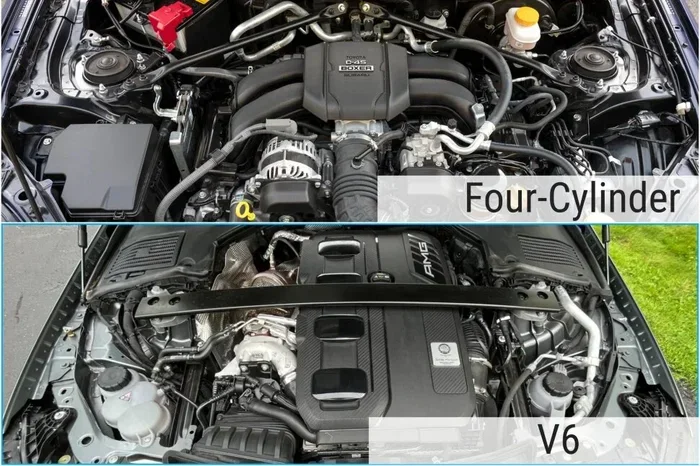
A 4-cylinder engine has four cylinders arranged in a line or in a flat configuration. This is the most common engine type in modern cars. A 6-cylinder engine usually comes in a V-shape, where three cylinders sit on each side of a central crankshaft. This is why it is often called a V6 engine.
The engine configuration directly impacts how the engine feels while driving. More cylinders generally mean smoother power delivery and more overall output. But they also add weight, complexity, and cost. These trade-offs are at the heart of the 4-cylinder versus 6-cylinder debate.
How Do Cylinders Create Power?
Each cylinder goes through a four-stroke cycle: intake, compression, combustion, and exhaust. This cycle repeats hundreds of times per minute. The more cylinders firing in sequence, the more constant and smooth the power delivery becomes.
A 4-cylinder engine fires each cylinder in a specific order to keep things running smoothly. However, because there are fewer cylinders, there can be slight vibrations between power pulses. A 6-cylinder engine has more overlapping power strokes, which naturally reduces vibration and creates a smoother engine operation. This is one reason why many luxury cars and trucks still prefer the 6-cylinder layout.
4-Cylinder Engines: Pros and Cons
Why Choose a 4-Cylinder Engine?
Four-cylinder engines have become the default choice for most new cars on the market today. They offer a compelling mix of efficiency, affordability, and modern technology that makes them hard to ignore.
Fuel economy is the biggest advantage of a 4-cylinder engine. Because there are fewer cylinders burning fuel, these engines use significantly less gas. For drivers who commute daily or put high mileage on their vehicles, this savings adds up fast. A typical 4-cylinder sedan can deliver 30 to 40 miles per gallon on the highway, depending on the model.
Lower purchase price is another major benefit. Cars with 4-cylinder engines cost less to manufacture, which means you pay less at the dealership. Insurance premiums are often lower too, since insurers view smaller engines as less risky.
Maintenance costs tend to be lower as well. A 4-cylinder has fewer parts overall — less oil, fewer spark plugs, and simpler engine components. When something does need repair, the parts and labor are generally cheaper than for a 6-cylinder engine.
Where 4-Cylinder Engines Fall Short
Despite their many advantages, 4-cylinder engines do have limitations. The most obvious one is raw power output. A standard 4-cylinder produces less horsepower and torque than a 6-cylinder of the same size. This means slower acceleration and less effortless passing on highways.
Towing capacity is another area where 4-cylinders struggle. Most 4-cylinder engines are not well-suited for pulling heavy trailers or boats. If you need to tow regularly, a 4-cylinder will leave you wanting more grunt under the hood.
Some drivers also notice more engine vibration in 4-cylinder engines, especially at idle. While modern engines use balance shafts and other technology to reduce this, it is still more noticeable than in a 6-cylinder. The sound and feel of a 4-cylinder can also be less refined, especially under heavy load.
Modern Turbo 4-Cylinders Change the Game
Here is where things get interesting. Modern turbocharged 4-cylinder engines have closed the gap significantly. By forcing more air into the combustion chamber, a turbocharger dramatically increases power output from a smaller engine.
Many automakers now offer turbo 4-cylinders that produce as much power as older naturally aspirated V6 engines. For example, some modern turbo 4-cylinder engines deliver over 300 horsepower while still achieving excellent fuel economy. This technology has made the 4-cylinder vs 6-cylinder debate much more nuanced than it was a decade ago.
The trade-off is that turbocharged engines can be more complex and may require more careful maintenance. Turbo components like intercoolers and wastegates add potential failure points. But for most drivers, the benefits of a turbo 4-cylinder far outweigh these concerns.
6-Cylinder Engines: Pros and Cons
Why Choose a 6-Cylinder Engine?
The V6 engine has long been the sweet spot between power and efficiency for many vehicle types. It offers a noticeable step up in performance without the fuel consumption penalties of larger engines like the V8.
Smoother operation is perhaps the most immediate benefit you will notice in a 6-cylinder engine. The additional cylinders create more overlapping power strokes, which virtually eliminates the vibration you feel in a 4-cylinder. This makes for a more refined and premium driving experience, especially at idle and low speeds.
More horsepower and torque give 6-cylinder engines a clear advantage in acceleration and passing power. Whether you are merging onto a highway or climbing a steep hill, a V6 provides confident, effortless performance. This extra power also translates directly into better towing capacity, making V6 engines popular choices for trucks and SUVs.
For drivers who frequently haul heavy loads or tow trailers, a 6-cylinder engine provides a meaningful safety margin. The additional torque means the engine does not have to work as hard, which reduces strain and can actually extend engine longevity under heavy use.
Where 6-Cylinder Engines Fall Short
The downsides of a 6-cylinder engine center on cost and efficiency. Because a V6 has more cylinders, more spark plugs, more valves, and more complex internal components, it costs more to build and buy.
Fuel economy is the most significant drawback. A V6 typically uses 15 to 30 percent more fuel than a comparable 4-cylinder engine in the same vehicle. For drivers who log thousands of miles per year, this difference can translate into hundreds of dollars extra at the pump annually.
Maintenance and repair costs are also higher with a 6-cylinder engine. There are simply more parts that can wear out or fail over time. Oil changes cost more because the engine holds more oil. Spark plug replacements involve more cylinders. And if a major component like a catalytic converter fails, the repair bill is typically larger.
Vehicle weight is another factor. A V6 engine is heavier than a 4-cylinder, which can affect handling and braking performance. Some drivers may notice that a V6-equipped vehicle feels slightly less nimble than its 4-cylinder counterpart, especially in city driving or tight parking situations.
Fuel Economy and Performance Comparison
Head-to-Head Fuel Economy
When comparing gas mileage between engine types, the results are fairly consistent across most vehicle segments. A 4-cylinder engine will almost always deliver better fuel economy than a 6-cylinder in the same model. The difference is most pronounced in city driving, where stop-and-go traffic favors smaller, lighter engines.
Here is a general comparison of what you can expect:
- City fuel economy: 4-cylinder engines typically achieve 20 to 28 mpg, while 6-cylinder engines average 17 to 24 mpg.
- Highway fuel economy: 4-cylinder engines deliver 28 to 40 mpg, compared to 24 to 32 mpg for 6-cylinder engines.
- Combined fuel economy: Expect a 15 to 25 percent improvement with a 4-cylinder over a 6-cylinder in the same vehicle.
Keep in mind that these numbers vary based on driving habits, vehicle weight, and whether the engine is naturally aspirated or turbocharged. A turbocharged 4-cylinder can sometimes match or even exceed the fuel economy of a naturally aspirated V6, especially in highway cruising conditions.
Performance and Power Output
Horsepower and torque are where the 6-cylinder engine really shines. On average, a V6 produces 25 to 40 percent more horsepower than a comparable 4-cylinder engine. This power advantage becomes especially apparent when the vehicle is fully loaded or towing a trailer.
Acceleration tests tell a clear story. A 6-cylinder SUV can go from 0 to 60 mph in roughly 6 to 7 seconds, while a similar 4-cylinder model might take 8 to 10 seconds. For most daily driving, this difference is noticeable but not dramatic. However, for drivers who value spirited acceleration and confident highway merging, the V6 makes a meaningful difference.
Engine refinement is another performance metric that favors the 6-cylinder. The smoother idle, more linear power delivery, and refined sound of a V6 create a more premium feel. This is why many automakers reserve V6 engines for higher trim levels or luxury versions of their vehicles.
Quick Tips for Comparing Engines
- Always compare engines within the same vehicle model for the most accurate results.
- Check the EPA fuel economy ratings on the window sticker or the fueleconomy.gov website.
- Test drive both engine options back to back if possible. The difference will be immediately apparent.
- Consider your typical driving conditions. City drivers benefit more from a 4-cylinder, while highway and towing drivers may prefer a V6.
Which Engine Is Right for You?
Choose a 4-Cylinder If…
Most drivers will find that a 4-cylinder engine meets their needs perfectly. You should strongly consider a 4-cylinder if any of the following apply to your situation.
If your primary use is daily commuting or running errands around town, a 4-cylinder will save you real money on fuel. The better fuel economy pays for itself over time, especially if you drive more than 12,000 miles per year. City drivers who deal with stop-and-go traffic will appreciate the lighter weight and nimble handling of a 4-cylinder vehicle.
Budget-conscious buyers should also lean toward a 4-cylinder. The lower purchase price, cheaper insurance, and reduced maintenance costs make this the clear financial winner. If you do not need to tow anything heavy, there is little reason to pay extra for a 6-cylinder engine.
Environmentally conscious drivers will also prefer the 4-cylinder. Lower fuel consumption means fewer carbon emissions, which is better for the planet. Many modern 4-cylinder engines also meet stringent emissions standards that some older V6 engines cannot match.
Choose a 6-Cylinder If…
There are clear scenarios where a 6-cylinder engine is the better choice. If you regularly tow a boat, trailer, or camper, the additional torque of a V6 makes a real difference in safety and capability.
Families who need a large SUV or minivan for road trips will appreciate the extra power a 6-cylinder provides. Fully loaded with passengers and luggage, a V6 engine can maintain highway speeds and climb mountain grades without straining. A 4-cylinder in the same vehicle might struggle under those conditions.
Drivers who enjoy spirited driving and value a refined, smooth experience will also gravitate toward the V6. The additional horsepower and silky power delivery make highway driving more enjoyable and passing maneuvers more confident. If you spend a lot of time on open roads, the V6 is well worth the extra fuel cost.
Some drivers simply prefer the sound and feel of a 6-cylinder engine. There is a certain refinement and maturity to a V6 that a 4-cylinder cannot replicate. If driving pleasure matters to you, the V6 delivers a more satisfying experience in most cases.
Consider a Hybrid or Electric Option
It is worth noting that the 4-cylinder vs 6-cylinder debate is evolving. Many automakers now offer hybrid versions of 4-cylinder engines that significantly boost performance while maintaining excellent fuel economy. Some hybrid 4-cylinder systems deliver V6-like acceleration while sipping gas like a small 4-cylinder.
Fully electric vehicles eliminate the engine debate altogether. With instant torque and no cylinders at all, electric motors provide a driving experience that is smooth, quiet, and incredibly efficient. If you are in the market for a new vehicle, it is worth considering whether a hybrid or electric option might be the best of both worlds.
Maintenance and Long-Term Ownership
Cost of Ownership Over Time
When you look at the total cost of ownership, the 4-cylinder engine usually comes out ahead. The initial savings on the purchase price, combined with lower fuel costs and cheaper maintenance, add up to significant savings over 5 to 10 years of ownership.
A 6-cylinder engine will cost more at every stage. The vehicle itself is more expensive. Insurance premiums are higher. Fuel costs are greater. And when repairs are needed, the parts and labor are pricier. Over a typical ownership period, a 4-cylinder vehicle can save its owner several thousand dollars compared to an equivalent 6-cylinder model.
Reliability and Engine Longevity
Both engine types can last well over 200,000 miles with proper maintenance. However, the simpler design of a 4-cylinder engine means there are fewer components that can fail. Fewer spark plugs, fewer valves, fewer cylinders — all of these factors contribute to potentially lower repair frequency over the long haul.
A V6 engine has more moving parts and more complex systems, which means more potential failure points. That said, modern V6 engines are built to last and are generally very reliable. The key is following the manufacturer’s maintenance schedule and addressing any issues promptly.
One area where 6-cylinder engines sometimes have an advantage is under heavy loads. Because the engine does not have to work as hard when towing or hauling, the internal components experience less stress. This can actually contribute to longer engine life in vehicles that are regularly used for heavy-duty tasks.
Common Mistakes to Avoid
- Overlooking your actual needs: Do not buy a 6-cylinder just because it sounds impressive. If you never tow or haul, you are wasting money.
- Ignoring fuel costs: The price difference at the pump between a 4-cylinder and 6-cylinder adds up fast over thousands of miles.
- Skipping regular maintenance: Both engine types need timely oil changes, spark plug replacements, and fluid checks to last a long time.
- Assuming all 4-cylinders are the same: A naturally aspirated 4-cylinder and a turbocharged 4-cylinder are very different in terms of power and maintenance needs.
- Not test driving both options: The best way to decide is to drive both engine versions back to back and feel the difference yourself.
Expert Insights on the 4-Cylinder vs 6-Cylinder Debate
Automotive experts generally agree that the 4-cylinder engine is the better choice for the majority of drivers today. Advances in turbocharging and direct injection technology have made modern 4-cylinders far more capable than their predecessors. Most drivers will never notice a meaningful power deficit in a turbo 4-cylinder for normal driving.
However, experts also acknowledge that the 6-cylinder engine still holds a valid place in the market. For heavy-duty applications, luxury vehicles, and drivers who prioritize a refined driving experience, the V6 remains a compelling option. The key is matching the engine to the vehicle’s intended use.
Industry trends clearly favor smaller engines. Many automakers have phased out V6 engines entirely in favor of turbo 4-cylinders or hybrid powertrains. This shift is driven by tightening emissions regulations and consumer demand for better fuel economy. As a result, the 4-cylinder is becoming the default choice across more vehicle segments than ever before.
Conclusion
The 4-cylinder vs 6-cylinder debate does not have a single right answer. It depends entirely on your driving habits, your budget, and what you expect from your vehicle. A 4-cylinder engine delivers excellent fuel economy, lower costs, and sufficient power for most everyday driving situations. It is the smart, practical choice for the majority of car buyers.
A 6-cylinder engine offers more power, smoother operation, and better towing capability for drivers who need those advantages. If you regularly haul heavy loads, tow trailers, or simply value a refined driving experience, the V6 is worth the extra cost.
Take the time to evaluate your own driving patterns and priorities. Consider how many miles you drive each year, what you use your vehicle for, and how much you are willing to spend on fuel and maintenance. Test drive both engine options whenever possible. The right choice will become clear when you match the engine to your actual needs rather than assumptions or stereotypes.
Ultimately, both engine types serve millions of satisfied drivers every day. Whether you choose a 4-cylinder or 6-cylinder engine, you can make a confident decision knowing that you have weighed the pros and cons carefully. The best engine is the one that fits your life, your budget, and your driving style perfectly.
Frequently Asked Questions
Is a 4-cylinder engine good for highway driving?
Yes, a 4-cylinder engine handles highway driving very well for most situations. Modern turbo 4-cylinder engines provide plenty of power for steady cruising and safe passing. However, if you frequently tow heavy loads or carry a full vehicle, a 6-cylinder may feel more comfortable and confident at highway speeds.
Do 6-cylinder engines cost significantly more to insure?
Not always, but they can. Insurance companies consider the vehicle’s value, engine size, and repair costs when setting premiums. A 6-cylinder engine may lead to slightly higher insurance rates because the vehicle costs more and repairs are pricier. However, the difference is usually modest compared to other factors like your driving record and location.
Can a 4-cylinder engine last as long as a 6-cylinder engine?
Absolutely. With proper maintenance, a 4-cylinder engine can easily last over 200,000 miles. The simpler design actually means fewer parts that can wear out. Many high-mileage vehicles on the road today are powered by 4-cylinder engines that have been well cared for over many years of service.
Are turbocharged 4-cylinder engines reliable?
Modern turbocharged 4-cylinder engines are generally very reliable. The technology has matured significantly, and most manufacturers back their turbo engines with comprehensive warranties. The key is following the recommended maintenance schedule, especially oil changes, since turbocharged engines can be more sensitive to oil quality and change intervals.
Which engine type gets better gas mileage?
A 4-cylinder engine almost always delivers better gas mileage than a 6-cylinder in the same vehicle. The fuel economy advantage typically ranges from 15 to 25 percent. Turbo 4-cylinder engines offer the best of both worlds, providing strong performance while still achieving excellent fuel efficiency compared to naturally aspirated V6 engines.
Should I choose a 4-cylinder or 6-cylinder for a family SUV?
For most families, a 4-cylinder SUV provides more than enough power for daily driving and occasional road trips. Choose a 6-cylinder if you regularly tow a trailer, carry heavy loads, or plan to use the vehicle for demanding tasks like off-roading in rugged terrain. The 4-cylinder will save you money on fuel and purchase price, which adds up significantly over time.