Is Prado Full Time 4WD Worth Your Hard Earned Money
The Prado Full Time 4WD system sends power to all four wheels constantly, giving you better traction and confidence. This guide explains the costs, features, and real-world performance to help you decide if it is worth the extra money. You will learn about on-road comfort, off-road ability, and long-term value.
Is Prado Full Time 4WD worth your hard-earned money? That is the question many SUV buyers ask. The Toyota Prado has built a reputation for being tough, reliable, and capable. But the full-time four-wheel drive system adds cost and complexity.
You might wonder if that extra expense is justified. Does it really make a difference in daily driving? Or is it just a marketing gimmick? In this article, we will answer those questions. We will look at how the system works, what it costs, and how it performs on and off the road.
By the end, you will know exactly whether a Prado with full-time 4WD fits your needs and budget. Let us dive into the details.
Key Takeaways
- Constant Traction: Full-time 4WD powers all wheels all the time, improving grip on any surface.
- Higher Upfront Cost: Prado models with full-time 4WD cost more than part-time versions.
- On-Road Comfort: You get a smoother ride and better stability during daily driving.
- Off-Road Confidence: Low-range gearing and locking differentials make tough trails easier.
- Fuel Economy Trade-Off: Full-time systems use slightly more fuel than part-time setups.
- Strong Resale Value: The Prado with full-time 4WD holds its value well in the used market.
- Maintenance Matters: Regular checks of the transfer case and fluids keep the system reliable.
📑 Table of Contents
- What Is Prado Full Time 4WD and How Does It Work?
- Prado Full Time 4WD: The System Explained
- Is Prado Full Time 4WD Worth the Price?
- Real-World Performance: On-Road and Off-Road
- Prado Full Time 4WD vs. Part-Time 4WD
- Common Mistakes and Maintenance Tips
- Final Verdict: Is Prado Full Time 4WD Worth Your Hard-Earned Money?
What Is Prado Full Time 4WD and How Does It Work?
How Full-Time 4WD Differs from Part-Time 4WD
Full-time 4WD sends power to all four wheels at all times. A center differential allows the front and rear axles to spin at different speeds. This is crucial for on-road driving. Without it, the drivetrain would bind on paved surfaces.
Part-time 4WD, on the other hand, is designed for off-road use only. You switch it on when you need extra traction. On dry pavement, you must switch it off. Otherwise, you risk damaging the transfer case.
The Prado Full Time 4WD system works automatically. You do not need to manually engage or disengage it. This makes it very convenient for daily driving.
Key Components of the Prado 4WD System
Several parts work together to make full-time 4WD function. Here are the main components:
- Transfer Case: This box splits engine power between the front and rear axles.
- Center Differential: It allows speed differences between the front and rear driveshafts.
- Front and Rear Differentials: These send power to the left and right wheels on each axle.
- Locking Differentials: They force both wheels on an axle to spin at the same speed for better traction.
Each part plays a role in delivering smooth and reliable power. The Prado uses a viscous coupling or a torque-vectoring center diff in many models. This helps with traction on slippery roads.
Prado Full Time 4WD: The System Explained
Transfer Case and Center Differential
The transfer case is the heart of the 4WD system. It takes power from the transmission and sends it to the front and rear driveshafts. In the Prado Full Time 4WD, the transfer case houses a center differential.
This center differential uses a viscous fluid or clutch packs. It allows the front and rear axles to rotate at different speeds. That is why you can drive on pavement without any drivetrain wind-up. The system is always active, so you get instant traction when you need it.
Multi-Terrain Select and Crawl Control Features
Toyota added smart features to the Prado 4WD system. Multi-Terrain Select lets you choose different modes. You can pick Mud, Sand, Rock, or Snow. Each mode adjusts throttle response and braking for the surface.
Crawl Control is another great feature. It acts like a low-speed cruise control for off-road crawling. You set a speed, and the system manages the brakes and throttle. This lets you focus on steering through tough obstacles.
These features make the Prado Full Time 4WD very versatile. You can tackle a rocky trail one day and drive to work the next with ease.
Is Prado Full Time 4WD Worth the Price?
Upfront Cost vs. Long-Term Value
The Prado Full Time 4WD costs more than the part-time version. The price difference can be a few thousand dollars. You might ask if it is worth it. Let us break down the costs and benefits.
On the plus side, full-time 4WD adds resale value. Buyers in the used market love the Prado with full-time 4WD. It is seen as a more complete and capable vehicle. The reliability of the system also means fewer surprises.
However, there is a slight fuel economy penalty. Full-time 4WD adds weight and drivetrain friction. You might see a 0.5 to 1.0 L/100km increase in fuel use. Over time, this adds up. But many owners feel the safety and comfort benefits outweigh the cost.
Expert Insight: According to automotive analysts, the Prado Full Time 4WD holds its value about 10-15% better than part-time models in most markets. This can offset the initial price gap when you sell.
Resale and Reliability Benefits
The Toyota Prado is famous for its reliability. The full-time 4WD system is built to last. With proper maintenance, it can easily exceed 300,000 km. The transfer case and differentials are robust and well-sealed.
When you buy a used Prado with full-time 4WD, buyers check the service history. Regular fluid changes for the transfer case and front and rear differentials are key. A well-maintained 4WD system is a big selling point.
In the resale market, the full-time 4WD Prado often sells faster. It appeals to families who need a daily driver and weekend adventurer. The all-weather capability gives peace of mind in rainy or snowy climates.
Real-World Performance: On-Road and Off-Road
Daily Driving Comfort and Stability
The Prado Full Time 4WD shines in daily driving. Because power goes to all four wheels, you get better stability. This is especially noticeable on wet roads or during sudden lane changes.
On the highway, the system keeps the SUV tracking straight. You feel less body roll in corners. The ride is smooth and composed. It feels like a proper family SUV, not a rugged truck.
For daily commuters, the full-time system adds confidence. You do not have to worry about a sudden rain shower making the road slippery. The traction is always there.
Off-Road Adventures and Traction
When you head off-road, the Prado Full Time 4WD really proves its worth. The low-range gearing gives you massive torque at slow speeds. The locking differentials help you power through mud, sand, or snow.
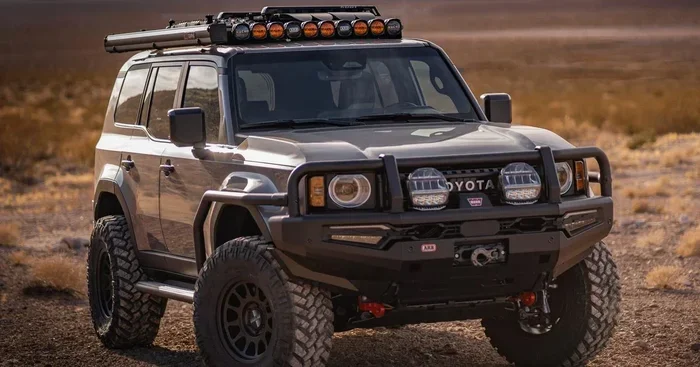
The approach and departure angles are impressive for a midsize SUV. The ground clearance lets you clear big rocks without scraping the underbody. The wading depth is also good for creek crossings.
Many owners use their Prado for overlanding trips. The full-time 4WD system handles long distances on rough terrain with ease. You can set the Multi-Terrain Select to match the surface and just enjoy the ride.
Quick Tip: Always check your tire pressure before heading off-road. Lower tire pressure gives you a bigger footprint and better traction on sand and mud. This works hand in hand with the 4WD system.
Prado Full Time 4WD vs. Part-Time 4WD
Here is a quick comparison to help you decide. The table below shows the key differences.
| Feature | Full-Time 4WD | Part-Time 4WD |
|---|---|---|
| Power Delivery | All wheels always | Two wheels (rear) by default |
| On-Road Use | Safe and comfortable | Must be off on pavement |
| Fuel Economy | Slightly lower | Slightly higher |
| Off-Road Capability | Excellent, always ready | Excellent when engaged |
| Upfront Cost | Higher | Lower |
| Resale Value | Higher | Lower |
| Driver Effort | Zero, fully automatic | Manual switching required |
As you can see, full-time 4WD offers more convenience and safety. Part-time 4WD is simpler and cheaper. But for most buyers, the Prado Full Time 4WD is the better all-rounder.
Common Mistakes and Maintenance Tips
Quick Tips for 4WD Owners
Here are some quick tips to keep your Prado Full Time 4WD in top shape:
- Check fluids regularly. The transfer case and differentials need specific fluids. Change them on schedule.
- Inspect for leaks. Look under the SUV for any red or brown drips. Early detection saves money.
- Use the right tires. All-terrain tires suit both on-road and off-road use. They balance comfort and grip.
- Drive gently in 4WD on pavement. Even though it is full-time, avoid sharp turns at high speed on dry pavement to reduce wear.
- Keep the system clean. Mud and debris can clog the air intake or cover the sensors. Rinse it off after off-road trips.
Common Mistakes to Avoid
Many owners make mistakes that shorten the life of their 4WD system. Here are the most common ones:
- Forgetting to check transfer case fluid. This fluid breaks down over time. Neglecting it leads to premature wear.
- Running on part-time mode incorrectly. The Prado Full Time 4WD does not have a part-time mode, but some owners try to mimic it by turning off the system. This can damage the center differential.
- Ignoring unusual noises. A grinding or whining sound from the drivetrain is a warning sign. Get it checked immediately.
- Overloading the vehicle. Excess weight stresses the transfer case and differentials. Stay within the towing and payload limits.
Avoid these mistakes, and your 4WD system will last for years.
Final Verdict: Is Prado Full Time 4WD Worth Your Hard-Earned Money?
The Prado Full Time 4WD system is a fantastic feature. It offers real benefits for daily driving and off-road adventures. You get constant traction, better stability, and peace of mind in all weather conditions.
The higher upfront cost is offset by strong resale value and long-term reliability. If you live in an area with rain, snow, or you enjoy weekend getaways on rough roads, it is a smart investment.
However, if you only drive on dry pavement and never venture off-road, a part-time 4WD Prado might save you some money. But even then, the full-time system adds a layer of safety that is hard to put a price on.
In the end, the Prado Full Time 4WD is worth the money for most buyers. It is a versatile, capable, and dependable SUV. You will feel confident every time you turn the key.
Frequently Asked Questions
What is the main benefit of Prado Full Time 4WD?
The main benefit is constant traction to all four wheels. This improves stability on wet roads and gives you instant off-road capability without any manual switching. It makes daily driving safer and more confident.
Does Prado Full Time 4WD use more fuel?
Yes, full-time 4WD systems use slightly more fuel than part-time setups. The extra weight and drivetrain friction add a small penalty. However, many owners find the safety and convenience benefits well worth the slight increase in fuel cost.
Can you turn off Prado Full Time 4WD?
Most Prado models with full-time 4WD do not have an off switch. The system is always active. This is different from part-time systems that require you to lock and unlock the hubs. Always check your specific model’s owner manual for details.
Is Prado Full Time 4WD good for towing?
Yes, the full-time 4WD system provides excellent traction when towing heavy loads. The low-range gearing and locking differentials help you control the vehicle on steep or slippery tow roads. Just remember to stay within the manufacturer’s towing capacity limits.
How often should you service the 4WD system?
You should check the transfer case and differential fluids every 50,000 km to 80,000 km. Regular fluid changes prevent wear and keep the system running smoothly. Always use the recommended fluid type specified in the owner manual.
Does Prado Full Time 4WD hold its value?
Yes, the Prado with full-time 4WD holds its value very well. Used buyers prefer the all-weather capability and the added resale benefits. In most markets, it sells faster and commands a higher price than part-time 4WD versions.