Does the Subaru Crosstrek Have Blind Spot Monitoring
The Subaru Crosstrek offers blind spot monitoring as a standard or available feature depending on the trim level. This driver safety feature uses sensors to alert you of vehicles in your blind spots, making lane changes safer and more confident. We break down which trims include it, how the system works, and what other advanced driver assistance features come with the Crosstrek.
Does the Subaru Crosstrek have blind spot monitoring? This is one of the most common questions shoppers ask when looking at this popular compact SUV. The short answer is yes, but the full answer depends on the trim level, the model year, and the specific package you choose.
The Subaru Crosstrek has built a strong reputation as a practical, safe, and versatile vehicle. It appeals to commuters, outdoor enthusiasts, and families alike. And safety sits at the core of what makes this car appealing. Subaru has long championed driver assistance technologies, and the Crosstrek benefits from that philosophy. In this article, we walk through everything you need to know about blind spot monitoring on the Crosstrek. We cover which trims include it, how the system works, and what other safety features come standard.
Blind spot monitoring has become a must-have feature for many car buyers today. It adds a layer of awareness that mirrors alone simply cannot provide. Whether you are a daily commuter or a weekend adventurer, knowing what is beside you at all times makes every drive safer. Let us dive into the details of how the Subaru Crosstrek handles this important safety technology.
Key Takeaways
- Blind spot monitoring is available on most Subaru Crosstrek trims, and it comes standard on higher-end models.
- The EyeSight driver assist suite bundles blind spot monitoring with other safety technologies like adaptive cruise control and lane keep assist.
- Older model years may not include blind spot monitoring as standard, so checking your specific trim is important.
- Aftermarket blind spot monitoring can be added if your Crosstrek lacks the feature from the factory.
- The system uses radar sensors mounted near the rear bumper to detect vehicles in your blind zones.
- Side mirror indicators and audible alerts warn you when a vehicle is detected in your blind spot.
- Subaru’s commitment to safety makes the Crosstrek a strong choice for drivers who prioritize active safety tech.
📑 Table of Contents
- What Is Blind Spot Monitoring and Why Does It Matter?
- Which Subaru Crosstrek Trims Include Blind Spot Monitoring?
- How Does the Blind Spot Monitoring System Work on the Crosstrek?
- Can You Add Blind Spot Monitoring to a Crosstrek That Does Not Have It?
- Subaru Crosstrek Safety Features Beyond Blind Spot Monitoring
- Comparing the Crosstrek to Competitors with Blind Spot Monitoring
- Final Thoughts on the Subaru Crosstrek and Blind Spot Monitoring
What Is Blind Spot Monitoring and Why Does It Matter?
Before we look at the Crosstrek specifically, let us understand what blind spot monitoring actually does. The system uses sensors, typically radar or cameras, mounted on the sides of the vehicle. These sensors scan the areas beside and slightly behind your car. When a vehicle enters your blind zone, the system alerts you through a warning light or an audible signal.
This technology is especially useful in several common driving situations:
- Lane changes on highways where traffic moves at high speeds
- Merging onto busy roads from ramps or parking lots
- Driving in heavy traffic where vehicles are close together
- Parking lot maneuvers where cars may be approaching from the sides
The beauty of blind spot monitoring is that it works quietly in the background. You do not need to think about activating it. It is always on when you are driving, ready to alert you if something is in your blind zone. This passive safety approach makes it one of the most valuable driver assistance features available today.
Which Subaru Crosstrek Trims Include Blind Spot Monitoring?
The Subaru Crosstrek comes in several trim levels, and blind spot monitoring availability varies between them. Here is a breakdown of what you can expect across the lineup.
Base Trim (2024 Model Year)
The base Subaru Crosstrek trim has expanded its standard features in recent years. For the 2024 model, blind spot monitoring comes standard on even the entry-level trim. This is a significant upgrade from earlier years when this feature was reserved for higher trims. Subaru has made driver safety technology more accessible across the lineup.
Higher Trims and the EyeSight Package
On the higher trims, blind spot monitoring is part of the EyeSight driver assist suite. This package bundles several advanced features together, including:
- Blind spot monitoring with rear cross-traffic alert
- Adaptive cruise control for highway driving
- Lane keep assist that helps you stay centered in your lane
- Pre-collision braking that can detect potential frontal collisions
- Lane departure and sway warning
If you are looking for a Crosstrek with the full suite of advanced driver assistance features, the higher trims or the EyeSight package is the way to go. These trims also often include leather seating, upgraded infotainment systems, and other comfort features that complement the safety technology.
How Does the Blind Spot Monitoring System Work on the Crosstrek?
The Subaru Crosstrek uses a smart sensor system to detect vehicles in your blind spots. Here is how it works in practice:
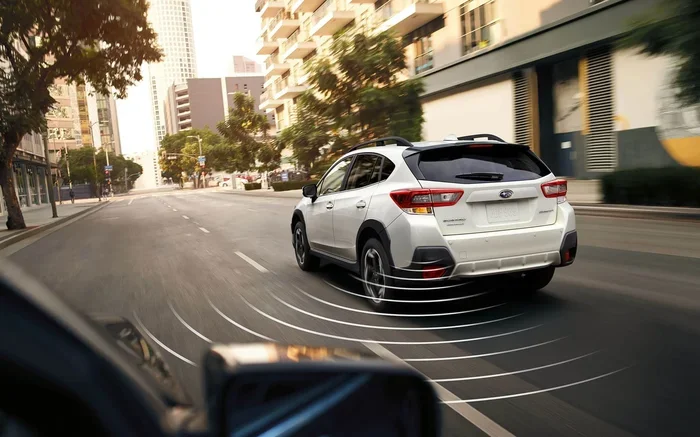
The system relies on radar sensors mounted near the rear bumper on both sides of the vehicle. These sensors continuously scan the areas that are not visible through your side mirrors or rearview mirror. When a vehicle enters the detection zone, a warning light illuminates on the corresponding side mirror.
If you activate your turn signal while a vehicle is detected in your blind spot, the system provides an additional alert. This can be an audible chime or a more urgent warning, depending on the situation. The idea is simple but effective: alert the driver before a dangerous maneuver rather than after.
One thing to note is that the blind spot monitoring system on the Crosstrek also includes rear cross-traffic alert. This means it can detect vehicles approaching from the sides when you are reversing out of a parking space. This is incredibly useful in crowded parking lots where visibility is limited.
Can You Add Blind Spot Monitoring to a Crosstrek That Does Not Have It?
If you own an older Subaru Crosstrek model that does not come with blind spot monitoring from the factory, you are not out of luck. There are options to add this feature aftermarket.
Many automotive aftermarket companies offer blind spot monitoring kits that can be professionally installed. These kits typically include sensors that mount to the rear bumper, a control module, and warning lights that integrate with your existing mirror indicators. The installation process is generally straightforward for a qualified technician.
Before you buy an aftermarket kit, consider a few things:
- Compatibility with your specific Crosstrek model year
- Quality of the sensors and reliability of the system
- Warranty implications for your vehicle
- Cost of the kit and professional installation
It is worth noting that if your Crosstrek has a push-button start system, you should also make sure you are familiar with how the system works. For tips on using the push start button properly, check out our guide on are you supposed to hold the push start button to avoid any confusion when starting your vehicle.
Subaru Crosstrek Safety Features Beyond Blind Spot Monitoring
Blind spot monitoring is just one piece of the puzzle when it comes to Subaru Crosstrek safety. Subaru has designed the Crosstrek with a comprehensive suite of safety features that work together to protect you and your passengers.
EyeSight Driver Assist Technology
The EyeSight system is Subaru’s flagship driver assistance technology. It uses a pair of cameras mounted near the rearview mirror to monitor the road ahead. The system can detect potential collisions, help maintain safe following distances, and even assist with steering input to keep you in your lane.
EyeSight also includes adaptive cruise control, which automatically adjusts your speed to maintain a safe distance from the vehicle ahead of you. This is especially helpful on long highway drives where fatigue can set in. The system works in harmony with blind spot monitoring to create a comprehensive safety net around the vehicle.
Subaru’s Commitment to Safety Ratings
The Subaru Crosstrek has earned top safety ratings from both the NHTSA and the IIHS. These independent organizations test vehicles rigorously, evaluating crashworthiness, crash avoidance, and headlight performance. Subaru’s consistent high marks reflect the brand’s dedication to building safe cars.
When you combine the structural integrity of the Crosstrek’s body with active safety features like blind spot monitoring and EyeSight, you get a vehicle that is designed to prevent accidents before they happen. This proactive approach to safety sets Subaru apart from many competitors in the compact SUV segment.
Maintenance Tips for Keeping Safety Systems in Top Shape
Your safety systems, including blind spot monitoring, rely on proper vehicle maintenance to function correctly. Keeping your car in good shape ensures that all electronic systems operate as intended. For example, maintaining your engine’s health with fresh components can prevent issues that might interfere with electronic systems. If you want to learn more about how regular maintenance affects your car’s performance, read our article on does your car run better with a new serpentine belt to understand the importance of keeping key components fresh.
Here are some quick maintenance tips to keep your Subaru Crosstrek safety systems running smoothly:
- Keep your rear bumper sensors clean and free from debris
- Ensure your side mirrors are properly adjusted and undamaged
- Keep your windshield cameras clean for optimal EyeSight performance
- Stay current with software updates from your Subaru dealer
- Check your electrical system regularly for any warning lights
Comparing the Crosstrek to Competitors with Blind Spot Monitoring
How does the Subaru Crosstrek stack up against other compact SUVs when it comes to blind spot monitoring? Here is a quick comparison:
The Honda HR-V offers blind spot monitoring on most trims, but it often comes at a higher base price than the Crosstrek. The Mazda CX-30 includes blind spot monitoring as standard on higher trims but may require a package on base models. The Toyota Corolla Cross also offers this feature, but availability varies by trim and region.
What sets the Subaru Crosstrek apart is the combination of standard all-wheel drive, a strong safety reputation, and the inclusion of blind spot monitoring across a wide range of trims. When you also factor in the EyeSight suite and Subaru’s consistently high safety ratings, the Crosstrek becomes a compelling choice for safety-conscious buyers.
It is also worth noting that the Subaru Crosstrek offers excellent visibility. The upright seating position and large windows give drivers a clear view of their surroundings. This natural visibility complements the electronic blind spot monitoring system, creating a driving experience that feels safe and confident from every angle.
Final Thoughts on the Subaru Crosstrek and Blind Spot Monitoring
The Subaru Crosstrek delivers blind spot monitoring as a standard or widely available feature across its trim lineup. Whether you buy the base model or the fully loaded EyeSight-equipped variant, you can count on this safety technology to help you stay aware of your surroundings on the road.
Subaru has made a clear commitment to making advanced safety features accessible to all buyers. The inclusion of blind spot monitoring on the base Crosstrek trim is a testament to that philosophy. When you pair this feature with the EyeSight driver assist suite, adaptive cruise control, and lane keep assist, you get a vehicle that is genuinely prepared to help you avoid accidents.
If you are in the market for a compact SUV that prioritizes safety, the Subaru Crosstrek should be at the top of your list. The combination of standard safety technology, strong crash test ratings, and a user-friendly design makes it one of the best choices in its class. And if you ever need to add this feature to an older model, aftermarket options are available and relatively affordable.
Stay safe on the road, and make sure your Subaru Crosstrek is equipped with the safety features that give you peace of mind every time you drive.
Frequently Asked Questions
Is blind spot monitoring standard on all Subaru Crosstrek trims?
For the latest model years, blind spot monitoring comes standard on most Subaru Crosstrek trims. However, older models or base trims from earlier years may have required a package or upgrade to include this feature. Always check the specific trim details for your model year to confirm availability.
Can I retrofit blind spot monitoring onto my older Subaru Crosstrek?
Yes, aftermarket blind spot monitoring kits are available and can be professionally installed on older Crosstrek models. These kits typically include sensors, a control module, and mirror-mounted warning lights. Make sure to choose a kit compatible with your specific model year for the best results.
How reliable is the Subaru Crosstrek blind spot monitoring system?
The system is highly reliable and uses proven radar sensor technology. Subaru designs these systems to work consistently in various driving conditions. However, like all electronic systems, it requires proper maintenance and clean sensors to function at its best.
Does the Subaru Crosstrek blind spot monitoring include rear cross-traffic alert?
Yes, the blind spot monitoring system on the Crosstrek typically includes rear cross-traffic alert. This feature detects vehicles approaching from the sides when you are reversing, which is especially helpful in parking lots and tight spaces.
What other safety features come with the EyeSight package on the Crosstrek?
The EyeSight package includes adaptive cruise control, lane keep assist, pre-collision braking, lane departure warning, and sway warning. It works alongside blind spot monitoring to create a comprehensive safety system that covers many common driving scenarios.
Does blind spot monitoring work at all speeds on the Subaru Crosstrek?
The blind spot monitoring system on the Crosstrek is designed to work at all speeds. It is most noticeable at highway speeds when vehicles pass quickly, but it also functions in city traffic and low-speed situations like parking lot maneuvers.