What Size Pickup Truck Do I Need to Pull a Camper
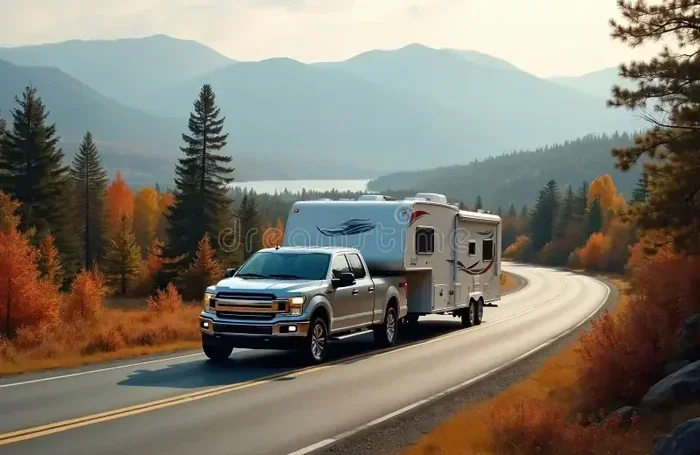
Choosing the right what size pickup truck do I need to pull a camper depends on your camper weight, hitch type, and towing goals. A half-ton truck works great for lightweight campers, while heavier setups need a three-quarter-ton or one-ton model. Always check your truck’s towing capacity and payload capacity before buying.
So you want to pull a camper, but you are not sure what size pickup truck do you need to pull a camper. This is one of the most common questions new campers ask every year. The answer is not as simple as picking a big truck and calling it a day. Your ideal truck size depends on several key factors that we will cover in this guide.
Whether you own a small pop-up camper or a massive fifth wheel, the right truck makes all the difference. Choosing the wrong size can lead to unsafe towing, poor fuel economy, and a lot of frustration on the road. In this article, we will break down everything you need to know about truck towing and camper matching. You will learn about towing capacity, payload limits, hitch types, and how to pick the perfect pickup truck models for your setup.
We keep things simple and practical here. No jargon. No fluff. Just clear advice that helps you make the best decision for your camping trips. Let us dive in and find out what truck you really need.
Key Takeaways
- Match Truck to Camper Weight: Always know your camper’s total weight before choosing a truck size.
- Half-Ton Trucks Handle Light Campers: Models like the Ford F-150 and Toyota Tundra pull small to mid-size trailers easily.
- Three-Quarter-Ton Trucks Are Versatile: The Chevy Silverado 2500 and Ram 2500 handle heavier fifth wheels and travel trailers.
- One-Ton Trucks Pull the Heaviest Setups: Gooseneck and large fifth wheel campers need the beefiest trucks.
- Payload Matters Just as Much as Towing: Don’t forget to factor in camper weight sitting on the truck bed.
- Hitch Type Changes Everything: A gooseneck hitch offers better stability for heavy loads than a bumper hitch.
- Test Drive and Verify: Always check real-world towing numbers and test your setup before hitting the road.
📑 Table of Contents
Understanding Towing Capacity
What Is Towing Capacity?
Towing capacity is the maximum weight your truck can safely pull behind it. This number is set by the manufacturer based on the engine, transmission, rear axle, and frame strength. Every truck has a different towing capacity, and it is printed in the owner’s manual.
For example, a base model Ford F-150 might tow up to 13,500 pounds. But a fully loaded F-150 with a towing package can pull even more. The key is to look at the specific configuration of your truck, not just the general model number.
How to Find Your Truck’s Towing Numbers
Finding your truck’s towing numbers is easy. Start by checking the door jamb sticker on the driver’s side. This sticker lists the gross vehicle weight rating, also known as GVWR. It tells you the maximum safe weight of your truck plus everything inside it.
Next, look up your truck model online or in the owner’s manual. Manufacturers list towing capacity for each trim level and engine option. Always use the numbers for your exact configuration. Adding a towing package, upgraded suspension, or a stronger rear axle can increase your towing limits significantly.
Quick Tips
- Always check the towing capacity for your specific truck configuration, not just the model name.
- Add up the weight of the camper, hitch, and cargo before comparing to your truck’s limits.
- Leave a safety margin of at least 10% below your maximum towing capacity.
Types of Pickup Trucks for Towing Campers
Not all trucks are created equal when it comes to truck towing. Pickup trucks fall into three main categories based on their size and strength. Each category handles different camper weights and setups. Let us break them down.
Half-Ton Trucks
Half-ton trucks are the most popular choice for casual campers and weekend travelers. These include the Ford F-150, Chevy Silverado 1500, Ram 1500, Toyota Tundra, and Nissan Titan. They offer a great balance of comfort, fuel economy, and towing power.
Most half-ton trucks can tow between 5,000 and 14,000 pounds depending on the engine and configuration. This makes them perfect for small travel trailers, pop-up campers, and lightweight truck campers. If your camper weighs under 6,000 pounds, a half-ton truck will likely do the job just fine.
One big advantage of half-ton trucks is their daily drivability. They feel comfortable on the highway, get decent fuel economy, and are easy to park. For many families, a half-ton truck is the only truck they will ever need.
Three-Quarter-Ton Trucks
Three-quarter-ton trucks step up the power game. Models include the Chevy Silverado 2500, Ford F-250, Ram 2500, and Toyota Tundra 3.4 TRD Pro. These trucks are built for heavier towing and come with stronger frames, bigger brakes, and more powerful engines.
A three-quarter-ton truck can typically tow between 14,000 and 20,000 pounds. This makes them ideal for medium to large travel trailers, fifth wheel campers, and heavier gooseneck hitch setups. If your camper weighs between 8,000 and 18,000 pounds, a three-quarter-ton truck is a great match.
These trucks also offer better payload capacity, which means they can carry more gear, supplies, and weight in the truck bed. For full-time campers who live on the road, a three-quarter-ton truck provides the perfect balance of power and practicality.
One-Ton Trucks
One-ton trucks are the heavy-duty champions of the pickup world. Think of the Ford F-350, Chevy Silverado 3500, Ram 3500, and GMC Sierra 3500. These trucks are built for the toughest towing jobs and the heaviest campers.
A one-ton truck can tow anywhere from 18,000 to 37,000 pounds depending on the configuration. These are the trucks you need for large fifth wheels, toy haulers, and oversized truck campers. If you plan to pull a camper that weighs over 20,000 pounds, a one-ton truck is your best bet.
One-ton trucks come with dual rear wheels on most models, which adds stability and payload capacity. They are not as easy to drive daily as half-ton trucks, but for serious towing, nothing beats their raw power and hauling ability.
| Truck Class | Typical Towing Range | Best Camper Types | Fuel Economy |
|---|---|---|---|
| Half-Ton | 5,000 – 14,000 lbs | Pop-up, small travel trailer, lightweight truck camper | Good |
| Three-Quarter-Ton | 14,000 – 20,000 lbs | Mid-size travel trailer, fifth wheel, gooseneck | Moderate |
| One-Ton | 18,000 – 37,000 lbs | Large fifth wheel, toy hauler, heavy truck camper | Lower |
Matching Your Truck to Your Camper Type
Choosing the right truck also depends on the type of camper you want to pull. Different camper styles have different weight profiles and towing requirements. Let us look at the most common types.
Travel Trailers
A travel trailer is the most common type of camper. These range from small teardrop trailers weighing 1,500 pounds to large fifth wheels weighing over 20,000 pounds. The hitch weight, also called tongue weight, is the downward force the trailer puts on the hitch ball.
For a small travel trailer under 5,000 pounds, almost any half-ton truck will work. For mid-size trailers between 5,000 and 10,000 pounds, a half-ton with a towing package is a solid choice. Larger travel trailers over 10,000 pounds need a three-quarter-ton truck at minimum.
Always remember to factor in the weight of everything you will load into the truck bed and cab. Gear, coolers, chairs, and supplies all add up fast. Your total payload must stay within the truck’s rated limits.
Fifth Wheel Campers
Fifth wheel campers are mounted in the truck bed over the rear axle. They use a special fifth wheel hitch that sits in the bed and connects to a gooseneck ball. This setup offers much better stability and towing comfort than a standard bumper hitch.
Fifth wheels are popular among full-time RVers because they feel more like home on the road. They range from small compact models weighing 6,000 pounds to massive luxury units weighing over 25,000 pounds.
For a small fifth wheel under 10,000 pounds, a half-ton truck can handle the job. For medium fifth wheels between 10,000 and 18,000 pounds, go with a three-quarter-ton truck. Large fifth wheels over 18,000 pounds need a one-ton truck with a gooseneck hitch setup.
Pop-Up and Tent Campers
Pop-up campers are the lightest option on the market. They typically weigh between 1,000 and 4,000 pounds when fully set up. Almost any pickup truck, even a small one, can pull a pop-up camper with ease.
If fuel economy matters to you, a half-ton truck is a great choice for pop-up campers. You will get good gas mileage, easy handling, and plenty of room for your camping gear. Pop-up campers are perfect for weekend warriors who want a simple and affordable camping setup.
Key Factors Beyond Truck Size
Truck size is just one piece of the puzzle. Several other factors play a big role in safe and efficient towing. Let us look at the most important ones.
Payload vs. Towing Capacity
Many people confuse payload capacity with towing capacity, but they are very different. Towing capacity is how much weight your truck can pull behind it. Payload capacity is how much weight your truck can carry on top of its own weight, including passengers, cargo, and the camper’s hitch weight sitting in the bed.
For example, if your truck has a payload capacity of 2,000 pounds and your fifth wheel hitch weight is 2,500 pounds, you are already overloaded before you even start towing. This is a common mistake that can be dangerous. Always check both numbers before buying a truck and camper combo.
Hitch Types and Weight Distribution
The type of hitch you use matters a lot for towing safety. There are three main types: bumper hitches, weight distribution hitches, and gooseneck hitches.
A bumper hitch is the simplest and most common. It attaches to the rear bumper and works well for lighter trailers. A weight distribution hitch uses spring bars to spread the trailer weight across all four wheels. This improves stability and steering control for mid-weight trailers.
A gooseneck hitch mounts in the truck bed and provides the most stable towing experience for heavy loads. It is the preferred choice for fifth wheel campers and heavy truck camper setups. If you are pulling a camper over 12,000 pounds, a gooseneck hitch is highly recommended.
Rear Axle and Suspension Setup
The rear axle on your truck plays a huge role in towing performance. Trucks with a heavier rear axle ratio, such as 3.73 or 4.10, tow much better than those with a 3.55 ratio. The axle ratio determines how much torque reaches the wheels.
Suspension also matters. Trucks with heavy-duty suspension, helper springs, or air bags handle towing weight much better. They reduce sway, improve ride quality, and keep the truck level when loaded. When shopping for a truck, always ask about the suspension options available.
Common Mistakes When Choosing a Towing Truck
Even experienced truck buyers make mistakes when choosing a truck for towing. Here are the most common ones to avoid.
Ignoring Camper Weight
The biggest mistake is guessing your camper weight instead of checking it. Every camper has a dry weight, which is the weight without water, propane, or gear. But the fully loaded weight is what really matters. Add the weight of fresh water (8.3 pounds per gallon), propane, batteries, food, and personal gear.
Always weigh your camper at a CAT scale before buying a truck. This gives you the most accurate number to work with. Do not rely on the manufacturer’s listed weight alone.
Overlooking the Towing Package
Not every truck trim comes with a towing package. A base model truck may have a much lower towing capacity than a top trim with the same engine. The towing package usually includes a stronger cooling system, a transmission oil cooler, a wiring harness, and a trailer brake controller.
Always confirm that your truck has the proper towing package before relying on its maximum towing numbers. Without the right package, your truck may overheat or struggle on long uphill drives.
Underestimating Fuel Costs
Towing a heavy camper takes a toll on fuel economy. A half-ton truck might get 22 miles per gallon without a trailer but drop to 12 miles per gallon when towing. A one-ton truck can drop even lower. Factor in the cost of fuel over a full camping season before deciding on a truck size.
If fuel economy matters to you, a smaller camper paired with a half-ton truck is the most efficient choice. You will save money at the pump and still enjoy comfortable towing.
Final Thoughts: Finding the Right Truck for Your Camper
So, what size pickup truck do you need to pull a camper? The answer comes down to your specific setup. Know your camper weight, understand your truck’s towing and payload limits, and choose a truck that gives you a comfortable safety margin. There is no one-size-fits-all answer, but with the right information, you can make a confident choice.
Start by weighing your camper fully loaded. Then match that weight to the right truck class. A half-ton truck handles light to mid-weight campers beautifully. A three-quarter-ton truck covers most camping setups with ease. And a one-ton truck is ready for the heaviest fifth wheels and truck campers on the market.
Do not forget about the hitch, payload, and fuel costs. These details make a big difference in your towing experience. Take your time, do your research, and choose the setup that fits your camping lifestyle. The right truck and camper combination will give you years of safe and enjoyable adventures on the road.
When in doubt, visit your local dealership and test drive a few truck models with your camper in tow. Feeling the difference between truck sizes on the road is the best way to make your final decision. Happy camping and safe towing!
Frequently Asked Questions
Can a half-ton truck pull a fifth wheel camper?
Yes, but only smaller fifth wheels. A half-ton truck like the Ford F-150 can pull a fifth wheel camper under 10,000 pounds. Always check your specific truck’s towing capacity and make sure the payload can handle the hitch weight before towing.
What happens if my truck is too small to pull my camper?
An undersized truck will struggle on hills, overheat, and become unsafe to drive. It can also damage the transmission, engine, and brakes over time. Always match your truck size to your camper weight to avoid these serious problems.
Do I need a special license to tow a camper with a pickup truck?
In most states, a standard driver’s license is enough for towing campers under 26,000 pounds combined weight. However, some states require a special endorsement for heavier setups. Check your local DMV regulations before towing a large camper.
How much does a towing package cost?
A factory towing package typically costs between $500 and $2,000 depending on the truck model. It includes a wiring harness, trailer brake controller, upgraded cooling, and a stronger rear axle. This investment is well worth the safety and performance benefits it provides.
Should I get a short bed or long bed truck for a camper?
A long bed truck (8-foot bed) offers better weight distribution and more room for large truck campers. A short bed (5.5 or 6.5 feet) works fine for most travel trailers with a slider hitch. Choose based on your camper type and how you plan to use the truck bed.
What is the difference between towing capacity and payload capacity?
Towing capacity is the maximum weight your truck can pull behind it. Payload capacity is the maximum weight your truck can carry on top of its own weight, including passengers, cargo, and the camper’s hitch weight in the bed. Both numbers matter for safe towing.