Auto Tint: Everything You Need to Know for Your Car
Auto tint is a smart upgrade for any vehicle that blocks heat, shields against UV rays, and adds privacy. This guide covers every type of auto tint film, installation methods, costs, and legal limits. You will learn how to pick the right tint and avoid common mistakes that ruin the job.
Auto tint has become one of the most popular car upgrades on the road today. Whether you want to beat the summer heat or protect your car’s interior, auto tint delivers real results. In this guide, we walk you through everything you need to know about car window tinting. You will learn what auto tint is, how it works, and why so many drivers choose it.
The right window tint film can transform how your car feels on a sunny day. It cuts down glare, blocks harmful UV rays, and adds a sleek look to any vehicle. But not all tint is the same. There are different types, shades, and installation methods to consider. We will break it all down for you in simple, easy-to-follow sections.
By the end of this article, you will feel confident choosing the best auto tint for your ride. You will know the costs, the legal rules, and the pros and cons of each type. Let us get started.
Key Takeaways
- Auto tint saves you money by reducing cabin heat and easing AC strain on hot days.
- UV protection from auto tint helps keep your skin safe and your car interior from fading.
- Different tint types exist, including ceramic, carbon, dyed, and metallic options for various needs.
- Auto tint laws vary by state, so always check local VLT limits before tinting your windows.
- Professional installation beats DIY for a bubble-free, long-lasting finish in most cases.
- Costs range from $100 to $400+ depending on film type, vehicle size, and tint quality.
📑 Table of Contents
- What Is Auto Tint and How Does It Work?
- Types of Auto Tint Films
- Benefits of Auto Tint for Your Car
- Auto Tint Laws and Legal Limits
- Auto Tint Installation: DIY vs Professional
- Common Auto Tint Mistakes to Avoid
- How Much Does Auto Tint Cost?
- How Long Does Auto Tint Last?
- Expert Insights on Choosing the Right Auto Tint
- Conclusion
What Is Auto Tint and How Does It Work?
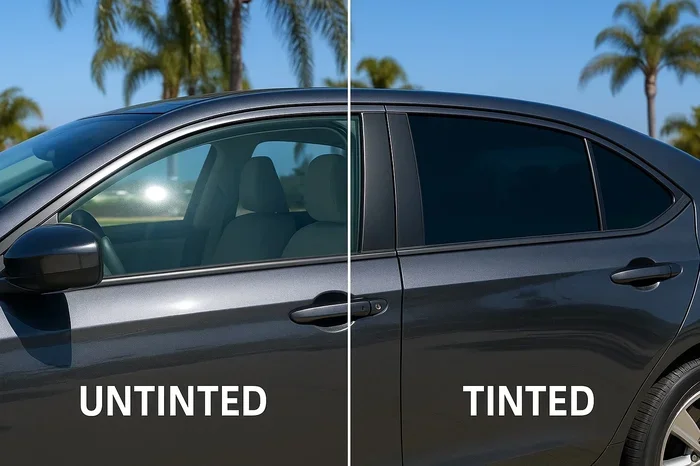
Auto tint is a thin film applied to your car’s glass windows. It works by filtering sunlight before it enters your vehicle. The film blocks a portion of visible light, heat, and ultraviolet radiation. This keeps your car cooler and protects both you and your interior.
Most window tint films are made from polyester or a mix of polymers. They come with different layers that handle heat rejection, glare, and UV blocking. The darker or more advanced the film, the more light and heat it blocks. But there is a trade-off. Darker tints reduce visibility, which is why laws exist around tint darkness.
How Tint Percentage Works
You will often hear people talk about tint percentage or VLT, which stands for Visible Light Transmission. This number tells you how much light the film lets through. A lower VLT means a darker tint. For example, a 5% tint lets in only 5% of light, while a 70% tint lets in most of it. Here is a quick breakdown:
- 5-20% VLT: Very dark. Great for privacy but may not be legal on front windows.
- 30-50% VLT: Medium shade. A popular choice for side and rear windows.
- 50-70% VLT: Light tint. Offers mild heat rejection and keeps good visibility.
Types of Auto Tint Films
Not all auto tint products are created equal. Each type has its own strengths and weaknesses. Choosing the right one depends on your budget, your goals, and your local laws. Let us look at the most common options on the market.
Dyed Auto Tint
Dyed tint film is the most affordable option. It uses dye layers to absorb heat and reduce light. Dyed tint gives a rich, dark look that many drivers love. However, it fades over time and offers less heat rejection than higher-end films.
- Pros: Budget-friendly, good appearance, easy to find.
- Cons: Fades with sun exposure, lower heat rejection, may bubble over time.
Carbon Auto Tint
Carbon tint is a step up from dyed film. It does not fade because it uses carbon particles instead of dye. Carbon film offers solid heat rejection and a matte finish that looks great. It also does not interfere with phone signals, which is a big plus for many drivers.
- Pros: No fading, matte look, good heat rejection, signal-friendly.
- Cons: Pricier than dyed film, slightly less heat rejection than ceramic.
Ceramic Auto Tint
Ceramic tint is the top-tier option. It uses nano-ceramic particles to block heat without affecting visibility. Ceramic film offers the best heat rejection and UV protection of any tint type. It also does not interfere with electronics. The downside is the price. Ceramic auto tint costs more, but it lasts longer and performs better.
- Pros: Best heat rejection, excellent UV protection, no signal interference, durable.
- Cons: Higher cost, may require professional installation.
Metallic Auto Tint
Metallic tint contains tiny metal particles that reflect heat away from your car. It gives a shiny, mirror-like look that some drivers prefer. Metallic film blocks heat well and is quite durable. However, it can interfere with GPS, cell signals, and radio reception.
- Pros: Strong heat rejection, durable, reflective look.
- Cons: May block signals, can look shiny, harder to install.
Hybrid Auto Tint
Hybrid tint combines two or more materials, often dye and metal. It balances cost and performance. Hybrid films offer better heat rejection than dyed tint alone and cost less than ceramic. They are a solid middle-ground choice for many car owners.
Benefits of Auto Tint for Your Car
Installing auto tint on your vehicle comes with many real-world benefits. Let us look at why so many drivers make this upgrade every year.
Heat Rejection and Comfort
One of the biggest reasons people tint their car windows is heat rejection. A good auto tint film can block up to 70% or more of solar energy. This means your car stays cooler on hot days. You do not have to blast the AC as hard, which saves fuel over time.
Think about parking your car in direct sunlight during summer. Without tint, the interior can become unbearable. With auto tint, the cabin stays much more comfortable. You get in the car and cool down faster.
UV Protection for Health and Interior
UV rays from the sun can damage your skin over time, even while driving. They also fade your dashboard, seats, and trim. Auto tint blocks up to 99% of harmful UV radiation. This protects both your health and your car’s interior. Over the years, this can save you money on repairs and replacements.
Glare Reduction
Driving with too much glare is dangerous and tiring. Auto tint cuts down on sun glare and headlight glare from vehicles behind you. This makes nighttime and early morning driving much more comfortable and safer.
Privacy and Security
Privacy tint makes it harder for people outside to see into your car. This protects your belongings from prying eyes. Many drivers feel safer knowing their personal items are less visible when parked in public areas.
Added Style
Let us not forget the look. A well-applied auto tint gives any vehicle a sleek, polished appearance. It is one of the easiest and most affordable ways to upgrade your car’s look.
Auto Tint Laws and Legal Limits
Auto tint laws vary from state to state and country to country. These laws control how dark your tint can be and where it can go on the vehicle. Breaking these rules can lead to fines, failed inspections, or even having your tint removed.
Understanding VLT Limits
Most states regulate tint percentage based on VLT levels. The front windshield usually has the strictest rules. Many states allow only a thin shade band across the top of the windshield. Side windows and rear windows often have more relaxed limits.
Here is a general comparison of common auto tint legal limits in the United States:
| Window | Typical Legal VLT Range | Common Rule |
|---|---|---|
| Front Windshield | 70%+ or shade band only | No dark tint allowed on most of the windshield |
| Front Side Windows | 50-70% VLT in most states | Must allow good visibility from outside |
| Rear Side Windows | Varies widely (20-70%) | Many states allow darker rear tint |
| Rear Window | Varies (20-50% common) | Some states require dual mirrors if tinted |
Always check your local auto tint laws before getting your windows tinted. Laws change, and what is legal in one state may not be in another. Your local tint shop can also help you stay compliant.
Medical Exemptions
Some states offer medical exemptions for darker tint. People with certain skin conditions or light sensitivity may qualify for darker windows. You typically need a doctor’s note and a special permit. This allows you to tint beyond the normal legal limits for health reasons.
Auto Tint Installation: DIY vs Professional
You have two main options when getting auto tint installed: do it yourself or hire a professional. Both have pros and cons. Your choice depends on your budget, your skill level, and how much time you have.
DIY Auto Tint Kits
DIY tint kits are widely available online and at auto parts stores. They cost less upfront, usually between $20 and $100 per window. The kits come with pre-cut film and basic instructions. Some people save money and enjoy the process. But DIY installation is tricky, especially for beginners.
Common problems with DIY auto tint include bubbles, creases, misalignment, and peeling edges. You also need the right tools and a clean workspace. If you have never tinted windows before, expect a learning curve.
Professional Installation
Professional tint shops have the experience, tools, and environment to do the job right. They use heat guns, squeegees, and clean rooms that keep dust and debris out of the film. A professional installation typically costs between $100 and $400+ for a full car.
The advantage is a smooth, bubble-free finish that lasts for years. Most shops also offer warranties on their work. If you want the best results with the least hassle, professional installation is the way to go.
Quick Tips for a Great Tint Job
- Choose a reputable shop with good reviews and a solid warranty.
- Ask about film brands before committing. Name-brand films last longer.
- Avoid washing your car for at least 3-4 days after tinting.
- Do not roll down windows for the first 48 hours to let the film cure.
- Use a soft cloth when cleaning tinted windows to avoid scratching.
Common Auto Tint Mistakes to Avoid
Even experienced car owners can make mistakes when it comes to auto tint. Here are some of the most common ones and how to avoid them.
Choosing the Wrong Tint Type
Not every tint works for every driver. If you live in a hot climate, cheap dyed tint will fade quickly and fail to block enough heat. If you need signal clarity, avoid metallic tint. Pick the film type that matches your needs, not just the price tag.
Ignoring Local Laws
This is one of the biggest mistakes drivers make. Getting dark tint on your front windows in a state where it is illegal will get you pulled over. Always verify the auto tint laws in your area before choosing your shade.
Skipping the Warranty
Some shops offer no warranty or very short ones. A good warranty protects you against bubbling, peeling, and discoloration. Always ask about the warranty before you commit to a shop or a film product.
Poor Preparation
If you are going the DIY route, preparation matters a lot. You need a dust-free environment, clean windows, and the right tools. Skipping prep leads to dust bubbles and uneven application. Take your time and do it right the first time.
Forcing the Tint to Cure Too Fast
After installation, the film needs time to cure properly. In cold or humid weather, this process takes longer. Do not roll down your windows or use harsh cleaners during the curing period. Being patient now saves you from peeling and bubbling later.
How Much Does Auto Tint Cost?
The cost of auto tint depends on several factors. The type of film, the number of windows, and the quality of installation all play a role. Here is a rough cost breakdown to help you plan:
- Basic dyed film: $50-$150 for a full car
- Carbon film: $150-$300 for a full car
- Ceramic film: $250-$500+ for a full car
- DIY kit: $20-$100 per window
Keep in mind that these are general ranges. Luxury vehicles, SUVs, and trucks with curved windows may cost more. The investment pays off through comfort, UV protection, and interior preservation over the life of your car.
How Long Does Auto Tint Last?
The lifespan of auto tint depends on the film type and how well it is maintained. Here is a general guide:
- Dyed film: 2-5 years before fading or bubbling
- Carbon film: 5-8 years with proper care
- Ceramic film: 10+ years, often with a lifetime warranty
To make your tint last longer, avoid harsh chemical cleaners. Use a soft microfiber cloth and gentle soap. Park in shaded areas when possible to reduce sun damage to the film edges.
Expert Insights on Choosing the Right Auto Tint
Industry experts agree that ceramic film offers the best overall value for most drivers. It delivers top-tier performance without the downsides of metallic interference. However, if budget is a concern, carbon film is an excellent alternative that balances cost and quality.
Tint professionals also stress the importance of choosing a shop that uses quality adhesives. Poor adhesive leads to peeling and edge lifting, which ruins the look and function of the tint. Ask your installer what adhesive system they use and whether it is manufacturer-approved.
One more expert tip: do not judge tint by color alone. A high-quality auto tint film may look lighter than a cheap dark film but block far more heat. Performance and appearance do not always go hand in hand, so ask for spec sheets and test the film with a heat gun if possible.
Conclusion
Auto tint is one of the best investments you can make for your car. It keeps you cooler, protects your health, and preserves your vehicle’s interior. With the right film type and proper installation, your tint will look great and perform well for many years.
Take the time to research your options. Understand the auto tint laws in your area. Choose a film type that fits your budget and goals. Whether you go with ceramic, carbon, or a more affordable dyed film, the benefits are clear. Your car, your health, and your comfort will all thank you.
Now that you have all the information you need, it is time to take action. Talk to a local tint professional or pick up a quality DIY kit. Enjoy the difference that auto tint makes every time you get behind the wheel.
Frequently Asked Questions
Is auto tint legal everywhere?
Auto tint laws vary by state and country. Most places allow some level of tint on side and rear windows but have strict rules for the front windshield and front side windows. Always check your local regulations before getting tinted.
Can I tint my car windows myself?
Yes, you can use a DIY tint kit to tint your own windows. However, professional installation usually produces better results with fewer bubbles and a longer-lasting finish. DIY is best for those with patience and some hands-on experience.
Does auto tint block UV rays?
Most quality auto tint films block up to 99% of harmful UV radiation. This protects your skin and prevents your car’s interior from fading and cracking over time.
How long does it take to tint a car?
A professional installation typically takes 1 to 3 hours for a full car. DIY jobs may take longer, especially for first-timers. The curing process takes an additional 3 to 7 days before the windows can be rolled down freely.
Will auto tint affect my phone or GPS signal?
Metallic tint can interfere with cell and GPS signals. Ceramic and carbon tint do not cause signal issues. If you rely heavily on your phone or navigation system, choose a signal-friendly tint like ceramic or carbon.
How much does auto tint cost on average?
The average cost ranges from $100 to $400 for professional installation on a standard car. DIY kits cost less but require more effort. The final price depends on the film type, vehicle size, and the quality of the shop you choose.