How Long Does It Take to Fully Charge an Electric Car
How Long Does It Take to Fully Charge an Electric Car depends on your charger type, battery size, and starting charge level. A Level 1 outlet can take 40+ hours, while a DC fast charger can add 200 miles in just 30 minutes. This guide explains every charging speed so you can plan with confidence.
If you are new to the electric vehicle world, one of the first questions that pops up is: How Long Does It Take to Fully Charge an Electric Car? The answer is not a single number. It depends on your charger, your battery, and even the weather outside. Many new EV owners expect a quick plug-in and a full battery by morning. But the reality is that charging times can range from less than an hour to more than a day.
Understanding the different charging levels helps you set realistic expectations and avoid range anxiety. This guide breaks down everything you need to know. You will learn the exact times for each charger type, the factors that speed up or slow down the process, and simple tips to make charging part of your daily routine. By the end, you will feel confident about your electric car charging plan.
Key Takeaways
- Charging time ranges wildly: from 30 minutes on a DC fast charger to over 40 hours on a standard wall outlet.
- Charger level is the biggest factor: Level 1 is slow, Level 2 is ideal for home, and DC fast charging is for road trips.
- Battery size matters: a larger kilowatt-hour pack takes longer to fill, but it also holds more miles.
- Temperature affects speed: cold weather slows charging, while optimal temperatures keep the battery happy.
- Home Level 2 charging is the sweet spot: it fully charges most EVs overnight for less than a few cents per mile.
- Avoid running the battery to zero: keeping the state of charge between 20% and 80% extends battery life.
- Public fast chargers are perfect for quick top-ups: plan stops around meals or rest breaks to maximize time.
📑 Table of Contents
How Long Does It Take to Fully Charge an Electric Car?
The Short Answer
The time to fully charge an electric car varies by the charger you use. A standard household outlet, known as Level 1, can take 40 to 50 hours for a full battery. A Level 2 home charger typically takes 4 to 10 hours. A DC fast charger can add about 200 miles of range in just 20 to 40 minutes. So, the charging speed depends entirely on the power source and the vehicle’s onboard charger.
Most drivers do not wait for a completely empty battery. They plug in when the state of charge drops to around 20% and charge up to 80%. This habit, called optimal charging, keeps the battery healthy and reduces charging time. Charging from 20% to 80% on a DC fast charger often takes less than 30 minutes.
Why Charging Time Varies So Much
Several factors influence the charging speed. The first is the charging equipment. A Level 1 charger uses a regular 120-volt outlet and delivers about 1.4 to 1.9 kilowatts of power. That is very slow. A Level 2 charger uses a 240-volt outlet, similar to a dryer plug, and delivers 3.3 to 19.2 kilowatts. DC fast chargers use much higher voltages and can deliver 50 to 350 kilowatts.
The second factor is the battery capacity. Measured in kilowatt-hours, a larger battery holds more energy and takes longer to fill. For example, a 60 kWh battery takes less time to charge than a 100 kWh battery on the same charger. The third factor is the vehicle’s onboard charger, which converts AC power from the grid to DC power for the battery. This charger has a maximum power limit. If the charger can only accept 7.2 kW, a Level 2 charger that outputs 11 kW will still charge at 7.2 kW.
Temperature also plays a big role. Cold weather slows down the chemical reactions inside the battery. The battery management system reduces the charging rate to protect the cells. Hot weather can also trigger thermal management systems that limit speed to prevent overheating. Ideal charging temperatures are between 60°F and 80°F.
Quick Tips for Checking Your Charge Time
- Check your owner’s manual for the maximum AC charging power your car accepts.
- Look at the battery label for the total kilowatt-hour capacity.
- Use a charging app to see real-time charging speeds at public stations.
- Plug in as soon as you park at home to take advantage of off-peak electricity rates.
Understanding the Three Charging Levels
Electric car charging comes in three main levels. Each level uses different power sources and connectors. Knowing the differences helps you choose the right setup for your home and your driving habits.
Level 1 Charging – The Slow but Simple Option
Level 1 charging uses a standard 120-volt household outlet. You do not need any special equipment except the charging cable that comes with the car. This is the slowest method. It adds about 3 to 5 miles of range per hour. For a typical EV with a 250-mile range, a full charge from empty takes 50 to 80 hours. That is over two to three days.
Level 1 is best for plug-in hybrids with small batteries or for emergency top-ups. If you only drive 20 miles a day, Level 1 might be enough. Just plug in every night and you will start each morning with a full battery. However, for daily drivers with larger batteries, Level 1 is not practical.
Common Mistake: Do not use an extension cord with a Level 1 charger. It can overheat and cause a fire. Always plug the cable directly into the wall outlet.
Level 2 Charging – The Sweet Spot for Home and Public
Level 2 charging uses a 240-volt outlet, the same type that powers a clothes dryer or an oven. You need a dedicated home charging station or a public Level 2 charger. A Level 2 charger delivers 3.3 to 19.2 kilowatts of power. This adds 12 to 30 miles of range per hour, depending on the charger and the car.
For most EV owners, Level 2 is the gold standard. It fully charges a 60 kWh battery in about 4 to 8 hours. That means you can plug in when you get home from work and have a full battery by morning. The cost of a home Level 2 charger ranges from $300 to $800 for the unit, plus installation fees. Many utility companies offer rebates that lower the cost.
Public Level 2 chargers are found at shopping centers, gyms, and workplaces. They are slower than DC fast chargers but perfect for topping up while you run errands. The connector used for Level 2 is the J1772 plug for most non-Tesla EVs. Tesla owners use an adapter that comes with the car.
DC Fast Charging – The Speed Champion
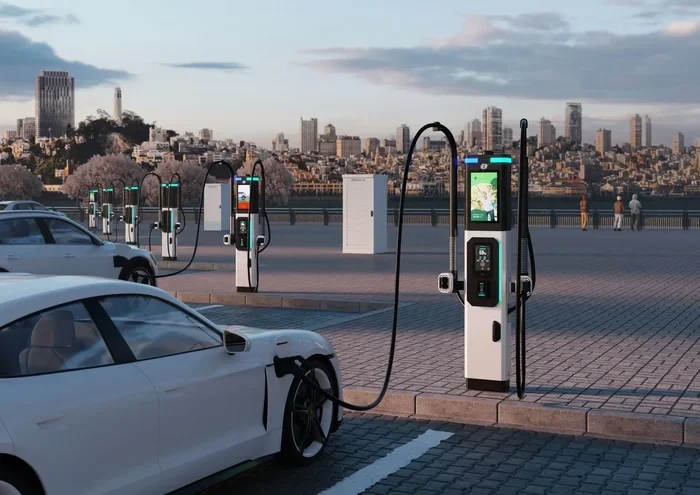
DC fast chargers, also called Level 3 chargers, use direct current to bypass the onboard charger. They deliver high power directly to the battery. Common DC fast charger types include the SAE Combo (CCS) and the CHAdeMO connector. Tesla Superchargers use a proprietary connector but are also DC fast chargers.
DC fast chargers range from 50 kW to 350 kW. A 50 kW charger adds about 100 miles of range in 20 to 30 minutes. A 150 kW charger can do the same in 10 to 15 minutes. The newest 350 kW chargers can add 200 miles in under 15 minutes.
However, DC fast charging is not meant for daily use. It is designed for road trips and quick stops. Frequent fast charging can cause battery degradation over time. The battery management system slows down the charging rate as the battery gets close to 80% to protect the cells. That is why fast charging from 10% to 80% is much faster than charging from 80% to 100%.
Comparison Table: Charging Levels at a Glance
| Charging Level | Typical Power Output | Time to Add 100 Miles | Best For |
|---|---|---|---|
| Level 1 (120V) | 1.4 – 1.9 kW | 20 – 30 hours | Overnight emergency top-ups |
| Level 2 (240V) | 3.3 – 19.2 kW | 3 – 8 hours | Home charging and public stations |
| DC Fast Charger (50-350 kW) | 50 – 350 kW | 15 – 45 minutes | Road trips and quick stops |
Factors That Affect How Long It Takes to Charge
Several factors go into the final charging time. Understanding them helps you plan your charging sessions and avoid frustration.
Battery Size and Capacity
The battery capacity is measured in kilowatt-hours. A larger battery holds more energy and takes longer to fill. For example, a Nissan Leaf with a 40 kWh battery charges much faster than a Tesla Model S with a 100 kWh battery on the same charger. When comparing electric vehicle charging time, always look at the kWh rating first.
However, a larger battery also means more range. So you do not need to charge as often if you drive a car with a big battery. The key is matching the battery size to your daily driving needs.
Starting and Ending Charge Levels
Charging from 10% to 80% is much faster than charging from 80% to 100%. The battery management system uses a constant current-constant voltage charging curve. The current stays high until the battery reaches about 50% to 70%. Then it gradually decreases as the battery fills up. The last 20% of the charge takes almost as long as the first 70%.
This is why many EV owners stop charging at 80%. They get the bulk of the range quickly and protect the battery. If you need a full 100% charge for a long trip, start charging early so the car has time to reach 100% without stressing the battery.
Temperature and Weather
Cold weather is the enemy of fast charging. When the temperature drops below 40°F, the battery chemistry slows down. The onboard charger reduces the power to warm the battery first. This can double the charging time in winter. Some EVs have a pre-conditioning feature that warms the battery while driving toward a fast charger. Use this feature to improve charging speed.
Hot weather can also affect charging. If the battery is too hot, the system reduces power to cool it down. Extreme heat can lead to battery degradation over time. Parking in the shade and charging in the evening when temperatures are cooler helps maintain optimal charging conditions.
Charger Condition and Cables
The condition of the charging cable and the charging station matters. A damaged cable can reduce the charging rate or stop charging altogether. Public charging stations that are not well-maintained may deliver lower power than their rated output. Always inspect the cable for fraying or damage before plugging in.
At home, make sure your wall outlet is properly grounded and wired for the amperage. A loose connection can cause slow charging or error messages. If you install a Level 2 charger, hire a licensed electrician to ensure the circuit is safe.
Common Mistakes That Slow Down Charging
- Using an ungrounded outlet: This can cause safety hazards and slow charging.
- Leaving the car plugged in at 100% for days: This stresses the battery and can reduce its lifespan.
- Ignoring the car’s pre-conditioning: Not warming the battery before a fast charge wastes time.
- Charging in extreme heat without shade: High temperatures trigger thermal limits that reduce speed.
Home Charging: What to Expect Every Day
Home charging is the most convenient way to own an electric car. You wake up every morning with a full battery. No detours to gas stations. No waiting in line. Here is what a typical home charging routine looks like.
Setting Up a Level 2 Charger at Home
A Level 2 home charging station is the backbone of daily EV ownership. You plug the car in when you arrive home and it charges while you sleep. A full charge overnight is guaranteed for most EVs. The charger connects to a 240-volt circuit, which an electrician can install in your garage or carport.
The installation cost varies. A simple Level 2 charger costs around $500 to $800. Installation by a licensed electrician adds $500 to $1,500 depending on your electrical panel and wiring distance. Many states and utilities offer rebates of $500 to $1,000. The charging cost at home is usually 3 to 5 cents per mile, much cheaper than gasoline.
Overnight Charging Myths
Some people worry that leaving the car plugged in all night will overcharge the battery. Modern EVs have a battery management system that stops charging when the battery reaches 100%. Once the charge is complete, the car draws power only to maintain the battery at 100%. This uses a tiny amount of electricity and is perfectly safe.
Another myth is that you should drain the battery completely before charging. This is not true. Lithium-ion batteries prefer partial charges. Keeping the state of charge between 20% and 80% is the best habit for long-term battery health. You can set a charging limit in the car’s settings to stop at 80% or 90% if you do not need a full charge.
Expert Insights: Electricians Share Tips
“I always recommend installing a dedicated circuit for the Level 2 charger,” says Mark, a licensed electrician with 15 years of experience. “Do not share the circuit with other appliances. A dedicated 40-amp circuit ensures the fastest and safest charging. Also, install a surge protector to shield the charger from power spikes.”
“If your electrical panel is old, upgrade it before installing the charger,” he adds. “A 200-amp panel gives you plenty of room for an EV charger and other home electronics.”
Quick Tips for Home Charging
- Set a daily charging schedule so the car is ready when you leave for work.
- Use a smart charger that sends data to your phone. You can monitor charging speed and cost.
- Keep the charge port clean. Dirt and moisture can cause connection issues.
- Plug in every day, even if the battery is only half empty. Frequent top-ups reduce the need for long charging sessions.
Public Charging Networks and Road Trips
Public charging stations are essential for road trips and long commutes. The public charging network has grown rapidly. You can now find fast chargers along most major highways. Here is what you need to know about using them.
How Fast Are Tesla Superchargers?
Tesla Superchargers are DC fast chargers that use a proprietary connector. They are known for reliability and speed. A V2 Supercharger delivers up to 150 kW, adding about 170 miles of range in 30 minutes. A V3 Supercharger delivers up to 250 kW, adding the same range in about 15 minutes. Tesla continues to expand its network, and the latest V4 chargers can deliver up to 350 kW.
Non-Tesla EVs can now use Superchargers with an adapter. The charging speed depends on the car’s maximum DC charging power. A non-Tesla EV that accepts 150 kW will charge at 150 kW on a V2 Supercharger. On a V3 or V4 charger, it will be limited to its own maximum rate.
Non-Tesla Fast Chargers Explained
For non-Tesla EVs, the two main DC fast charging standards are CCS (SAE Combo) and CHAdeMO. CCS is the standard in North America and Europe. CHAdeMO is used mainly by Nissan and some older EVs. Most new DC fast chargers support CCS. Some older stations still have CHAdeMO connectors, but CCS is becoming the universal standard.
Non-Tesla fast chargers are found at gas stations, rest stops, and shopping centers. Apps like PlugShare and ChargePoint help you locate them. Charging speeds vary widely. A 50 kW charger is considered slow for DC fast charging today. A 150 kW charger is standard. A 350 kW charger is the fastest available and can charge compatible EVs in record time.
Planning Your Charging Stops
Planning road trips with an electric car is easier than ever. Navigation systems in modern EVs automatically suggest charging stops based on your battery level and the route. Here are some tips to make public charging smooth.
- Start with a battery charge of at least 20% before heading to a fast charger.
- Aim to charge from 10% to 80%. This is the fastest and most efficient range.
- Use the car’s navigation to find chargers along your route and reserve a spot if the station supports it.
- Plan stops around meals or rest breaks. A 30-minute fast charge is perfect for a coffee and bathroom break.
- Check the charger status on the app before you arrive. Some chargers may be out of service or occupied.
Common Mistakes on Road Trips
- Arriving at a fast charger with a nearly empty battery: The car may limit the initial charging rate to protect the battery. Starting with at least 10% charge helps you get the fastest speed sooner.
- Ignoring the 80% limit: Charging from 80% to 100% on a fast charger can take as long as the first 70%. Unless you need every mile, stop at 80% and get back on the road.
- Not checking the connector type: Make sure the station has the right connector for your car. CCS and CHAdeMO are different and not interchangeable without an adapter.
Maximizing Battery Health and Charging Speed
Good charging habits keep your battery healthy and maintain fast charging speeds over the years. Battery degradation is a natural process, but you can slow it down with a few simple practices.
Optimal Charging Habits
The best habit is to charge at home every night. A Level 2 charger gives you a full battery every morning without any effort. Keep the daily charge between 20% and 80%. This range puts the least stress on the battery cells. If you need a full charge for a long trip, charge to 100% the night before and then drive to the fast charger with a full battery.
Avoid frequent DC fast charging for daily use. Fast charging generates more heat, which can accelerate battery degradation over thousands of cycles. Reserve fast charging for road trips and emergencies. For daily driving, Level 2 charging is gentle and efficient.
When to Avoid Fast Charging
There are times when you should skip the fast charger. If the battery is already very hot, let it cool down before fast charging. If the temperature is below freezing, some cars require a warm-up period before accepting fast charge. If the battery is already above 80%, the fast charger will slow down significantly, making it a waste of time.
Also, avoid charging to 100% and then leaving the car plugged in for days. Keeping a fully charged battery at high voltage stresses the cells. If you do not need the full range, set the charge limit to 90% or less.
Key Takeaways for Battery Longevity
- Charge at home with Level 2 whenever possible.
- Keep the daily state of charge between 20% and 80%.
- Use DC fast charging only for road trips and emergencies.
- Pre-condition the battery before fast charging in cold weather.
- Avoid leaving the car at 100% charge for extended periods.
- Check the battery health report in your car’s settings once a month.
Conclusion
How Long Does It Take to Fully Charge an Electric Car is a question with a practical answer. The time ranges from 30 minutes on a DC fast charger to over 40 hours on a standard outlet. Your daily routine, battery size, and charging setup determine where you fall on that spectrum. For most EV owners, a Level 2 home charger is the perfect solution. It fully charges the car overnight, costs just a few dollars, and keeps the battery healthy.
Public fast chargers are there for road trips and quick top-ups. They are fast, convenient, and growing every year. By understanding the three charging levels, the factors that affect charging time, and the best habits for battery health, you can enjoy electric car ownership with confidence. Plug in, plan your trips, and let the car do the rest. The future of driving is here, and charging it is simpler than you think.
Frequently Asked Questions
Can I charge my electric car on a standard household outlet?
Yes, you can use a standard 120-volt outlet with the Level 1 charging cable that comes with the car. However, this is the slowest method. It adds only 3 to 5 miles of range per hour. A full charge can take 40 to 50 hours. It is best for plug-in hybrids or emergency top-ups, not for daily use with a larger battery.
How long does it take to charge an electric car at a Tesla Supercharger?
A Tesla Supercharger V2 can add about 170 miles of range in 30 minutes. A V3 Supercharger can do the same in about 15 minutes. The exact time depends on the car’s battery size, the starting charge level, and the temperature. Charging from 10% to 80% is usually much faster than charging from 80% to 100%.
Does cold weather affect EV charging speed?
Yes, cold weather slows down charging significantly. When temperatures drop below 40°F, the battery management system reduces the charging power to warm the cells first. This can double the time it takes to charge on a DC fast charger. Pre-conditioning the battery while driving toward the charger helps maintain faster speeds.
Is it bad to charge my electric car every night?
No, charging every night is perfectly fine and recommended for most EV owners. Using a Level 2 charger at home, you can set a timer to stop charging at 80% or 90%. This keeps the battery in the optimal state of charge and extends its lifespan. Modern EVs have built-in systems that prevent overcharging.
How much does it cost to fully charge an electric car?
The cost depends on your local electricity rate and the battery size. At an average rate of $0.15 per kilowatt-hour, charging a 60 kWh battery from empty to full costs about $9. That equals roughly 3 to 5 cents per mile. Home charging is much cheaper than gasoline, and many utilities offer lower off-peak rates for overnight charging.
Can I install a Level 2 charger in an apartment or condo?
It can be challenging but is possible. You need permission from the building management and access to an electrical panel near your parking spot. Some apartments install shared Level 2 chargers in the parking lot. Utility companies and state programs often provide incentives for multifamily EV charging. Talk to your property manager about your options.