How to Charge a Kia Niro Your Ultimate Step by Step Guide
Charging a Kia Niro is simple whether you own the EV or hybrid version. This guide walks you through every method, from home wall box setup to public fast charging stations. You will learn charging times, costs, cable types, and pro tips to maximize your Kia Niro battery life and range on every trip.
If you just bought a Kia Niro or are thinking about getting one, you probably have one big question on your mind. How do you charge it? The good news is that charging a Kia Niro is straightforward. Whether you drive the electric version or the hybrid model, this guide covers everything you need to know.
The Kia Niro is one of the most popular electric vehicles on the road today. It offers a solid battery range, reliable performance, and a price point that fits many budgets. If you are coming from a petrol car, the charging process might feel new. But trust me, it becomes second nature very quickly.
In this article, we break down every charging method. You will learn about home charging setups, public stations, cable types, and how long each option takes. We also share practical tips to keep your battery healthy and your costs low. Let us get started.
Key Takeaways
- Multiple Charging Options: The Kia Niro supports home charging, public Level 2 stations, and DC fast charging for flexibility.
- Home Charging Is Most Convenient: A wall box charger lets you charge overnight and wake up to a full battery every morning.
- Charging Time Varies: Level 1 takes the longest, while DC fast charging can add significant range in under an hour.
- Know Your Cable Types: Type 2 and CCS connectors are the most common for the Kia Niro EV.
- Cost Savings Are Real: Charging at home is significantly cheaper than petrol or public charging stations.
- Battery Health Matters: Simple habits like not overcharging and avoiding extreme temperatures extend battery life.
📑 Table of Contents
- Understanding the Kia Niro Charging Options
- Step by Step: How to Charge Your Kia Niro at Home
- Charging the Kia Niro at Public Stations
- Charging Times and Costs Explained
- Choosing the Right Charging Cable and Adapter
- Tips to Maximize Your Kia Niro Battery Life
- Common Charging Mistakes to Avoid
- How Long Does a Kia Niro Battery Last?
- Kia Niro Hybrid vs EV Charging
- The Future of Kia Niro Charging
- Conclusion
Understanding the Kia Niro Charging Options
The Kia Niro gives you more than one way to charge. This flexibility is a huge advantage. You can charge at home, at work, or on the road. Each method has its own speed, cost, and convenience level. Let us look at them all.
Level 1 Charging (Standard Home Outlet)
The simplest way to charge your Kia Niro is using a regular household outlet. This is called Level 1 charging. You plug the included portable charger into a standard 120-volt socket. It is the slowest method, but it works in emergencies.
Level 1 charging adds about 3 to 5 miles of range per hour. That means a full charge can take 20 to 30 hours. This method is best for plug-in hybrid versions or for overnight top-ups when you do not drive much.
If you live in a small apartment and do not have a dedicated parking spot, Level 1 might be your only option. It is better than nothing. Just be patient because it takes a long time.
Level 2 Charging (Home Wall Box)
Level 2 charging is the sweet spot for most Kia Niro owners. You install a wall box charger in your garage or driveway. These units run on 240 volts, similar to what a large appliance uses.
A Level 2 charger adds about 25 to 30 miles of range per hour. A full charge from empty takes around 6 to 9 hours. This means you can plug in when you get home from work and wake up to a full battery every morning.
The cost of a wall box charger ranges from 500 to 1,200 dollars. Installation by a licensed electrician adds another 200 to 500 dollars. But the convenience and speed make it well worth the investment. If you want to explore cars in this price range, check out our guide on 7 to 8 lakh cars in India for options that include EV charging capabilities.
DC Fast Charging (Public Stations)
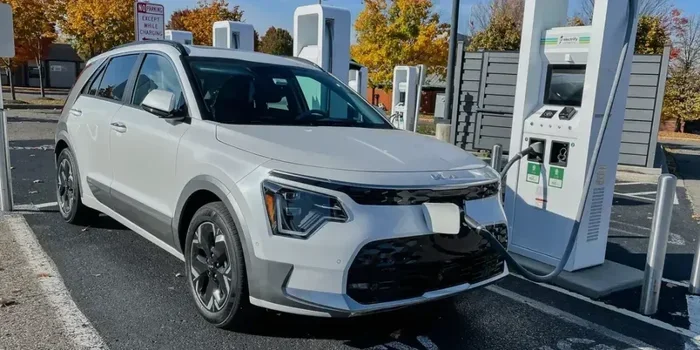
DC fast charging is the quickest way to juice up your Kia Niro EV. These stations are found at shopping centres, petrol stations, and highway rest stops. They use high-powered equipment that delivers energy directly to the battery.
DC fast charging can add up to 60 to 70 miles of range in just 20 minutes. A full charge from 10 to 80 percent takes about 45 to 55 minutes. This is perfect for long road trips or when you need a quick top-up.
However, frequent fast charging can generate more heat. Over time, this may affect battery health slightly. Use fast charging when you need it, but rely on Level 2 for your daily routine.
Step by Step: How to Charge Your Kia Niro at Home
Home charging is the most convenient option for daily use. Here is a clear walkthrough of the process.
Step 1: Choose Your Charging Equipment
You need two things to charge at home. A compatible charging cable and a power source. The Kia Niro comes with a portable EVSE cord set. This is the Level 1 charger that plugs into any standard outlet.
For faster charging, buy a Level 2 wall box charger. Make sure it is compatible with the Kia Niro charging port. Most wall boxes use a Type 2 connector, which fits the Niro perfectly.
Step 2: Install the Wall Box Charger
Hire a certified electrician to install your wall box. They will check your electrical panel capacity and run a dedicated circuit. A proper installation ensures safety and optimal charging speed.
Place the wall box near your parking spot. Make sure the cable reaches your car comfortably. Keep it away from direct sunlight and water exposure to protect the equipment.
Step 3: Connect the Charging Cable
Open the charging port on your Kia Niro. It is usually located on the front fender or near the headlight. Plug the connector firmly into the port until you hear a click.
Then connect the other end to the wall box or outlet. The charger will communicate with the car to verify the connection. You will see a light on the charger indicating it has started.
Step 4: Monitor the Charging Process
Most Kia Niro models let you monitor charging through the infotainment screen or the Kia mobile app. You can check the current charge level, estimated time remaining, and energy cost.
Set a charging schedule if your electricity provider offers off-peak rates. Charging during off-peak hours can save you a significant amount of money each month.
Step 5: Unplug and Go
Once the battery is full, the charger stops automatically. Press the button on the connector to release the lock. Pull the cable out carefully and store it in the trunk or under the floor panel.
Always make sure your hands are dry when handling the connector. Safety first, always.
Charging the Kia Niro at Public Stations
Public charging stations are everywhere now. You can find them at malls, offices, gyms, and highway rest areas. They are a great backup when you are away from home.
Finding a Public Charging Station
Use apps like PlugShare, ChargePoint, or the Kia navigation system to locate nearby stations. These apps show real-time availability and connector types. You can filter by fast charging or standard Level 2 stations.
Planning your route around charging stops makes long trips much easier. If you drive a Kia Niro hybrid, you might not need public charging as often. But for EV owners, it becomes part of your routine.
How to Use a Public Charger
Arrive at the station and park your Kia Niro so the charging port faces the charger. Open the port and plug in the connector.
Most public stations require payment. You can use a contactless card, a charging app, or a RFID membership card. Follow the on-screen instructions to start the session.
Stay near your car while it charges, especially at fast charging stations. Once the session is complete, the charger will beep or display a notification. Unplug and go.
Charging Times and Costs Explained
Understanding how long charging takes and what it costs helps you plan better. Here is a detailed breakdown.
| Charging Method | Voltage | Range Added Per Hour | Full Charge Time | Approximate Cost |
|---|---|---|---|---|
| Level 1 (Standard Outlet) | 120V | 3-5 miles | 20-30 hours | Included in home electricity |
| Level 2 (Wall Box) | 240V | 25-30 miles | 6-9 hours | 2-5 dollars per full charge |
| DC Fast Charging | 400V+ | 60-70 miles (20 min) | 45-55 min (10-80%) | 10-25 dollars per session |
Home charging is by far the cheapest option. The average cost of electricity is much lower than petrol or diesel. Over a year, you can save hundreds of dollars compared to a traditional car.
If you are exploring affordable EV options, our article on 5 to 8 lakh cars includes several electric and hybrid models worth considering alongside the Kia Niro.
Choosing the Right Charging Cable and Adapter
The right cable makes a big difference in charging speed and convenience. The Kia Niro uses a Type 2 connector for AC charging and a CCS (Combined Charging System) port for DC fast charging.
Type 2 Connector
The Type 2 connector is the standard for Level 2 and Level 3 AC charging in most countries. It has a rounded shape with multiple pins. Your Kia Niro comes with a Type 2 cable in the portable charger kit.
If you buy a public Level 2 charger, it will almost always have a Type 2 socket. Just bring your own cable if the station does not provide one.
CCS Combo 2 Connector
The CCS Combo 2 connector supports DC fast charging. It combines the Type 2 pins with two additional high-power pins on the bottom. This allows much faster energy transfer.
The Kia Niro EV supports DC fast charging up to 77 kW. This is fast enough to get you back on the road quickly. Just remember that not all public stations offer CCS. Check before you drive to a station.
Adapter Tips
Kia provides a portable adapter with the car. This adapter lets you plug into a regular 120-volt or 240-volt outlet. Keep it in the trunk for emergencies.
Never use an adapter that does not match your car specifications. Using the wrong adapter can damage the battery or the charging system. When in doubt, consult your owner manual or visit a Kia service centre.
For more on car electrical components and power systems, check out our detailed guide on 12V to 230V car inverters to understand how your car’s electrical system works.
Tips to Maximize Your Kia Niro Battery Life
Your battery is the most expensive component in your Kia Niro. Taking care of it saves you money and keeps your car running strong for years.
Charge Between 20 and 80 Percent
Avoid charging to 100 percent every day if you can. Keeping the battery between 20 and 80 percent reduces stress on the cells. This simple habit can add years to your battery life.
Of course, charge to 100 percent before a long trip. But for daily commuting, 80 percent is plenty and better for the battery.
Avoid Extreme Temperatures
Extreme heat and cold both affect battery performance. Park your Kia Niro in a garage or shaded area when possible. In very cold weather, pre-condition the battery while it is still plugged in.
This warms the battery to an optimal temperature before you drive. It improves range and charging speed.
Use Regenerative Braking
The Kia Niro has regenerative braking that recovers energy when you slow down. This energy goes back into the battery. It is a free way to add a few extra miles of range.
Set the regenerative braking level to high in the car settings. You will feel the car slowing down when you lift off the accelerator. This feature works in both the EV and hybrid versions.
Update Your Software Regularly
Kia releases software updates that optimize battery management. These updates can improve charging efficiency and range. Keep your car connected to Wi-Fi and install updates promptly.
Limit Fast Charging
DC fast charging is convenient but generates more heat. Over time, frequent fast charging can degrade the battery slightly. Use it for long trips and rely on Level 2 charging for your daily routine.
Common Charging Mistakes to Avoid
Even experienced EV drivers make charging mistakes. Here are some common ones and how to avoid them.
- Leaving the battery at 100 percent for days: This puts unnecessary stress on the cells. Unplug once charging is complete.
- Using damaged cables: Frayed or exposed cables are a fire hazard. Inspect your cables regularly and replace them if needed.
- Charging in extreme heat: Charging in direct sunlight during hot weather can overheat the battery. Charge in a shaded or indoor area.
- Ignoring the manual: The owner manual has specific charging guidelines for your model. Read it and follow the recommendations.
- Mixing charger types: Always use the correct connector for your charging method. Using the wrong one can damage the charging port.
For more on car electrical connections and socket types, our article on 12V car socket to 3 pin explains how different power connections work in vehicles.
How Long Does a Kia Niro Battery Last?
Battery longevity is a top concern for EV buyers. The Kia Niro EV comes with a battery warranty of 8 years or 100,000 miles, whichever comes first. This gives you peace of mind.
In real-world conditions, the Kia Niro battery can last 10 to 15 years or more. Many owners report minimal range loss even after 5 years of regular use. The key is proper charging habits and regular maintenance.
Keep your battery clean and dry. Avoid deep discharging below 10 percent regularly. These simple steps go a long way in preserving battery health.
Kia Niro Hybrid vs EV Charging
The Kia Niro comes in two powertrain options. The hybrid version does not need external charging. It charges its small battery through regenerative braking and the petrol engine.
The EV version needs external charging. It has a larger battery and offers zero-emission driving. If you want to learn more about the differences between hybrid and electric powertrains, check out our guide on hybrid vs electric vehicles.
For hybrid owners, fuel efficiency is the main concern. The Kia Niro hybrid delivers excellent mileage, often exceeding 50 miles per gallon combined. For EV owners, charging strategy and range planning are the focus.
Both versions share the same reliable Kia platform and offer a comfortable driving experience. Your choice depends on your daily driving habits and access to charging.
The Future of Kia Niro Charging
Charging technology is evolving fast. New ultra-fast chargers can deliver 150 kW or more. The next generation of Kia Niro models may support even faster charging speeds.
Wireless charging is also on the horizon. Imagine parking your Kia Niro over a charging pad and never needing a cable. This technology is still in development but could become mainstream within a few years.
Kia is investing heavily in EV infrastructure. They are partnering with charging networks to expand access to fast chargers. This means future Kia Niro owners will have even more convenient options.
Conclusion
Charging a Kia Niro is easier than you might think. Whether you use a home wall box, a public Level 2 station, or a DC fast charger, the process is simple and user-friendly. The key is finding the method that fits your lifestyle and sticking with it.
Invest in a good home charger for daily convenience. Use public fast chargers for road trips. And always take care of your battery with smart charging habits. Your Kia Niro will reward you with years of reliable, efficient, and enjoyable driving.
Start with these steps today. Charge smart, drive far, and enjoy every mile in your Kia Niro.
Frequently Asked Questions
How long does it take to charge a Kia Niro at home?
With a Level 2 wall box charger, a full charge takes about 6 to 9 hours. Using a standard Level 1 outlet, it can take 20 to 30 hours. Your actual charging time depends on battery size and starting charge level.
Can I charge my Kia Niro at any public charging station?
The Kia Niro EV uses a Type 2 connector for AC charging and CCS for DC fast charging. Most public stations support these standards. Always check the station compatibility before driving there.
What is the cost of charging a Kia Niro at home?
Home charging costs vary by electricity rates. On average, a full charge costs between 2 to 5 dollars. This is much cheaper than filling a petrol tank, saving you money over time.
Is DC fast charging bad for the Kia Niro battery?
Occasional fast charging is fine and convenient. However, frequent fast charging generates more heat, which can slightly reduce battery longevity over many years. Use it when you need it, not as your daily routine.
Does the Kia Niro hybrid need to be plugged in to charge?
No, the Kia Niro hybrid self-charges through regenerative braking and the petrol engine. You do not need a charging station. It is a great option if you do not have access to home charging.
How can I extend the battery life of my Kia Niro?
Charge between 20 and 80 percent for daily use, avoid extreme temperatures, use regenerative braking, and keep software updated. These simple habits help maintain battery health for many years.
=== INTERNAL LINKS ===
For more information on cars in your budget, check out our guides on 7 to 8 lakh cars in India and 5 to 8 lakh cars. Also, learn more about your car electrical system in our article on 12V to 230V car inverters.