How Much Are Tires for a Honda Civic Compared to Other Cars
How much are tires for a Honda Civic? On average, you can expect to pay between $450 and $800 for a full set of tires, depending on the type, brand, and size. This guide breaks down the exact costs, compares them to other compact cars, and shares practical tips to help you save money on your next tire purchase.
Key Takeaways
- Average Cost: Honda Civic tires typically range from $450 to $800 for a full set of four.
- Brand Matters: Budget brands like General and Falken cost less, while premium brands like Michelin and Bridgestone offer longer tread life.
- Size Affects Price: The standard Honda Civic tire size is 195/65R15, but larger wheels on Sport trims push costs higher.
- OEM vs Aftermarket: Aftermarket tires often provide better value than original equipment tires from the dealership.
- Maintenance Extends Life: Regular tire rotation and proper pressure can add thousands of miles to your tires.
- Compare Widely: Shopping around at online retailers and local shops can save you $50 to $100 per tire.
📑 Table of Contents
Understanding Honda Civic Tire Pricing
So, how much are tires for a Honda Civic? The short answer is that most drivers spend between $450 and $800 for a complete set of four tires. But the real answer depends on several factors that we will break down in this guide.
The Honda Civic is one of the most popular compact sedans on the road. It is known for being reliable, fuel-efficient, and affordable to maintain. Tire replacement is one of the regular costs every Civic owner will face at some point. Whether you drive a base LX trim or a sporty Si model, understanding tire pricing helps you make smart buying decisions.
Several things influence the final price you pay. These include the tire brand, the tire size, the type of tire, and where you buy them. Let us look at each of these factors in detail so you know exactly what to expect.
What Affects Tire Prices for a Honda Civic
The price of tires varies a lot from one model to the next. Here are the main factors that change the cost:
- Tire Brand: Premium brands like Michelin and Bridgestone cost more but often last longer. Budget brands like General and Falken offer solid performance at a lower price point.
- Tire Size: The standard Civic uses 195/65R15 tires. However, Sport and Touring trims may come with 18-inch or 19-inch wheels, which require larger and more expensive tires.
- Tire Type: All-season tires are the most common and affordable. Performance tires, all-terrain tires, and run-flat tires cost more.
- Where You Buy: Online retailers often have lower prices than local tire shops. Warehouse clubs like Costco also offer competitive deals.
When you compare tire prices across different brands and retailers, the differences can be surprising. A single tire might range from $80 to $250 depending on these factors. Multiply that by four, and you can see why shopping smart matters.
Honda Civic Tire Sizes and Types
Not all Honda Civics use the same tires. The tire size depends on the model year, trim level, and wheel package. Knowing the right size is the first step to finding the best price.
OEM vs Aftermarket Tires
When you buy a new Honda Civic, it comes with original equipment (OEM) tires. These are the tires the manufacturer installed at the factory. OEM tires are designed to meet the car’s performance and safety standards. However, they are often more expensive than aftermarket options.
Aftermarket tires are made by third-party manufacturers. They often provide the same quality at a lower price. Many drivers choose aftermarket tires because they get more options and better value. Some popular aftermarket brands for the Honda Civic include:
- Michelin Defender – Excellent tread life and all-season performance
- Continental TrueContact – Great fuel economy and wet traction
- General AltiMAX RT45 – A solid budget-friendly option
- Falken Ziex ZE310 – Good balance of comfort and performance
If you are wondering whether run-flat tires are an option, it is worth noting that most Honda Civics do not come with run-flat tires. Some drivers switch to run-flat tires for added safety, but this choice increases the overall cost. For comparison, Tesla vehicles often use run-flat or low-profile tires, which can also raise replacement costs significantly.
How Honda Civic Tire Costs Compare to Other Cars
One of the best ways to understand tire pricing is to compare it with similar vehicles. The Honda Civic sits in the compact car segment, which generally has lower tire costs than larger vehicles like SUVs and trucks.
Compact Car Tire Price Comparison
Here is a simple look at how Honda Civic tire costs stack up against other popular compact cars:
- Honda Civic: $450 – $800 for a full set (195/65R15 to 215/45R18)
- Toyota Corolla: $400 – $750 for a full set (similar size range)
- Mazda 3: $450 – $850 for a full set (slightly wider tires on some trims)
- Hyundai Elantra: $380 – $700 for a full set (often the most affordable option)
- Ford Focus: $420 – $780 for a full set
As you can see, the Honda Civic falls right in the middle of the pack. It is not the cheapest, but it is far from the most expensive. The Civic’s tires are reasonably priced, which adds to the car’s overall value proposition.
One thing to keep in mind is that tire costs vary by trim level. A base Civic LX with 15-inch wheels uses smaller, less expensive tires. A Civic Si or Touring with 18-inch or 19-inch wheels needs larger tires that cost more per unit. Always check your owner’s manual or the tire placard on the driver’s door jamb to confirm your exact size.
Best Tire Brands for Honda Civic
Choosing the right brand is one of the most important decisions you will make. The brand affects not only the price but also the ride quality, noise level, and how long the tires last.
Budget-Friendly Options
If you want to keep costs low, several brands offer excellent value:
- General Tire: The AltiMAX RT45 is a popular choice for Civic owners. It costs around $80 to $100 per tire and delivers reliable all-season performance.
- Falken: The Ziex ZE310 EcoRun offers good fuel economy and a quiet ride. Prices typically range from $75 to $95 per tire.
- Cooper: The Cooper CS5 Ultra Touring is a solid all-rounder at an affordable price point.
Budget tires are a great choice for daily commuting. They may not offer the same premium feel as high-end brands, but they get the job done safely and reliably.
Premium Tire Options
If you drive a lot or want maximum performance, premium tires are worth the investment:
- Michelin: The Defender 2 is one of the longest-lasting tires on the market. It typically costs $150 to $200 per tire but can last 70,000 to 80,000 miles.
- Bridgestone: The Turanza QuietTrack offers a smooth, quiet ride with excellent wet traction. Prices range from $130 to $180 per tire.
- Continental: The TrueContact Tour provides great fuel economy and consistent performance across seasons.
Premium tires cost more upfront, but their longer tread life often makes them cheaper in the long run. When you calculate the cost per mile, a $200 tire that lasts 80,000 miles is a better deal than a $90 tire that lasts 40,000 miles.
Tips to Save Money on Honda Civic Tires
Nobody wants to overspend on tires. The good news is that there are several easy ways to reduce your tire costs without sacrificing quality.
When to Replace Your Tires
Timing your tire replacement can save you money. Here are some tips:
- Check your tread depth regularly. Use the penny test. Insert a penny into the tread with Lincoln’s head facing down. If you can see the top of his head, it is time for new tires.
- Watch for visible wear. Uneven wear patterns often signal alignment or suspension problems. Fixing these issues early can prevent premature tire wear.
- Replace tires before they become dangerous. Worn tires reduce traction, especially on wet roads. This can increase the risk of accidents.
Replacing all four tires at once is recommended for the best performance and safety. However, if only two tires are worn, you can replace just the pair. Make sure the new tires match the remaining ones in brand, size, and tread pattern.
Where to Buy Tires for the Best Price
The place you buy your tires has a big impact on the final cost. Here are some options to consider:
- Online Retailers: Sites like Tire Rack and Discount Tire often have the lowest prices. They also offer free shipping to a local installer.
- Warehouse Clubs: Costco and Sam’s Club sometimes offer discounted tire packages that include mounting, balancing, and rotation.
- Local Tire Shops: Independent shops may offer competitive pricing and personalized service. Always get quotes from at least three places.
- Dealerships: The Honda dealership is the most convenient option, but it is usually the most expensive. You can often find the same tires elsewhere for less.
Also, remember that proper tire maintenance extends the life of your tires. Keeping your tires properly inflated, rotating them every 5,000 to 7,500 miles, and avoiding aggressive driving all help your tires last longer. Simple habits like these can save you hundreds of dollars over the life of your vehicle.
Just like washing your car too frequently can cause damage, neglecting tire care can lead to premature wear and higher costs. And just as a worn-out serpentine belt can affect how your car runs, worn tires can reduce fuel efficiency and handling. Staying on top of maintenance keeps everything working at its best.
Maintaining Your Honda Civic Tires for Longevity
Buying new tires is an investment. You want them to last as long as possible. Proper maintenance is the key to getting the most miles out of every set.
Tire Rotation and Pressure
Tire rotation means moving each tire to a different position on the car. This helps ensure even wear across all four tires. Most experts recommend rotating your tires every 5,000 to 7,500 miles, or every other oil change.
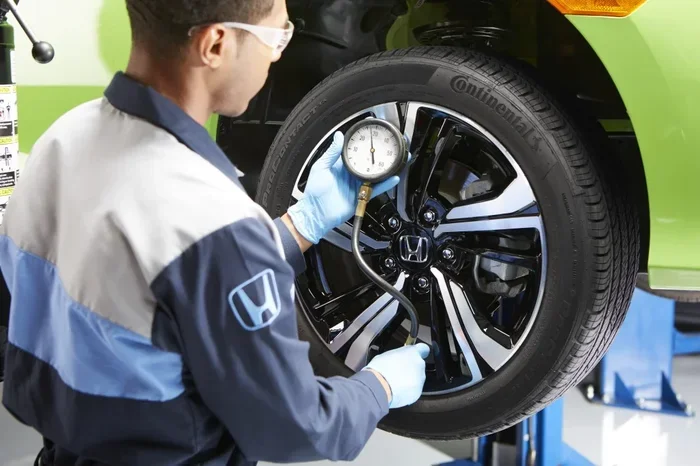
Checking your tire pressure at least once a month is equally important. Underinflated tires wear out faster on the outer edges of the tread. Overinflated tires wear out faster in the center. Both conditions reduce fuel economy and shorten tire life.
The recommended tire pressure for a Honda Civic is usually listed on a sticker inside the driver’s door jamb. It typically ranges from 30 to 35 PSI. Make it a habit to check your pressure when the tires are cold, meaning the car has been parked for at least three hours.
Alignment and Suspension Checks
Misaligned wheels cause uneven tire wear. If you notice your car pulling to one side or your steering wheel vibrating, get an alignment check. A proper alignment typically costs between $75 and $100, which is much less than replacing tires prematurely.
Your suspension system also affects tire wear. Worn shocks or struts can cause cupping, which looks like scalloped dips in the tread. If you notice this pattern, have your suspension inspected right away. Addressing suspension issues early protects your tires and improves your driving experience.
Keeping your tires in good condition also contributes to overall vehicle safety. Just as you would check whether a car can overheat on a hot day, you should regularly inspect your tires for signs of damage or excessive wear. A well-maintained set of tires gives you better traction, shorter stopping distances, and a smoother ride.
Final Thoughts on Honda Civic Tire Costs
So, how much are tires for a Honda Civic? The answer is clear: most drivers will spend between $450 and $800 for a full set, with the exact price depending on brand, size, and type. The Honda Civic remains one of the most affordable compact sedans to maintain, and tires are no exception.
By choosing the right brand, shopping around for the best price, and staying on top of maintenance, you can keep your tire costs low while enjoying safe and reliable driving. Whether you go with budget-friendly General tires or premium Michelin defenders, the key is to make an informed decision that fits your driving needs and budget.
Take the time to compare options, read reviews, and consult with tire professionals. A little effort upfront saves you money and headaches down the road. Your Honda Civic will thank you with better fuel economy, smoother handling, and many more miles of trouble-free driving.
Remember, tires are the only part of your car that touches the road. Investing in quality tires is investing in your safety and the longevity of your vehicle. Make the smart choice, and your Honda Civic will keep running strong for years to come.
Frequently Asked Questions
How much does it cost to replace all four tires on a Honda Civic?
On average, replacing all four tires on a Honda Civic costs between $450 and $800. The exact price depends on the tire brand, size, and type you choose. Budget tires will be at the lower end, while premium options cost more.
What size tires does a Honda Civic use?
The standard Honda Civic uses 195/65R15 tires. However, Sport and Touring trims with larger wheels may require 205/55R16 or even 215/45R18 tires. Always check your owner’s manual or the tire placard on the driver’s door jamb for the correct size.
How often should Honda Civic tires be replaced?
Honda Civic tires typically last between 40,000 and 70,000 miles depending on the brand and driving habits. Regular maintenance, proper inflation, and timely rotations can help extend tire life significantly.
Are Honda Civic tires expensive compared to other cars?
No, Honda Civic tires are reasonably priced for a compact car. They are comparable to Toyota Corolla and Hyundai Elantra tires. The cost is higher than economy cars but lower than larger vehicles like SUVs and trucks.
Can I mix tire brands on my Honda Civic?
It is best to use the same brand, size, and tread pattern on all four tires. Mixing brands can cause uneven wear and handling issues. If you must replace only two tires, install them on the rear axle for better stability.
Do Honda Civic tires need special maintenance?
Honda Civic tires benefit from regular rotation every 5,000 to 7,500 miles, monthly pressure checks, and alignment inspections. These simple steps help maximize tread life and keep your car driving safely and efficiently.
=== CONCLUSION ===
How much are tires for a Honda Civic compared to other cars? The answer is that they are competitively priced, typically ranging from $450 to $800 for a full set. The Honda Civic remains one of the most affordable and practical compact sedans on the market, and tire costs reflect that value.
By understanding the factors that affect tire pricing, choosing the right brand for your needs, and maintaining your tires properly, you can get the best return on your investment. Whether you prioritize budget-friendly options or premium performance, there is a tire out there that fits your Honda Civic perfectly.
Take action today. Check your tire pressure, inspect your tread depth, and start comparing prices from reputable retailers. A small effort now can save you significant money and keep your Honda Civic safe and reliable for many miles ahead.