Do You Have to Have Car Insurance in Florida Right Now
Yes, you must have car insurance in Florida. Florida is a no-fault insurance state that requires every driver to carry minimum liability coverage and personal injury protection (PIP). Driving without car insurance in Florida can lead to fines, license suspension, and vehicle impoundment.
Do you have to have car insurance in Florida? The short answer is yes. Florida law requires every driver on public roads to carry a minimum level of auto insurance. Whether you drive a brand-new sedan or a used pickup truck, you need proof of coverage. But what exactly does Florida require? And what happens if you get caught driving without it?
This guide breaks down everything you need to know about Florida car insurance laws. We will walk you through the minimum requirements, the penalties for driving uninsured, and tips to find affordable auto insurance that fits your budget. If you live in Florida or plan to drive there, this article is a must-read.
Key Takeaways
- Car insurance is mandatory in Florida: The state requires all drivers to carry a minimum level of coverage, including PIP and property damage liability.
- Florida follows no-fault rules: Your own insurance pays for your injuries first, regardless of who caused the accident.
- Penalties are steep: Driving uninsured in Florida can result in fines up to $500, license suspension, and even vehicle impoundment.
- Minimum coverage is not enough for serious accidents: The legal minimums are low, and serious crashes can easily exceed those limits.
- Full coverage is highly recommended: Adding comprehensive and collision coverage protects your vehicle and your wallet.
- You can get insurance even on a tight budget: Many affordable options exist, and shopping around saves money.
- You need proof of insurance at all times: Carry your insurance card in the vehicle and be ready to show it during a traffic stop.
📑 Table of Contents
- Why Florida Requires Car Insurance
- Florida Minimum Car Insurance Requirements
- Penalties for Driving Without Insurance in Florida
- Why Minimum Coverage Is Not Enough
- How to Find Affordable Car Insurance in Florida
- What to Do If You Cannot Afford Insurance
- Florida Financial Responsibility Law and Proof of Insurance
- Common Mistakes Florida Drivers Make With Car Insurance
- Frequently Asked Questions About Florida Car Insurance
- Final Thoughts on Florida Car Insurance
Why Florida Requires Car Insurance
Florida is one of a handful of states that mandates car insurance for all drivers. The reason is simple: car accidents cost money. Medical bills, vehicle repairs, and legal fees add up fast. Without insurance, one bad accident can destroy your finances. The state stepped in to make sure every driver can pay for the damage they cause.
Florida operates under what is called a no-fault insurance system. This means that after an accident, your own insurance company pays for your injuries first. It does not matter who was at fault. This system is designed to speed up claims and reduce lawsuits. But it also means every driver needs solid coverage.
What Is No-Fault Insurance?
In a no-fault state like Florida, each driver deals with their own insurance company after a crash. Your personal injury protection, or PIP, covers your medical bills. It also covers lost wages if you cannot work after an accident. This is different from tort states, where the at-fault driver’s insurance pays for everything.
No-fault insurance does not mean no one is at fault. It just means your insurance pays first. If your injuries are serious enough, you can step outside the no-fault system and sue the other driver. Florida has a serious injury threshold that allows this. Understanding how no-fault insurance works is key to staying compliant and protected.
Florida Minimum Car Insurance Requirements
Florida law sets specific minimum car insurance requirements that every driver must meet. These are the bare minimums. They are not suggestions. Driving without at least these limits is illegal. Here is what Florida requires:
- Personal Injury Protection (PIP): $10,000 per person per accident
- Property Damage Liability (PDL): $10,000 per accident
That is it. Florida does not require bodily injury liability coverage. This is unusual. Most other states require both bodily injury and property damage liability. The lack of a bodily injury requirement is why Florida has so many uninsured drivers on the road.
What Does PIP Cover?
PIP coverage pays for your medical expenses after an accident, regardless of who caused it. It also covers a portion of your lost wages if you cannot work. PIP pays up to 80% of your medical bills and 60% of your lost income. It also covers funeral costs in the worst-case scenario.
However, PIP has limits. The $10,000 minimum may not cover a serious accident. A single hospital stay can easily exceed that amount. This is why many Florida drivers choose to buy higher PIP limits. It is a smart move that can save you from financial ruin.
What Does Property Damage Liability Cover?
Property damage liability pays for damage you cause to someone else’s property. This includes their vehicle, a fence, a building, or any other property. The $10,000 minimum is quite low. A single fender bender with a newer vehicle can easily cost more than that.
If you cause an accident and your PDL limit is too low, you are personally responsible for the rest. Your savings, your car, and even your wages could be at risk. This is why experts recommend carrying higher property damage liability limits than what Florida requires.
Penalties for Driving Without Insurance in Florida
Driving without car insurance in Florida is a serious offense. The state takes this very seriously. If you are caught driving uninsured, you will face harsh penalties. Here is what could happen:
- First Offense: A fine of $150 to $500. Your vehicle may be impounded.
- Second Offense: A fine of $500 to $1,000. Your license and registration may be suspended for up to one year.
- Third Offense: A fine of $1,000 to $2,500. Your license and registration may be suspended for up to three years.
These are not small penalties. A license suspension can affect your job, your daily routine, and your ability to get around. And if you cause an accident while uninsured, the financial consequences can be devastating. You could face a lawsuit, wage garnishment, and years of debt.
Can You Go to Jail for Driving Without Insurance?
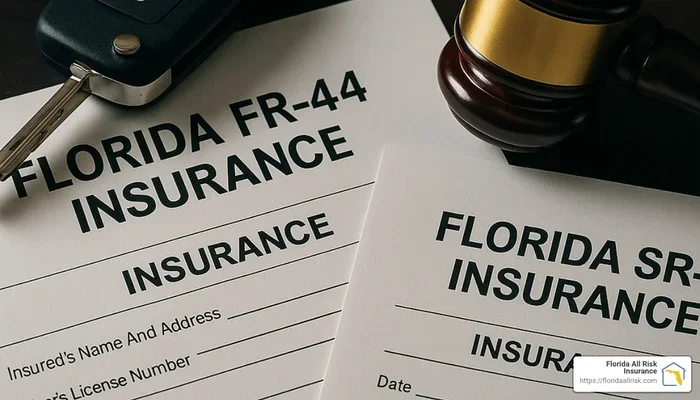
Jail time is rare for a first offense, but it is possible. Repeat offenders and those involved in serious accidents while uninsured may face jail time. The court can also order you to file an SR-22 insurance form. This is a certificate of financial responsibility that proves you carry insurance. SR-22 filing usually comes with higher premiums and lasts for several years.
The best way to avoid all of this is simple: keep your auto insurance active and never let it lapse. Set up automatic payments and renewal reminders. Staying insured is always cheaper than dealing with the consequences of driving uninsured.
Why Minimum Coverage Is Not Enough
Florida’s minimum car insurance requirements are among the lowest in the country. While they keep you legal, they do not offer much protection. A serious accident can easily cost tens of thousands of dollars. The $10,000 PIP and PDL limits may disappear in a single hospital visit or a collision with a newer vehicle.
Consider this scenario. You rear-end another car at a red light. The other driver has a brand-new SUV. The damage to their vehicle alone could be $15,000 or more. Your property damage liability covers only $10,000. You are now personally responsible for the remaining $5,000. That is money out of your own pocket.
This is why most experts recommend carrying full coverage car insurance. Full coverage includes comprehensive and collision coverage. It protects your vehicle in addition to other people’s vehicles and property. It is an investment in your financial security.
What Is Full Coverage?
Full coverage is a term that usually means liability coverage plus comprehensive and collision coverage. Here is what each part does:
- Liability Coverage: Pays for damage and injuries you cause to others.
- Comprehensive Coverage: Pays for damage to your car from non-collision events like theft, fire, flooding, or hail.
- Collision Coverage: Pays for damage to your car in a crash, regardless of fault.
Full coverage costs more than minimum coverage. But it can save you thousands of dollars in the long run. If you have a car loan or lease, your lender will likely require full coverage anyway.
How to Find Affordable Car Insurance in Florida
Car insurance in Florida can be expensive. The state has high rates due to its large population, tourist traffic, and frequent storms. But that does not mean you have to overpay. There are several ways to find affordable car insurance that meets your needs.
Shop Around and Compare Quotes
Every insurance company uses different factors to set your premium. Your age, driving record, credit score, and vehicle type all matter. The same driver can pay very different prices at different companies. Always get at least three quotes before choosing a policy.
Use online comparison tools to save time. These tools let you compare rates from multiple insurers in minutes. You might be surprised at how much prices vary. A few extra minutes of shopping can save you hundreds of dollars per year.
Ask About Discounts
Most insurers offer discounts you may not know about. Common discounts include:
- Safe driver discounts for maintaining a clean driving record
- Multi-policy discounts when you bundle home and auto insurance
- Good student discounts for drivers under 25
- Low-mileage discounts if you drive less than 10,000 miles per year
- Defensive driving course discounts
Ask your agent about every available discount. You might be leaving money on the table without even knowing it. A few small discounts can add up to significant savings over time.
Consider Raising Your Deductible
Your deductible is the amount you pay out of pocket before insurance kicks in. A higher deductible means lower monthly premiums. If you have enough savings to cover a higher deductible, this can be a smart way to reduce your insurance premium Florida costs.
Just make sure you can afford the deductible if you ever need to file a claim. Raising your deductible saves money only if you do not have frequent claims.
What to Do If You Cannot Afford Insurance
If you are struggling to afford car insurance, you are not alone. Many Florida drivers face this challenge. But driving uninsured is never the answer. Here are some options to consider:
- Usage-Based Insurance: Some companies offer pay-per-mile or pay-how-you-drive plans. If you drive very little, this can save you a lot of money.
- State Programs: Florida offers the FR-44 and HSIP (High-Risk Insurance Plan) for drivers who cannot find coverage elsewhere. These programs are designed as a last resort.
- Reduce Coverage on Older Vehicles: If your car is worth less than $3,000, you may not need comprehensive and collision coverage. Dropping these can lower your premium.
- Talk to Your Agent: Your insurance agent can help you find a policy that fits your budget. They may have options you have not considered.
No matter what, do not let your policy lapse. Even a one-day gap in coverage can cause problems. If you need to cancel your policy, make sure you have a new one in place first.
Florida Financial Responsibility Law and Proof of Insurance
Florida follows a financial responsibility law. This means every driver must prove they can pay for damages caused by an accident. The most common way to prove this is through car insurance. Your insurance card serves as your proof of financial responsibility.
You must carry your insurance card in your vehicle at all times. If you are pulled over, the officer will ask to see it. You can also be asked for proof during a traffic accident. If you cannot provide proof, you may face immediate penalties.
Some drivers wonder, can you use an E-ZPass in a rental car? Yes, but rental cars also require insurance coverage. Whether you use a personal policy, a credit card benefit, or the rental company’s coverage, you must have proof of financial responsibility. Similarly, if you can you rent a car at 24, you will need insurance. Most rental companies require renters to be at least 21, and insurance is mandatory regardless of age.
Florida law enforcement can verify your insurance electronically through the Florida Highway Safety and Motor Vehicles database. This means you cannot simply claim you had insurance and avoid a penalty. The state can check your status instantly. Always keep your policy active and your proof of insurance accessible.
Common Mistakes Florida Drivers Make With Car Insurance
Many Florida drivers make avoidable mistakes when it comes to auto insurance. Here are some of the most common ones:
- Buying only the minimum: The legal minimums are low and often not enough to cover a real accident.
- Letting insurance lapse: Even a one-day gap can result in fines and license suspension.
- Not comparing quotes: Staying with the same insurer for years without shopping around can cost you hundreds of dollars.
- Ignoring uninsured motorist coverage: This coverage protects you if the other driver has no insurance. It is especially important in Florida, which has many uninsured drivers.
- Not understanding PIP limits: Many drivers assume PIP covers everything. It does not. Know your limits and what is covered.
Avoiding these mistakes can save you money, stress, and legal trouble. Take the time to understand your policy and make sure it fits your needs.
Frequently Asked Questions About Florida Car Insurance
Can you drive a totaled car in Florida without insurance?
No, you need insurance even if your car is totaled. Florida requires all drivers to carry at least PIP and property damage liability coverage. If your car is totaled and you still drive it, you must have insurance. If the vehicle is no longer drivable, you should notify the DMV and cancel your registration to avoid unnecessary premiums.
What happens if you get into an accident without insurance in Florida?
If you cause an accident without insurance, you will face fines, license suspension, and possible vehicle impoundment. You will also be personally responsible for all damages and medical bills. The other driver can sue you for compensation. This can lead to wage garnishment and long-term financial damage.
Do you need insurance if you do not drive your car in Florida?
Yes. Florida law requires insurance for any vehicle registered in the state. Even if you do not drive your car regularly, it must be insured. You cannot register a vehicle without proof of insurance. The only exception is if you formally declare the vehicle non-operational with the DMV.
Can you get car insurance with a suspended license in Florida?
It is possible but difficult. Most insurers will not cover a driver with a suspended license. You may need to file an SR-22 form and work with a high-risk insurer. Once your license is reinstated, you can shop for better rates. Maintaining continuous coverage is the best way to rebuild your driving record.
How much does car insurance cost in Florida?
The average cost of car insurance in Florida is higher than the national average. Rates vary based on your age, driving record, vehicle type, and coverage levels. On average, full coverage can cost between $150 and $300 per month. Shopping around and taking advantage of discounts can help lower your rates significantly.
Is Florida a no-fault state for car insurance?
Yes, Florida is a no-fault insurance state. This means your own insurance pays for your injuries after an accident, regardless of who caused it. You must carry PIP coverage to comply with the law. No-fault insurance speeds up claims but also requires every driver to carry minimum coverage.
Final Thoughts on Florida Car Insurance
The bottom line is clear: you must have car insurance in Florida. It is the law. It protects you financially. And it gives you peace of mind every time you get behind the wheel. Florida’s minimum requirements are low, but they are the starting point. For real protection, consider carrying more than the minimum.
Take the time to compare quotes, understand your coverage, and stay compliant. Insurance is not just a legal requirement. It is a smart financial decision. One accident without insurance can change your life forever. Do not let that happen. Keep your policy active, your coverage adequate, and your driving safe.
If you have ever wondered, can you drive a right-hand drive car in the U.S., the answer is yes, but you still need insurance. The same applies whether you drive a standard sedan, a classic car, or even a kei car in states where they are allowed. Insurance follows the vehicle and the driver. No matter what you drive or where you drive it, Florida expects you to be covered.
Stay informed, stay insured, and stay safe on Florida roads. Your wallet, your license, and your future self will thank you.