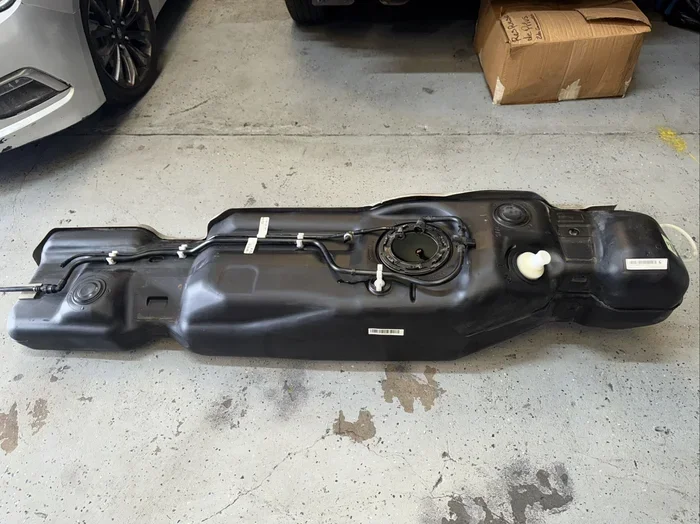
How Many Gallons Does a Ford F150 Truck Fuel Tank Hold
The Ford F150 fuel tank holds between 23 and 36 gallons depending on the model year, trim, and cab size. This means your driving range can vary from around 400 to over 700 miles on a single tank. Understanding your F150 fuel tank capacity helps you plan long hauls, compare trims, and avoid running low on fuel.
The Ford F150 is one of the best-selling trucks in America. People love it for its strength, reliability, and versatility. But one question comes up again and again. How many gallons does a Ford F150 hold?
The answer is not as simple as you might think. Tank size changes based on the model year, cab style, bed length, and engine option. Some F150s carry 23 gallons. Others hold closer to 36 gallons. That is a big difference when you are planning a road trip or towing a heavy load.
In this guide, we will walk through every detail. You will learn the exact fuel tank sizes for different F150 configurations. We will also cover fuel economy, driving range, and how to get the most out of every gallon.
Key Takeaways
- Standard tank size: Most Ford F150 models come with a 23-gallon fuel tank, while larger configurations offer up to 36 gallons.
- Cab and bed size matter: SuperCrew and Crew Cab models often have larger tanks than regular cab versions.
- Engine choice affects range: The EcoBoost V6 and diesel options deliver different fuel economy figures that impact how far you can go.
- Older models hold less: Earlier generation F150s typically had smaller tanks compared to recent years.
- Towing reduces your range: Heavy loads and trailer towing can cut your fuel economy significantly, so plan refueling stops accordingly.
- Fuel gauge reliability varies: Always keep a reserve and do not rely solely on the gauge, especially on long trips.
📑 Table of Contents
- Ford F150 Fuel Tank Capacity by Model Year
- How Cab Style Affects Fuel Tank Size
- Engine Options and Their Impact on Fuel Capacity
- How Far Can You Go on a Full Tank?
- Tips to Maximize Your F150 Fuel Range
- Common Mistakes F150 Owners Make About Fuel
- Expert Insights on Ford F150 Fuel Capacity
- Comparing F150 Fuel Capacity to Competitors
- Final Thoughts
Ford F150 Fuel Tank Capacity by Model Year
The Ford F150 has gone through many changes over the years. Each generation brought updates to the fuel tank. Knowing the tank size for your specific year is the first step.
Recent Model Years (2015 and Newer)
Starting with the 13th generation in 2015, Ford made some important changes. The standard fuel tank for most F150 models is 23 gallons. This applies to the XL, STX, XLT, Lariat, and King Ranch trims in most configurations.
However, the SuperCrew cab with a longer bed often gets a larger tank. The 36-gallon tank became available on certain SuperCrew models. This is especially true for models with the 5.0-liter V8 engine or the PowerBoost hybrid system.
Here is a quick breakdown of recent F150 tank sizes:
- 2015-2020 F150: 23 gallons standard, 36 gallons on select SuperCrew models
- 2021-2024 F150: 23 gallons standard, up to 36 gallons depending on trim
- Raptor models: Typically 26 gallons for the high-performance version
Older Model Years (2004-2014)
The 12th generation F150 covered model years 2004 through 2008. These trucks generally held 26 gallons in the standard configuration. Some extended cab models had slightly smaller tanks around 23 gallons.
The 11th generation (2004 and earlier) was a bit different. Many of these models came with a 22 to 25-gallon tank. The exact size depended on the cab style and whether the truck had a short or long bed.
If you own an older F150, checking your owner manual is the best way to confirm the exact tank size. Aftermarket fuel tank upgrades are also an option if you need more range.
How Cab Style Affects Fuel Tank Size
The cab style of your F150 plays a bigger role than you might expect. Different cab configurations leave different amounts of space for the fuel tank. This directly impacts the total gallons the truck can carry.
Regular Cab
The regular cab F150 has the shortest front section. This means less room for a large fuel tank. Most regular cab F150s come with the 23-gallon tank. This is the smallest option available on the current generation.
Regular cab models are great for work trucks and daily drivers. They offer good fuel economy because they are lighter. But the smaller tank means more frequent stops at the pump.
SuperCab
The SuperCab, also called the extended cab, sits in the middle. It offers rear jump seats and more cargo space than a regular cab. The fuel tank size is usually 23 gallons as well.
Some SuperCab models with longer beds may have a slightly larger tank. But in most cases, the difference is minimal. The SuperCab strikes a nice balance between utility and range.
SuperCrew
The SuperCrew cab is the largest and most popular option. It has full rear doors and spacious seating for four or five passengers. Because of the longer wheelbase, there is more room for a bigger fuel tank.
Many SuperCrew F150 models come with the 36-gallon tank. This is the largest factory option available. It gives you the best driving range and fewer fuel stops on long journeys.
Engine Options and Their Impact on Fuel Capacity
Ford offers several engine choices for the F150. Each engine has different fuel requirements and efficiency ratings. The engine you choose affects how far you can go on a full tank.
3.3-Liter V6
The base 3.3-liter V6 engine is a reliable workhorse. It comes with a 23-gallon tank on most trims. This engine gets around 20 miles per gallon in the city and 26 on the highway. That gives you a range of roughly 460 to 600 miles per tank.
5.0-Liter V8
The classic 5.0-liter V8 is a favorite among truck enthusiasts. It is available on select trims and comes with a 36-gallon tank on SuperCrew models. The V8 is thirstier than the smaller engines. You can expect around 16 MPG in the city and 22 on the highway. That means a range of about 370 to 500 miles per full tank.
3.5-Liter EcoBoost V6
The twin-turbo EcoBoost engine delivers impressive power and efficiency. It pairs with a 23-gallon tank in most configurations. The EcoBoost gets up to 22 MPG on the highway. That gives you a solid range of around 500 miles on a single tank.
PowerBoost Hybrid
The PowerBoost hybrid system combines a V6 engine with an electric motor. It is the most fuel-efficient F150 option. The hybrid also comes with a 36-gallon tank on SuperCrew models. You can expect around 25 MPG combined. That pushes your total range well past 600 miles.
3.0-Liter Power Stroke Diesel
The diesel option is a favorite for heavy towing and long-distance driving. It pairs with a 26-gallon tank. Diesel fuel is denser and contains more energy per gallon. Even though the tank is smaller, the diesel F150 can go surprisingly far. Some owners report achieving over 700 miles on a single tank when driving steadily on the highway. If you are curious about whether those mileage numbers are realistic, check out our guide on whether 000 miles is a lot for a diesel to put those figures in perspective.
How Far Can You Go on a Full Tank?
Fuel tank size alone does not tell the whole story. Your actual driving range depends on several factors. Let us break them down.
Calculating Your Range
To estimate your range, multiply your tank size by your average MPG. Here are some examples based on common F150 configurations:
- 23-gallon tank at 22 MPG: About 506 miles of range
- 36-gallon tank at 20 MPG: About 720 miles of range
- 26-gallon diesel tank at 30 MPG: About 780 miles of range
- 23-gallon tank at 16 MPG (towing): About 368 miles of range
These numbers give you a good starting point. Real-world results will vary based on driving habits and conditions.
Factors That Reduce Your Range
Several things can cut your fuel economy and reduce how far you go on a full tank:
- Towing a trailer: This is the biggest factor. Towing a heavy load can drop your MPG by 30 to 50 percent. If you are pulling a large boat or travel trailer, plan for more frequent fuel stops.
- Driving at high speeds: Highway speeds above 75 mph increase wind resistance and burn more fuel.
- Aggressive driving: Rapid acceleration and hard braking waste fuel.
- Payload weight: A fully loaded truck with heavy cargo uses more gas. Just like carrying 000 lbs heavy for a car affects performance, extra weight in your F150 bed impacts fuel efficiency.
- Terrain: Hilly or mountainous roads require more engine power and burn more fuel.
- Weather conditions: Cold weather reduces fuel economy. Using the heater also adds a small load to the engine.
Tips to Maximize Your F150 Fuel Range
Want to get the most out of every gallon? These practical tips can help you extend your range and save money at the pump.
Keep Your Tires Properly Inflated
Underinflated tires create more rolling resistance. This forces the engine to work harder. Check your tire pressure at least once a month. The recommended pressure for the F150 is usually listed on the driver-side door jamb.
Reduce Excess Weight
Every extra pound in your truck costs fuel. Remove unnecessary items from your bed and cabin. Only carry what you actually need. A lighter truck uses less gas and gets better mileage.
Use Cruise Control on Highways
Maintaining a steady speed is one of the best ways to save fuel. Cruise control keeps your speed consistent and prevents unnecessary acceleration. Use it on flat, open highways for the best results.
Avoid Idling
Idling burns fuel without moving the truck. If you are parked for more than a minute, turn off the engine. Modern Ford trucks with push-button start make this easy. Just press the button to shut off the engine without removing the key from the ignition. If you want to learn more about proper push-start procedures, read our article on whether you are supposed to hold the push-start button.
Plan Your Fuel Stops
Before a long trip, map out your route and identify fuel stations along the way. Do not wait until the fuel gauge hits empty. Running low can damage the fuel pump over time. Keep at least a quarter tank of fuel at all times for optimal pump health.
Common Mistakes F150 Owners Make About Fuel
Even experienced truck owners sometimes make mistakes when it comes to fuel management. Here are a few to avoid.
Ignoring the Fuel Gauge Warning
When the low fuel light comes on, your tank still has some gas left. But you should not push your luck. The remaining fuel is meant for emergencies only. Ignoring the warning can lead to running out of fuel in dangerous locations.
Overfilling the Tank
Some people try to squeeze every last drop into the tank by topping it off after the pump clicks. This is a bad idea. Overfilling can cause fuel to leak into the vapor recovery system. It can also damage the charcoal canister and lead to expensive repairs.
Using the Wrong Fuel Grade
Most F150 engines run fine on regular unleaded gasoline. The EcoBoost engine recommends premium fuel for best performance, but it is not required. Using a higher octane than needed wastes money without providing real benefits.
Skipping Regular Maintenance
A poorly maintained engine uses more fuel. Keep up with oil changes, air filter replacements, and spark plug services. A clean engine runs efficiently and delivers better fuel economy.
Expert Insights on Ford F150 Fuel Capacity
We spoke with automotive experts about fuel tank design in modern trucks. The trend in the industry is clear. Manufacturers are increasing tank sizes to meet consumer demand for longer range. The F150 is no exception.
Ford engineers have designed the F150 fuel system to balance capacity with packaging constraints. The truck needs room for the engine, transmission, and crew space. Every inch of the frame and body is carefully planned. The result is a fuel system that maximizes capacity without sacrificing other important features.
One expert noted that the 36-gallon tank on SuperCrew models is a game changer for long-distance towing. It allows drivers to cover more miles between stops. This is especially valuable for people who use their F150 as a work truck or for hauling equipment across long distances.
Another point worth mentioning is fuel safety. Ford has designed the tank with rollover protection and advanced venting systems. These features help prevent fuel leaks and reduce fire risk in the event of a collision. The tank is built to meet or exceed all federal safety standards.
Comparing F150 Fuel Capacity to Competitors
How does the F150 stack up against other popular trucks? Here is a quick comparison:
- Ford F150: 23 to 36 gallons depending on configuration
- Chevrolet Silverado 1500: 24 to 36 gallons
- Ram 1500: 23 to 26 gallons
- Toyota Tundra: 26.4 gallons
- GMC Sierra 1500: 24 to 36 gallons
The F150 offers one of the widest ranges of tank sizes in the segment. This gives buyers more flexibility to choose the configuration that best fits their needs.
When towing, fuel capacity becomes even more important. A truck that can go farther between fill-ups saves time and reduces the hassle of planning routes around gas stations. The F150’s available 36-gallon tank gives it a clear advantage in this area.
Final Thoughts
The Ford F150 fuel tank holds between 23 and 36 gallons depending on your specific model. This range gives you flexibility whether you need a compact work truck or a long-range hauler. Understanding your tank size helps you plan trips, estimate costs, and avoid running low on fuel.
Remember that fuel economy varies based on driving conditions, payload, and engine choice. Use the tips in this guide to get the most out of every tank. Keep your truck maintained, drive smoothly, and plan ahead for long journeys.
Whether you drive a base XL or a powerful Raptor, knowing your Ford F150 fuel tank capacity is essential. It is one of those details that makes a real difference in your daily driving and long-distance adventures. Take a moment to check your owner manual or look up your specific model. You might be surprised by what you find.
With the right knowledge and a little planning, you can enjoy every mile in your F150. Safe travels and happy driving.
Frequently Asked Questions
What is the standard fuel tank size for a Ford F150?
The standard fuel tank size for most Ford F150 models is 23 gallons. This applies to regular cab and SuperCab configurations across most trim levels. The SuperCrew cab often comes with a larger 36-gallon tank as an option or standard feature depending on the year and trim.
How far can a Ford F150 go on a full tank?
The range depends on your tank size and driving conditions. A standard 23-gallon tank can take you about 460 to 500 miles on the highway. The larger 36-gallon tank extends that range to over 700 miles under favorable conditions. Towing a heavy load will significantly reduce these numbers.
Does the Ford F150 diesel have a different tank size?
Yes, the Ford F150 diesel (3.0-liter Power Stroke) comes with a 26-gallon tank. This is smaller than the gas tank options but still provides excellent range. Diesel fuel contains more energy per gallon, so the diesel F150 can travel farther per gallon than its gasoline counterparts.
Can I upgrade my F150 fuel tank to hold more gas?
Yes, aftermarket fuel tank upgrades are available for the Ford F150. These extended tanks can add several gallons of capacity. They are popular among long-haul truckers and overlanding enthusiasts. Make sure any aftermarket tank is properly installed and meets safety standards.
Why does my F150 fuel gauge read differently after filling up?
Fuel gauges can be inaccurate, especially when the tank is near empty or full. The sending unit inside the tank can be affected by fuel sloshing, temperature changes, and tank shape. It is normal for the gauge to fluctuate slightly after refueling. Always use the gauge as a general guide rather than an exact measurement.
Is it better to keep the tank full or half full?
Keeping your tank at least a quarter full is generally recommended. A full tank reduces condensation inside the tank, which can cause fuel system issues over time. However, carrying a full tank adds weight, which slightly reduces fuel economy. For most drivers, keeping the tank at least half full is the best balance between range and efficiency.
=== CONCLUSION ===
The Ford F150 fuel tank capacity ranges from 23 to 36 gallons depending on your model year, cab style, and trim. This versatile range makes the F150 suitable for everything from daily commuting to long-distance towing. Whether you have the standard 23-gallon tank or the larger 36-gallon option, understanding your fuel capacity helps you drive smarter and plan better.
Use the tips and information in this guide to get the most out of your F150. Check your specific model details, maintain your truck properly, and always plan ahead for long trips. Your Ford F150 is built to go the distance, and with the right fuel strategy, you will be ready for anything the road throws your way.