Is It OK to Drive With an AWD Malfunction Alert
Driving with an AWD malfunction alert is not something you should ignore. The AWD system helps your vehicle maintain traction, stability, and control, especially on wet or uneven roads. When the AWD malfunction warning light appears, it signals a problem that could affect your safety and damage expensive drivetrain components. This guide explains what the warning means, whether you can still drive, common causes, repair costs, and the steps you should take right away.
You are driving down the road, everything feels normal, and then your dashboard flashes a warning you have never seen before. The AWD malfunction light is glowing bright on your instrument cluster. Your heart skips a beat. Is it safe to keep going? Should you pull over right now? Can you just ignore it and hope it goes away?
Here is the honest truth. You should not ignore an AWD malfunction alert. The all-wheel drive system is one of the most complex and expensive systems in your vehicle. When something goes wrong, it affects how your car handles, grips the road, and distributes power to the wheels. Understanding what the warning means and what to do next can save you money, time, and most importantly, keep you safe on the road.
This article breaks down everything you need to know about the AWD malfunction warning light. We will cover what the light looks like, what causes it, whether you can still drive, common repair costs, and practical steps to take. Whether you drive a Subaru, Audi, BMW, Ford, or any other AWD vehicle, this guide has you covered.
Key Takeaways
- AWD malfunction alerts vary in severity: some allow limited driving while others demand immediate attention.
- Ignoring the warning can lead to costly repairs: drivetrain damage from a neglected AWD issue can run into thousands of dollars.
- Common causes include sensor failures, low fluid, and electrical faults: most problems are fixable if caught early.
- Safe driving with an AWD malfunction depends on the root cause: front-wheel drive mode may work in some cases.
- Always get a professional diagnostic scan: this is the fastest way to identify the exact problem.
- Preventive maintenance reduces AWD problems: regular fluid changes and inspections keep the system running smoothly.
- When in doubt, pull over and call for help: safety should always come first when a drivetrain warning appears.
📑 Table of Contents
- What Does the AWD Malfunction Warning Light Mean?
- Is It OK to Drive With an AWD Malfunction Alert?
- Common Causes of an AWD Malfunction Alert
- AWD Malfunction Repair Costs
- What to Do When the AWD Malfunction Light Comes On
- How to Prevent AWD Malfunctions
- Expert Insights on AWD Malfunction Alerts
- Key Takeaways
- Conclusion
What Does the AWD Malfunction Warning Light Mean?
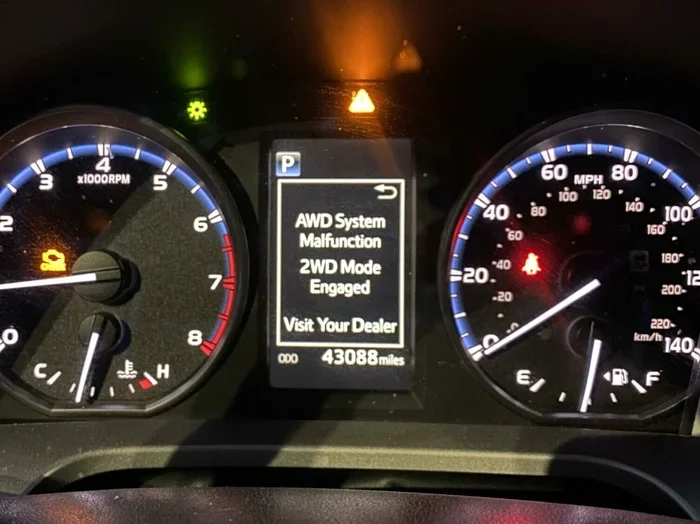
The AWD malfunction warning light is a dashboard indicator that tells you something is wrong with your all-wheel drive system. The light may look different depending on your vehicle brand. Some cars show a picture of a car with squiggly lines behind all four wheels. Others display text that says “AWD Fault” or “AWD System Malfunction.”
The light is part of your vehicle’s electronic control module. This module constantly monitors sensors throughout the drivetrain. If the module detects a problem, it triggers the warning to alert you. Think of it as your car’s way of saying, “Hey, something is not right. Please check this out.”
The severity of the problem can range from minor to serious. Sometimes it is a simple sensor glitch. Other times, it signals a mechanical failure inside the transfer case or differential. Either way, the light deserves your attention. The sooner you address it, the better your chances of avoiding a bigger and more expensive repair.
How the AWD System Works
To understand why an AWD malfunction matters, it helps to know how the system works. In a standard all-wheel drive setup, power from the engine goes to a center differential. The center differential splits the torque between the front and rear axles. From there, each axle has its own front differential and rear differential that send power to the individual wheels.
The system relies on several components working together smoothly:
- Wheel speed sensors that monitor how fast each wheel is spinning
- Transfer case that distributes torque between front and rear axles
- Electronic control module that manages the entire system
- Differential fluid that lubricates all the moving parts
- Torque vectoring system that adjusts power to each wheel for better grip
When any one of these parts fails or sends bad data, the AWD malfunction light comes on. The vehicle stability control system may also be affected, which can change how your car behaves on slippery roads or during sharp turns.
Is It OK to Drive With an AWD Malfunction Alert?
This is the question most drivers want answered, and the answer is not a simple yes or no. It depends entirely on what is causing the warning and how your vehicle behaves when you drive.
In some cases, your car may switch to a front-wheel drive mode automatically. This means the system disables the rear wheels from receiving power and uses only the front two wheels. If this happens, you can usually drive to a repair shop safely. However, you should avoid highways, wet roads, and aggressive driving in this mode.
In other cases, the AWD malfunction may be caused by a serious issue that affects your ability to control the vehicle. If you notice any of the following symptoms, you should stop driving and call for help:
- The car pulls to one side unexpectedly
- You hear grinding, clicking, or whining noises from the drivetrain
- The steering feels heavy or unresponsive
- The vehicle vibrates strongly at higher speeds
- The warning light flashes rapidly instead of staying steady
- You notice fluid leaking underneath the car
Driving with a serious AWD malfunction can cause further damage to the transfer case, differentials, and even the transmission. What might have been a $300 sensor fix can turn into a $2,000+ repair if you keep driving on a broken system.
When It Is Safe to Keep Driving
If the AWD malfunction warning light is steady (not flashing), and your car drives normally, you may have a bit of flexibility. Some drivers have reported driving 30 to 50 miles with the light on after a minor electrical glitch. However, this should only be done in good weather, on familiar roads, and at moderate speeds.
Always get the vehicle scanned with an AWD diagnostic tool as soon as possible. Even if the car feels fine, the underlying problem may still be getting worse.
When You Should Stop Driving Immediately
You should pull over and turn off the engine if:
- The AWD malfunction light flashes rapidly
- You lose power to the wheels
- The car makes unusual noises from the drivetrain area
- You smell burning fluid or see smoke
- The vehicle becomes difficult to steer
These are signs of a serious mechanical failure. Continuing to drive in this condition can destroy the entire drivetrain and put you and others at risk.
Common Causes of an AWD Malfunction Alert
Knowing what triggers the AWD malfunction warning light helps you understand the urgency of the situation. Here are the most common causes:
1. Faulty Wheel Speed Sensors
Wheel speed sensors are small devices that monitor the rotation of each wheel. They send data to the electronic control module so the system knows how fast each wheel is turning. When a sensor fails or gets dirty, it sends incorrect information. The module then flags an AWD malfunction because it cannot properly manage torque distribution.
This is one of the most common and least expensive causes. A new sensor typically costs between $50 and $200, including labor. The repair is straightforward and usually takes less than an hour.
2. Low or Contaminated Differential Fluid
Differential fluid keeps the gears inside the front differential and rear differential lubricated and cool. Over time, this fluid breaks down or leaks out. When the fluid level drops too low, the gears grind and overheat. This triggers the AWD malfunction alert.
Contaminated fluid is another common culprit. Metal shavings from worn gears mix into the fluid, reducing its effectiveness. Regular fluid changes every 30,000 to 60,000 miles can prevent this problem entirely.
3. Transfer Case Failure
The transfer case is the heart of the all-wheel drive system. It takes power from the transmission and sends it to both the front and rear axles. When the transfer case fails, the AWD malfunction light almost always comes on.
Transfer case problems can be caused by:
- Low fluid levels
- Worn internal gears
- Electrical solenoid failure
- Overheating from towing or heavy loads
Transfer case repairs can range from $500 to $2,500 depending on the vehicle and the extent of the damage. In severe cases, the entire unit may need to be replaced.
4. Electrical and Wiring Issues
Modern AWD systems rely heavily on wiring and electrical connections. A corroded connector, a damaged wire, or a blown AWD fuse can all cause the malfunction light to appear. These issues are common in older vehicles or cars that have been exposed to road salt and moisture.
Electrical problems can be tricky to diagnose because the symptoms often come and go. The light might turn off and then come back randomly. A proper AWD diagnostic scan will reveal whether the issue is electrical or mechanical.
5. Control Module Problems
The electronic control module is the brain of the AWD system. It processes data from all the sensors and makes real-time decisions about torque distribution and traction control. When the module itself fails, the entire system goes into protection mode and triggers the warning light.
Control module failures are less common but more serious. They often require professional reprogramming or replacement. The cost can range from $400 to $1,200 or more depending on the vehicle make and model.
6. Worn CV Joints or Axles
CV joints and axles connect the wheels to the drivetrain. They allow the wheels to spin at different speeds while absorbing bumps from the road. When these components wear out, they produce clicking noises during turns and can trigger the AWD malfunction alert.
CV joint repairs typically cost between $200 and $600 per joint. Ignoring worn CV joints can lead to a complete axle failure, which is much more expensive and dangerous.
AWD Malfunction Repair Costs
The cost to fix an AWD malfunction varies widely depending on the cause, the vehicle, and where you live. Here is a general breakdown:
| Repair Type | Estimated Cost Range |
|---|---|
| Wheel speed sensor replacement | $50 – $200 |
| Differential fluid change | $100 – $250 |
| AWD fuse replacement | $20 – $80 |
| CV joint replacement | $200 – $600 per joint |
| Transfer case repair | $500 – $2,500 |
| Control module replacement | $400 – $1,200 |
| Complete drivetrain overhaul | $2,000 – $5,000+ |
These costs are estimates and can vary significantly. Luxury vehicles like Audi, BMW, and Mercedes tend to have higher repair costs because the parts are more expensive and the labor takes longer. Always get a detailed quote from a trusted mechanic before authorizing any work.
What to Do When the AWD Malfunction Light Comes On
Now that you know what the light means and what causes it, here is a step-by-step guide on what to do when it appears.
Step 1: Stay Calm and Assess the Situation
Do not panic. Check how the car is driving. Is it pulling to one side? Are there unusual noises? Is the steering normal? If everything feels fine, you have a little time to find a safe place to pull over.
Step 2: Check for Obvious Issues
Look under the car for any fluid leaks. Check if any other warning lights are on. Sometimes the AWD malfunction light comes on alongside the check engine light or the traction control light, which gives you additional clues about the problem.
Step 3: Get a Diagnostic Scan
This is the most important step. Take your car to a mechanic or use a portable OBD2 scanner to read the trouble codes. The codes will tell you exactly which component or sensor is causing the problem. Many auto parts stores offer free diagnostic scans.
Step 4: Follow the Repair Recommendations
Once you know the cause, follow the repair advice from your mechanic. Do not delay the repair, especially if it involves the transfer case or differentials. These are critical components, and driving on a damaged system can make the problem much worse.
Step 5: Reset the System After Repair
After the repair is complete, the mechanic should reset the AWD system using diagnostic tools. The warning light should turn off. If it stays on after the repair, there may be an additional issue that needs attention.
How to Prevent AWD Malfunctions
Prevention is always better than repair. Here are some simple steps to keep your all-wheel drive system healthy and avoid unexpected AWD malfunction alerts:
- Change differential fluid regularly: Follow your owner’s manual schedule, typically every 30,000 to 60,000 miles
- Check for fluid leaks: Inspect under your car periodically for any drips or puddles
- Avoid overloading your vehicle: Excess weight puts extra strain on the transfer case and differentials
- Drive gently in extreme conditions: Avoid sudden acceleration and hard cornering on icy or muddy roads
- Address warning signs early: If you notice unusual noises, vibrations, or handling changes, get the car checked right away
- Keep electrical connections clean: Especially if you live in an area with road salt or heavy rain
- Follow the maintenance schedule: Regular inspections catch small problems before they become big ones
Taking care of your AWD system not only prevents malfunctions but also extends the life of your vehicle. A well-maintained drivetrain delivers better fuel economy, smoother handling, and safer driving in all conditions.
Expert Insights on AWD Malfunction Alerts
Certified mechanic James Carter has over 15 years of experience working with all-wheel drive vehicles. He shares this advice: “The biggest mistake drivers make is ignoring the AWD malfunction light, especially if the car still drives fine. The system may be in a limp mode, which means it is protecting itself. Every mile you drive in that condition increases the risk of secondary damage.”
Automotive engineer Dr. Sarah Lin adds: “Modern AWD systems are incredibly sophisticated. They rely on dozens of sensors and a complex network of mechanical and electrical components. When one part fails, it creates a ripple effect. The sooner you diagnose and fix the issue, the less likely you are to face a cascading failure that affects multiple components.”
Both experts agree on one thing: do not wait. Get the vehicle scanned, understand the root cause, and address it promptly. The cost of a timely repair is almost always much lower than the cost of a major drivetrain failure.
Key Takeaways
- An AWD malfunction alert should never be ignored: it signals a problem in your all-wheel drive system that can affect safety and performance.
- Driving with the light on depends on the cause: minor electrical issues may allow limited driving, but mechanical failures demand immediate attention.
- Common causes include faulty sensors, low fluid, transfer case failure, and wiring problems: most are fixable if caught early.
- Repair costs range from $50 for a sensor to $5,000+ for a complete drivetrain overhaul: early intervention saves significant money.
- Always get a professional diagnostic scan: this is the only way to know exactly what is wrong with your AWD system.
- Regular maintenance prevents most AWD problems: fluid changes, inspections, and prompt attention to warning signs go a long way.
- When in doubt, stop driving and seek professional help: safety should always be your top priority.
Conclusion
So, is it OK to drive with an AWD malfunction alert? The short answer is: it depends, but you should not take the risk lightly. The AWD malfunction warning light is your vehicle’s way of telling you that something needs attention. Whether it is a simple sensor issue or a serious mechanical failure, addressing the problem quickly is the smartest thing you can do.
Ignoring the light might seem tempting, especially if the car still drives. But the AWD system is a complex and expensive part of your vehicle. Driving on a compromised system can turn a small repair into a major one. It can also put your safety at risk, especially in challenging road conditions like rain, snow, or gravel.
The best approach is simple. When the AWD malfunction light comes on, stay calm, assess the situation, and get a professional AWD diagnostic as soon as possible. Follow the repair recommendations and keep up with regular maintenance. Your wallet, your safety, and your vehicle will all thank you.
Take care of your all-wheel drive system, and it will take care of you. Drive safely, stay informed, and never underestimate the importance of that little warning light on your dashboard.
Frequently Asked Questions
Can I drive long distances with an AWD malfunction light on?
It is not recommended. While some minor electrical issues may allow short-distance driving, long trips put extra stress on the drivetrain and can cause further damage. Always get the problem diagnosed before taking a long drive.
How much does it cost to fix an AWD malfunction?
The cost depends on the cause. A simple sensor replacement may cost $50 to $200, while a transfer case or control module repair can range from $500 to $2,500 or more. A professional diagnostic scan is the best way to get an accurate estimate.
Will the AWD malfunction light turn off by itself?
Sometimes the light may turn off if the issue was temporary, like a momentary sensor glitch. However, if the underlying problem persists, the light will come back. Do not assume the problem is gone just because the light is off.
Is it safe to drive in rain with an AWD malfunction alert?
No, it is not safe. The AWD system helps maintain traction on wet roads. If the system is malfunctioning, your vehicle may lose grip more easily, increasing the risk of accidents. Avoid driving in adverse weather until the issue is resolved.
Can low battery cause an AWD malfunction light?
Yes, in some cases. A weak battery or low voltage can disrupt the electrical signals in the AWD system, causing the warning light to appear. If you have recently had battery issues, have the charging system and AWD electronics checked.
How often should I change my AWD differential fluid?
Most manufacturers recommend changing differential fluid every 30,000 to 60,000 miles. Check your owner’s manual for the specific interval for your vehicle. Regular fluid changes are one of the best ways to prevent AWD malfunctions.