How to Turn Traction Control Back On and Drive Safely
Knowing how to turn traction control back on is essential for every driver who wants safe and confident handling on any road. Your traction control system helps prevent wheel slippage, but it can shut off for various reasons — from a simple button press to a faulty sensor. This guide walks you through the exact steps to reset and reactivate your system, troubleshoot common problems, and understand when to seek professional help. We cover everything from dashboard lights to sensor issues so you can get back to safe driving fast.
You are driving on a rainy highway, and suddenly your car feels unstable. You glance at the dashboard and notice the traction control light is on. Or maybe you accidentally hit the traction control off button and now you are wondering how to turn traction control back on. Either way, you are not alone.
Traction control is one of the most important safety features in modern vehicles. It helps you maintain grip when road conditions get tricky. But when it stops working, it can feel unsettling. The good news is that turning it back on is usually simple. In this guide, we walk you through every step, every reason it might have shut off, and every fix you can try at home.
Key Takeaways
- Traction control can be turned back on easily by pressing the traction control button or restarting your vehicle.
- Common reasons traction control shuts off include sensor malfunctions, low battery voltage, and blown fuses.
- Driving without traction control is risky especially on wet, icy, or uneven road surfaces.
- Dashboard warning lights give you early signals when something is wrong with your traction control system.
- Regular vehicle maintenance helps prevent traction control issues before they become serious problems.
- Knowing your vehicle’s specific steps ensures you can reactivate traction control quickly and safely.
- Professional inspection is recommended if simple fixes do not restore your traction control system.
📑 Table of Contents
- What Is Traction Control and Why Does It Matter?
- Why Does Traction Control Turn Off?
- How to Turn Traction Control Back On: Step by Step
- Is It Safe to Drive Without Traction Control?
- Common Mistakes People Make with Traction Control
- How to Prevent Traction Control Issues
- Understanding Your Dashboard Warning Lights
- Expert Tips for Better Vehicle Control
- When to Seek Professional Help
- Conclusion
What Is Traction Control and Why Does It Matter?
Traction control is a safety system that prevents your wheels from spinning out. When you accelerate on slippery surfaces, your drive wheels can lose grip. The traction control system steps in. It reduces engine power or applies the brakes to individual wheels. This helps you keep control of the vehicle.
Most cars built after 2012 come with traction control as a standard feature. It works closely with your anti-lock braking system and electronic stability control. Together, these systems keep your car stable during sudden stops, sharp turns, and slippery conditions.
When traction control is off, your wheels can spin freely. This is helpful in certain situations, like when you are stuck in snow or mud. But for everyday driving, having it on is much safer. Understanding how this system works gives you more confidence behind the wheel.
How the System Works Behind the Scenes
Your vehicle uses wheel speed sensors to monitor each wheel. These sensors send data to the car’s computer. If one wheel spins faster than the others, the computer takes action. It may reduce fuel flow to the engine or apply brake force to that specific wheel. This happens in milliseconds.
The system relies on several components working together. The wheel speed sensors, the electronic control unit, and the brake actuator all play a role. When one part fails, the whole system can shut down. That is when the traction control warning light appears on your dashboard.
Why Does Traction Control Turn Off?
There are several reasons your traction control might deactivate. Some are simple. Others require a closer look. Understanding the cause helps you fix the problem faster.
You Accidentally Pressed the Button
Many vehicles have a traction control off button. It is usually located on the steering column or center console. You might have bumped it while adjusting your seat or reaching for something. This is the most common and easiest fix.
Some cars also have a button for electronic stability control. Since traction control is part of that system, pressing the stability control off button can also deactivate traction control. Check your owner’s manual to find the exact button location for your vehicle.
Sensor Malfunction
Wheel speed sensors are the eyes of your traction control system. When a sensor gets dirty or damaged, it sends wrong signals. The car’s computer then disables the system as a safety measure. A faulty sensor is one of the most common reasons traction control stays off.
Dirt, ice, or debris can cover the sensor. Over time, the sensor wiring can also wear out. If cleaning the sensor does not help, you may need a replacement. A mechanic can diagnose this quickly with a diagnostic scanner.
Low Battery Voltage
Your car’s electrical system powers the traction control module. When the battery is weak or the alternator is failing, voltage drops. This can cause the system to shut off temporarily. If you notice other electrical issues, like dim headlights or slow power windows, the battery might be the culprit.
Blown Fuse or Wiring Issues
Every system in your car has a fuse. The traction control system is no different. A blown fuse can cut power to the entire module. Check your fuse box for the traction control fuse. Your owner’s manual will show you where it is located.
Wiring problems are less common but still possible. Corroded connectors or damaged wires can interrupt the signal between the sensors and the control unit. This usually requires professional inspection.
ABS System Failure
Traction control and ABS work hand in hand. If your anti-lock braking system has a problem, traction control often shuts off too. The same wheel speed sensors feed data to both systems. So a sensor issue can affect both at the same time.
When both the ABS light and the traction control light come on together, the problem is likely shared. Have a mechanic check both systems to avoid driving with compromised safety features.
How to Turn Traction Control Back On: Step by Step
Now that you know why traction control might be off, let us get it back on. Follow these steps in order. Most drivers resolve the issue within minutes.
Step 1: Press the Traction Control Button
Start by finding the traction control button in your vehicle. Press it once to turn the system back on. You should see the traction control warning light on your dashboard turn off within a few seconds.
If you are not sure where the button is, check your owner’s manual. Some vehicles label it as TCS or traction control. Others group it with the stability control settings.
Step 2: Restart Your Vehicle
If pressing the button does not work, try restarting the engine. Turn the key or press the start button to shut off the car. Wait about 30 seconds. Then start the engine again. This resets the car’s computer and often clears temporary glitches.
After restarting, check if the traction control light is off. If it is, the system should be active again. Drive slowly at first to test if the system is working properly.
Step 3: Check for Error Codes
If restarting does not help, use an OBD-II scanner to check for error codes. You can buy a basic scanner at most auto parts stores for under 50 dollars. Plug it into the diagnostic port under your steering column.
The scanner will display codes that point to the problem. Common codes related to traction control include C0034, C0035, and C1234. Look up the code online or ask a mechanic for help interpreting it.
Step 4: Inspect the Wheel Speed Sensors
Locate the wheel speed sensors on each wheel. They are usually near the wheel hub or axle. Look for dirt, metal shavings, or damage. Clean the sensor with a soft cloth and some electrical contact cleaner.
After cleaning, start the car and see if the traction control light goes off. If it stays on, the sensor may need replacement. Replacement sensors are affordable and easy to install on most vehicles.
Step 5: Check the Fuse Box
Open your fuse box and locate the traction control fuse. Compare it to the diagram in your owner’s manual. If the fuse is blown, replace it with one of the same amperage.
Never use a higher-rated fuse. It can cause electrical damage to your vehicle. If the new fuse blows again, there is a deeper electrical issue that needs professional attention.
Step 6: Visit a Mechanic
If none of the above steps work, take your car to a trusted mechanic. They have professional diagnostic tools that can pinpoint the exact problem. It is always better to get a proper diagnosis than to keep driving with a disabled safety system.
Is It Safe to Drive Without Traction Control?
Driving without traction control increases your risk of losing control. The system is designed to help you stay safe on slippery roads. Without it, your wheels can spin uncontrollably during acceleration. This is especially dangerous on wet, icy, or gravel surfaces.
There are rare situations where you might want traction control off. For example, when your car is stuck in deep snow or mud, spinning the wheels can help you gain momentum. But once you are free, turn it back on immediately.
Some drivers also turn it off during spirited driving on a track. But for everyday road use, keeping traction control on is always the safer choice. Your vehicle handles better, stops more predictably, and feels more stable when this system is active.
When You Must Drive Without It
If your traction control system is malfunctioning and you need to drive, do so carefully. Reduce your speed. Accelerate gently. Avoid sudden turns or hard braking. Keep a larger following distance from the car ahead of you. These precautions help compensate for the missing safety feature.
Get the system repaired as soon as possible. Driving with a disabled traction control system for a long time puts you and your passengers at risk. Treat it as a priority repair, not something to ignore.
Common Mistakes People Make with Traction Control
Many drivers make avoidable mistakes when dealing with traction control issues. Here are the ones to watch out for.
- Ignoring the warning light. Many people see the traction control light and simply ignore it. This is a mistake. The light is telling you something needs attention.
- Assuming the system is broken. Often, a simple restart or button press fixes the issue. Always try the basics before assuming the worst.
- Driving aggressively with the system off. Without traction control, aggressive driving becomes much more dangerous. Ease off the accelerator and drive smoothly.
- Using the wrong fuse. When replacing a blown fuse, always match the amperage exactly. A wrong fuse can cause further damage.
- Delaying repairs. If a sensor or module needs replacement, do not put it off. The longer you drive with a disabled system, the higher your risk.
How to Prevent Traction Control Issues
Prevention is always better than repair. A few simple habits can keep your traction control system working reliably for years.
Keep Your Sensors Clean
Wheel speed sensors collect dirt and debris over time. During your regular car washes, pay attention to the wheel area. A quick wipe-down of the sensors can prevent false readings and system shutdowns.
Maintain Your Battery
A healthy battery keeps all your electronic systems running properly. Have your battery tested at least once a year. Replace it every three to five years, or sooner if you notice electrical issues.
Check Tire Condition Regularly
Your tires are the only part of your car that touches the road. Worn tires reduce grip and put extra strain on the traction control system. Keep your tires properly inflated and replace them when the tread gets low.
Address Warning Lights Promptly
Never ignore any dashboard warning light. The traction control light, ABS light, and check engine light are all connected. A small issue today can become a big problem tomorrow if left unchecked.
Understanding Your Dashboard Warning Lights
Your dashboard is full of helpful signals. Each light tells a story about what is happening under the hood. Learning to read them makes you a safer driver.
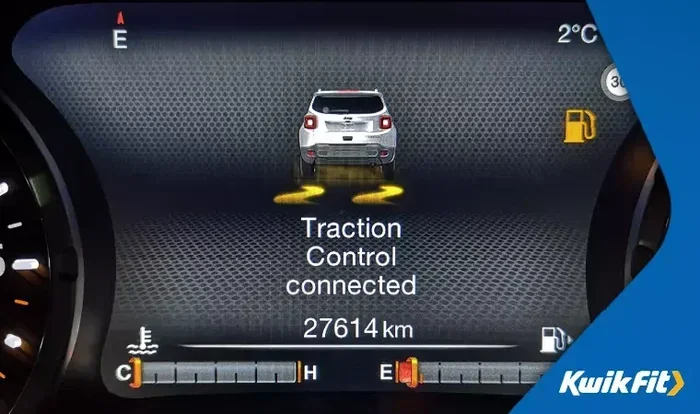
The traction control warning light usually looks like a car with squiggly lines beneath it. When it stays on, the system is either off or has a fault. When it flashes briefly during startup, that is normal. It means the system is performing a self-check.
If the light stays on while driving, pay attention. You may notice reduced stability during acceleration or cornering. This is your car telling you something needs attention. Do not wait for the problem to get worse.
Some vehicles also display a message on the information screen. It might say “Traction Control Off” or “Service Traction Control.” These messages give you a clear direction to take action.
Expert Tips for Better Vehicle Control
Beyond just turning traction control back on, there are habits that improve your overall driving safety. Here are some expert-backed tips.
- Drive according to road conditions. Slow down on wet or icy roads. Your tires need more time to grip when surfaces are slippery.
- Avoid sudden inputs. Smooth steering, gentle braking, and gradual acceleration all help the traction control system do its job.
- Keep up with scheduled maintenance. Regular service appointments catch small issues before they become expensive repairs.
- Learn your vehicle’s features. Read your owner’s manual. Knowing what each button and light does gives you more control and confidence.
- Invest in quality tires. Good tires are the foundation of your vehicle’s handling. They work with traction control, ABS, and stability control to keep you safe.
These habits might seem small, but they add up to a big difference in your safety on the road. Think of traction control as one layer of protection. Your driving habits are another. Together, they create a much safer driving experience.
When to Seek Professional Help
Most traction control issues are simple to fix. But some problems need a trained professional. Here are signs that it is time to visit a mechanic.
- The traction control light stays on after trying all the basic fixes.
- You see multiple warning lights on your dashboard at the same time.
- Your vehicle feels unstable or pulls to one side during normal driving.
- You hear unusual noises when braking or accelerating.
- The ABS light and traction control light both stay illuminated.
A professional mechanic has the tools and training to diagnose complex issues. They can scan your vehicle’s computer, test individual components, and perform repairs safely. Do not hesitate to seek help when you need it. Your safety is worth it.
Conclusion
Learning how to turn traction control back on is a simple but valuable skill for every driver. Whether it was accidentally switched off or shut down due to a sensor issue, the steps in this guide give you everything you need to fix it. Start with the simplest solutions. Press the button. Restart the engine. Check the fuses and sensors. Most of the time, the problem is easy to resolve.
But more importantly, remember why this system exists. Traction control keeps you safe when road conditions challenge your grip. It works silently in the background every time you drive. Treat it with the respect it deserves. Keep it maintained, address warning lights promptly, and never drive long distances with it disabled.
Safe driving starts with awareness and preparation. Now that you know how to handle traction control issues, you are better equipped to stay safe on every road. Keep this guide handy. Share it with fellow drivers. And always prioritize the safety features that your vehicle provides.
Frequently Asked Questions
Can I drive with the traction control light on?
You can drive short distances with the light on, but it is not recommended. The system may not activate when you need it most, especially on slippery roads. Have the system checked as soon as possible to restore your safety features.
What does it mean when the traction control light flashes?
A flashing traction control light usually means the system is actively working to prevent wheel spin. It often appears during slippery conditions or sudden acceleration. If the light stays on solid, the system may be disabled or malfunctioning.
How much does it cost to fix a traction control issue?
Costs vary widely depending on the cause. A simple sensor cleaning costs nothing. Replacing a wheel speed sensor typically ranges from 100 to 300 dollars. More complex issues involving the control module can cost 500 dollars or more. Always get a professional diagnosis first.
Does traction control work in all weather conditions?
Traction control is designed to help in all conditions, but it is especially useful on wet, icy, and snowy roads. It prevents wheel spin during acceleration, giving you better control. However, it cannot defy the laws of physics, so always adjust your driving to match road conditions.
Can low tire pressure cause the traction control light to come on?
Yes, it can. Low tire pressure changes how your wheels interact with the road surface. This can cause uneven wheel speeds that confuse the traction control sensors. Always keep your tires properly inflated to help all your safety systems work correctly.
Should I turn off traction control when stuck in snow?
Yes, temporarily turning it off can help when you are stuck. Spinning the wheels freely may give you the momentum needed to get unstuck. But remember to turn it back on immediately once you are moving again. Driving without traction control on regular roads is much less safe.