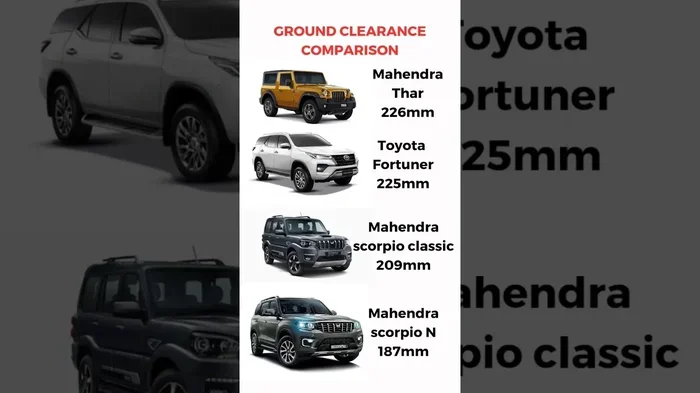
Car Ground Clearance Chart Every Buyer Should Check
A car ground clearance chart helps buyers compare ride heights across vehicles before making a purchase. Ground clearance affects your ability to drive over bumps, speed bumps, and rough roads without scraping the undercarriage. This guide breaks down ground clearance measurements for SUVs, sedans, hatchbacks, and crossovers. You will learn how to read a ground clearance chart, why it matters, and which vehicles offer the best clearance. Use this resource to make a confident, informed car buying decision.
Key Takeaways
- Ground clearance determines obstacle clearance: It tells you how much space exists between the lowest point of your car and the road surface.
- SUVs and off-road vehicles offer the highest clearance: Typically ranging from 200 mm to 250 mm or more.
- Sedans and hatchbacks have lower clearance: Usually between 120 mm and 160 mm, which suits city driving well.
- A car ground clearance chart simplifies comparison: You can quickly compare multiple models side by side.
- Ride height affects driving comfort and safety: Too low means scraping risks; too high can affect handling and stability.
- Check suspension type and tire size: These factors also influence your effective ground clearance on the road.
📑 Table of Contents
- What Is a Car Ground Clearance Chart and Why Does It Matter?
- Understanding Ground Clearance Values Across Vehicle Types
- Car Ground Clearance Chart: Model-by-Model Comparison
- Why Ground Clearance Matters for Daily Driving
- Common Mistakes Buyers Make When Checking Ground Clearance
- Expert Insights: How to Use a Ground Clearance Chart for Car Buying
- Key Takeaways
- Conclusion
- FAQs
What Is a Car Ground Clearance Chart and Why Does It Matter?
A car ground clearance chart is a reference table that lists the distance between the lowest part of a vehicle and the ground. This measurement is usually given in millimeters or inches. It is one of the most important specs to check when buying any car.
Ground clearance directly impacts how your car handles different road surfaces. If you drive on poorly maintained roads, speed bumps, or gravel paths, higher clearance saves you from painful undercarriage scrapes. On the other hand, lower clearance can improve aerodynamics and fuel efficiency on smooth highways.
Think of ride height as the gap between your car and the road. The bigger the gap, the more obstacles you can clear. A ground clearance chart puts all this information in one place so you can compare vehicles easily.
Many buyers overlook this spec. They focus on engine power, interior features, or price tags. But vehicle ground clearance can make or break your daily driving experience. It especially matters if you live in areas with rough roads, seasonal flooding, or speed bumps everywhere.
How Ground Clearance Is Measured
Manufacturers measure ground clearance from the lowest point of the car to the ground. This lowest point is usually the differential, exhaust pipe, or oil pan. The measurement is taken with the car fully loaded to its curb weight.
Here is how the process works:
- The car sits on a flat, level surface.
- The lowest undercarriage point is identified.
- The vertical distance from that point to the ground is measured.
- The result is listed in millimeters or inches.
Always check whether the ground clearance value listed is for a loaded or unloaded vehicle. A loaded car sits lower because of the extra weight. This changes your effective clearance on the road.
Understanding Ground Clearance Values Across Vehicle Types
Different types of vehicles have very different minimum ground clearance numbers. A car ground clearance chart groups vehicles by type, which makes comparison much simpler. Let us break down the typical ranges.
SUV Ground Clearance
SUVs are built with higher ride height in mind. Most SUVs offer between 200 mm and 250 mm of ground clearance. This gives them excellent capability on rough terrain and flooded roads. Popular SUVs like the Ford Endeavour, Toyota Fortuner, and Mahindra Thar sit well above 200 mm.
If you plan to do light off-roading or frequently drive on unpaved roads, an SUV with high undercarriage clearance is a smart choice. The extra height also helps during monsoon season when roads flood quickly.
Sedan Ground Clearance
Sedans are designed for comfort and aerodynamics. Their ground clearance typically ranges from 120 mm to 160 mm. Cars like the Honda City, Hyundai Creta (sedan version), and Toyota Corolla fall into this category.
Lower clearance works well for city driving on smooth roads. However, you need to be more careful with speed bumps, speed breakers, and potholes. A ground clearance chart helps sedan buyers understand these limits before buying.
Hatchback Ground Clearance
Hatchbacks generally have the lowest ride height. Most hatchbacks offer between 110 mm and 150 mm. The Maruti Suzuki Swift, Hyundai i20, and Tata Altroz are popular examples in this segment.
Hatchbacks are great for city commuting and fuel efficiency. But their low clearance height means you must watch for speed bumps and broken roads. A car ground clearance chart is especially useful for hatchback buyers who want to know their limits.
Crossover and Crossover SUV Ground Clearance
Crossovers blend the best of both worlds. They sit higher than sedans but lower than traditional SUVs. Most crossovers offer between 170 mm and 210 mm of ground clearance. The Kia Seltos, Hyundai Creta, and Tata Harrier are popular crossover choices.
This middle-ground ground clearance measurement makes crossovers versatile. You get enough height for rough patches without sacrificing on-road comfort and handling.
Car Ground Clearance Chart: Model-by-Model Comparison
A good car ground clearance chart lets you compare models side by side. Below is a comparison table showing typical ground clearance values for popular vehicles across segments.
| Vehicle | Type | Ground Clearance (mm) | Ground Clearance (inches) |
|---|---|---|---|
| Mahindra Thar | SUV | 226 mm | 8.9 in |
| Toyota Fortuner | SUV | 220 mm | 8.7 in |
| Ford Endeavour | SUV | 215 mm | 8.5 in |
| Tata Harrier | Crossover SUV | 200 mm | 7.9 in |
| Kia Seltos | Crossover | 190 mm | 7.5 in |
| Hyundai Creta | Crossover | 170 mm | 6.7 in |
| Honda City | Sedan | 150 mm | 5.9 in |
| Toyota Corolla | Sedan | 145 mm | 5.7 in |
| Maruti Suzuki Swift | Hatchback | 120 mm | 4.7 in |
| Hyundai i20 | Hatchback | 120 mm | 4.7 in |
Use this car ground clearance chart as a starting point. Always verify the exact ground clearance value from the manufacturer’s website or the vehicle’s spec sheet. Values can vary based on trim level and tire size.
Quick Tip: Check Your Tire Size Too
Tire size directly affects your effective ride height. If you upgrade to larger tires, your clearance height increases. But if you use smaller aftermarket tires, your clearance drops. Always factor in your tire size when interpreting a ground clearance chart.
Why Ground Clearance Matters for Daily Driving
Ground clearance is not just for off-road enthusiasts. It affects your daily driving in many practical ways. Here is why you should pay attention to this spec.
Speed Bumps and Speed Breakers
Speed bumps are everywhere in Indian cities and towns. If your car has low undercarriage clearance, you must slow down significantly. Higher ground clearance lets you cross speed bumps without scraping the front bumper or undercarriage.
For sedan and hatchback owners, this means being extra cautious. SUV and crossover owners have more freedom to take speed bumps at moderate speeds.
Flooded Roads and Monsoon Driving
During monsoon season, waterlogged roads are a real challenge. Vehicle ground clearance determines how deep a water puddle you can safely cross. Higher clearance means your engine and exhaust stay dry even on flooded roads.
This is why many buyers in flood-prone areas prefer SUVs and crossovers over sedans and hatchbacks. A car ground clearance chart helps you choose a vehicle suited to your local road conditions.
Fuel Efficiency and Aerodynamics
Here is a trade-off many buyers do not consider. Higher ground clearance means more wind resistance. This can slightly reduce fuel efficiency. Lower vehicles cut through the air better, which improves mileage.
So if fuel economy is a top priority, a sedan or hatchback with lower ride height might be the better choice. But if you need versatility, the slight fuel penalty of higher clearance is worth it.
Approach, Departure, and Breakover Angles
Advanced off-road clearance specs include three important angles:
- Approach angle: The steepest incline your front bumper can climb without scraping.
- Departure angle: The steepest decline your rear bumper can clear without scraping.
- Breakover angle: The steepest peak your vehicle can cross without the undercarriage getting stuck.
These angles work together with ground clearance to determine true off-road capability. A ground clearance chart that includes these angles gives you a complete picture of a vehicle’s terrain ability.
Common Mistakes Buyers Make When Checking Ground Clearance
Many buyers make avoidable mistakes when using a car ground clearance chart. Here are the most common ones and how to avoid them.
Mistake 1: Ignoring the Lowest Point
Not all parts of a car are at the same height. The minimum ground clearance is measured at the lowest point, which could be the exhaust, differential, or front bumper lip. Always check where the measurement is taken from.
Mistake 2: Forgetting About Tire Size
As mentioned earlier, tire size changes your effective clearance. A ground clearance chart usually lists stock tire measurements. If you plan to change tires, factor that in.
Mistake 3: Confusing Loaded and Unloaded Clearance
A fully loaded car sits lower than an empty one. The ground clearance measurement listed by manufacturers is usually for a loaded vehicle. Keep this in mind when planning off-road trips with a full car.
Mistake 4: Focusing Only on Maximum Clearance
Some cars have high clearance in the front but low clearance at the rear due to suspension design. Always check the overall picture. A car ground clearance chart that shows front and rear clearance separately is the most helpful.
Mistake 5: Overlooking Suspension Type
Suspension type affects how much your car compresses under load. MacPherson strut suspensions are common in sedans. Multi-link and solid axle suspensions are found in SUVs and offer more consistent clearance under different loads.
Expert Insights: How to Use a Ground Clearance Chart for Car Buying
Expert car buyers always check the ground clearance chart before making a final decision. Here are some professional tips to help you get the most from this tool.
Tip 1: Define Your Driving Environment First. Before looking at any car ground clearance chart, assess where you drive most. City roads with good pavement? A sedan or hatchback works fine. Rough roads, construction zones, or rural areas? Go for higher clearance.
Tip 2: Compare Within the Same Segment. A ground clearance chart is most useful when comparing similar vehicle types. Comparing an SUV to a hatchback does not give you a fair picture of what you need.
Tip 3: Look at Real-World Reviews. Manufacturer specs are helpful, but real-world experiences tell the full story. Check owner reviews and forums where people share their ground clearance experiences on specific roads.
Tip 4: Consider Future Needs. If your family is growing or your driving conditions might change, choose a vehicle with higher clearance height now rather than regretting it later.
Tip 5: Use the Chart as a Starting Point. A car ground clearance chart gives you the numbers. But your final decision should also factor in engine performance, safety features, comfort, and budget. Clearance is just one piece of the puzzle.
Key Takeaways
- Ground clearance determines obstacle clearance: It tells you how much space exists between the lowest point of your car and the road surface.
- SUVs and off-road vehicles offer the highest clearance: Typically ranging from 200 mm to 250 mm or more.
- Sedans and hatchbacks have lower clearance: Usually between 120 mm and 160 mm, which suits city driving well.
- A car ground clearance chart simplifies comparison: You can quickly compare multiple models side by side.
- Ride height affects driving comfort and safety: Too low means scraping risks; too high can affect handling and stability.
- Check suspension type and tire size: These factors also influence your effective ground clearance on the road.
Conclusion
A car ground clearance chart is one of the most underrated yet essential tools for any car buyer. It gives you a clear, at-a-glance view of how much space your vehicle has between the road and its undercarriage. Whether you drive a sedan, hatchback, crossover, or SUV, understanding your ground clearance helps you make better driving decisions every day.
Vehicle ground clearance affects everything from daily commute comfort to off-road capability and even fuel efficiency. Use the car ground clearance chart in this guide to compare models, avoid common mistakes, and find the right vehicle for your needs. Always check the minimum ground clearance value, consider your tire size, and factor in your typical driving conditions.
The next time you are in the market for a new car, make the ground clearance chart your first stop. It is a small step that can save you from costly repairs, uncomfortable rides, and unexpected scrapes. Choose wisely, drive confidently, and let your ground clearance work for you.
FAQs
What is a good ground clearance for a city car?
For city driving on smooth roads, a ground clearance of 120 mm to 150 mm works well. Most hatchbacks and sedans fall into this range. This height is enough to handle city speed bumps and normal road conditions without any issues.
Can I increase my car’s ground clearance?
Yes, you can increase ride height by installing larger tires or using a suspension lift kit. However, modifying your car may affect its warranty and handling. Always consult a professional mechanic before making any changes to your vehicle ground clearance setup.
Does ground clearance affect fuel efficiency?
Yes, higher ground clearance creates more wind resistance, which can slightly reduce fuel efficiency. Lower vehicles have better aerodynamics and tend to use less fuel. However, the difference is usually small and may not be noticeable in everyday driving.
Is higher ground clearance always better?
Not necessarily. Higher clearance height is great for rough roads and off-roading, but it can reduce highway stability and fuel economy. The best ground clearance depends on where and how you drive. Choose based on your specific needs.
What is the difference between ground clearance and ride height?
Ground clearance is the measured distance from the lowest point of the car to the road surface. Ride height refers to the overall height of the vehicle’s chassis from the ground. Both terms are related but are not exactly the same. A car ground clearance chart usually refers to the minimum clearance figure.
Should I check the ground clearance chart before buying a used car?
Absolutely. A ground clearance chart is just as important for used car buyers. Wear and tear on suspension components can reduce your effective clearance over time. Always verify the ground clearance value and inspect the undercarriage condition before purchasing any used vehicle.