Why Are Trucks Called 1500 And What Does The Name Mean
Why are trucks called 1500? The number 1500 refers to a half-ton truck classification that has been used for decades by manufacturers like Ford, Ram, and Chevrolet. Understanding this naming system helps buyers choose the right pickup truck for their needs and budget.
Have you ever wondered why trucks are called 1500? It seems like a random number, right? You see the Ford F-150, the Ram 1500, and the Chevrolet Silverado 1500 everywhere. But what does that 1500 actually mean? And why do manufacturers stick with it?
The answer is simpler than you might think. The 1500 in truck names tells you something important about the vehicle. It connects to a long history of how trucks were classified and sold. Understanding this helps you make smarter buying decisions. In this article, we will dive deep into why trucks are called 1500 and what the name really means.
Whether you are shopping for a new truck or just curious about the naming system, this guide has you covered. We will explore the history, the meaning, and how the numbers have changed over the years. By the end, you will never look at a truck badge the same way again.
Key Takeaways
- The 1500 designation means a half-ton truck: It originally referred to the payload capacity in thousands of pounds.
- Three major brands use the 1500 name: Ford F-150, Ram 1500, and Chevrolet Silverado 1500 all fall into this category.
- The numbers have evolved over time: Modern 1500 trucks are far more capable than their predecessors despite the same name.
- Higher numbers mean heavier trucks: 2500 and 3500 models are one-ton and one-and-a-half-ton trucks respectively.
- The name matters for buyers: It signals the truck’s size, capability, and intended use.
- Towing and payload are key factors: The 1500 label helps buyers understand what a truck can handle.
- History shapes the name: The 1500 naming convention dates back to the early days of pickup trucks.
📑 Table of Contents
The History Behind Truck Naming
Truck naming did not start with fancy badges and sleek designs. It began with a very practical system. Early truck makers needed a way to show buyers how much weight a truck could carry. The numbers became a quick shorthand for capability.
Where It All Began
In the early days of pickup trucks, manufacturers used simple numbering systems. A half-ton truck could carry about 1,000 pounds of cargo. That is where the number 1500 comes from. It represents half a ton in thousands. Makes sense, right?
Ford was one of the first to use this system. The Ford F-150 name has been around since the 1940s. Back then, trucks were built for work. Farmers and tradespeople needed vehicles that could haul tools and materials. The number on the truck told them what the truck could do.
Chevrolet followed a similar path with its Silverado line. Ram, which started as part of Dodge, also adopted the numbering system. Over time, these names became brand icons. People did not just buy a truck. They bought an F-150 or a Ram 1500.
How the System Grew
As truck needs grew, so did the naming system. Manufacturers added more numbers to show different sizes. The 1500 stayed as the mid-range option. The 2500 and 3500 models came along for heavier-duty work.
This system made it easy for buyers to compare trucks. You did not need to read a long spec sheet. The number told you a lot about what the truck could handle. A 1500 was for everyday use. A 2500 was for heavier loads. A 3500 was for the toughest jobs.
Today, the system still works the same way at its core. But modern trucks are so much more than their numbers suggest. A 2024 Ford F-150 can do things that trucks from the 1980s could not even dream of.
What Does the 1500 Number Actually Mean?
The 1500 in a truck name stands for a half-ton classification. But what does that really mean in real-world terms? Let us break it down.
The Half-Ton Connection
A half-ton truck can carry roughly 1,000 pounds of payload. Payload means the weight of cargo plus passengers. This includes everything in the truck bed and everything riding inside the cab.
Modern 1500 trucks often exceed this original limit. Today, a Ford F-150 can tow over 13,000 pounds. It can carry more than 2,000 pounds in the bed. The numbers on the truck do not always match the real capability anymore. But the name stuck.
Here is a quick look at what the different numbers mean:
- 1500: Half-ton truck. Best for everyday driving and light hauling.
- 2500: Three-quarter-ton truck. Great for heavier towing and hauling.
- 3500: One-ton truck. Built for the toughest jobs and trailers.
Why Half-Ton? Understanding Payload Ratings
The term half-ton comes from the original payload capacity. Truck makers used this number to set their vehicles apart. A half-ton truck was lighter and more fuel-efficient than a one-ton truck.
Over time, payload ratings increased. Engineers found ways to build stronger frames and better suspensions. But the naming convention stayed the same. A 1500 is still called a half-ton, even though it can do far more than the name suggests.
This is one reason why the 1500 name can be confusing. The number does not perfectly match modern truck capabilities. But it has become a tradition that buyers recognize and trust.
The Math Behind the Name
The naming system is actually pretty simple when you think about it. One ton equals 2,000 pounds. Half a ton equals 1,000 pounds. So 1500 represents half a ton in a rounded, simplified way.
Truck makers took this basic math and turned it into a branding tool. The number 1500 instantly tells you this is a half-ton pickup. It creates a clear hierarchy across a brand’s lineup. A Ram 1500 sits below a Ram 2500, which sits below a Ram 3500.
This system helps buyers quickly understand what they are looking at. You do not need to be a truck expert to know that a 3500 is bigger and stronger than a 1500. The numbers do the talking.
The Big Three: Ford, Ram, and Chevrolet
Three brands dominate the 1500 truck market. Each one has its own take on the half-ton formula. Let us look at how each brand uses the 1500 name.
Ford F-150
The Ford F-150 is the best-selling truck in America. It has held that title for decades. The F-150 name is almost synonymous with pickup trucks in general.
Ford has built the F-150 for every kind of buyer. You can get a work-focused model with a steel bed. Or you can get a luxury version with leather seats and a touchscreen. The F-150 does it all.
The 1500 in the Ford F-150 means it is a half-ton truck. It is the entry-level model in the F-Series lineup. The F-250 and F-350 are heavier-duty options for those who need more capability.
Ram 1500
Ram broke away from Dodge to become its own brand. The Ram 1500 quickly earned a reputation for comfort and refinement. It is often seen as the most comfortable half-ton truck on the road.
Ram focuses heavily on the interior experience. The seats are some of the best in the truck world. The ride is smooth, even when the truck is fully loaded. This makes the Ram 1500 popular with families and daily drivers.
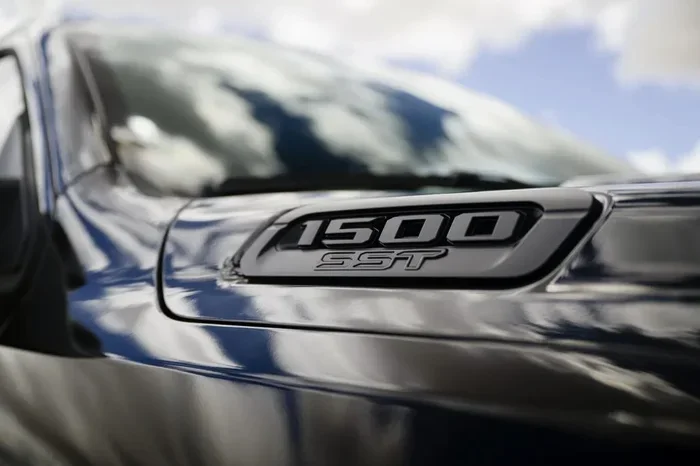
The 1500 badge on a Ram tells you it is a half-ton pickup. Ram also offers the 2500 and 3500 for buyers who need more hauling power. The naming system works the same way across the lineup.
Chevrolet Silverado 1500
Chevrolet uses a different name for its truck line. The Silverado 1500 is the half-ton model. The Silverado 2500 is the three-quarter-ton, and the Silverado 3500 is the one-ton.
The Silverado 1500 offers a great balance of capability and comfort. It has a strong engine lineup, including a turbocharged four-cylinder and a powerful V8. The truck handles well for its size and feels modern inside.
Chevrolet has used the Silverado name since 1999. Before that, the trucks were simply called Chevrolet pickups. The Silverado branding helped the trucks stand out in a crowded market.
How Truck Numbers Have Changed Over Time
The truck naming world has changed a lot over the years. What started as a simple payload indicator has become a complex branding system. Let us look at how things have evolved.
From Simple Numbers to Complex Badges
In the early days, trucks had very few trim levels. You got a base model or you did not. The 1500 number was enough to tell you what the truck could do. There was not much more to it.
Today, trucks come with tons of trim levels and packages. The Ford F-150 alone has over a dozen trim options. You have the XL, STX, XLT, Lariat, King Ranch, Platinum, Limited, and more. Each one adds features and raises the price.
The 1500 number stays the same across all these trims. A base Ford F-150 XL and a luxury F-150 Limited are both 1500 trucks. The badge tells you the size class, not the features.
The Rise of Hybrid and Electric Trucks
Truck makers are now offering hybrid and electric versions of their 1500 models. The Ford F-150 PowerBoost is a hybrid that combines a gas engine with an electric motor. The Rivian R1T is a fully electric pickup that competes in the same space.
These new powertrains change the truck landscape. Buyers now care about fuel economy and electric range. The 1500 name still applies, but the trucks under the hood are very different from older models.
Hybrid and electric trucks bring new capabilities. Some can power tools and appliances at job sites. Others can serve as backup power for your home. The 1500 badge no longer just means hauling and towing.
How Modern 1500 Trucks Compare to Older Models
A modern 1500 truck is a completely different machine than one from 30 years ago. Today’s trucks are lighter, stronger, and more efficient. Advanced materials like aluminum and high-strength steel make this possible.
The Ford F-150 switched to an aluminum body in 2015. This made the truck significantly lighter without sacrificing strength. A lighter truck means better fuel economy and more payload capacity.
Technology has also transformed the 1500 experience. Modern trucks have cameras, sensors, and driver-assist features. Some can park themselves or stay in their lane on the highway. These are features that truck buyers from the 1990s could never have imagined.
What the 1500 Name Means for Buyers
If you are in the market for a new truck, the 1500 name tells you a lot. It helps you understand what kind of truck you are looking at. Here is what you need to know as a buyer.
Who Should Buy a 1500 Truck?
A 1500 truck is perfect for most buyers. It handles daily driving, commuting, and weekend errands with ease. You can tow a small trailer or boat. You can haul lumber, furniture, or gardening supplies.
Families love 1500 trucks because they offer space and comfort. The crew cab versions have room for five or more passengers. The beds are big enough for weekend projects but not so big that the truck is hard to park.
Here are some situations where a 1500 truck shines:
- Daily commuting with the occasional heavy load
- Towing a travel trailer or boat on weekends
- Hauling materials for home improvement projects
- Serving as a family vehicle with truck capability
- Running errands around town with a versatile vehicle
When You Might Need Something Bigger
A 1500 is not always the right choice. If you need to tow very heavy trailers, a 2500 or 3500 might be better. These trucks have stronger frames, bigger brakes, and more powerful engines.
Commercial users often need the extra capability of a heavier truck. Contractors who haul heavy equipment benefit from a 2500 or 3500 model. The 1500 can handle light work, but it has limits.
The key is to match the truck to your needs. Think about what you will actually use the truck for. If a 1500 covers 90 percent of your tasks, there is no need to spend more on a larger model.
Trim Levels and Packages Matter Too
The 1500 number is just the starting point. Within each 1500 model, there are many trim levels to choose from. A base 1500 will be more affordable. A fully loaded 1500 can cost as much as a luxury SUV.
Pay attention to the packages and features. A truck with the right tow package can make a big difference. Look for features like a trailer brake controller, upgraded suspension, and locking differentials.
Your budget should guide your trim choice. You do not need the top-of-the-line model to get a great truck. Many mid-level trims offer the features most buyers actually need.
Common Misconceptions About Truck Names
There are a lot of myths and misunderstandings about truck naming. Let us clear up some of the most common ones.
Myth: The Number Means the Truck Weighs That Much
Many people think a 1500 truck weighs 1,500 pounds. That is not true at all. A modern Ford F-150 weighs over 5,000 pounds. The number refers to payload capacity, not the truck’s own weight.
Myth: All 1500 Trucks Are the Same
Just because three trucks all have the 1500 badge does not mean they are equal. The Ford F-150, Ram 1500, and Silverado 1500 are different trucks. They have different sizes, engines, and features. The 1500 number just tells you they are all half-ton trucks.
Myth: Higher Numbers Always Mean Better Trucks
A 3500 is not always better than a 1500. It depends on what you need. For most drivers, a 1500 is more than enough. A 3500 is overkill for daily driving and light towing. The best truck is the one that fits your life.
Myth: The Naming System Is the Same Across All Brands
While the general system is similar, each brand has its own approach. Ford uses the F-Series with 150, 1500, 2500, and 3500. Ram uses 1500, 2500, and 3500. Chevrolet uses Silverado 1500, 2500, and 3500. The numbers mean similar things, but the details differ.
Expert Tips for Understanding Truck Names
Here are some quick tips to help you navigate the truck naming world with confidence.
- Always check the payload and towing specs: The number on the truck is just a starting point. Look at the actual numbers in the owner’s manual.
- Test drive before you buy: A 1500 truck from one brand can feel very different from another. Sit in the driver’s seat and see how it feels.
- Consider your real-world needs: Think about what you will actually do with the truck. Do not buy more truck than you need.
- Look at the total cost of ownership: A higher trim level costs more upfront and more to maintain. Factor in insurance, fuel, and maintenance costs.
- Read professional reviews: Trustworthy reviews give you real-world insights that spec sheets cannot provide.
Key Takeaways
- The 1500 designation means a half-ton truck: It originally referred to the payload capacity in thousands of pounds.
- Three major brands use the 1500 name: Ford F-150, Ram 1500, and Chevrolet Silverado 1500 all fall into this category.
- The numbers have evolved over time: Modern 1500 trucks are far more capable than their predecessors despite the same name.
- Higher numbers mean heavier trucks: 2500 and 3500 models are one-ton and one-and-a-half-ton trucks respectively.
- The name matters for buyers: It signals the truck’s size, capability, and intended use.
- Towing and payload are key factors: The 1500 label helps buyers understand what a truck can handle.
- History shapes the name: The 1500 naming convention dates back to the early days of pickup trucks.
Conclusion
The question of why trucks are called 1500 has a clear answer. The number represents a half-ton truck classification that has been used for decades. It started as a simple way to show payload capacity and evolved into a universal naming system.
Today, the 1500 name is recognized by truck buyers everywhere. It signals a versatile, capable half-ton pickup that handles most daily tasks with ease. Whether you choose a Ford F-150, a Ram 1500, or a Chevrolet Silverado 1500, you are getting a truck built for the modern world.
The next time you see a 1500 badge on a truck, you will know exactly what it means. You will understand the history behind the name and what it tells you about the vehicle. That knowledge will help you make a better buying decision and appreciate the trucks you see on the road every day.
Truck naming may seem simple on the surface. But underneath that 1500 badge is a rich history and a system that has served buyers well for generations. The name may not tell the whole story anymore, but it is still a powerful starting point for anyone in the market for a new truck.
Frequently Asked Questions
Why is the Ford F-150 called a 1500?
The Ford F-150 is called a 1500 because it is a half-ton truck. The number 1500 represents the payload capacity of approximately 1,000 pounds. This naming convention has been used by Ford since the early days of the F-Series lineup.
Is a 1500 truck the same as a half-ton truck?
Yes, a 1500 truck is a half-ton truck. The terms are used interchangeably across all major manufacturers. The 1500 designation tells you the truck falls into the half-ton category for payload and towing purposes.
Can a 1500 truck tow a travel trailer?
Absolutely. Most modern 1500 trucks can tow travel trailers weighing between 5,000 and 13,000 pounds depending on the engine and configuration. Always check the specific towing capacity for the exact model and trim you are considering.
What is the difference between a 1500 and a 2500 truck?
A 1500 is a half-ton truck while a 2500 is a three-quarter-ton truck. The 2500 has a stronger frame, better brakes, and more towing capacity. It is designed for heavier loads and tougher work than a 1500.
Do all truck brands use the 1500 naming system?
Most major American truck brands use a similar system. Ford uses F-150, Ram uses 1500, and Chevrolet uses Silverado 1500. The specific naming varies by brand, but the concept of a half-ton classification remains the same.
Are modern 1500 trucks better than older models?
Yes, modern 1500 trucks are significantly better than older models in almost every way. They are more fuel-efficient, more capable, more comfortable, and packed with technology. Advances in materials and engineering have transformed what a half-ton truck can do.